Note: This post is about the time we spent in Nepal after our trek. The trek came before all of this but the post isn’t ready yet, so you’re getting this one first. Our trek was a whole different experience so we broke the posts into two separate parts.
Our return to Kathmandu from the mountains gave us a chance to warm our bones and wash our bodies. Grace had priority as she held out the longest in the shower department. It’s amazing how much hair starts to feel like hay after so many days of not being washed!
Back at the Royal Penguin we sorted our clothes into piles of “a little stinky”, “stinky” and “I can’t believe I just smelled that”. Once we had that done and we were showered it was time for some food. Krishna Man met us and we followed him to a restaurant that would have never been on our radar but served the best Indian food we’ve ever had (so far….we’re going to India soon so I imagine that may change). It was a great way to celebrate our achievement. Also, it was the first time we had eaten meat in 12 days.
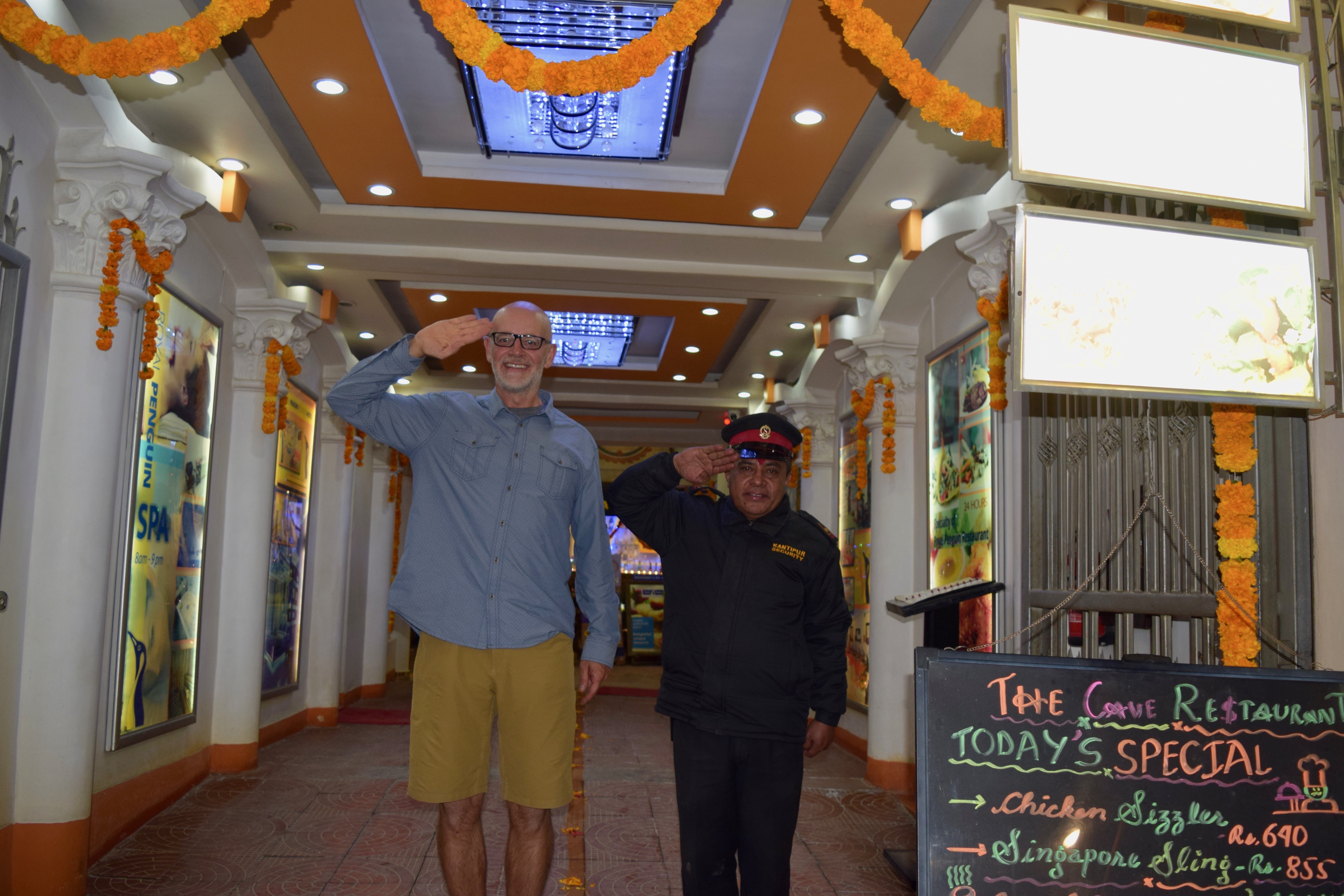
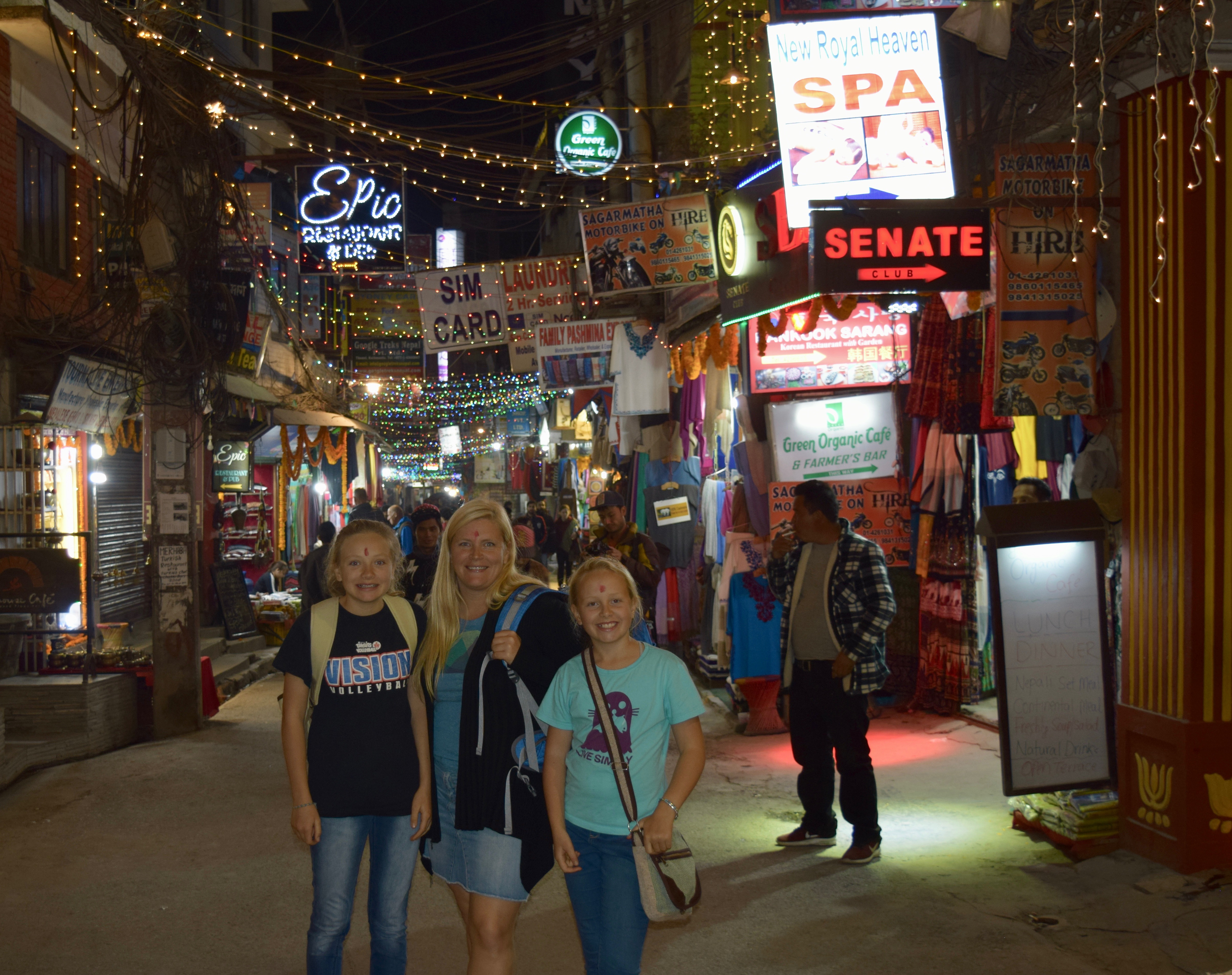
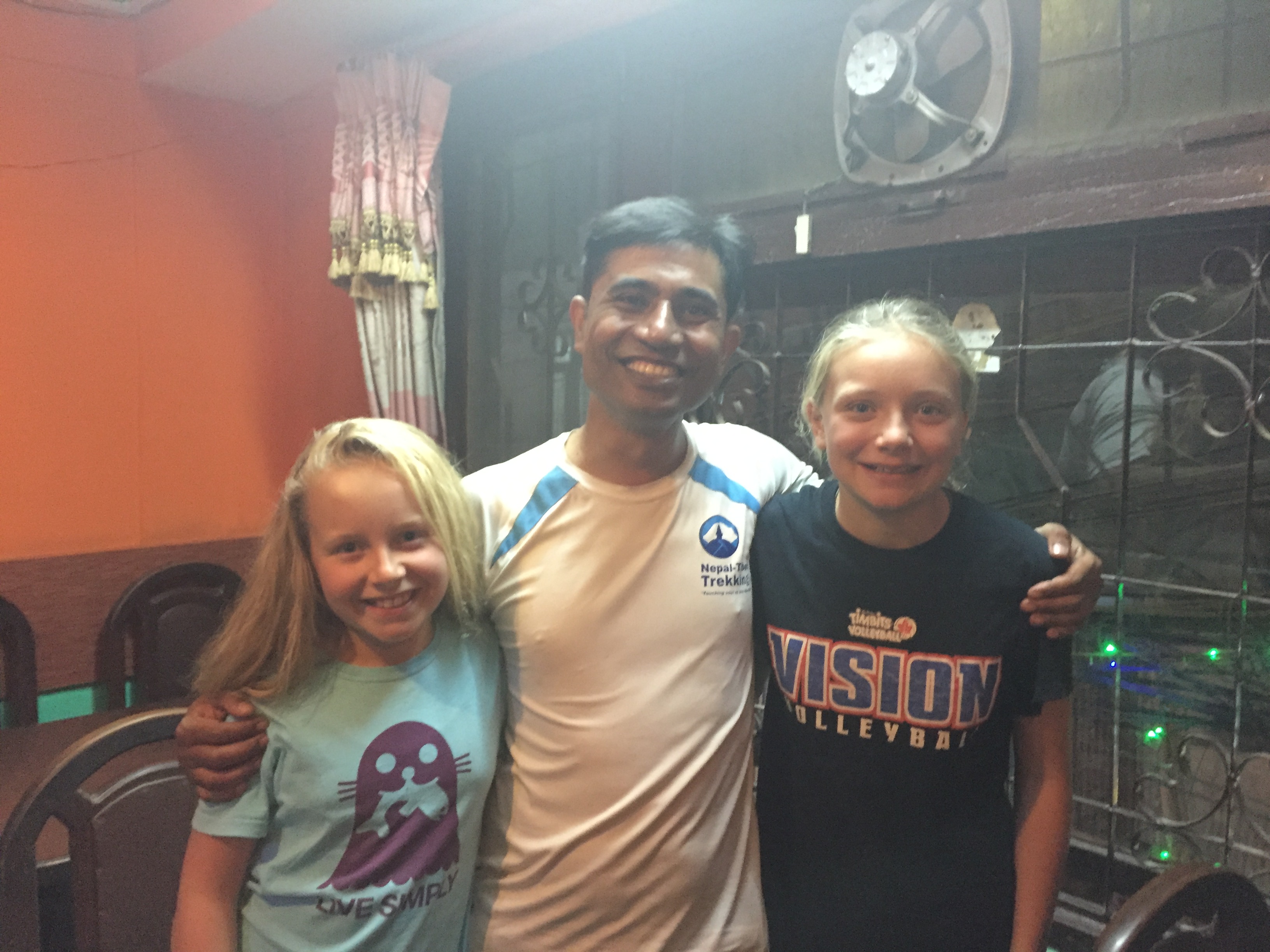
By luck and not a stitch of planning we ended up back in Kathmandu right at the beginning of their second biggest festival of the year, Tihar (also referred to as Diwali). People were dressed in their best, there were lights everywhere and people were singing, dancing and parading in the street. Outside of every store there was incense burning, Mandela’s made of flowers and people ready to give “festival prices” for whatever they were selling. It was exciting to take in all of the activity that seemed to be happening everywhere we turned. Krishna Man has us for dinner in his home with his family. His wife makes a mean Dal Baht!
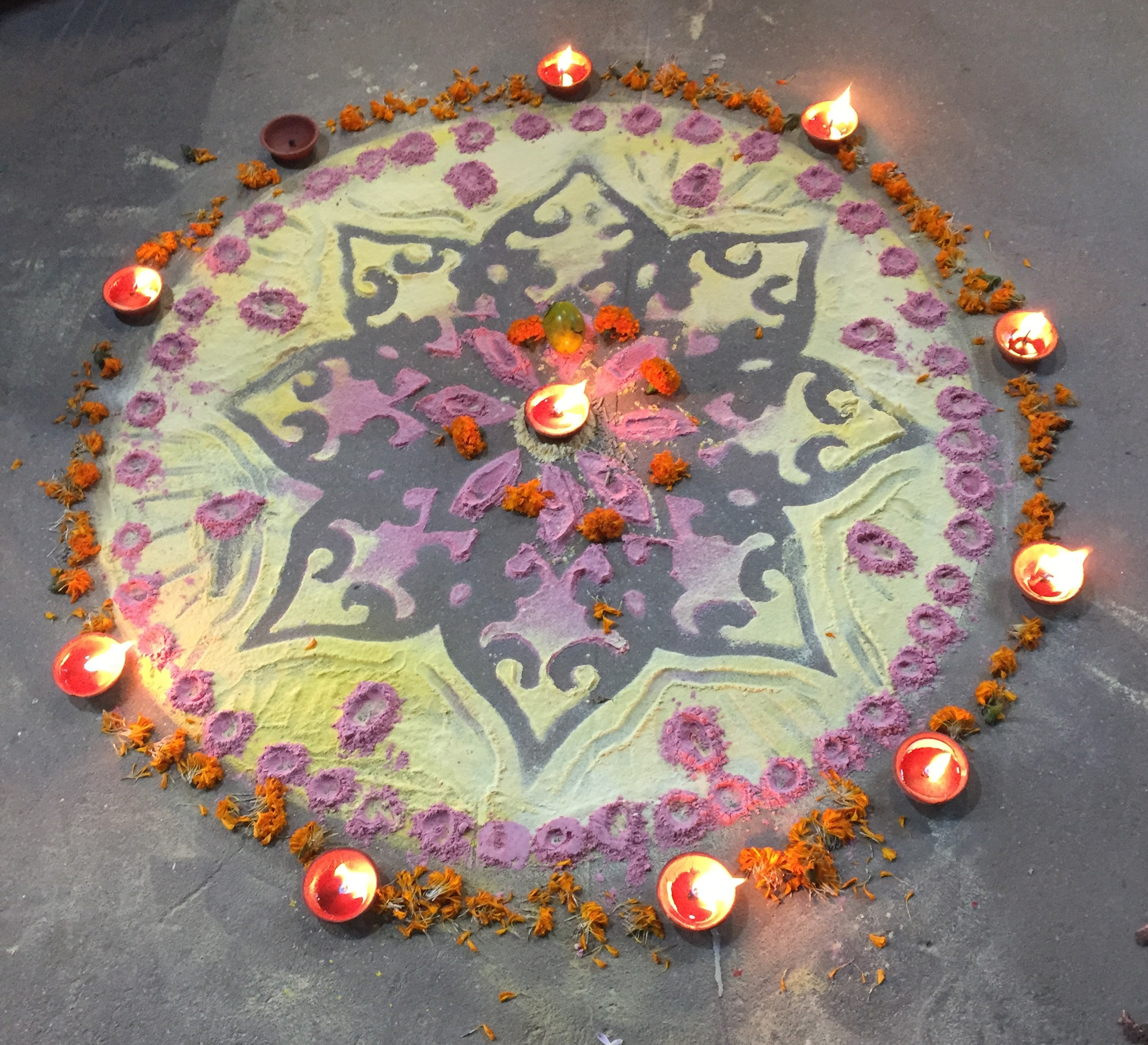
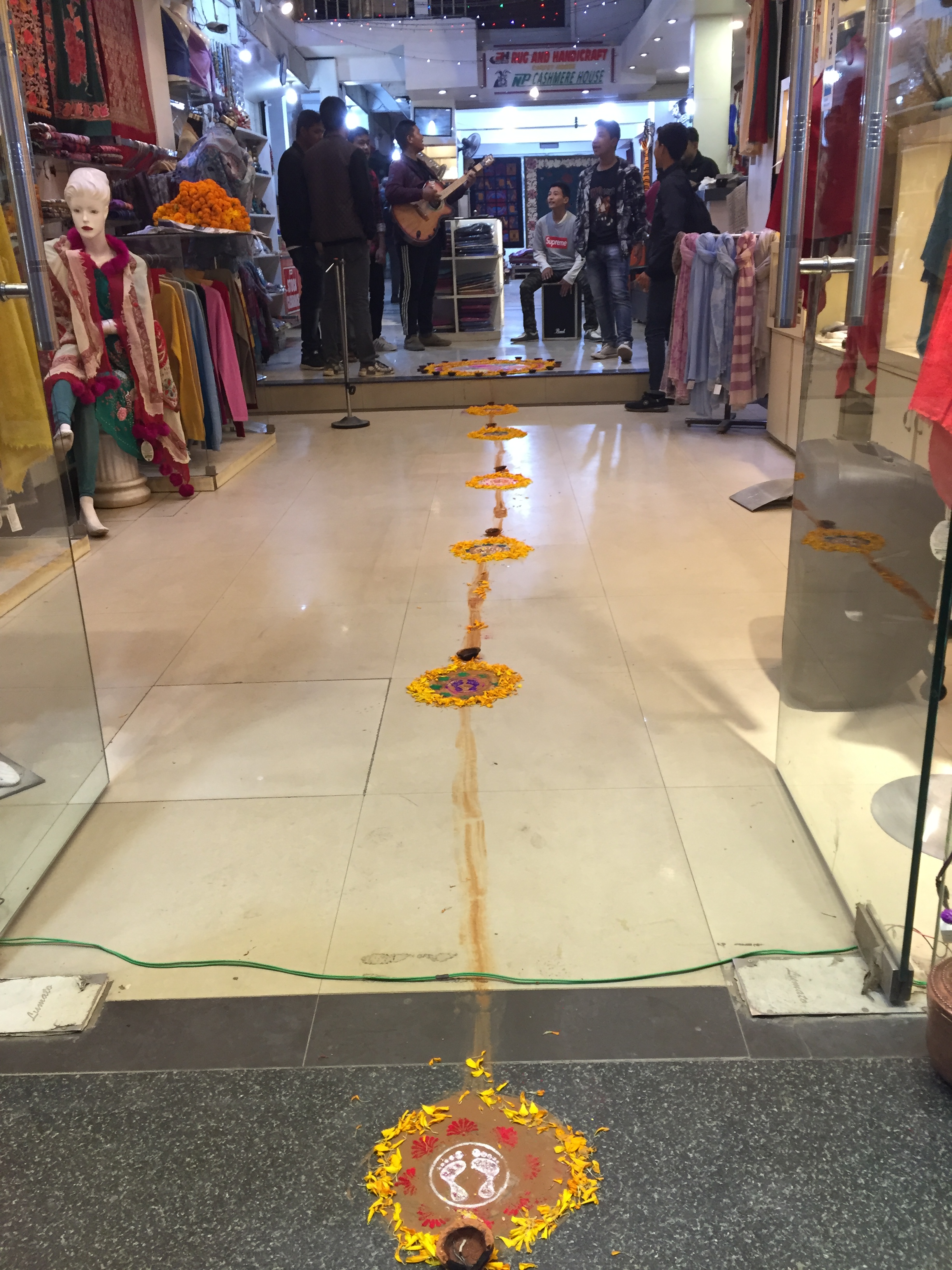
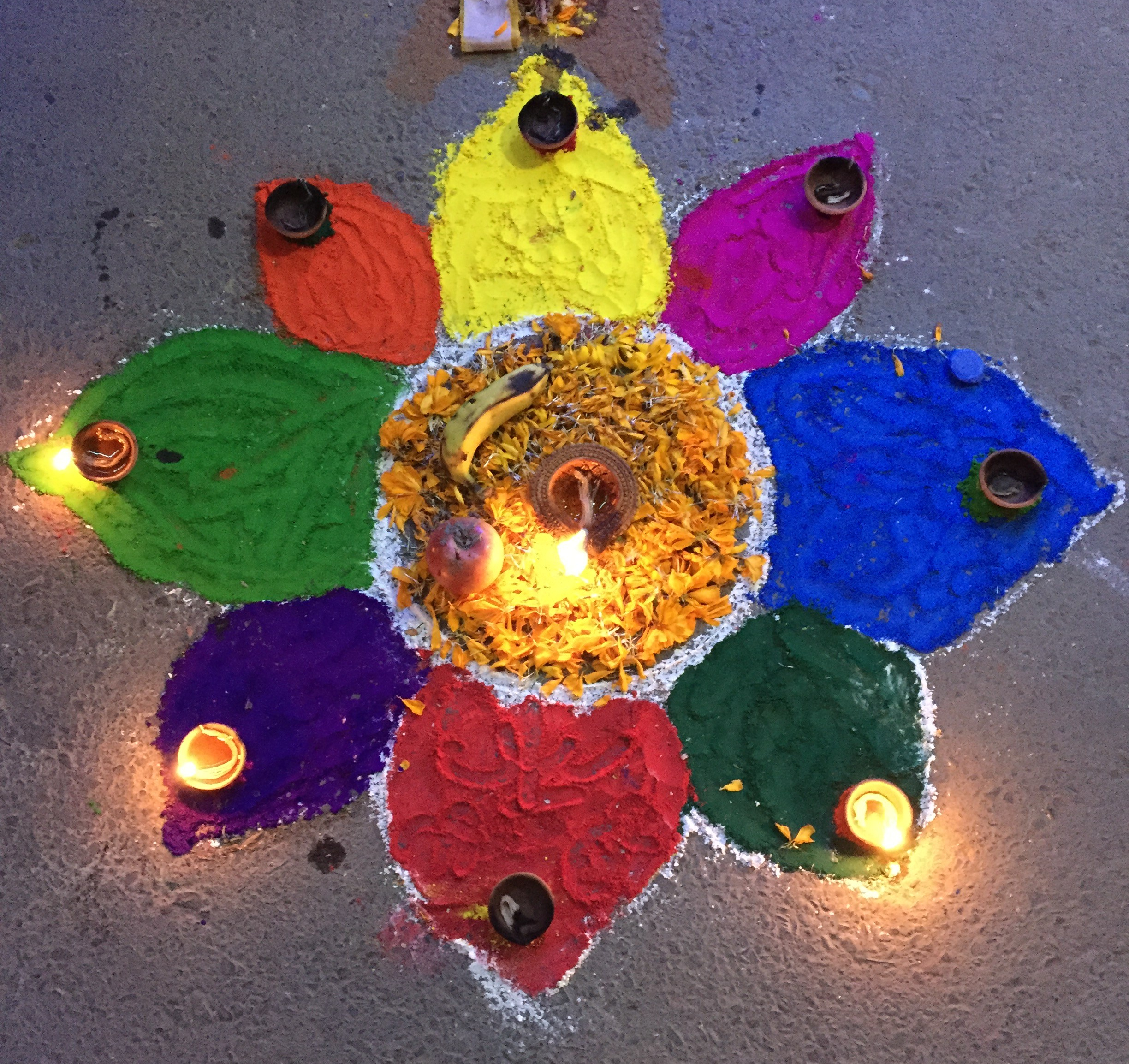

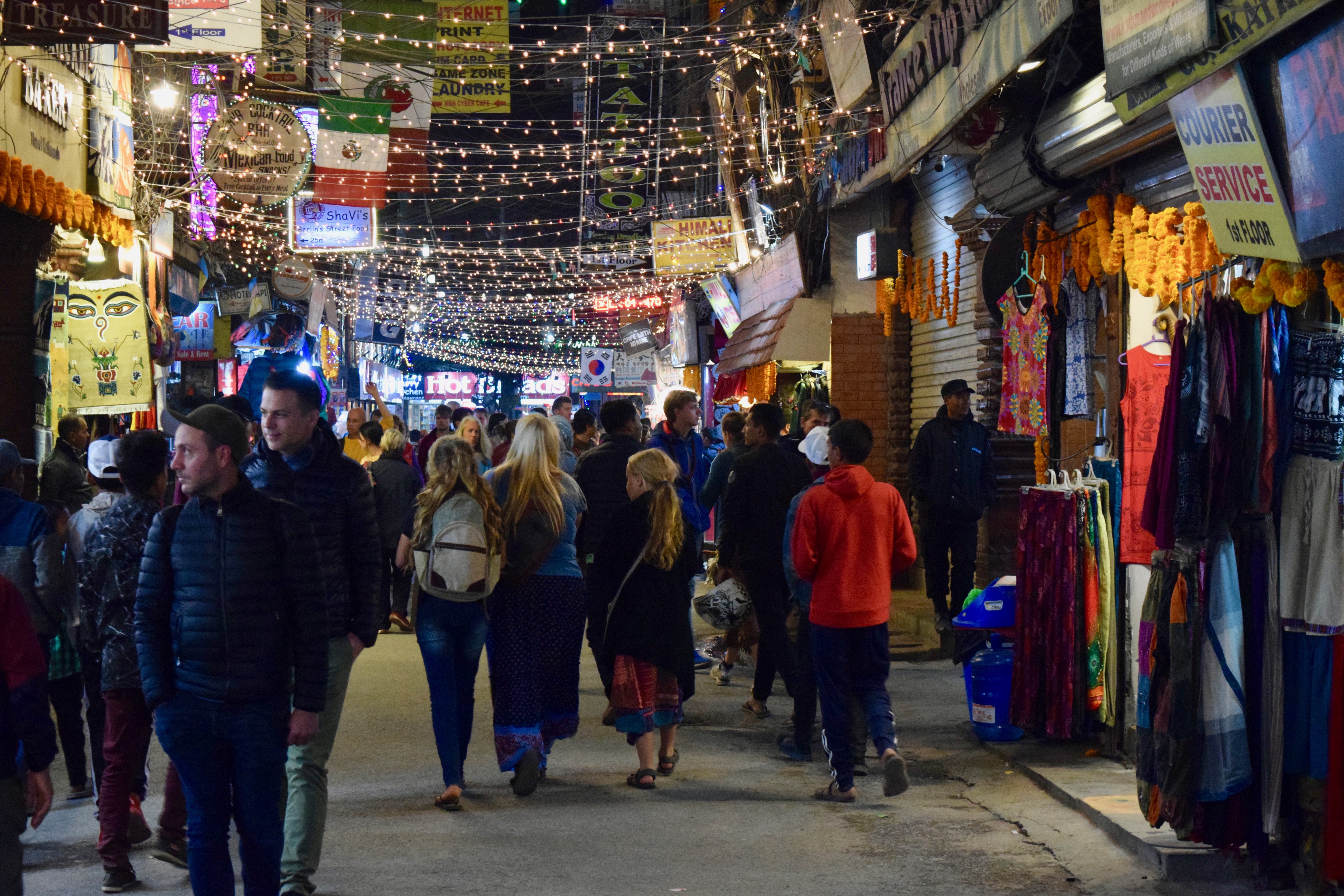
Along with the festival activities we spent the next few days sightseeing around Kathmandu and planning for the next leg of our trip.
The monkey temple was definitely a highlight of our sightseeing in Kathmandu. We caught a cab outside of our hotel and negotiated a price of 300rs to take us there (less than $4CAD). The girls loved watching the haggling we (mostly Mark) did with merchants and cab drivers. They even started doing it themselves for the gifts and souvenirs they bought. It’s expected and welcomed by the Nepali people and always fun.
When we pulled up to the entrance to the temple we were greeted by a rainbow of colours. There were vendors selling all kinds of flowers and coloured powders used for decorating during the festival time. We got chatting with a local man and he said there is always a market set up at that location but because of the festival there were more flowers than usual.
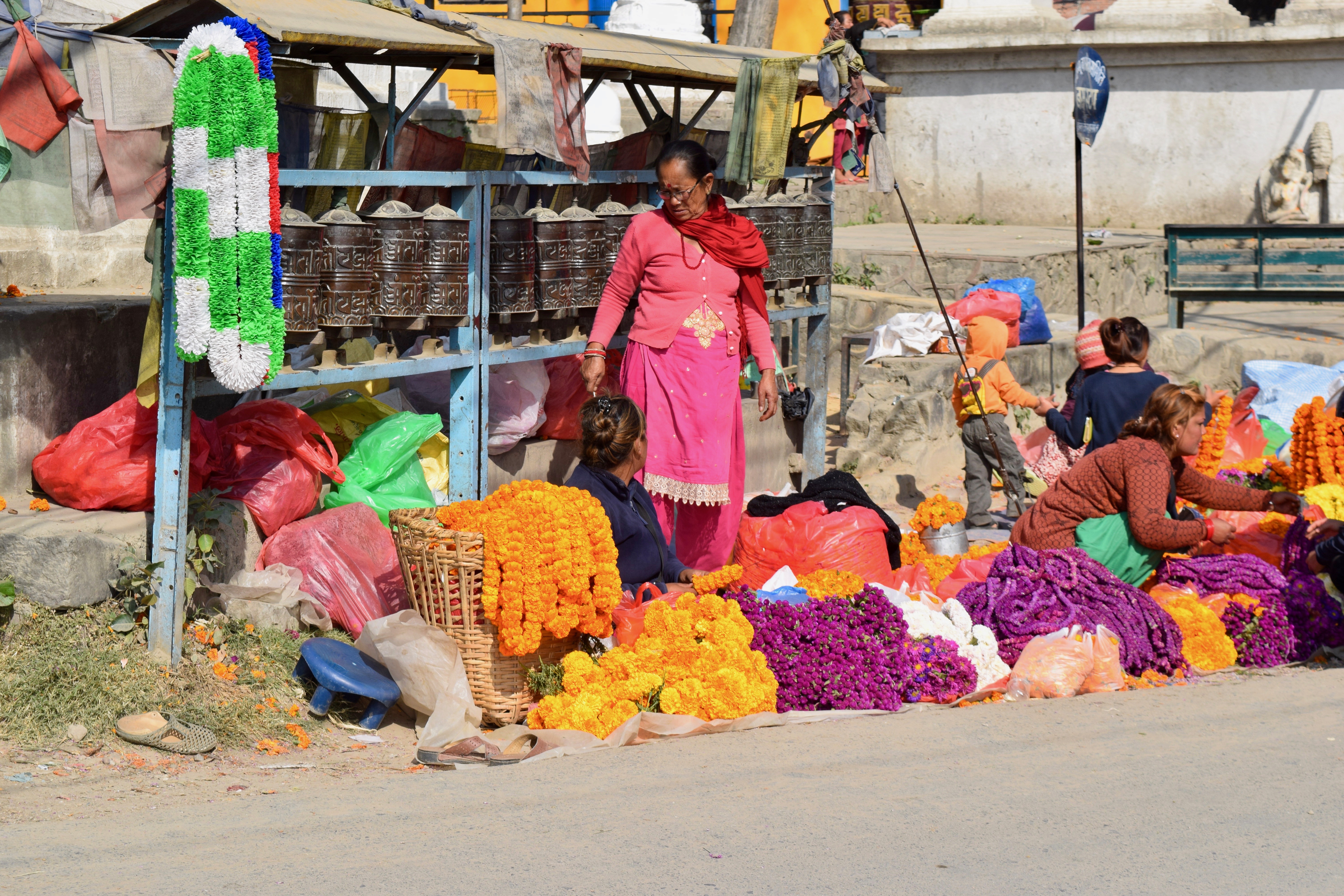

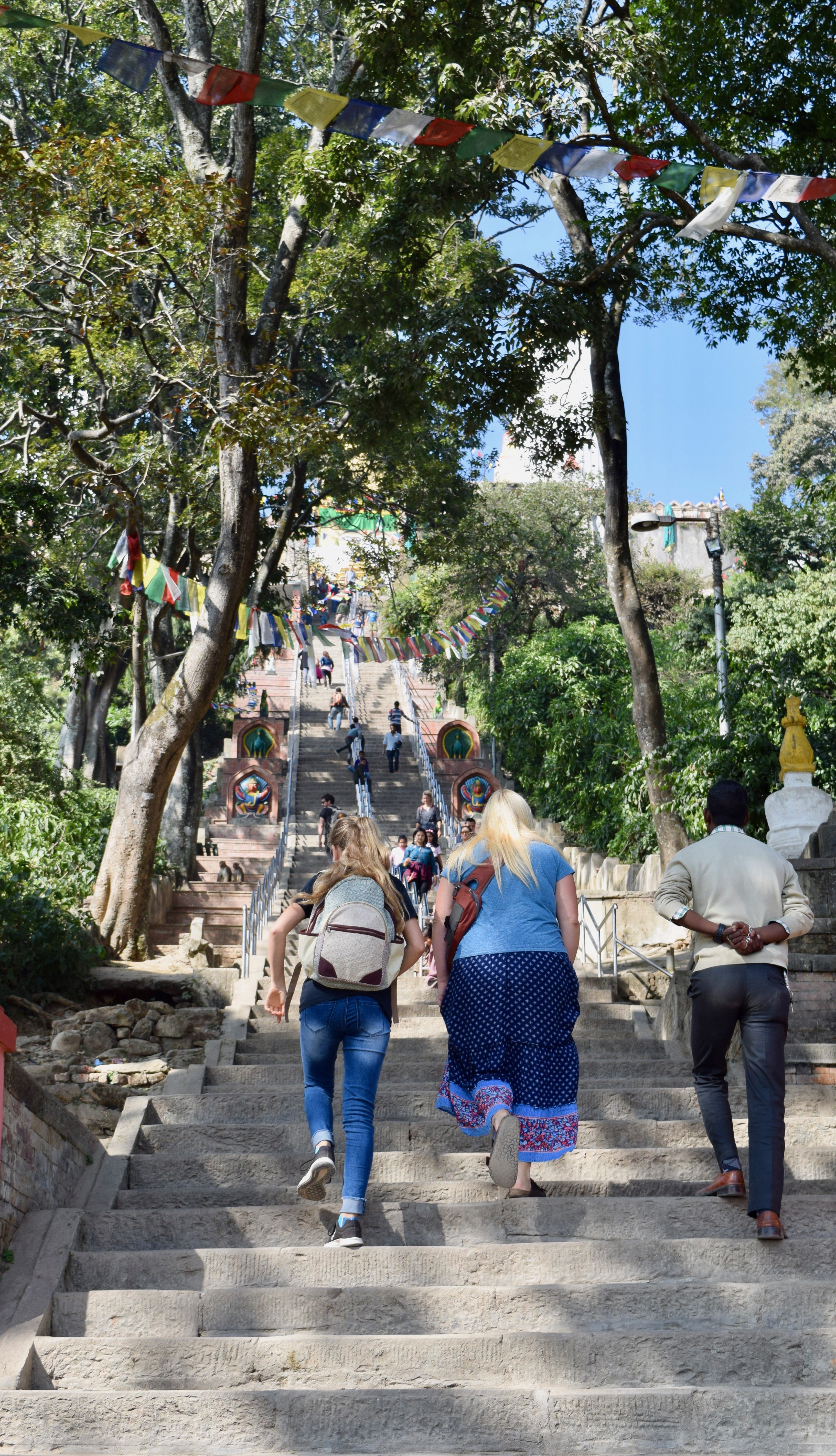
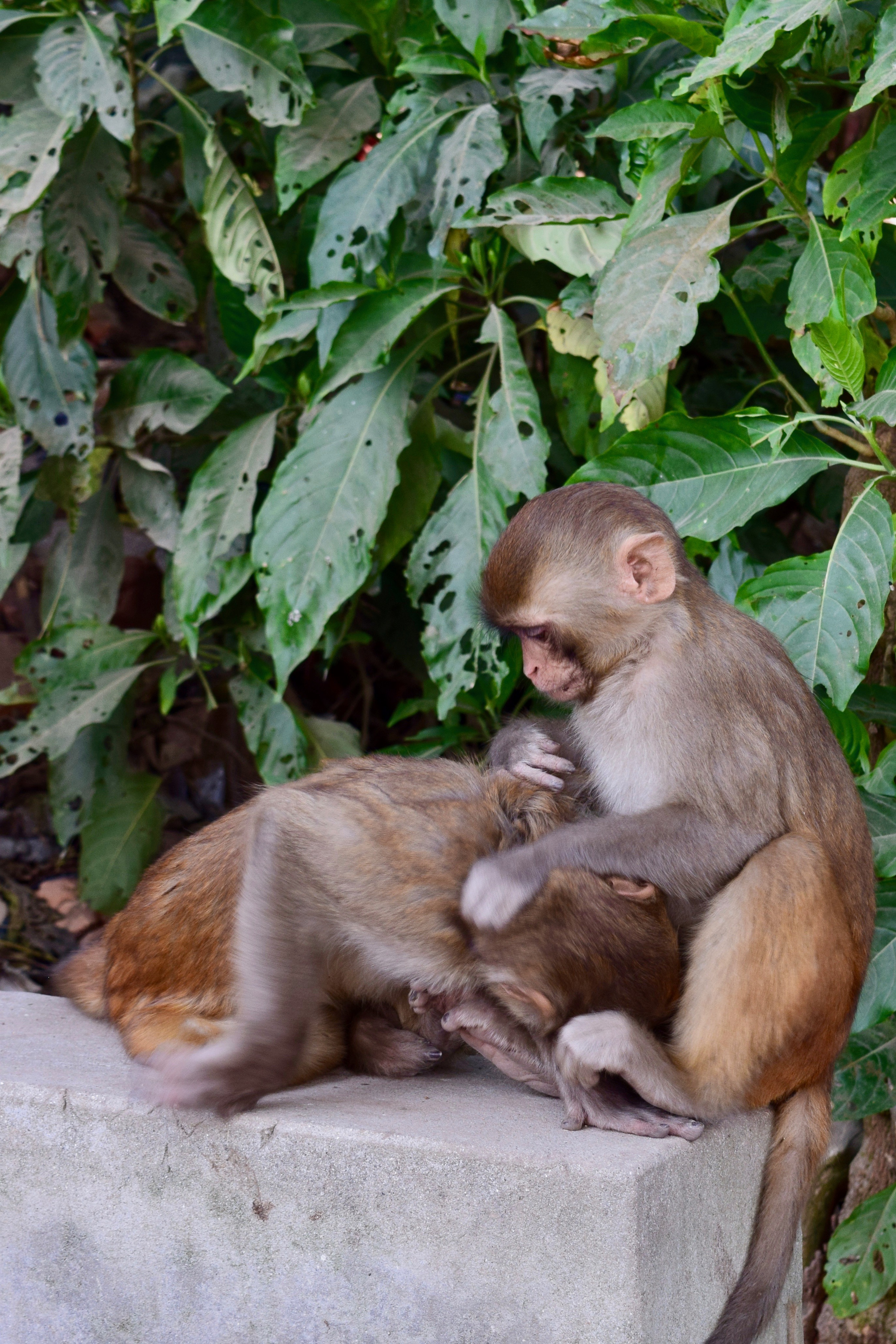
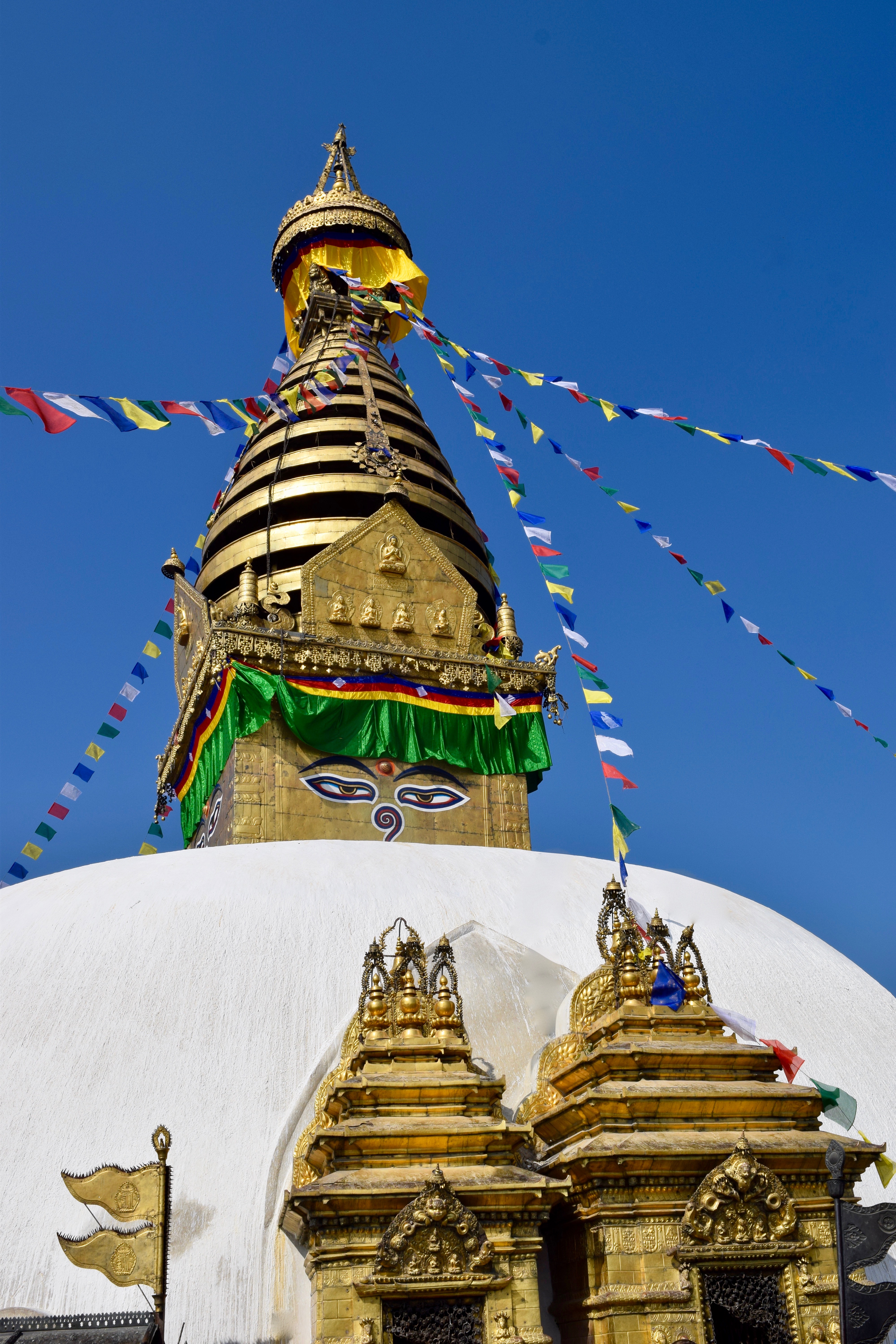
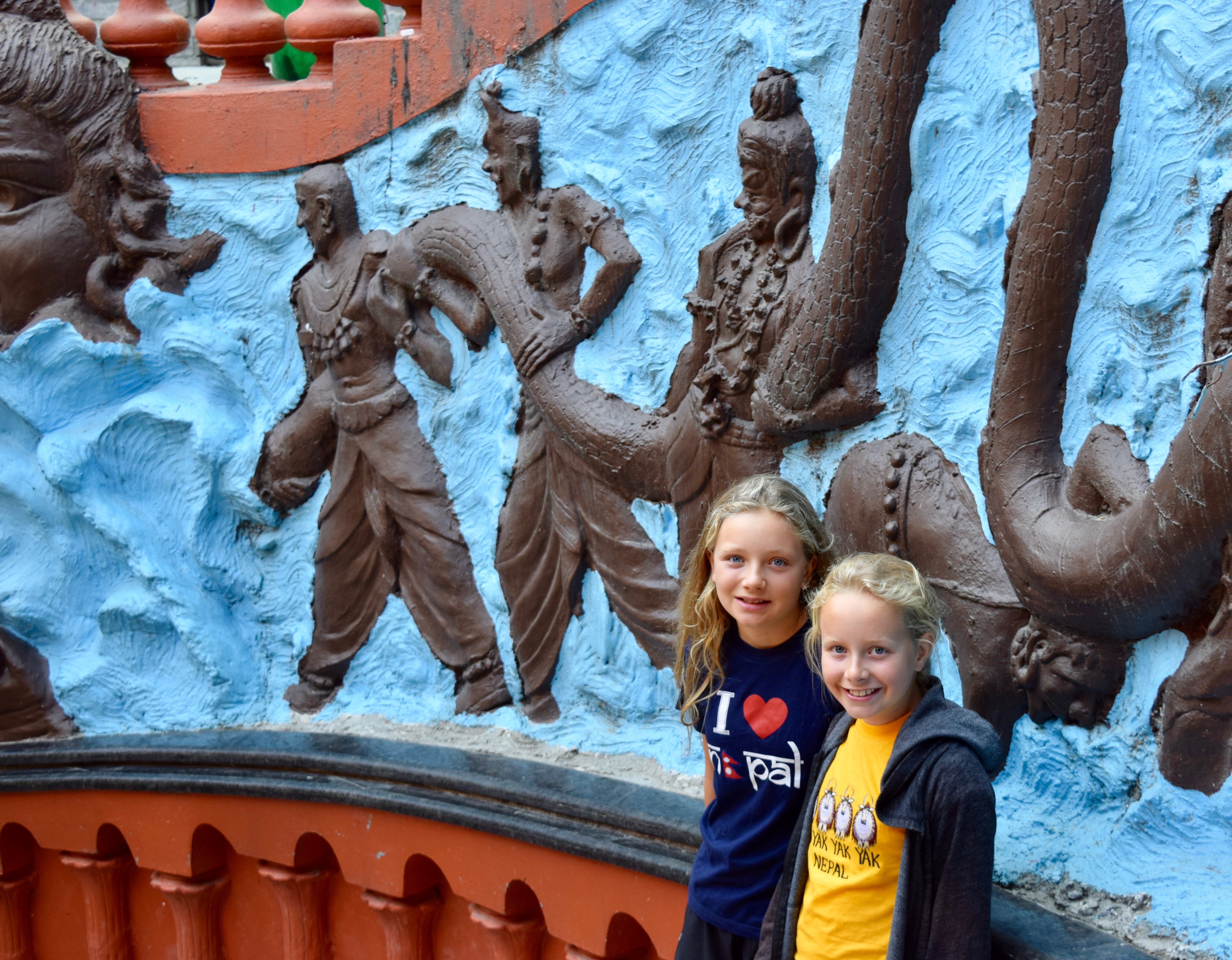
Swayambhunath (known as the Monkey Temple to foreigners) is located on the top of a hill and is used by both Buddhists and Hindus. The sounds of prayer wheels and fluttering prayer flags (horns honking and vendors hawking) followed us up the 365 steep steps to the top. We stopped on the way to watch the monkeys playing, grooming, eating and ummm, making friends (cough, cough). At the top was a giant stupa as well as statues and shrines to both Hindu and Buddhist deities; keeping them company were monkeys and stray dogs. We also visited an art studio for a little lesson on mandalas, how they are created and the different levels of artistry that go into them. I also learned something new….a real mandala is a representation of a stupa from above. Many of the mandalas we were saw in the studio were paintings of the stupa at the top of the monkey temple.

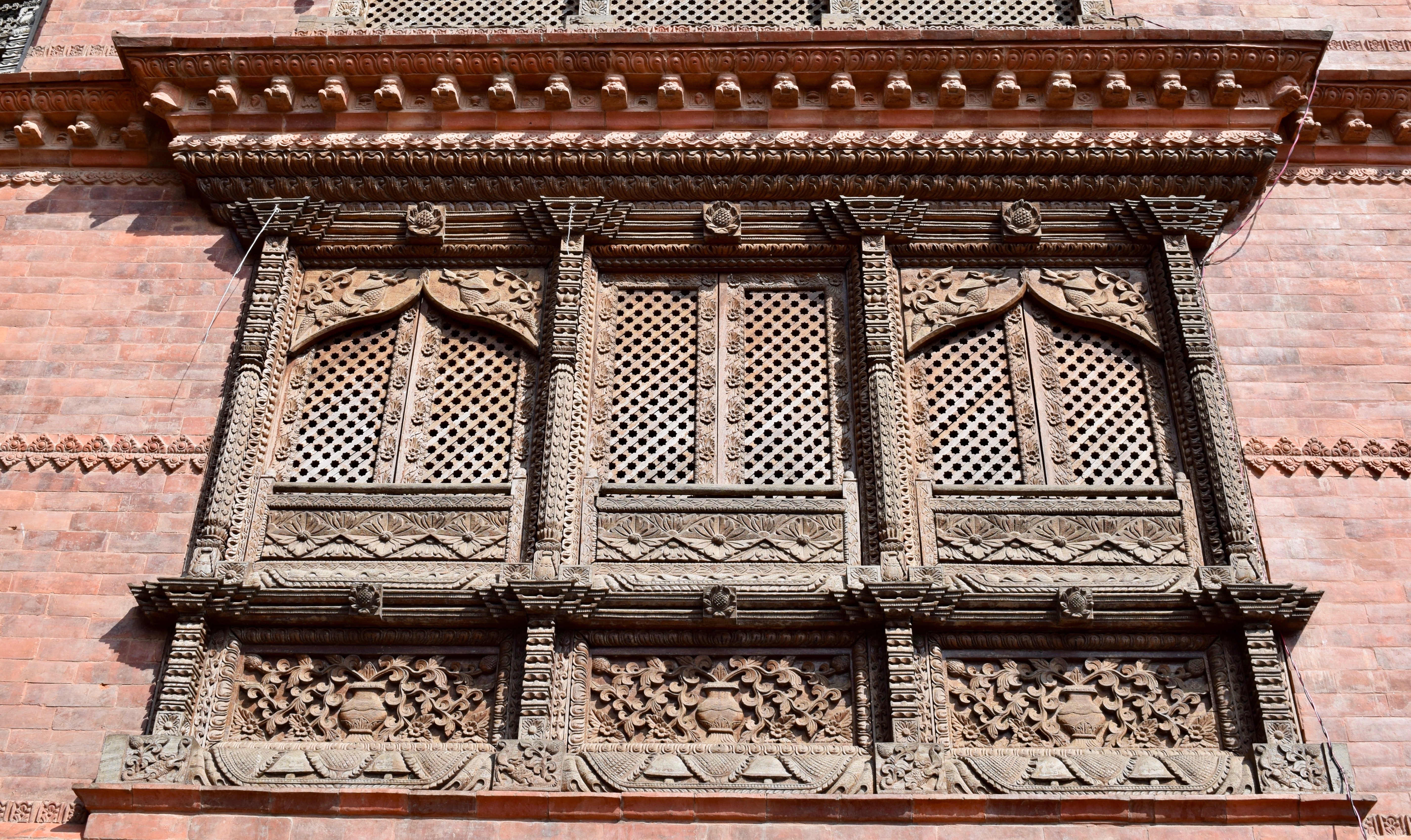
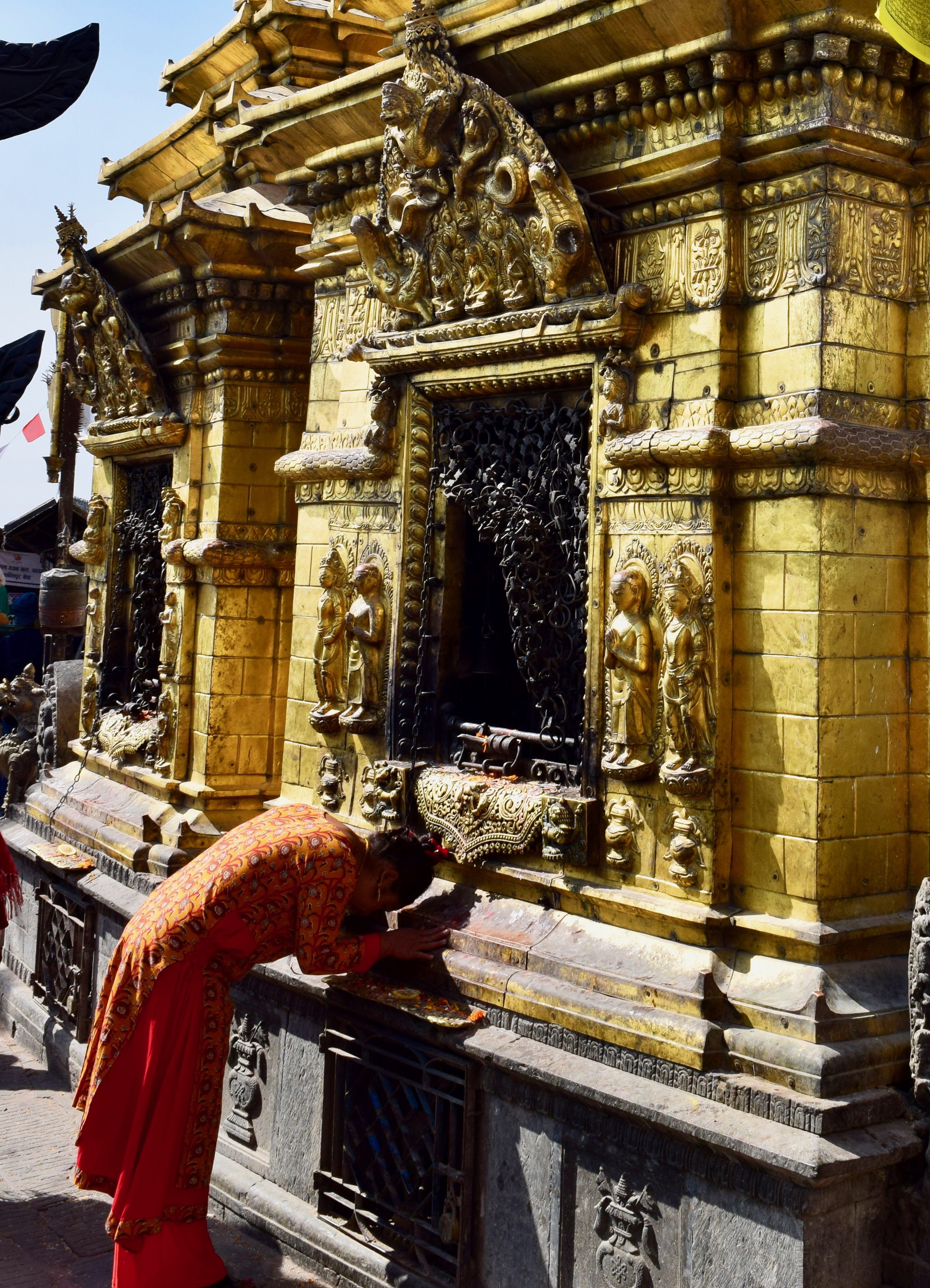
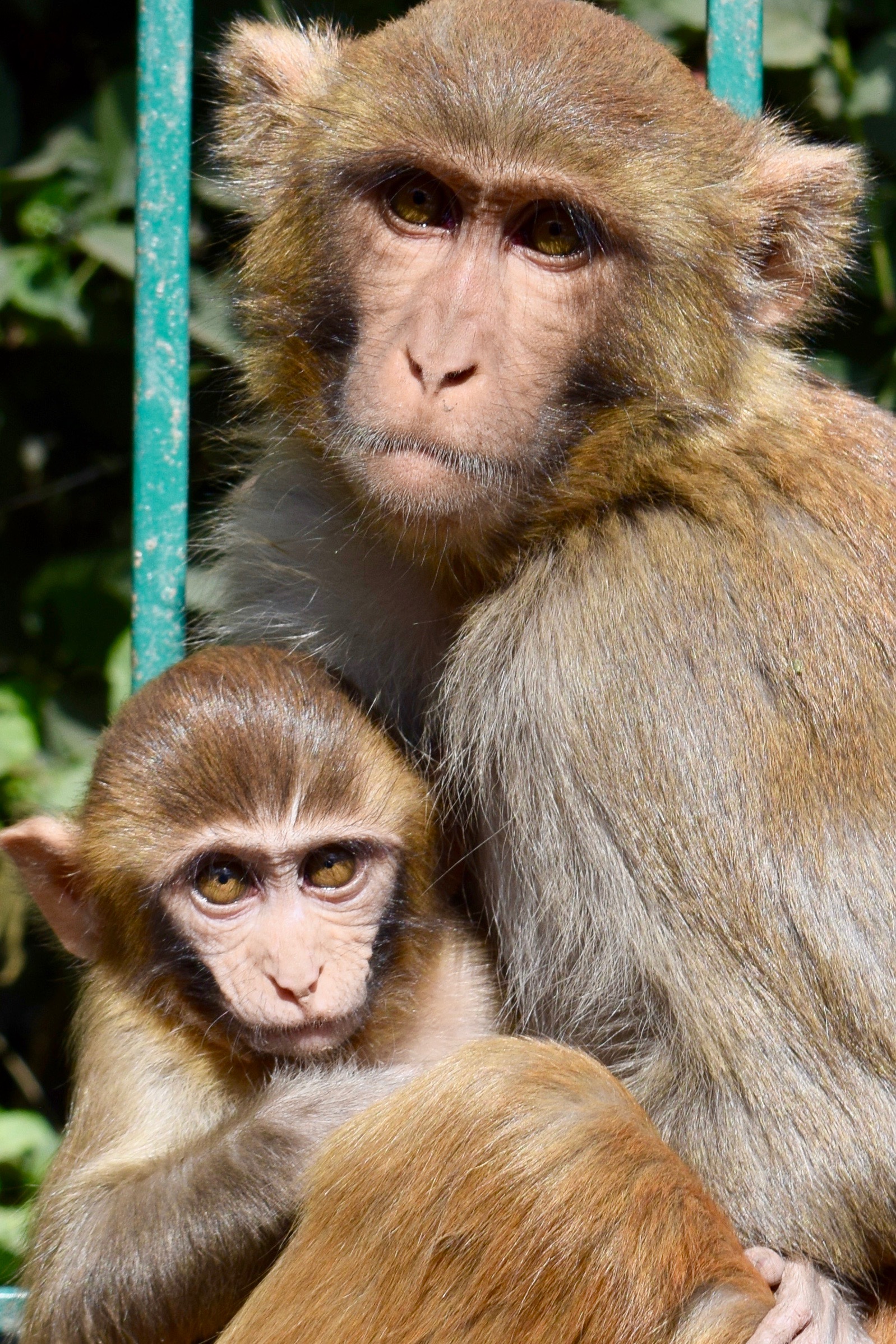
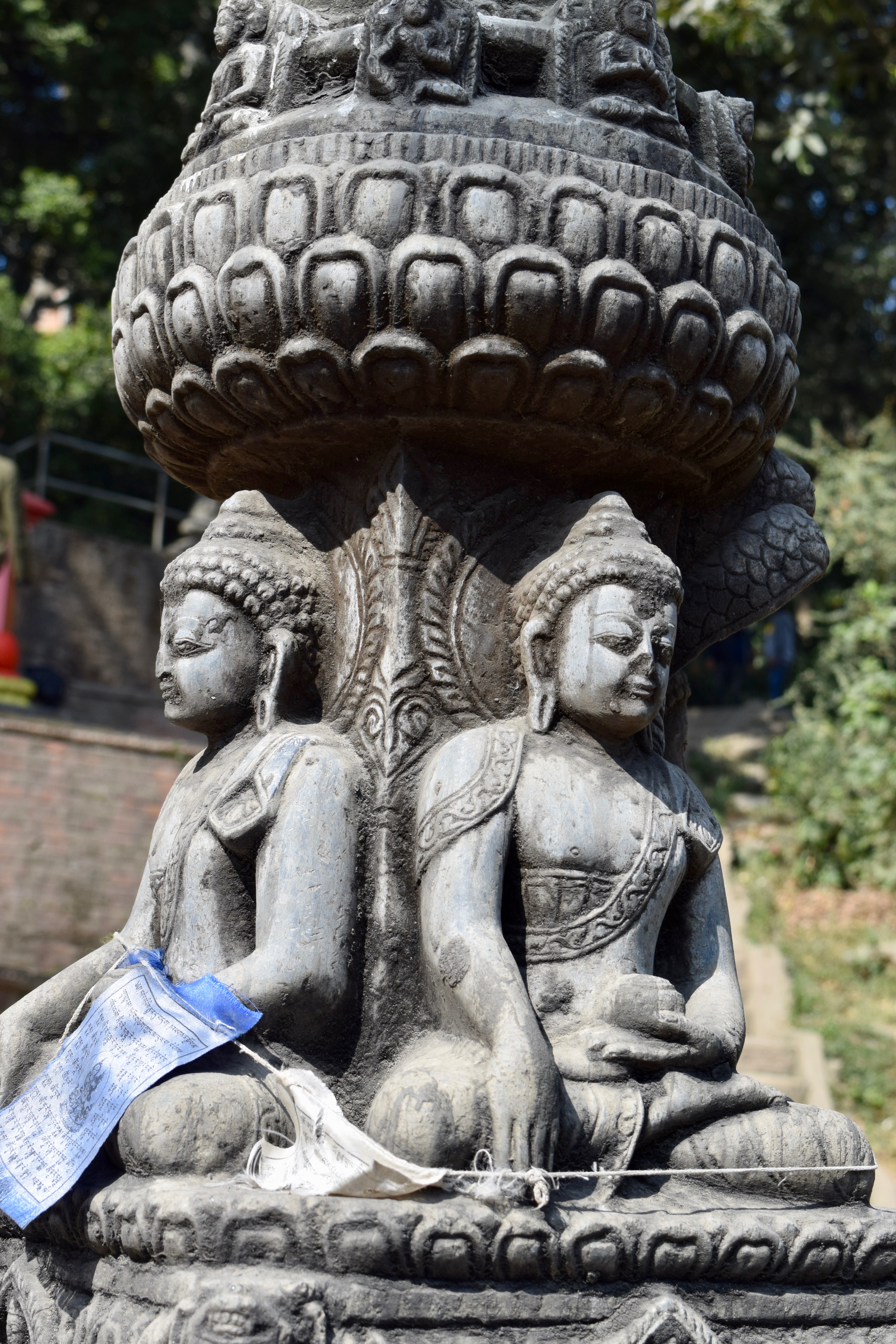

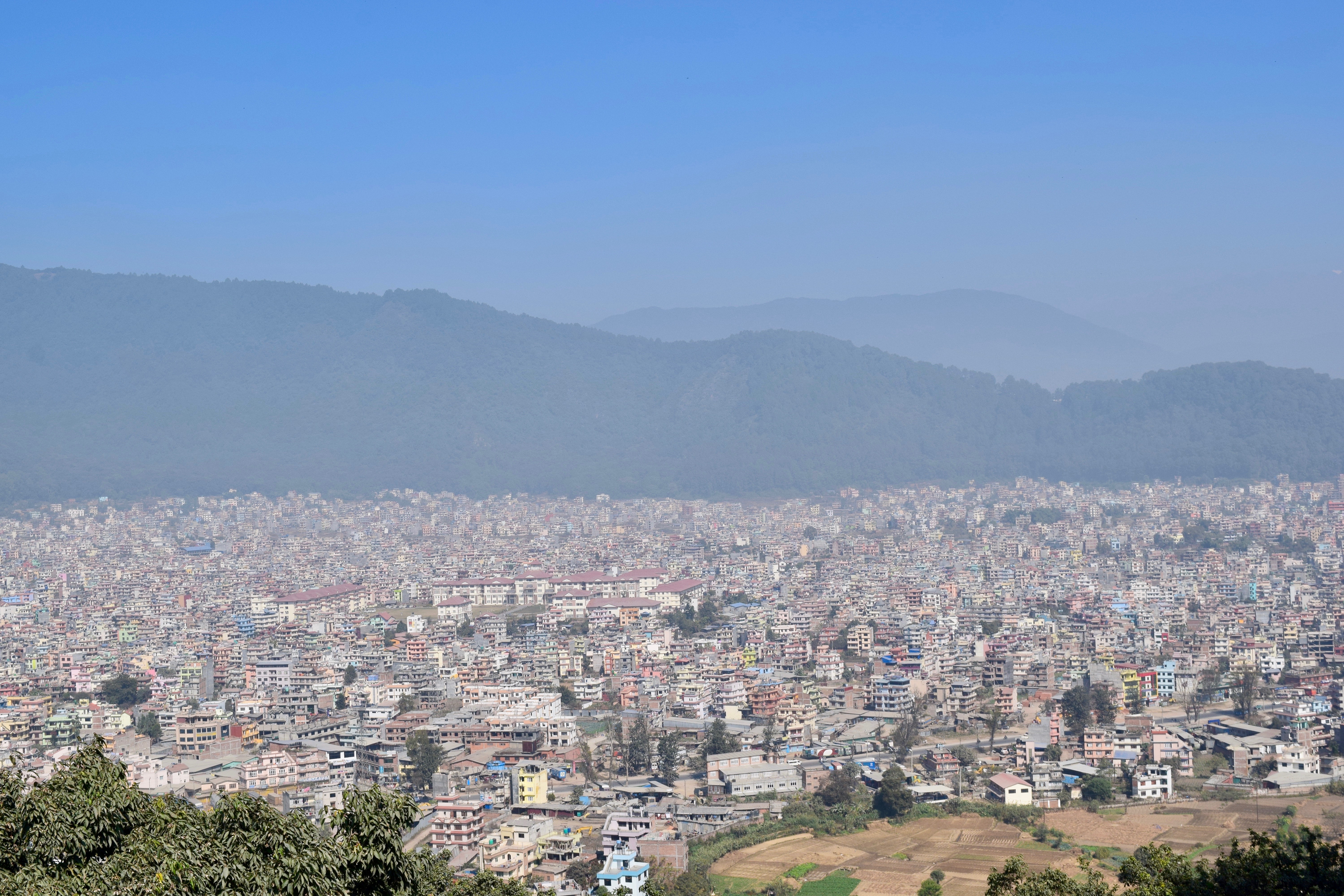
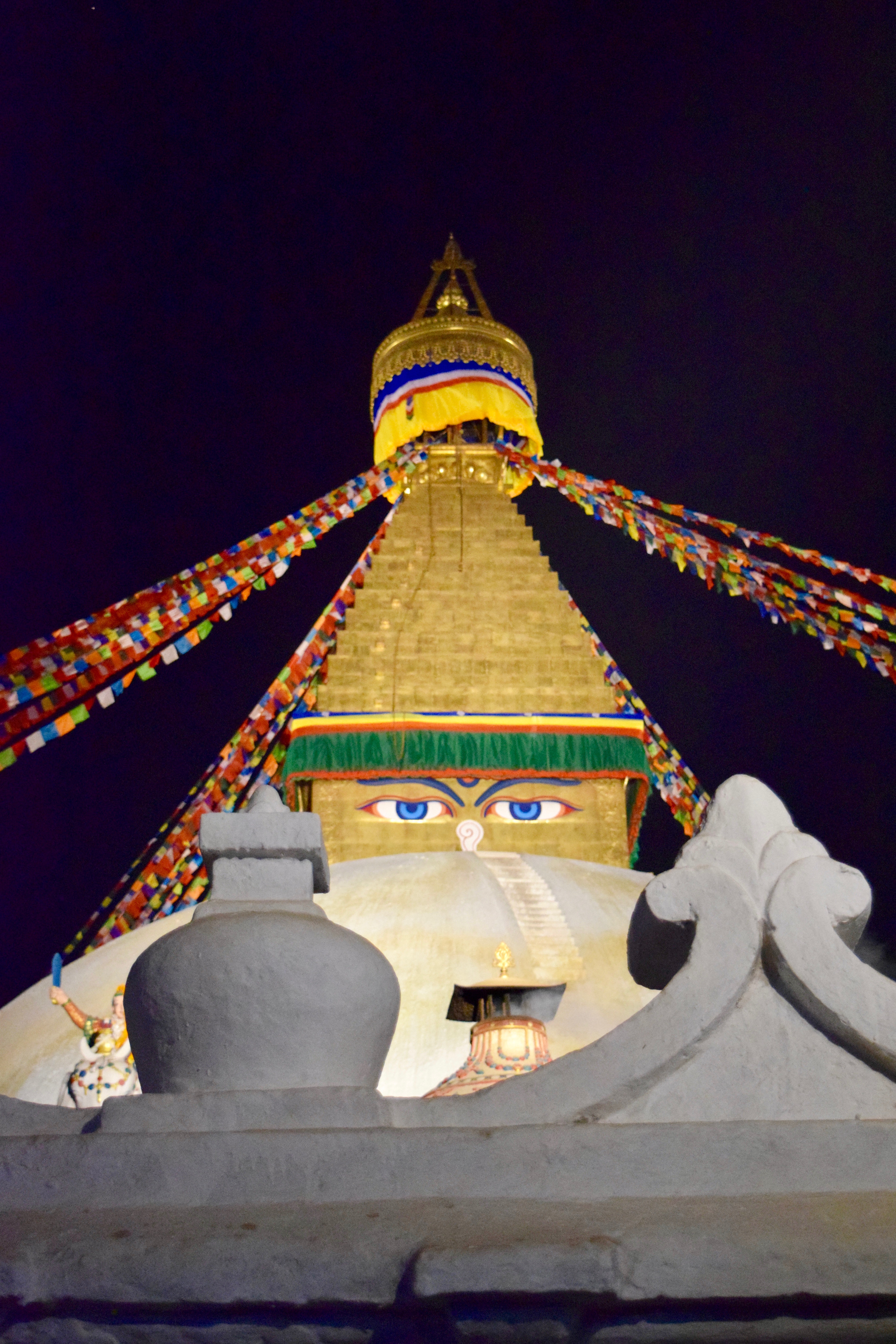
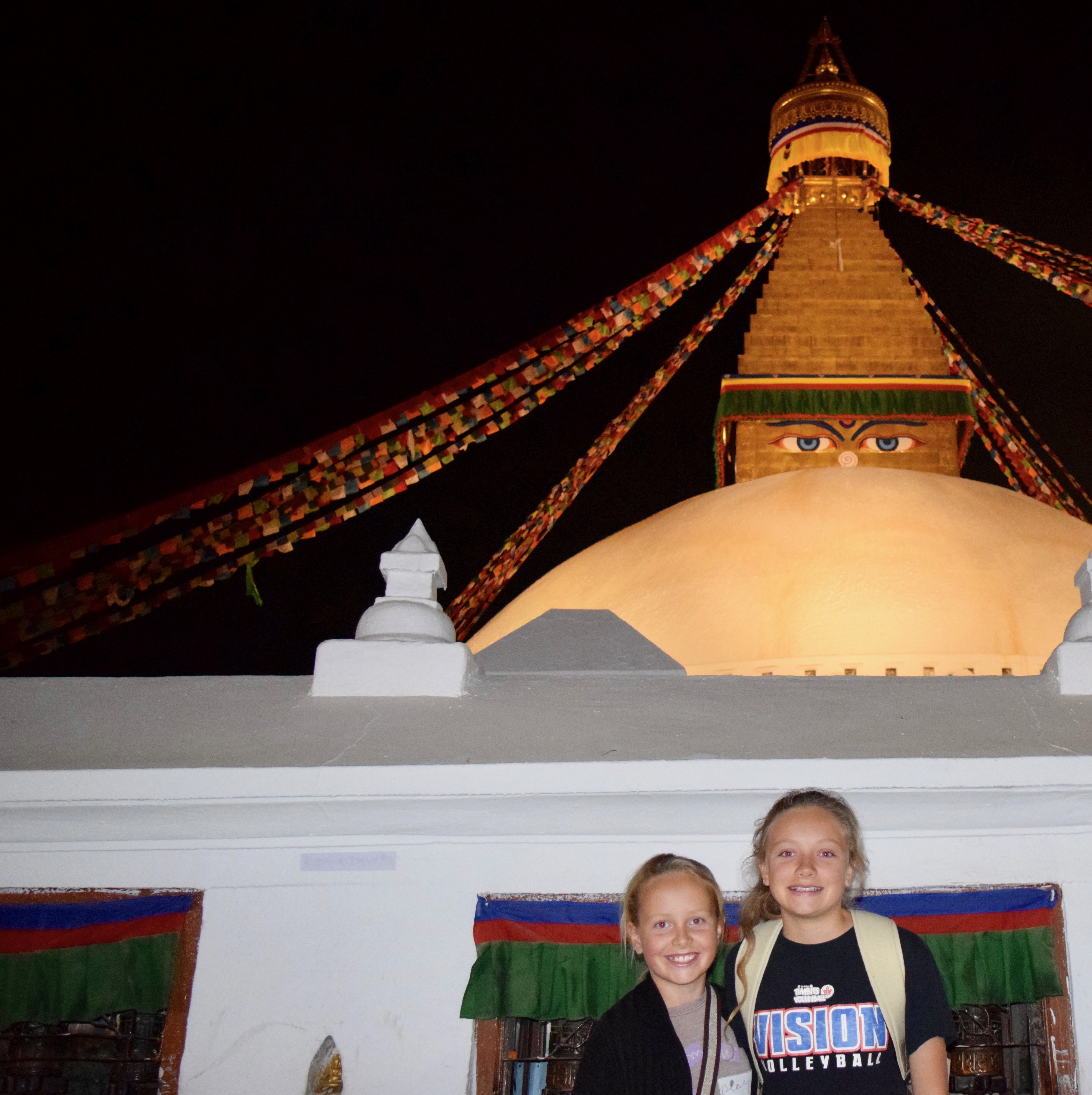
Temples, stupas and monasteries are a big part of life in Nepal, especially during festival time. The Boudhanath stupa is the largest in the Kathmandu valley and lies on an ancient Tibetan trade route. We decided to go in the evening on the suggestion of a worker at our hotel. She said there would be lots of people and a very festive atmosphere. She wasn’t wrong. Our cab ride there took about 30 minutes and it’s was only about 8-9 km from our hotel (an incredibly rough 8-9km). Post earthquake Nepal still has a lot of road work on the agenda. We enjoyed the lights and mood of the people as we walked around the area and drank it all in. Kathmandu is a colourful city, with hardworking and kind people. The 2015 earthquake was a huge blow to the country and there are signs of rebuilding (or the attempt to) everywhere you look.
Nepal-Tibet Trekking was again a great resource to help us decide what we wanted to do with the rest of our time in Nepal. Krishna Man arranged for us to spend some time in Chitwan National Park and Pokhara before we had to leave for India.
After Mark and I stopped in to pick up our laundry the evening before we leaving for Chitwan, we unloaded it and began sorting it for packing. We came across a shirt that wasn’t ours (wasn’t clean and smelled like BO). Also, there were 4 single socks and two missing pairs of pants (mine!!). Mark took the 4 single socks (expensive Smartwool socks) and a written list of missing items and went back. The man promised we would have them back to us, the only problem was we were leaving the next day. The staff at the Royal Penguin said he could bring the items there and they would keep them for us until we returned the following week. Good thing we were headed to the jungle and I wouldn’t need pants!! (UPDATE: We never saw any of the items again).
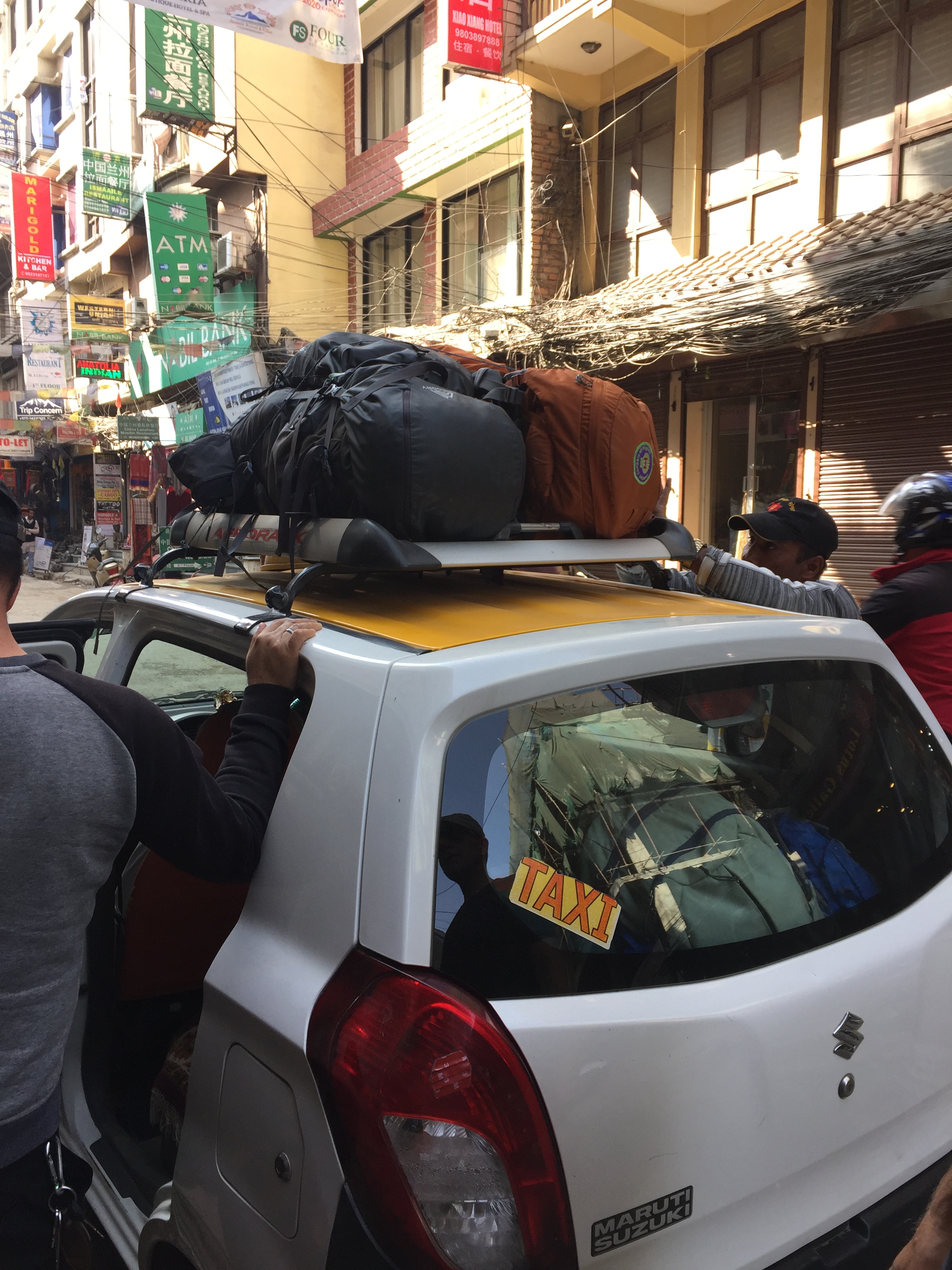
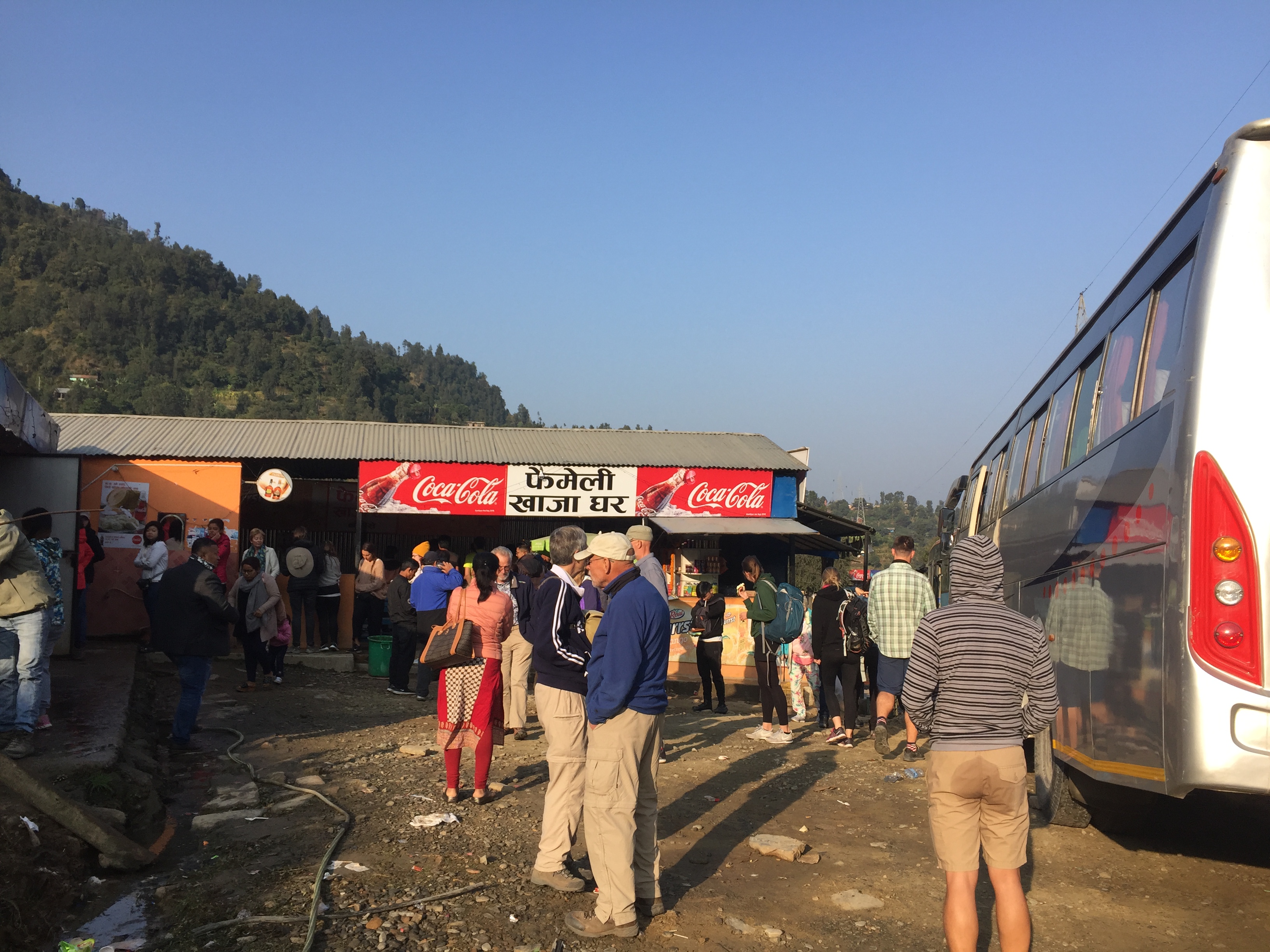
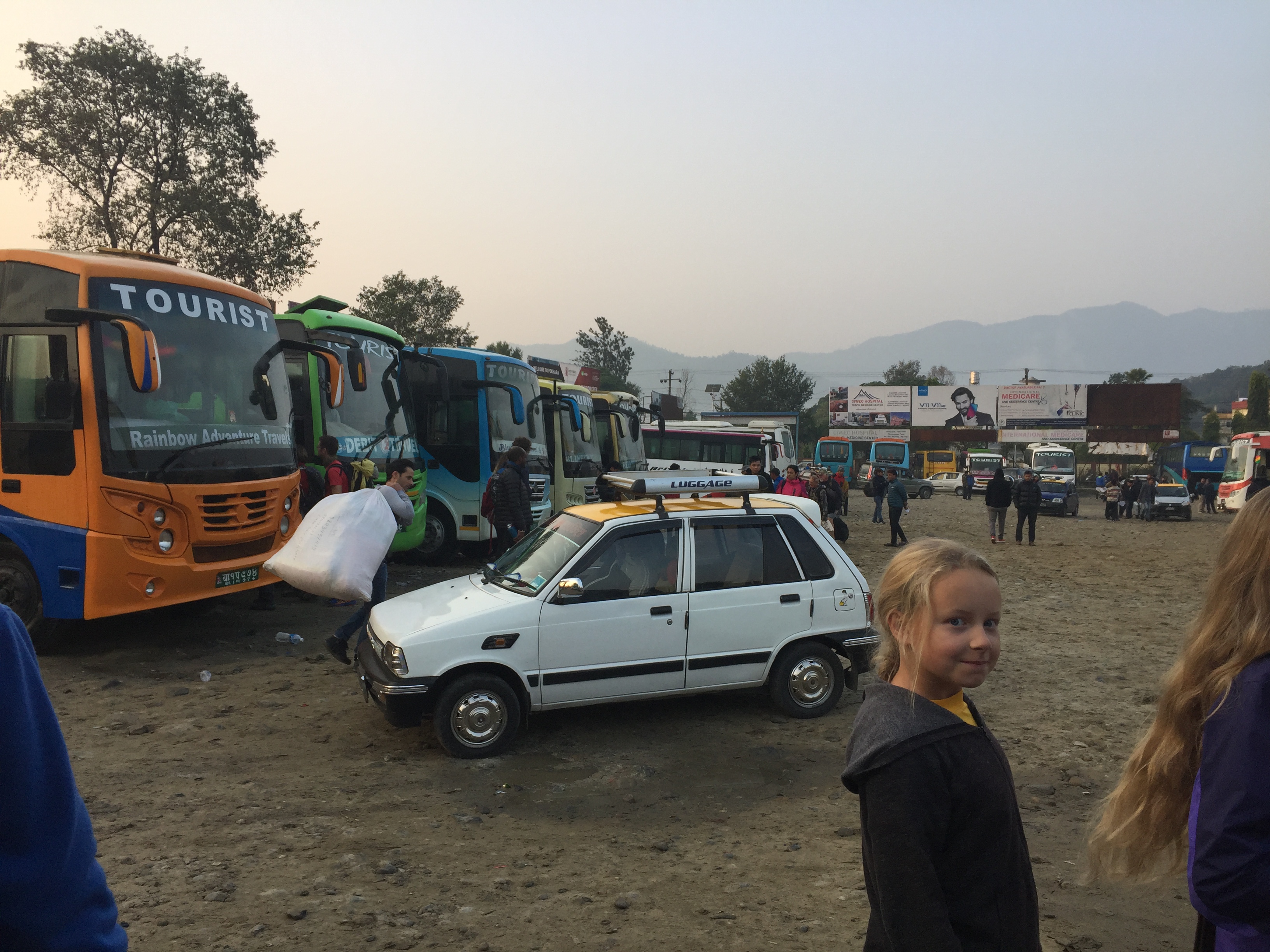
Friday morning we headed to the bus station (by station I mean busses lined up along the side of the road with no signs or indication of where they were going) bright and early to catch our ride to Chitwan. 6 hours, probably 15 stops (to let people off and on) and 2 bathroom/food breaks later we arrived in the steamy jungle.

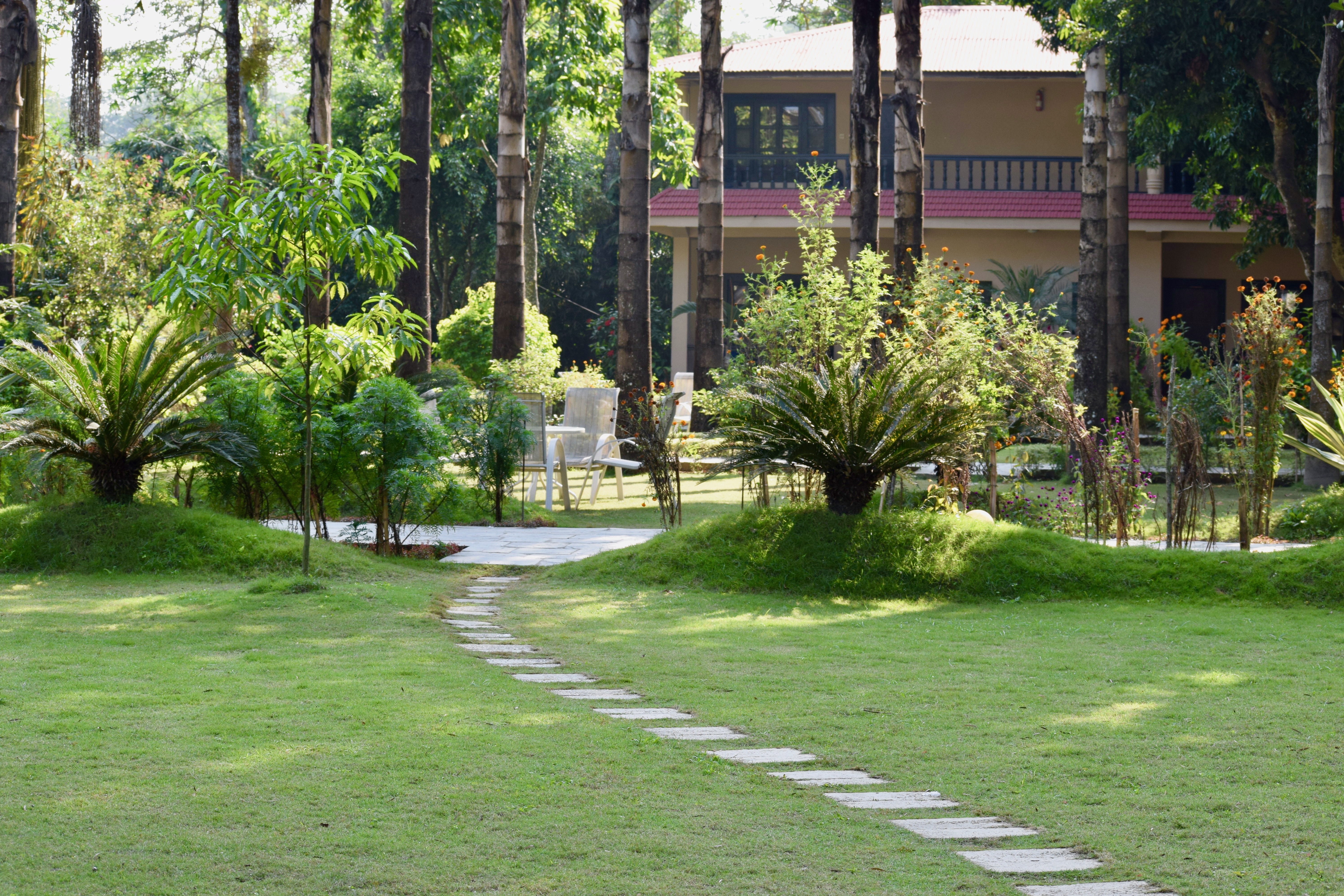
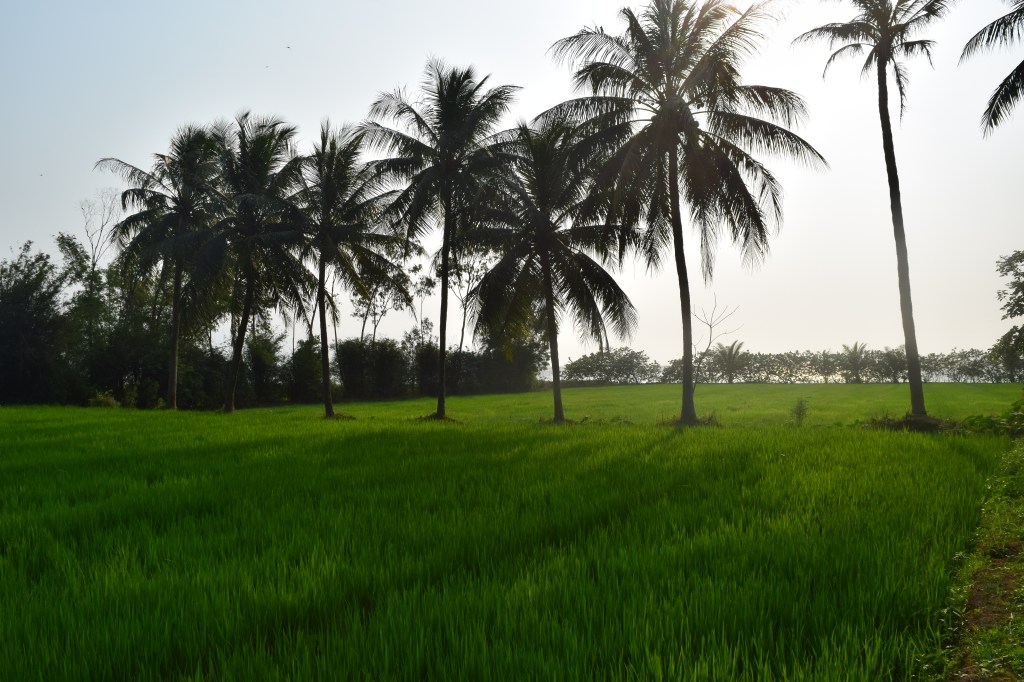
In Chitwan we were loaded into the back of a truck (there were benches to sit on) and carted away down a bumpy, dusty road to our hotel. I wasn’t sure what to expect when we arrived as we wound our way through the village. I was picturing rustic, very rustic. We continued down a road, passed a couple of elephants under a shade cover. We all looked at each other with our mouths hanging open. We were so close we could have touched them. These were not wild elephants (more about that later). The elephant distraction caused me to miss our entrance to the hotel. Gone were the dusty roads. Palm trees, lush plants, green grass and perfectly manicured grounds surrounded us. A pool glimmered off to the right which had the girls ready to drop everything and jump in. Hello Hotel Parkland!!

Our guide for the weekend, Babu, gave us the details of our stay and some of the safety rules; we were literally in the middle of a jungle so wandering around off property alone or at night was not a good idea.
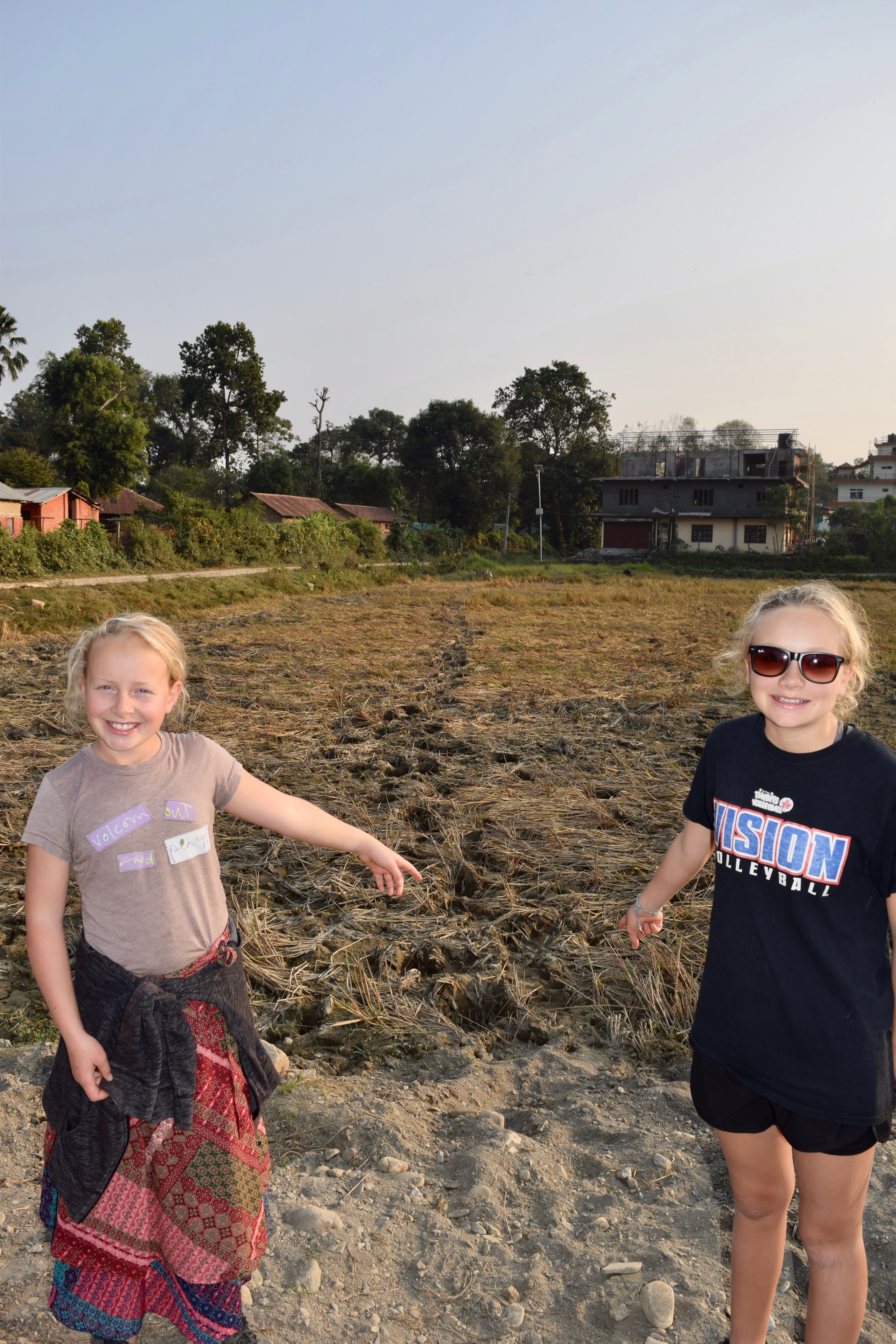
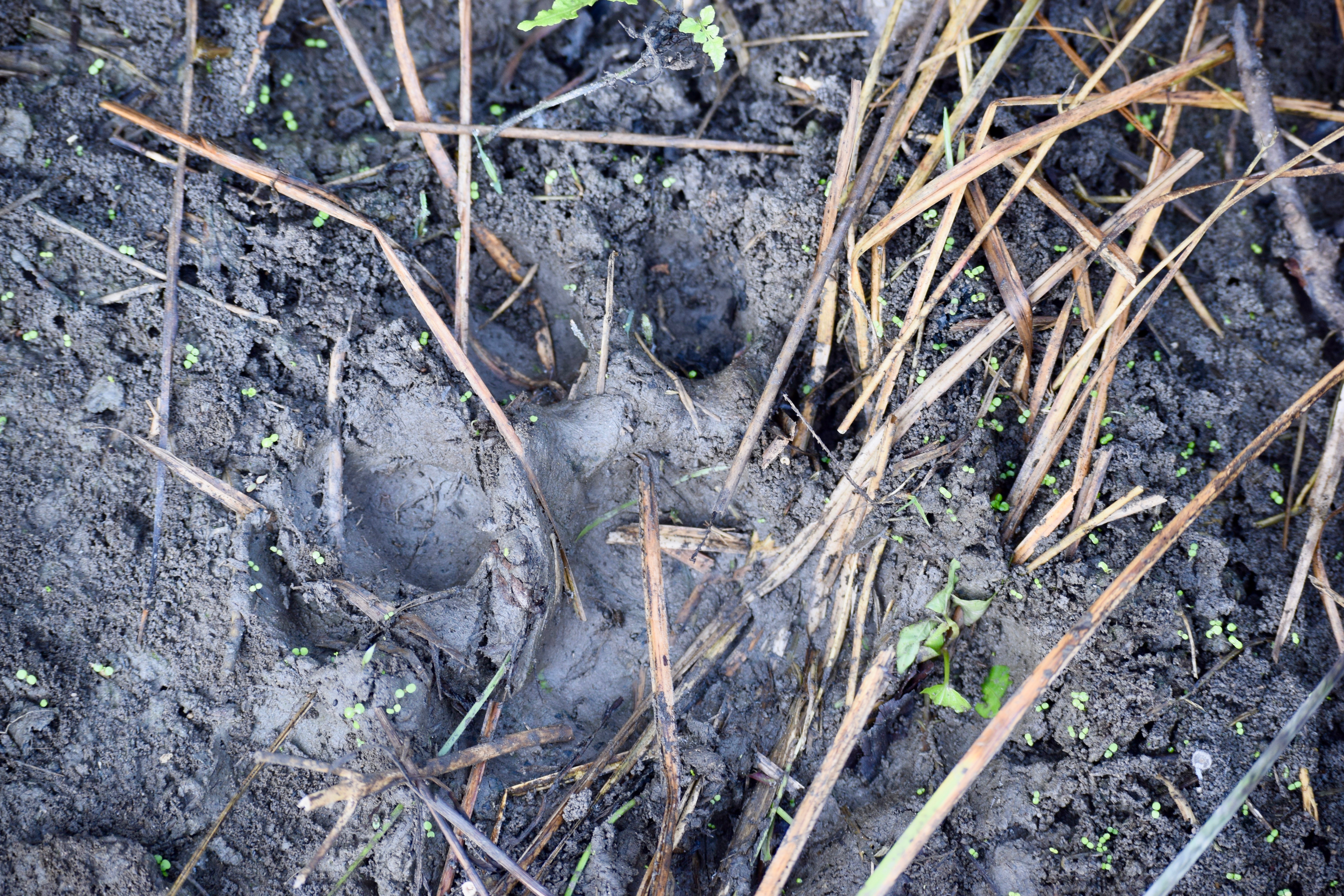
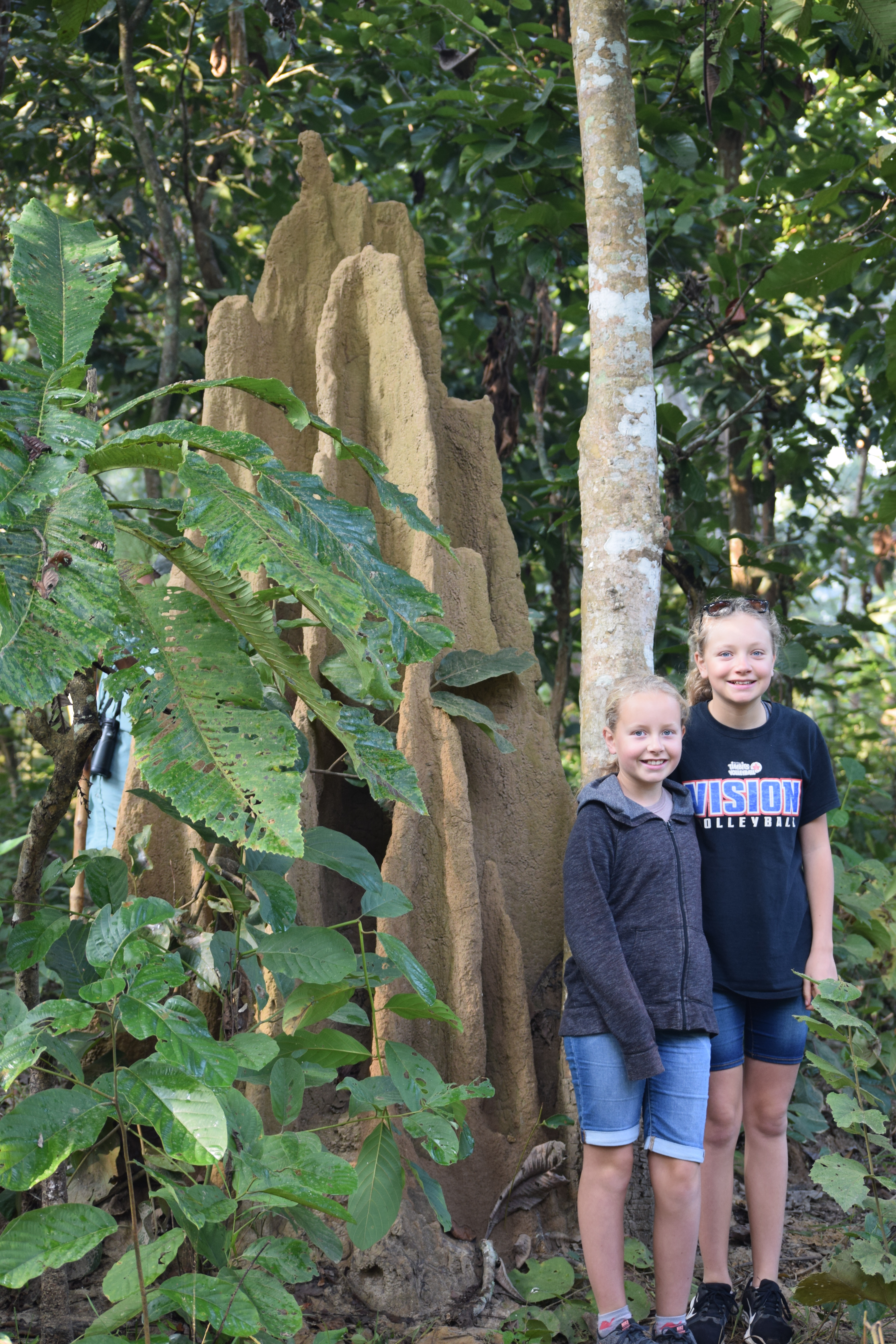
After lounging by the pool for the afternoon Babu took us on a walk into the jungle. We saw rhino and tiger prints, lots of birds and elephants (not wild).


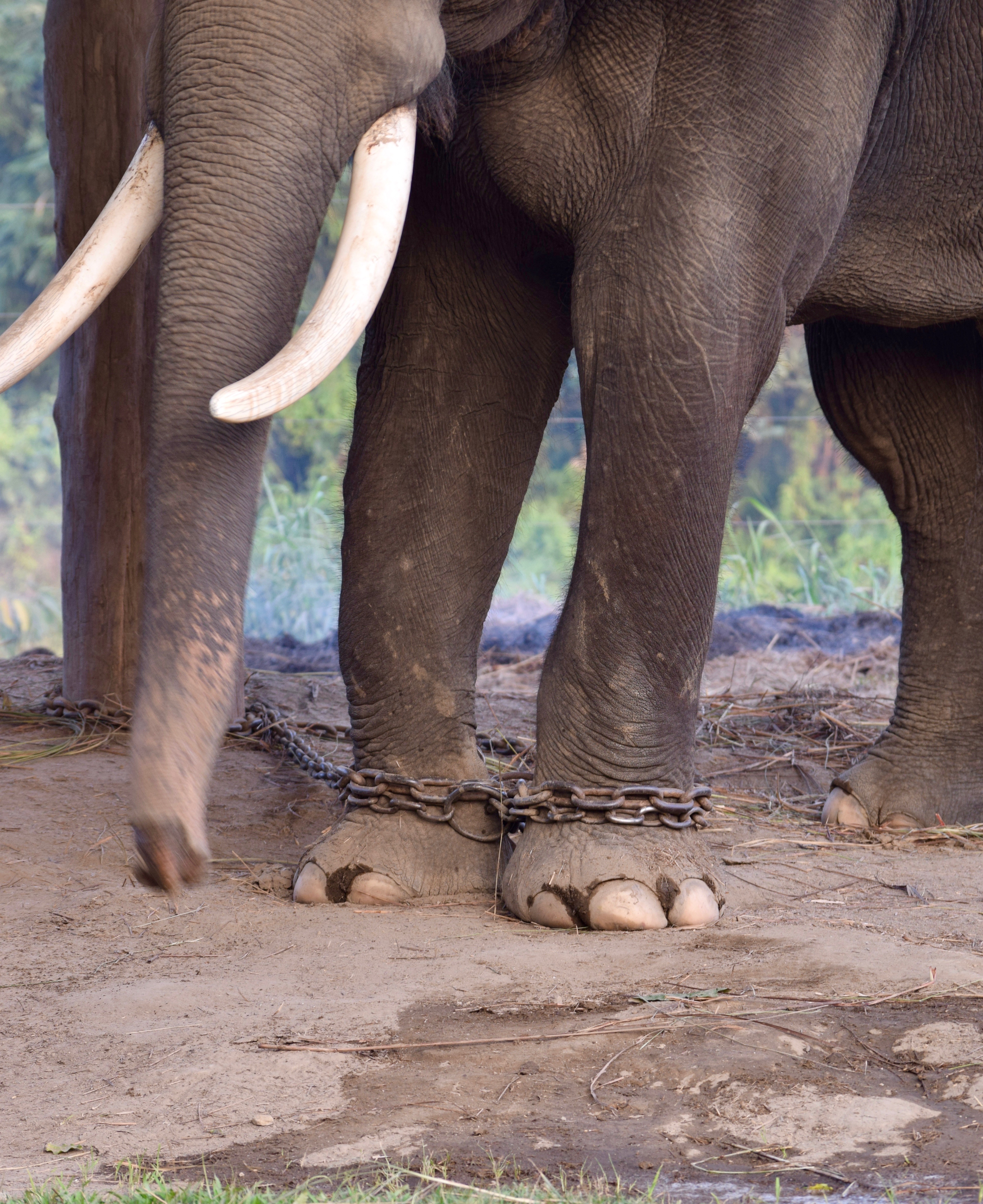
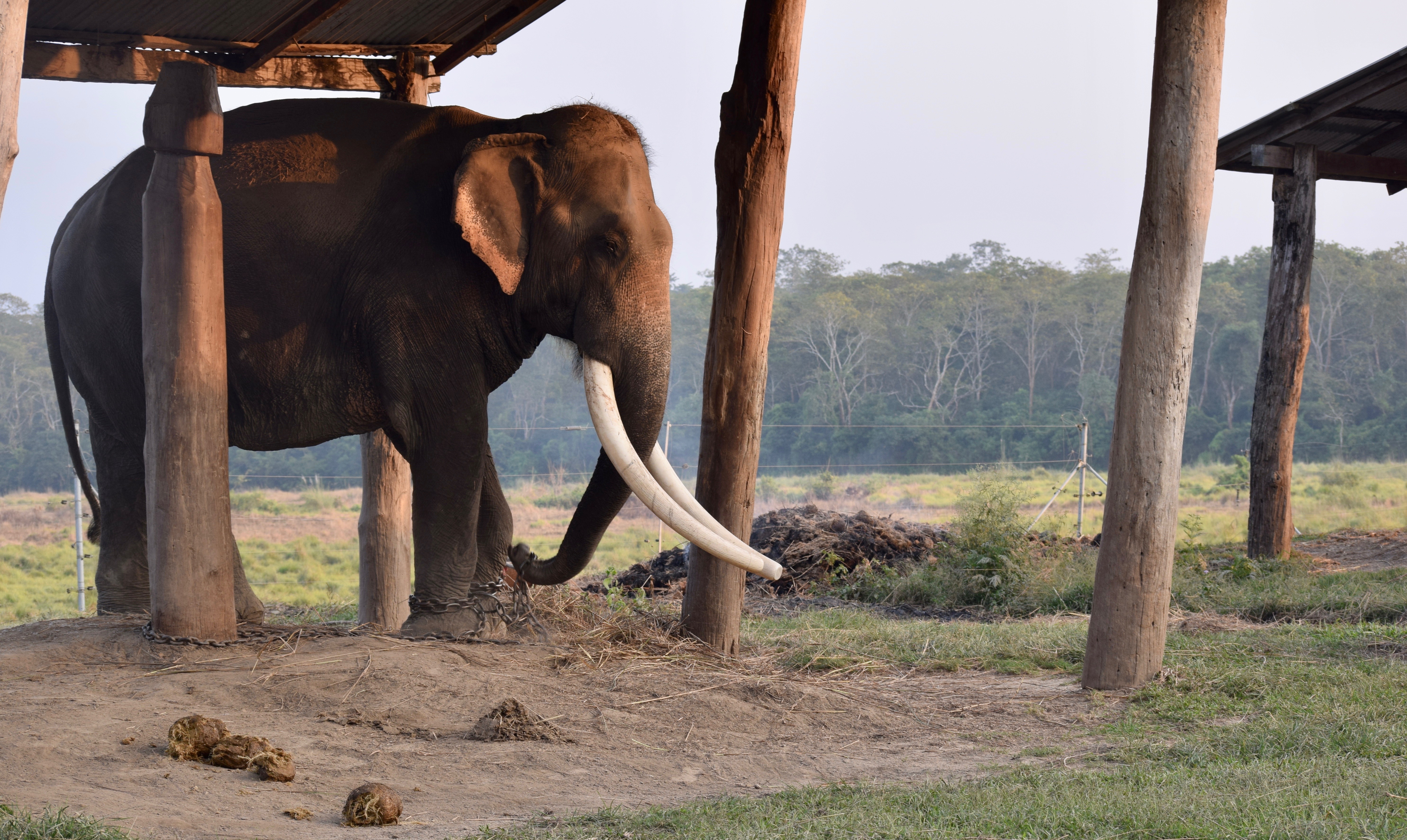
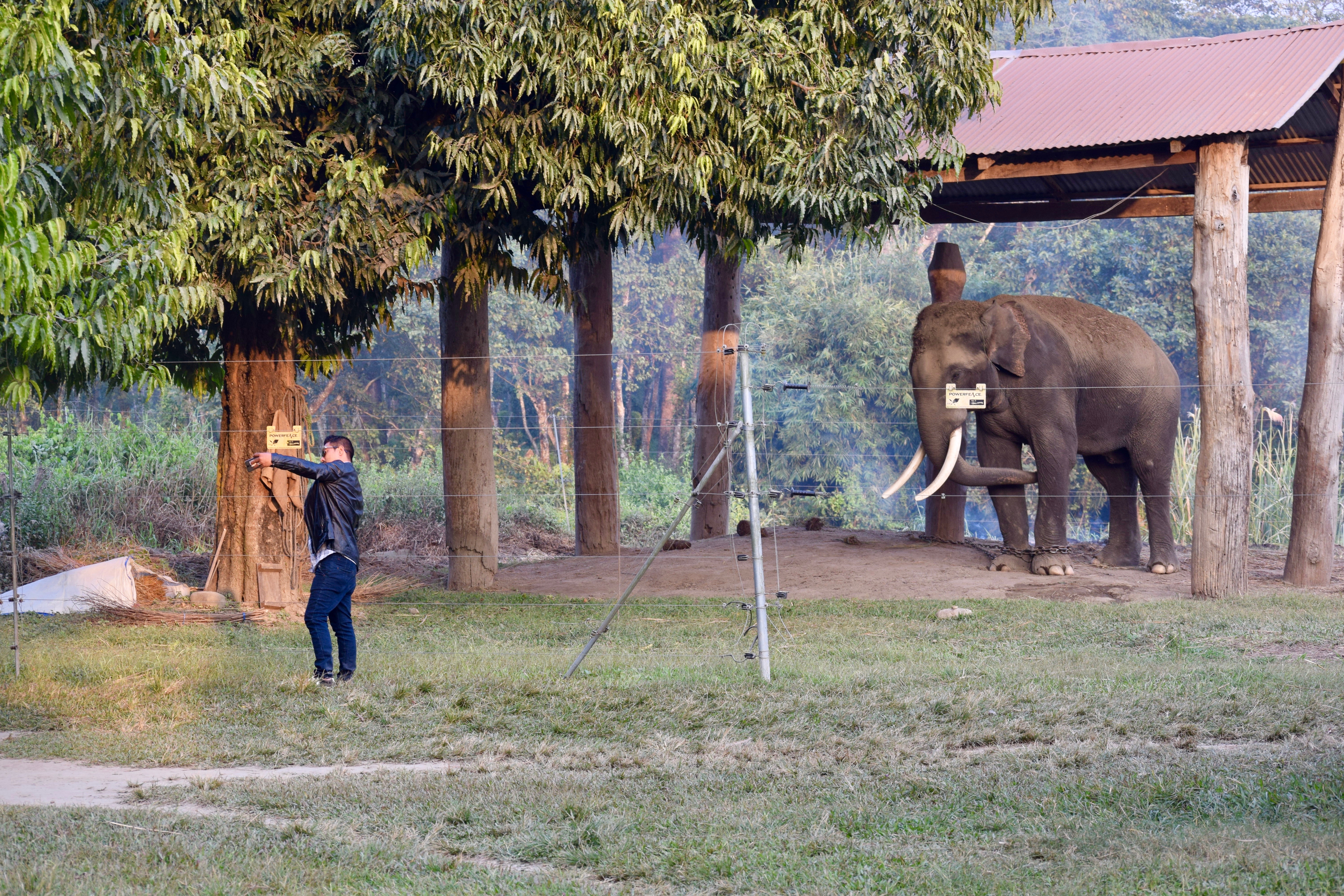
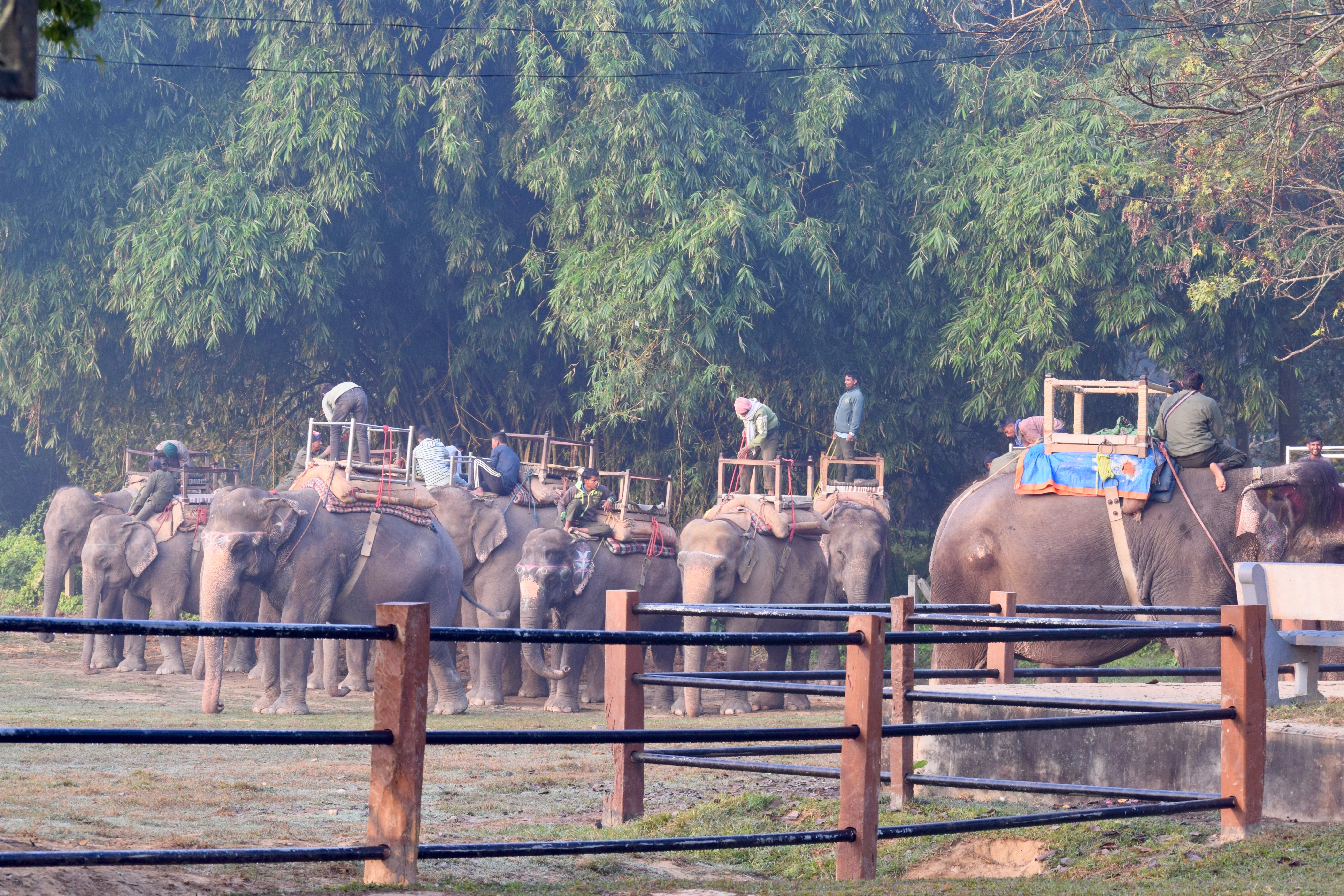
Side note: So, the elephant situation in Chitwan is controversial. There are plenty of wild elephants in the park, but there is also an “elephant conservation program” and many privately owned elephants. The conservation elephants are bred and used for patrolling the deep jungle for poachers. The private elephants are used for safaris. The training of elephants is a brutal process and in order to make the elephants comply while on safari they hit them really hard on the head with a large stick. We also saw male elephants with both front legs chained together and tied to a post. Both girls caught a glimpse of this and chose not to participate in the elephant safari. We did visit the breeding centre and where the elephants live, but it only further added to the terrible feeling. The part that brought a little joy back was going to the river and watching the elephants swim. It was beautiful and quite obvious that the elephants were enjoying themselves. It’s hard to condemn an impoverished country for their actions when they are just trying to find ways to employ their people. When you see the conditions that people live in and what they have to do just to survive, seeing things like the treatment of the elephants is sad, but I couldn’t bring myself to be outraged. Another thing is that these cultures have been training and using elephants for centuries; it’s hardly our place to come in and tell them to stop. “Umm, excuse us rich (relatively) white folks, but we think you should stop what you’re doing and find another way to feed all these people in your village.” We made sure they got to keep the money for the safari, but explained why we didn’t want to participate (we went on a jeep safari instead).


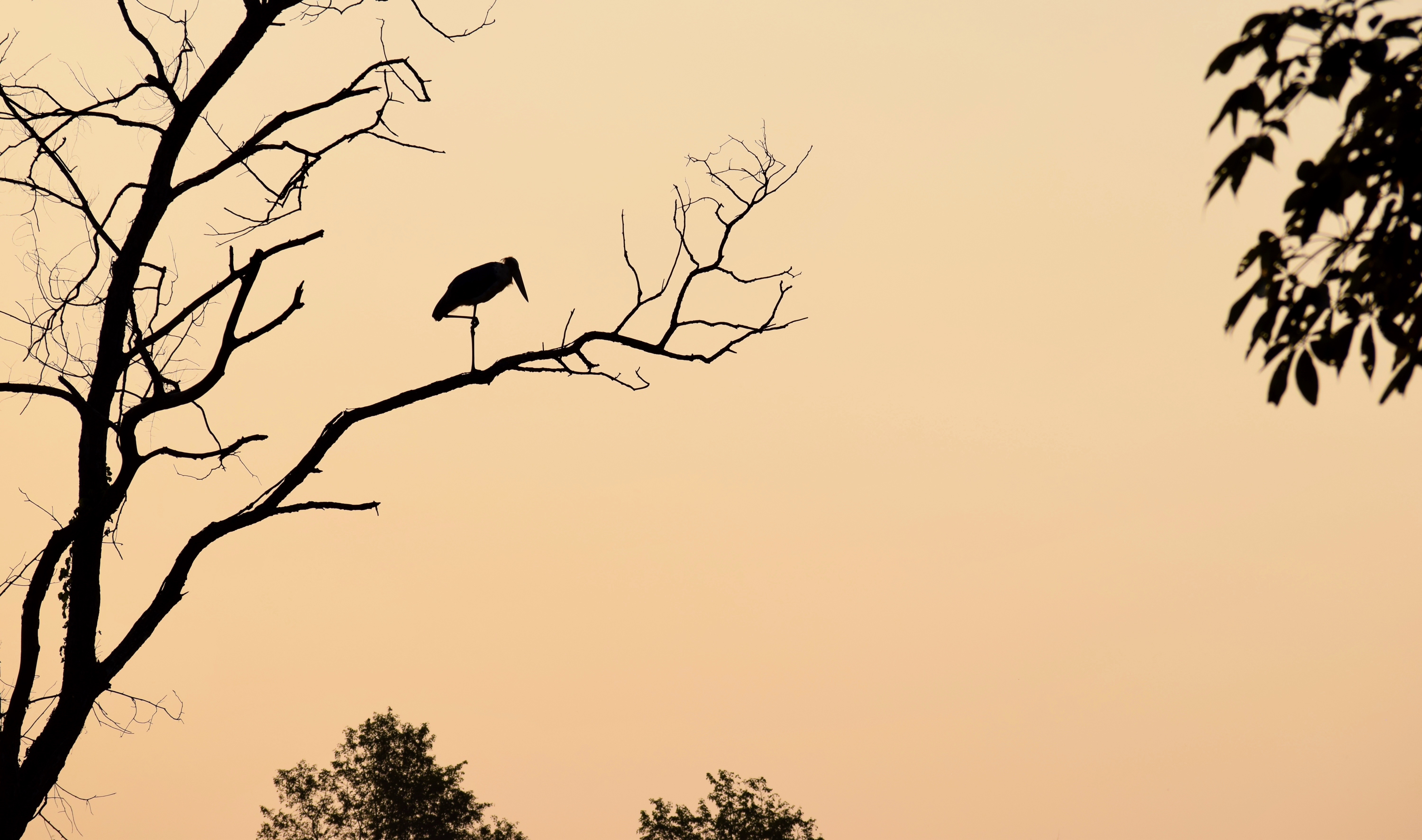
Bright and early the next morning we went on a canoe ride down the Narayani-Rapti river mainly looking for crocs. We were not disappointed. We saw two different species (one that eats mainly fish and the other that eats everything – humans included). Babu pointed out so many different bird species and described their habits and what they eat (science lesson done!). After the canoe ride we walked back through the jungle spotting some fresh rhino and tiger prints from the night before. There were rhino prints about 50 metres from the entrance to our hotel. Babu also told us that on his way to the hotel that morning he saw a wild elephant roaming through town.
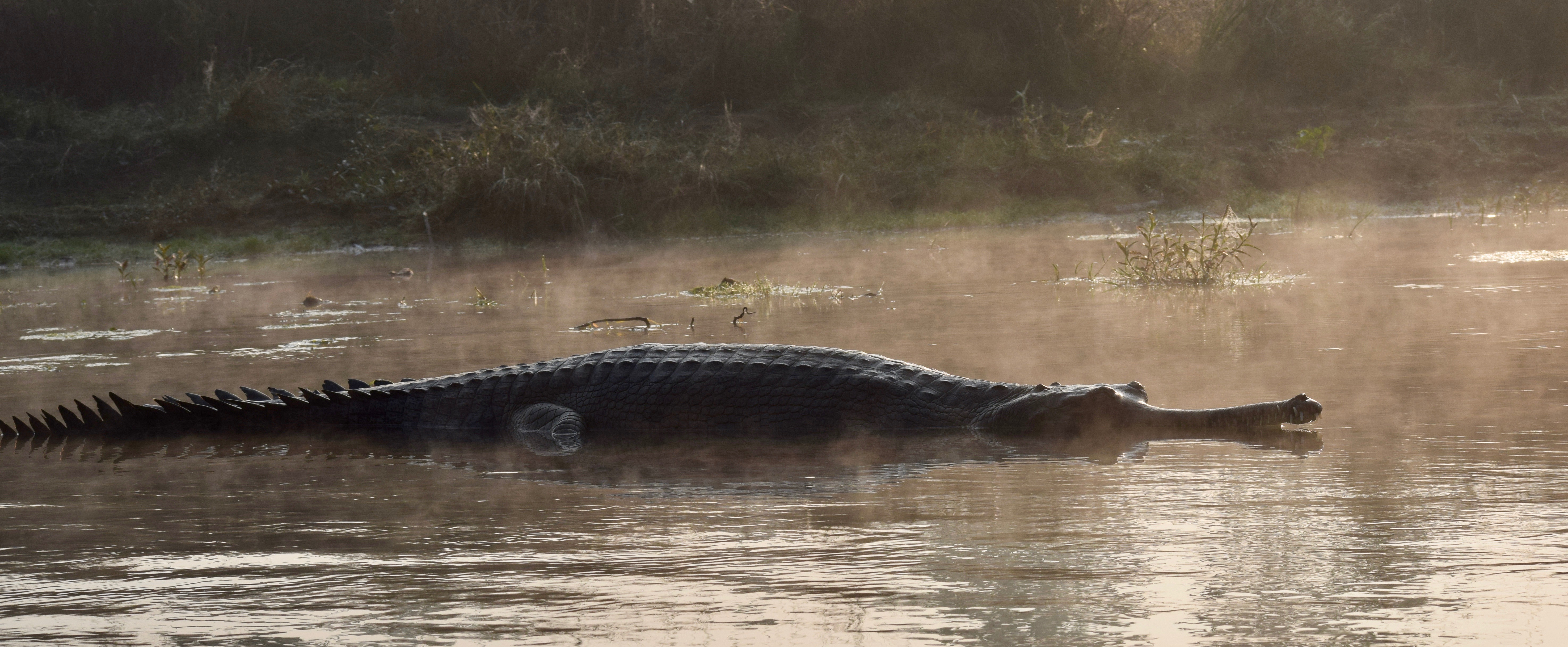
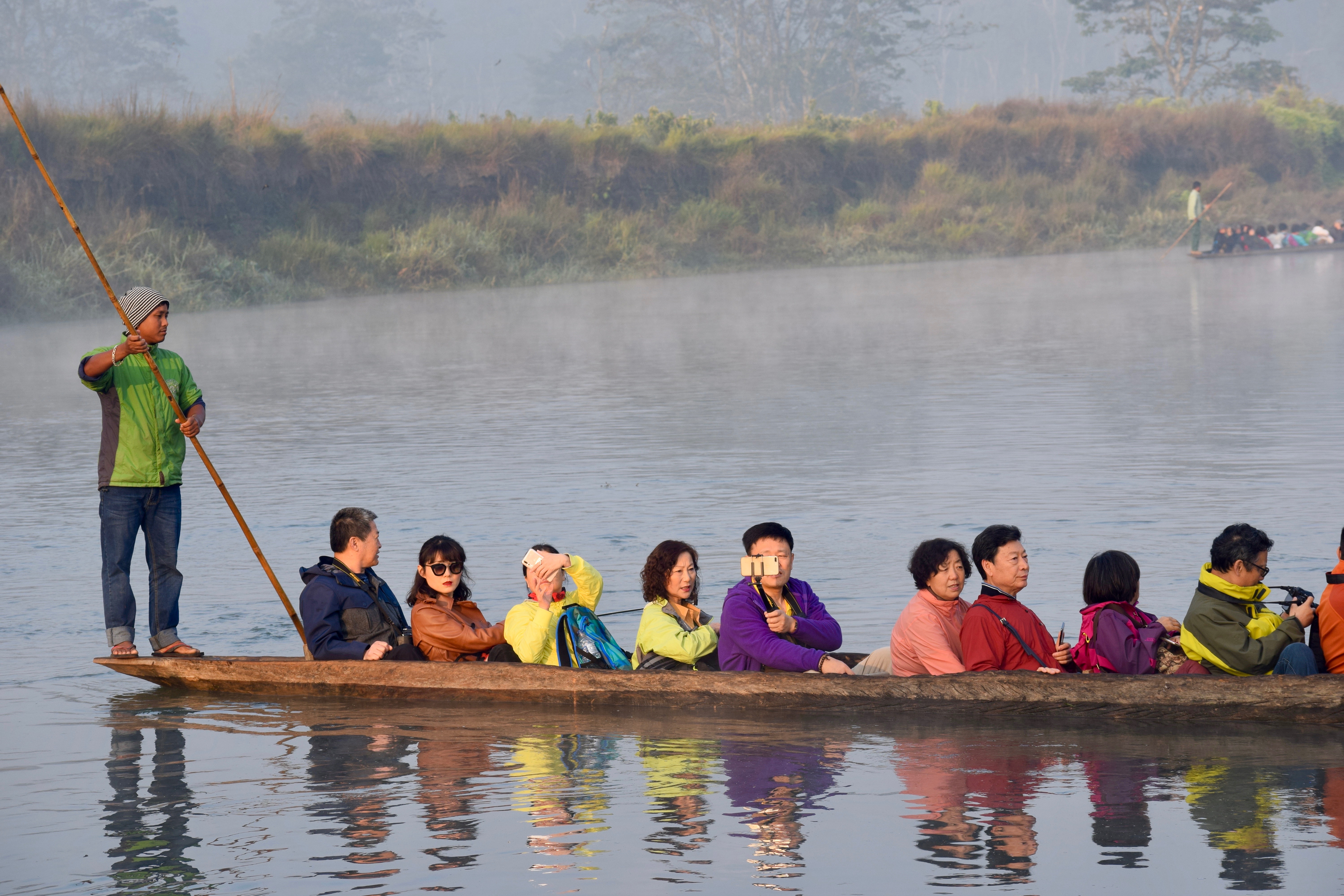

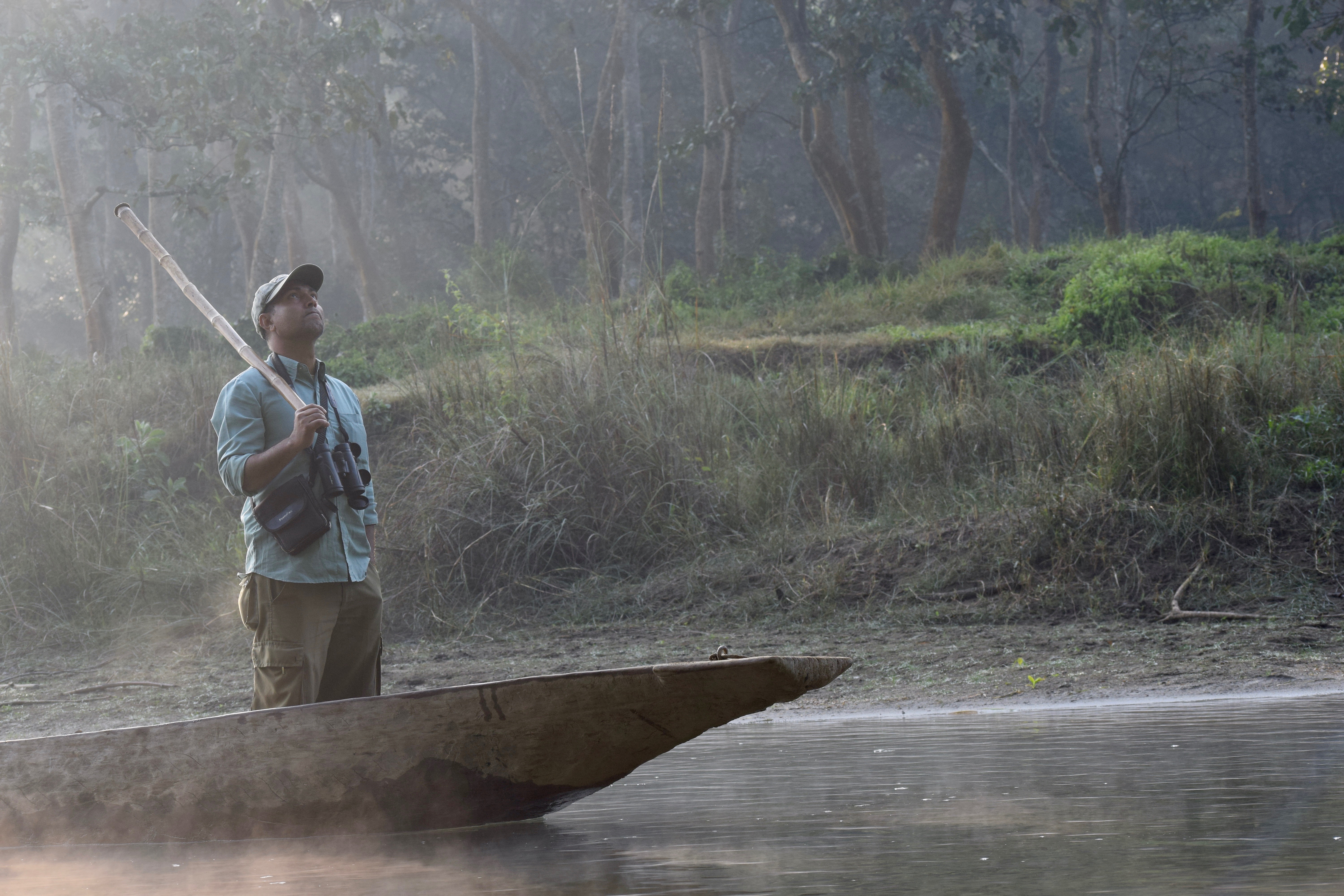

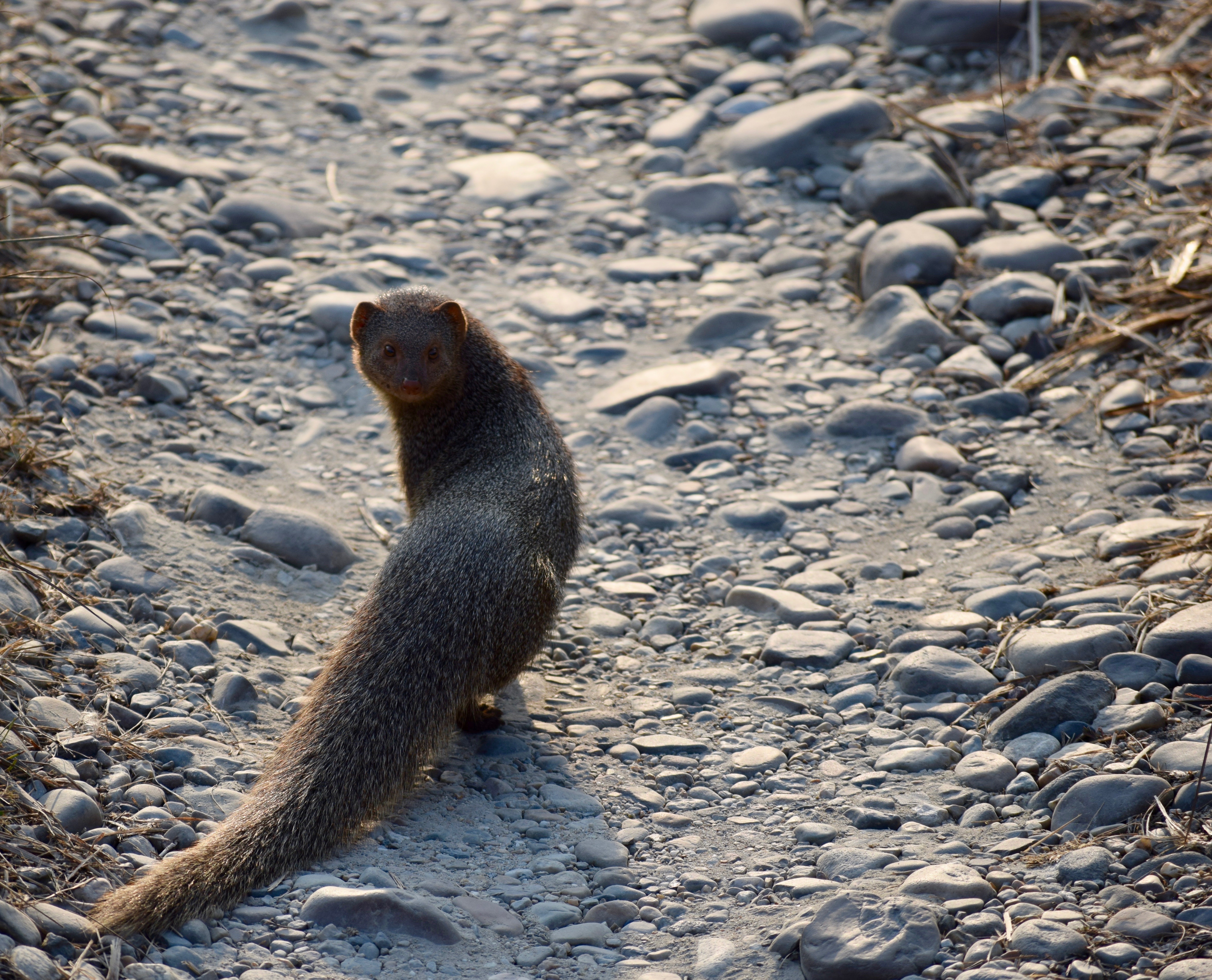
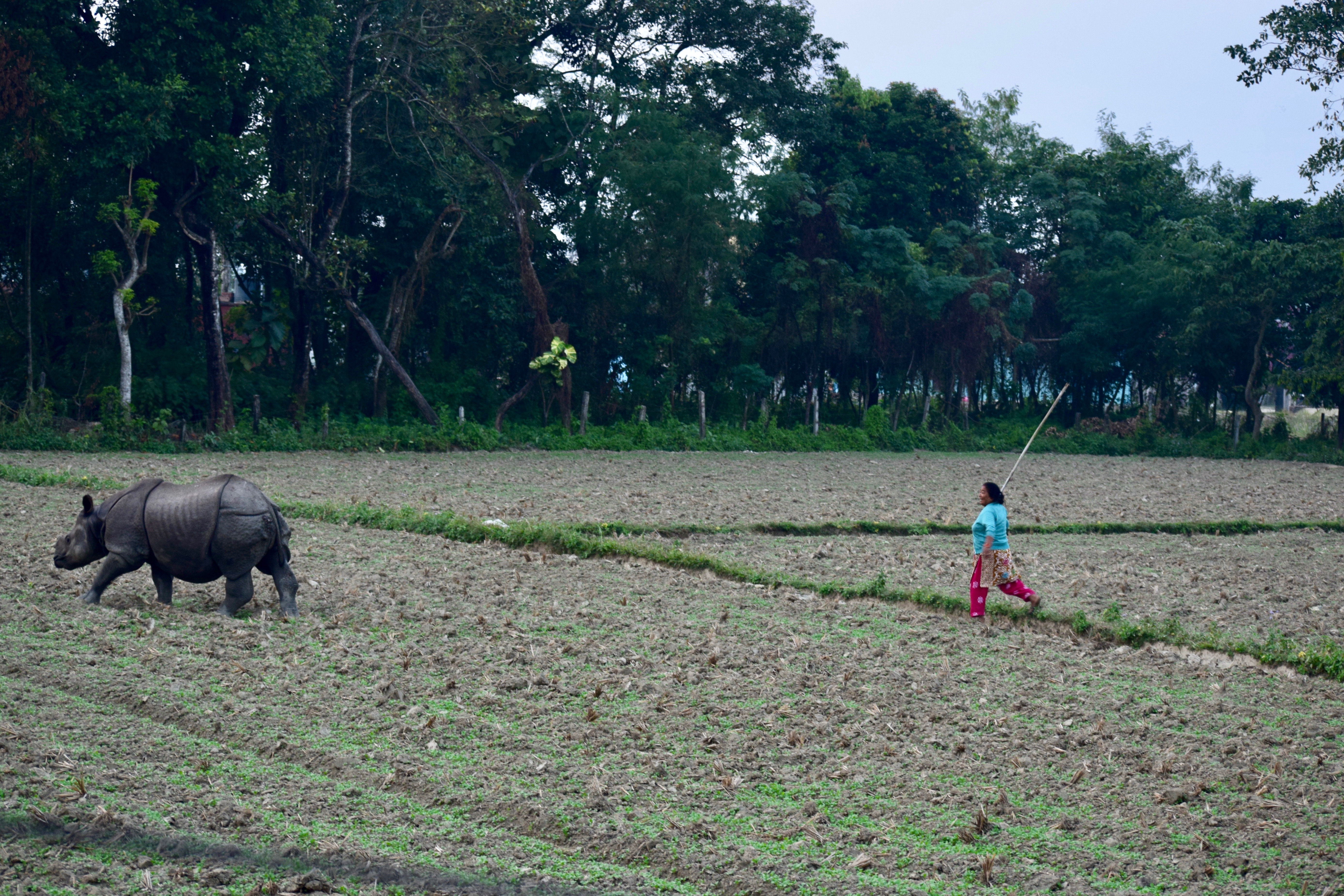
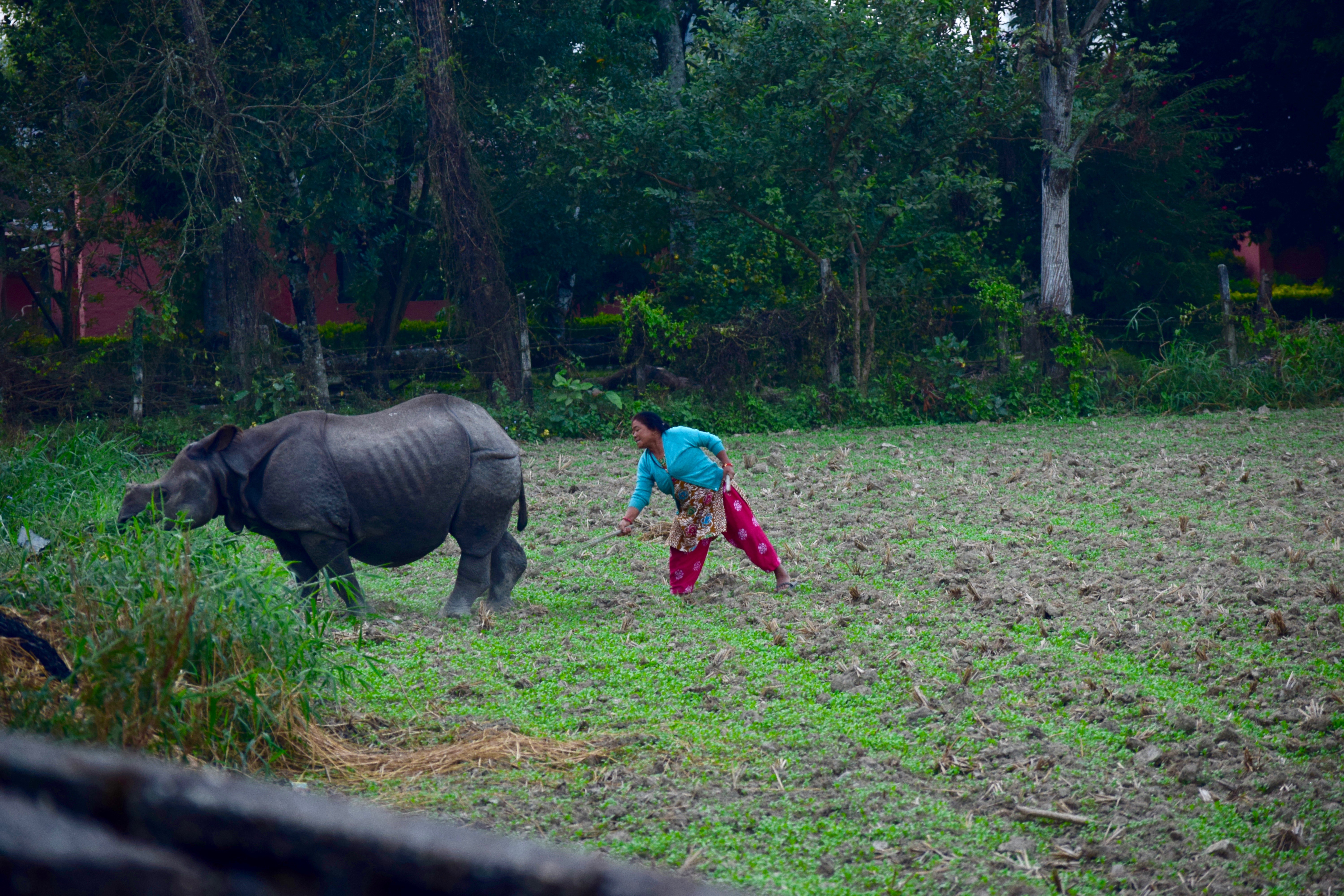
Our jeep safari began after some lunch and poolside naps. The vehicle we took was exactly what you’d expect, we sat in the back of a truck on benches with a shade cover over the top. Babu was gone with another group so it was just us and a new guide. He was young, spoke excellent english and was really knowledgeable about the wildlife. Once again we saw birds, more crocs, a mongoose, two kinds of deer AND….. once the safari was over, we were driving through town back to the hotel and what did we see, a rhino!! It was walking down the road ahead of us. It took a left into a garden and started eating. The owner of the garden (a middle aged woman) came running towards it with a large bamboo stick and whacked it on it’s hindquarter. It slowly sauntered away, into her field of vegetables where it continued to munch away. She chased it again until it finally left. It continued it’s walk through town and then headed back to the jungle. Bizarre.
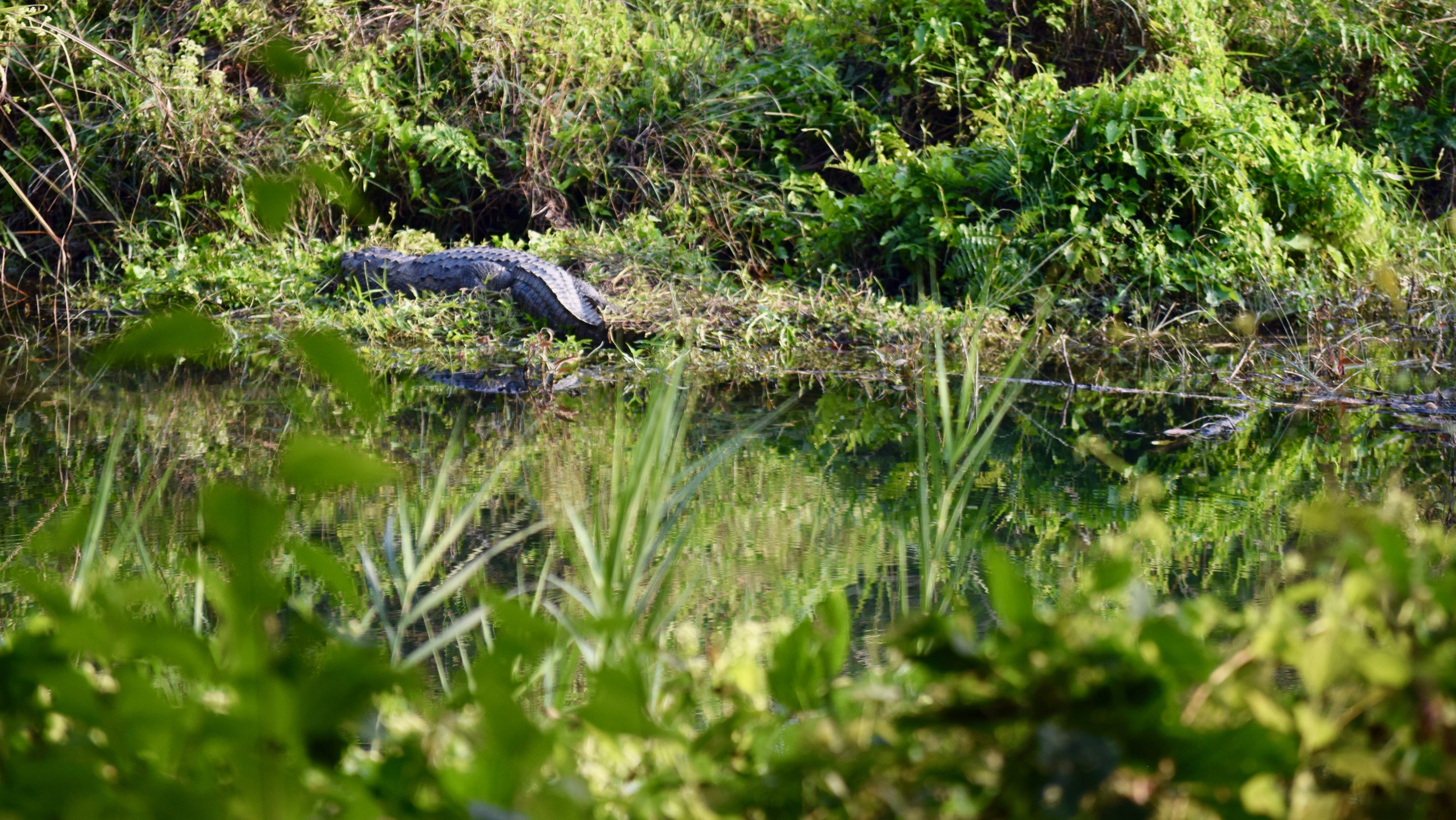


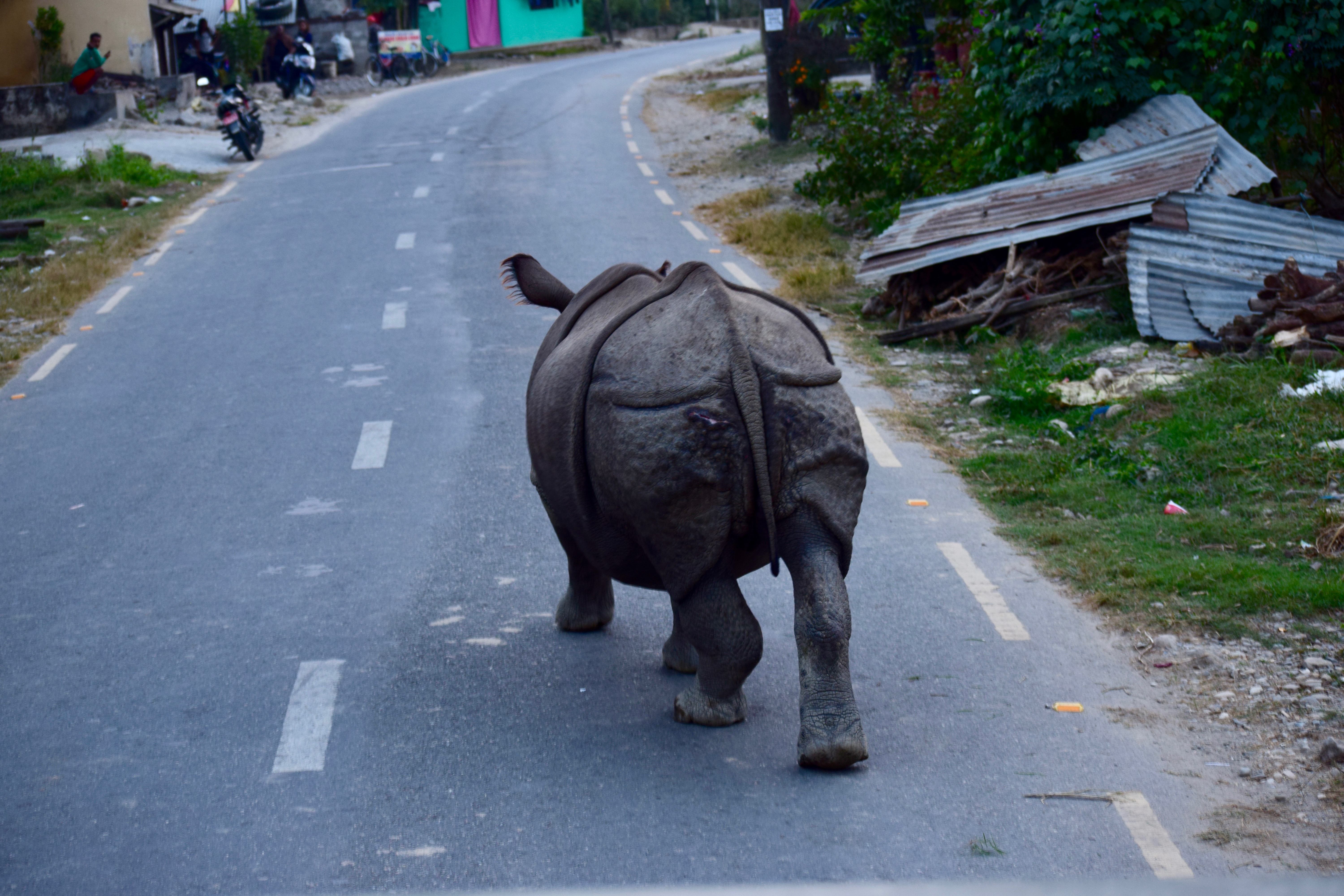
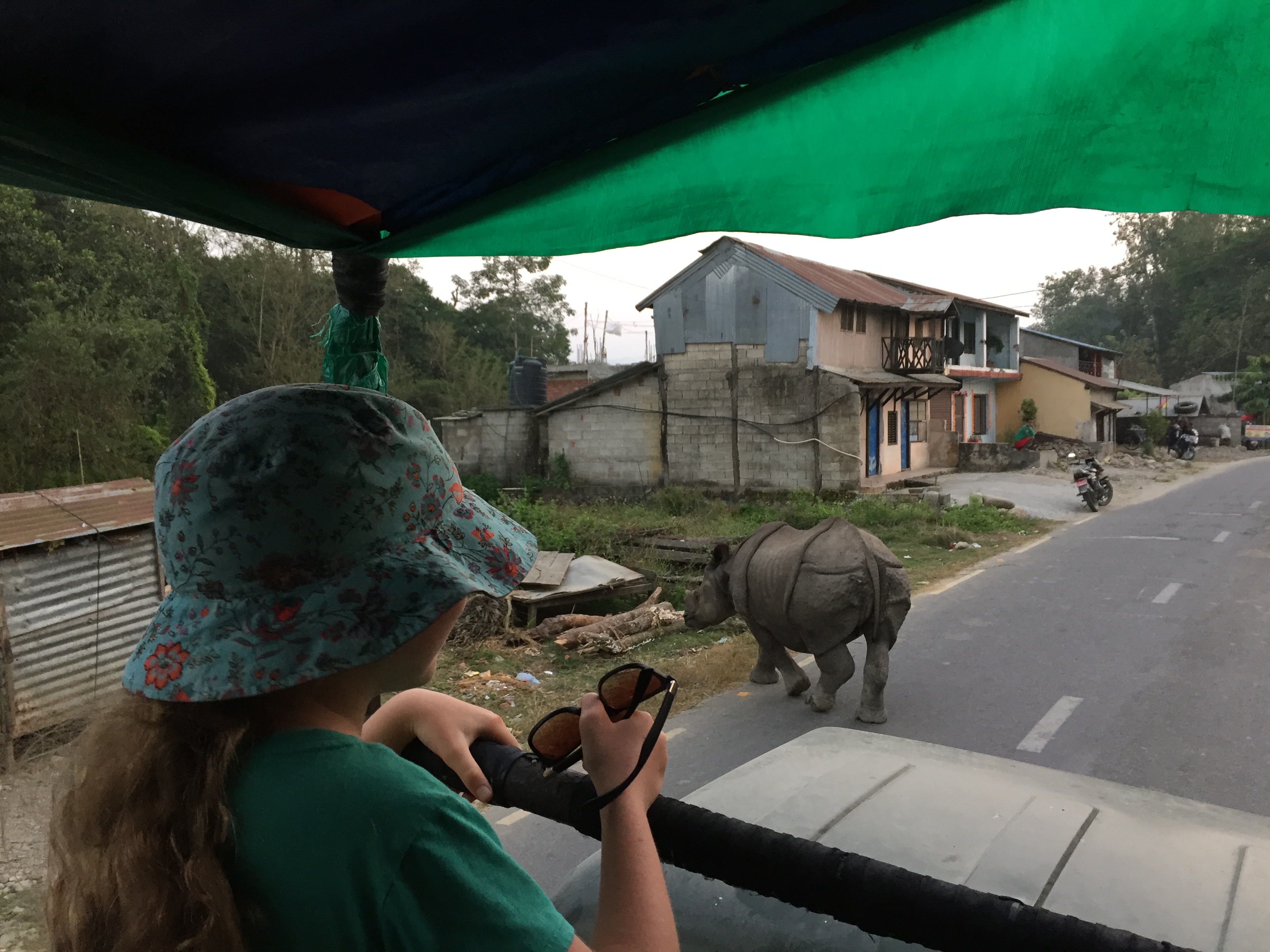
We were so excited about seeing the rhino, it’s the coveted animal sighting. No one else at our hotel saw one. Babu said we were very lucky. It was the icing on the cake for our time in Chitwan. Even though we had an early morning bus to catch and a 6 hour bus ride to Pokhara there was one thing we could not miss, the Trojans (the high school where we teach and Mark is the head football coach) were playing in the NOSSA final football game in Sault Ste. Marie, Ontario. Mark had asked his his friend and mentor, Larry Tougas, to take over Head Coaching duties while we were away for the year and the team did not disappoint. Once again they claimed the city championship and were headed to defend the NOSSA title. The game was being audio streamed by a Sault Ste. Marie media outlet, so we woke up at 1:45am and tuned in. Mark was pacing the room, talking to himself with earbuds in (the kids were asleep). Although the game didn’t go in the favour of our boys, we were so proud of their effort (which was evident even over the radio). They played in snow so deep the coaches had to shovel the lines and it was bitter cold. The announcers had such great things to say about our players and other than being there, it was the next best thing.
It was impossible to get much sleep after the game, we were thinking of the coaches and boys and how they must be feeling; we were feeling it too. I think we were probably on our long bus ride at the same time they were on their headed home.
Our spirits were lifted when we pulled into Pokhara. The calm beauty of the lakeside town was just what we needed. The girls and I all had some stage of cold happening and we were in need of some rest. Pokhara was the perfect place to do it.
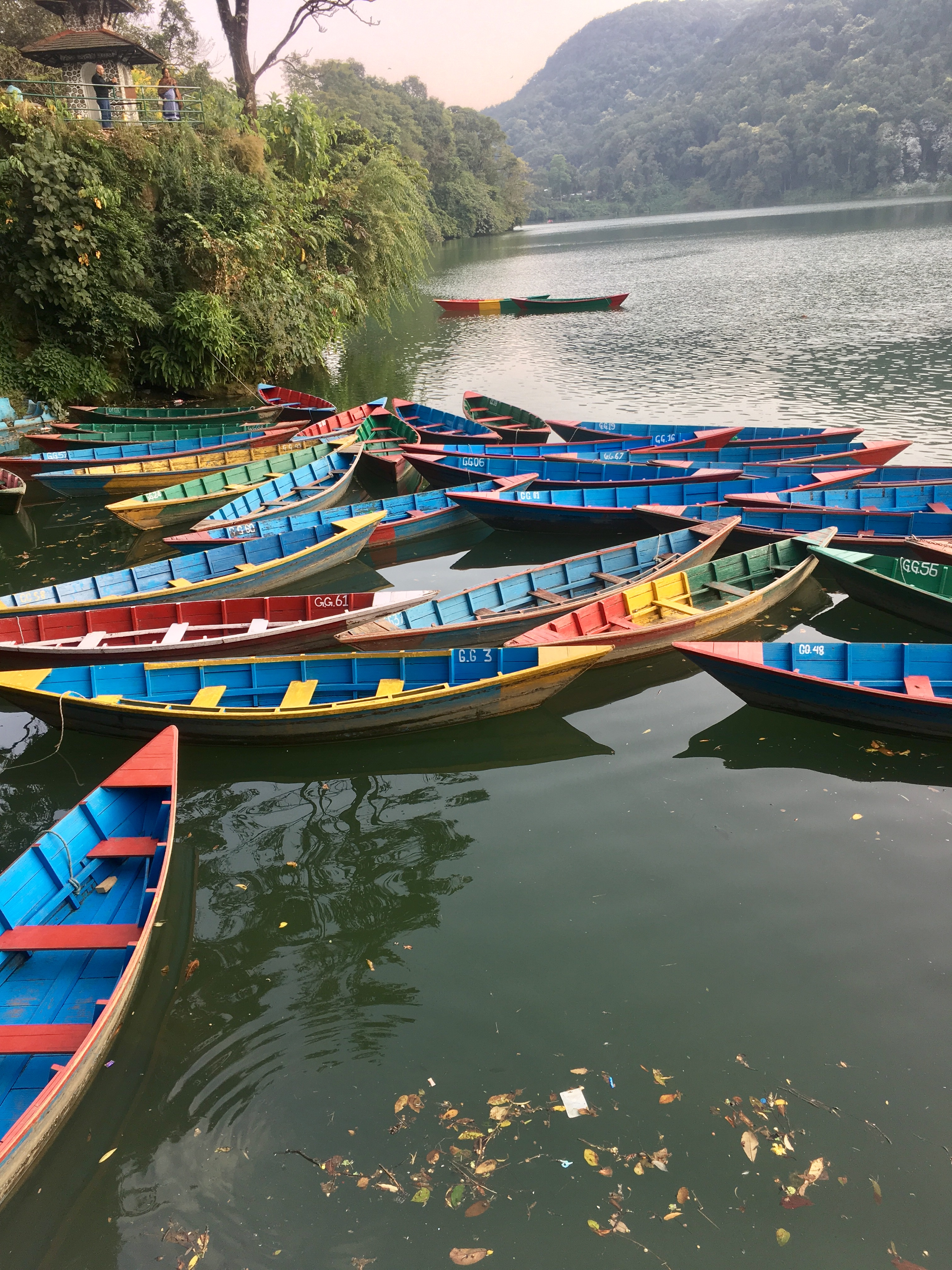
Pokhara is the place where trekkers leave for the Annapurna region, so there are lots of places to stay and great restaurants. The mountain range is breathtaking and the climate is great; 24 degrees during the day and 17 degrees in the evening. We spent a lot of time catching up on school work, reading and resting.

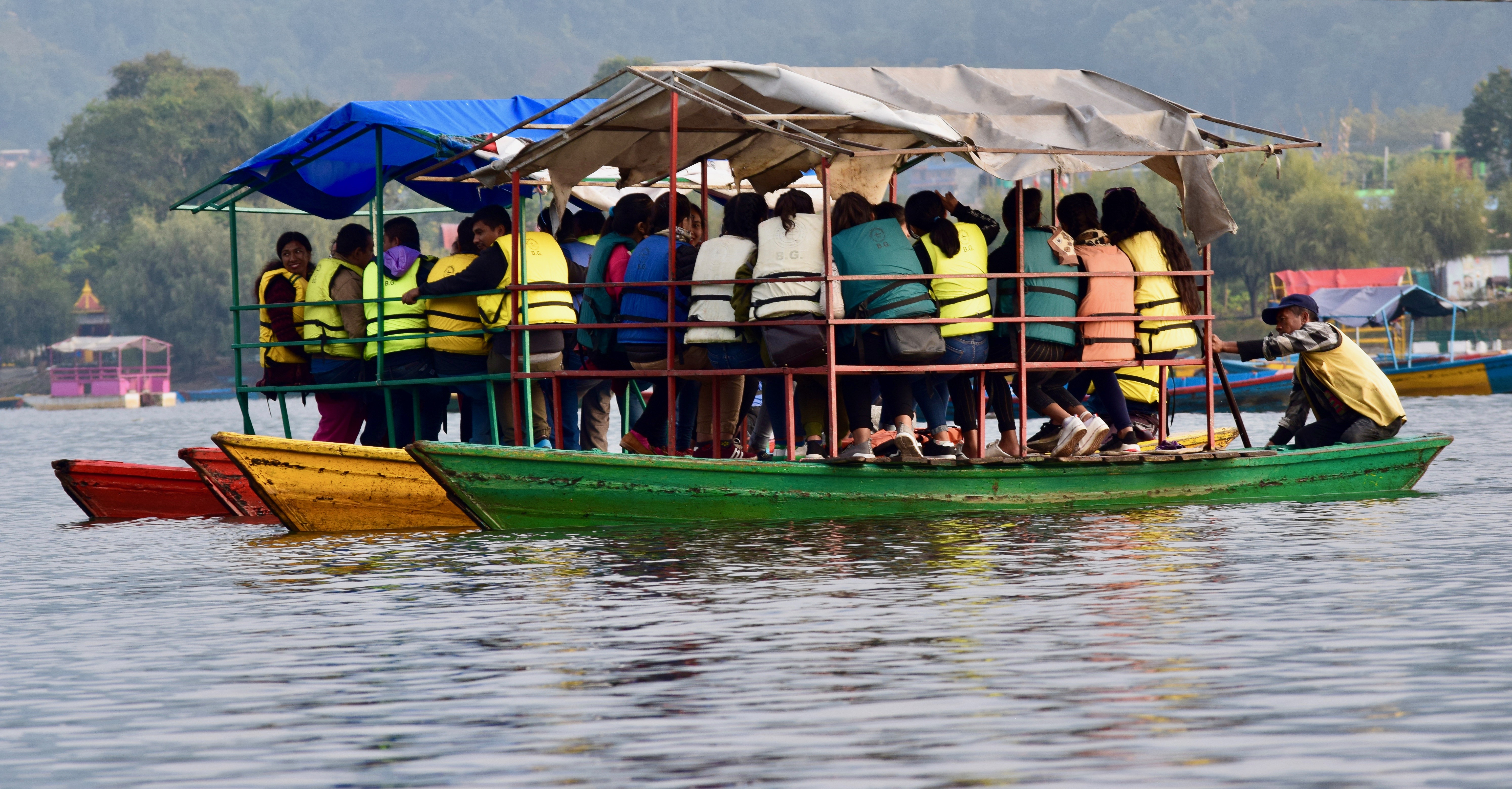
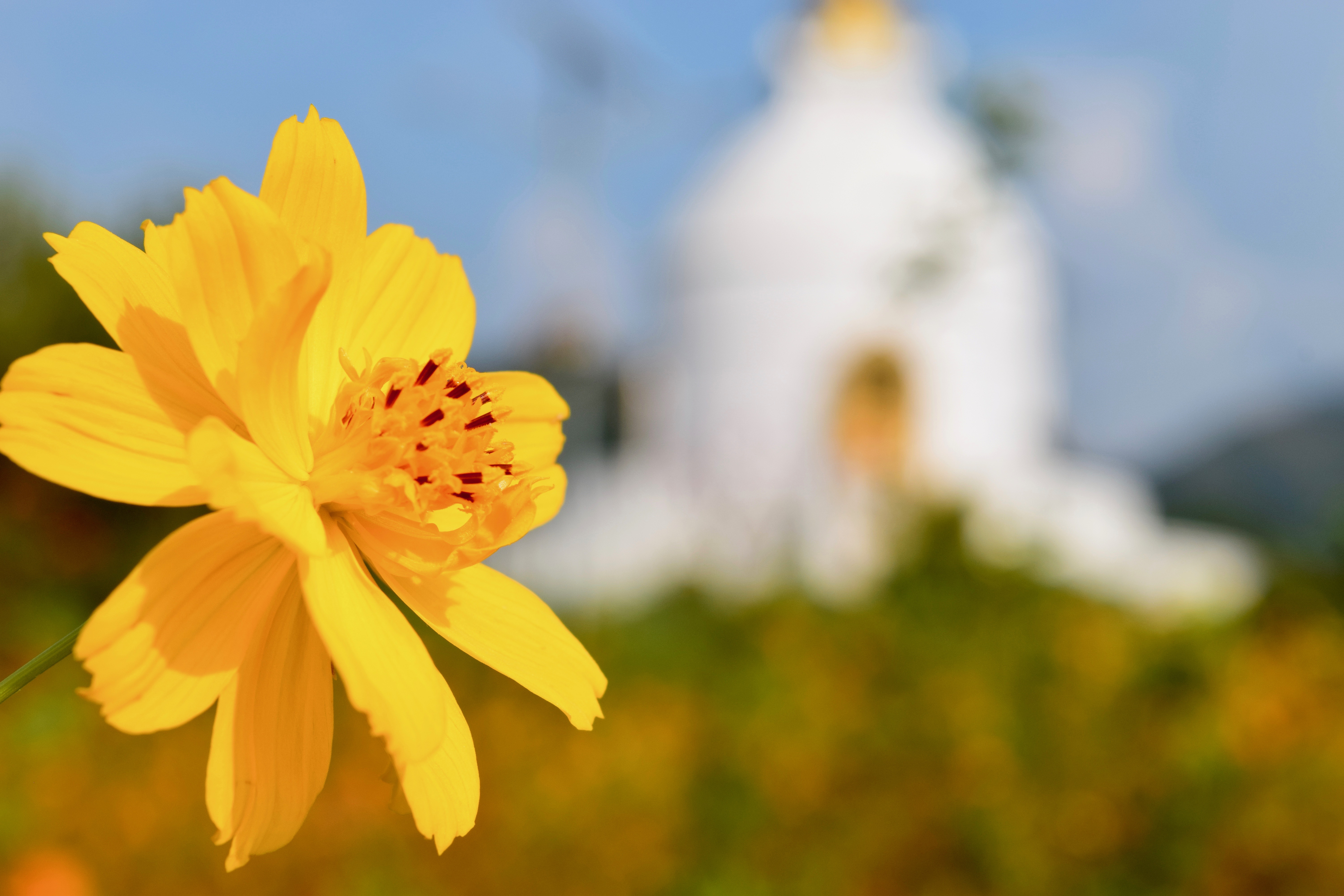
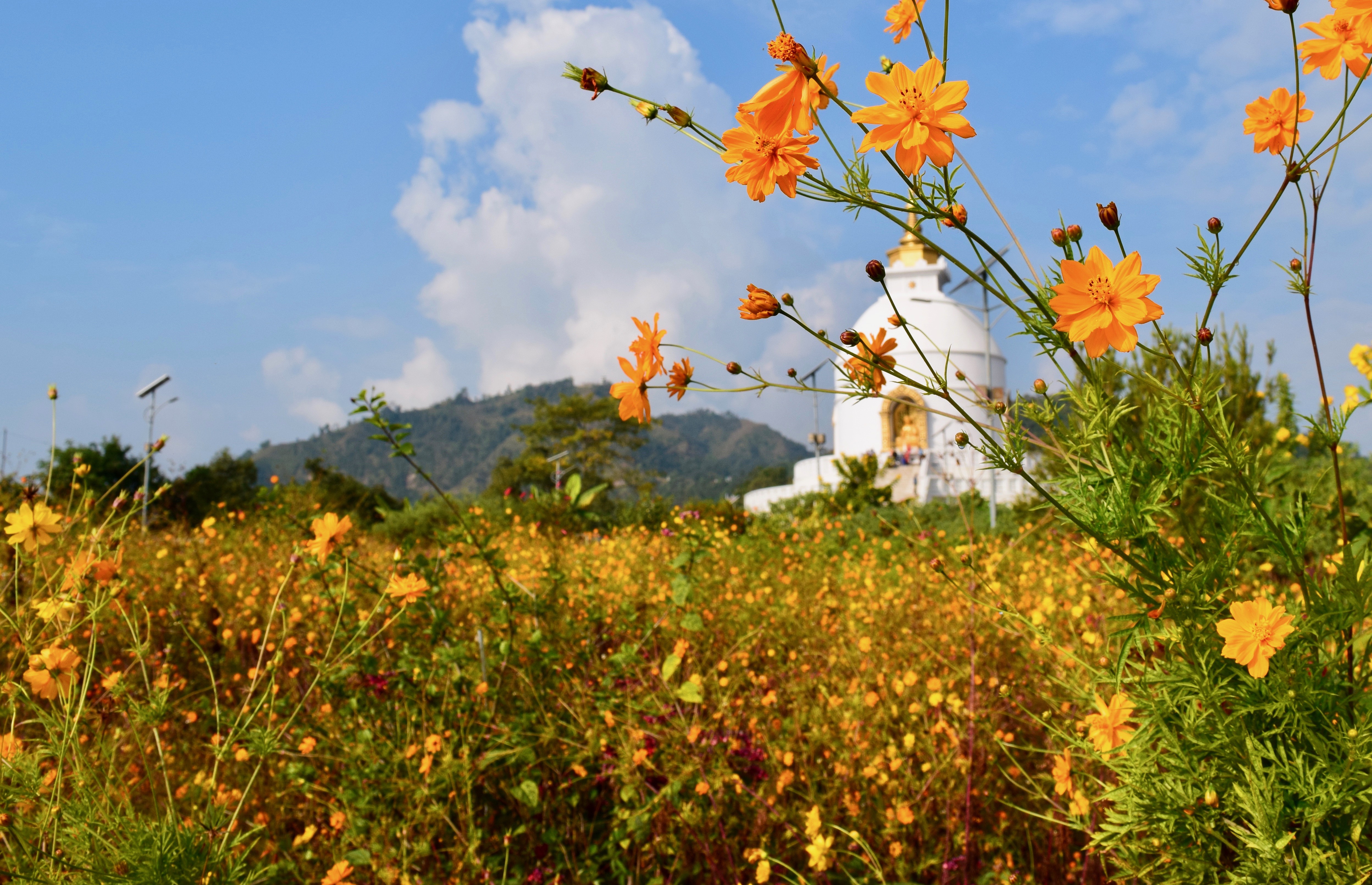
We took some time out from resting to hike to the Peace Pagoda. A ride in a colourful boat took us to the Tal Barahi Temple on an island in the middle of the lake before taking us across to the start of the trail to the pagoda. From the lakeside it took us about 45 minutes to get to the top. It was a hot and sticky morning. On a less cloudy day I imagine the view would be spectacular. The Annapurna Range has some of the most famous mountains in the world. But it was not to be that day. We did have a lovely view of the lake and city of Pokhara.




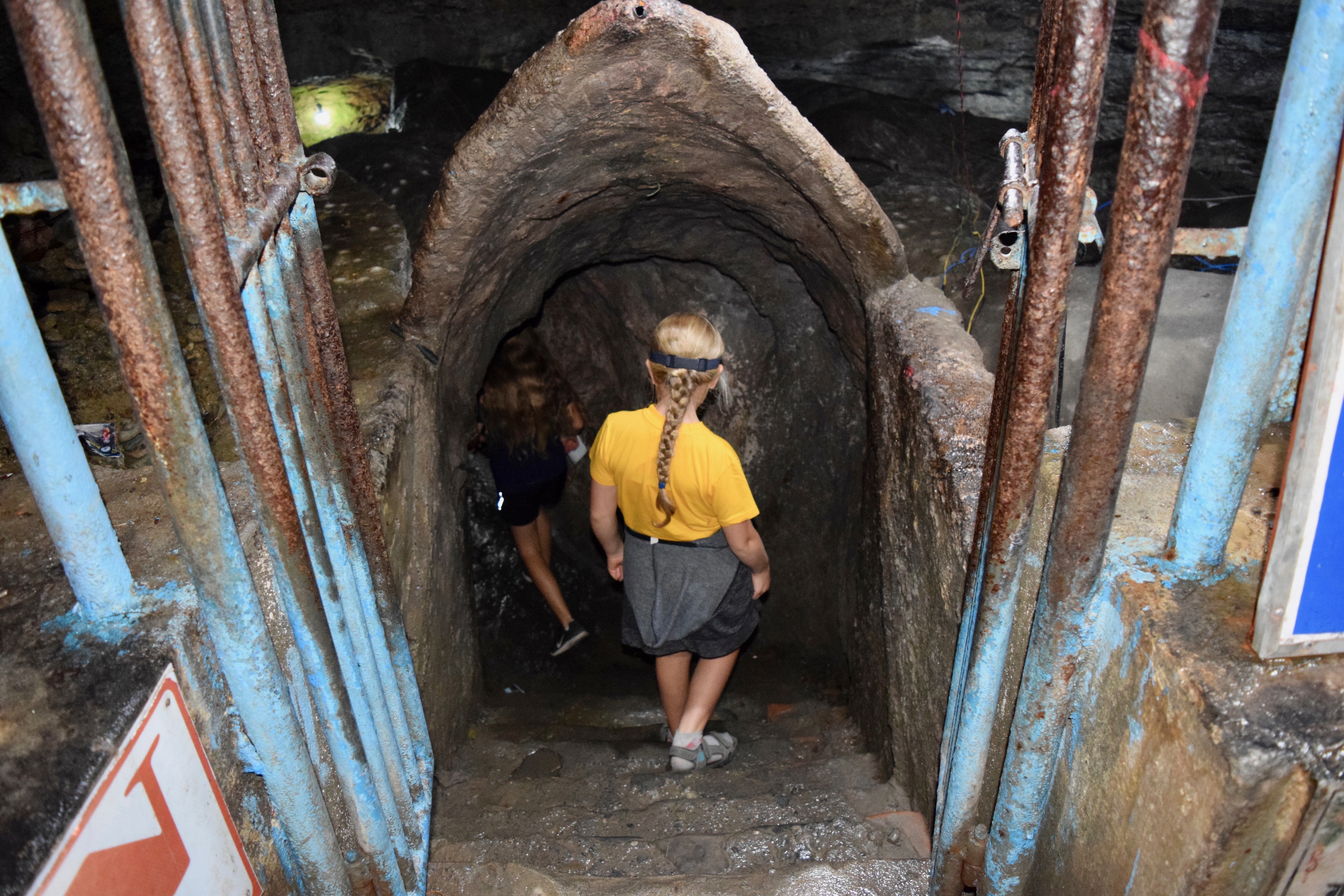
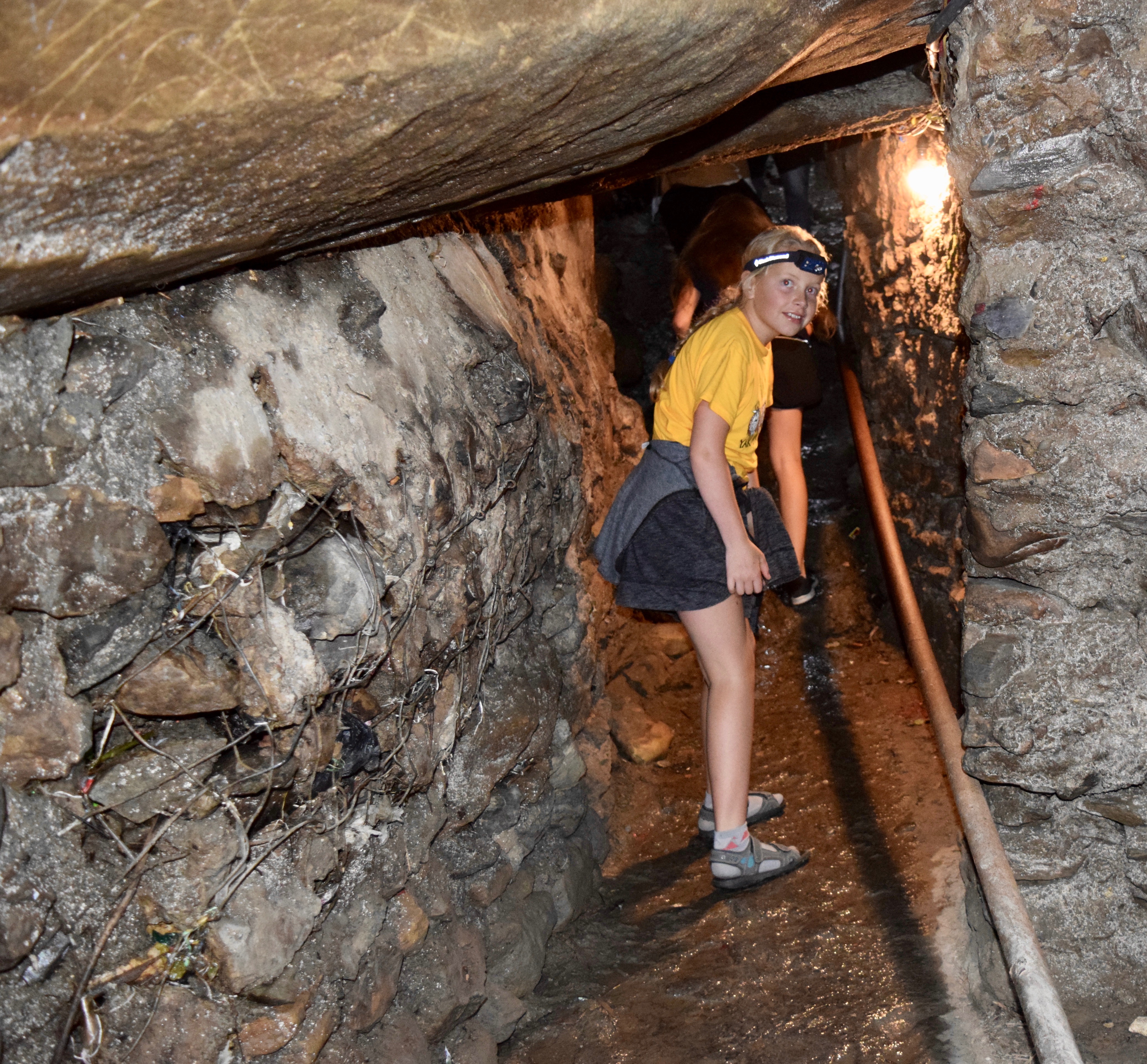
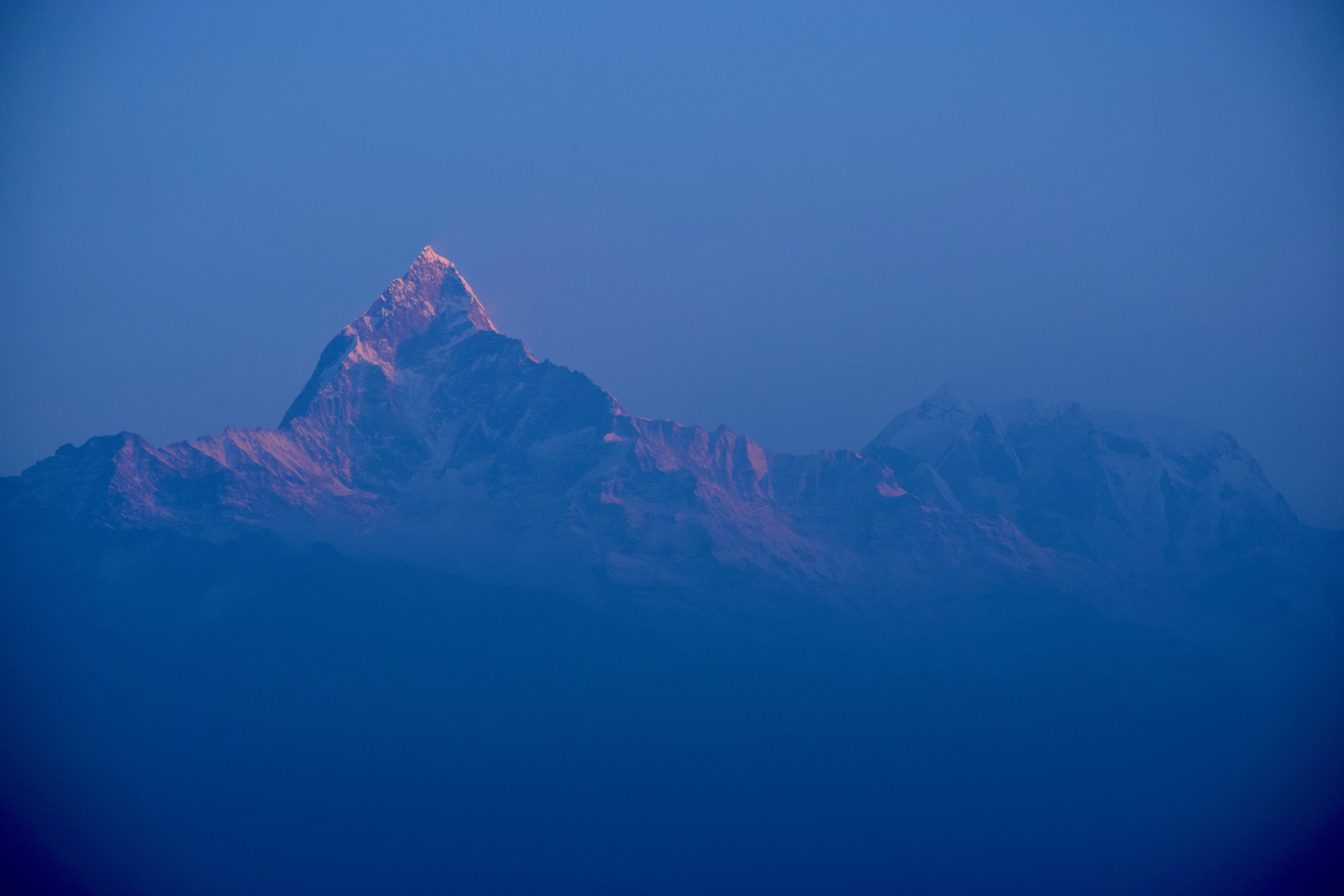
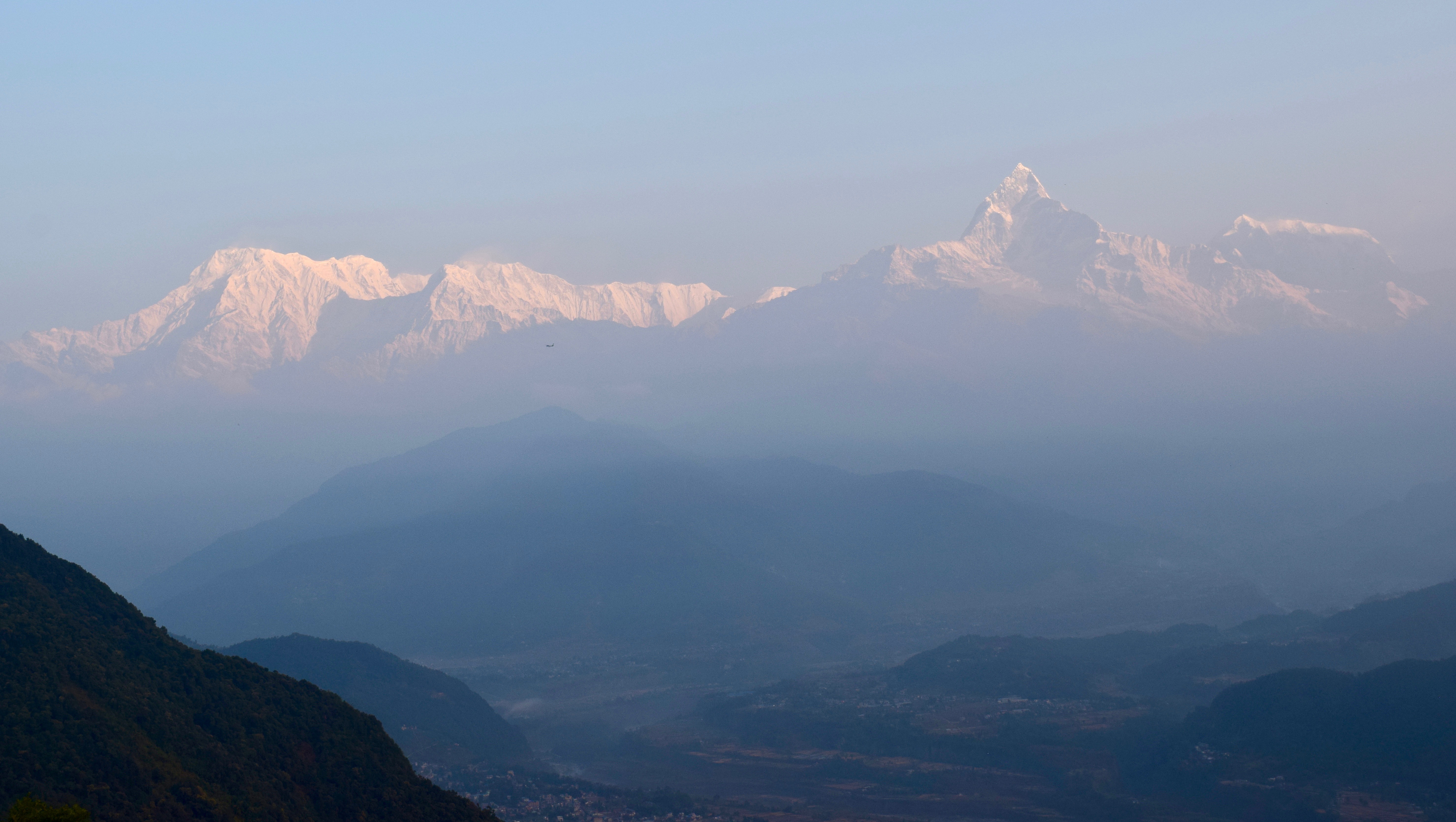
Although the weather was beautiful while we were there, the upper level clouds really hindered our view of the mountains. But, Robertson luck was on our side. We hired a jeep our second last morning there to take us to a lookout point in Sarangkot for sunrise. We dragged ourselves out of bed at 4:30 and were on the road by 5am. Our driver took us as far as he could and then we walked up about 200 stairs to get to the top of the lookout hill. For a while, as we waited, we thought it was going to be a bust. There were some low clouds hanging around, but as the light began to appear the clouds lifted and we were treated to the morning sun waking up the gleaming white snow peaks of Dhaulagiri (8167m), Machhapuchhare (Fishtail Mountain) (6993m) and, Annapurna II (8,091m).
On the way back down we had a great chat with our driver. He was newly back to Nepal after working in Dubai for the past 4 years. He was well educated and had good knowledge of the important issues the Nepali people are facing. Nepal is one of the poorest countries in the world and do you know what their biggest form of income is…. the money that is sent home from Nepali people working in the Middle East. It’s unimaginable that most of the money people use to survive comes from their people having to leave the country for YEARS at a time to work under deplorable circumstances. It’s very sad that there is such a disparity in wealth that rich countries can afford to have their own citizens live luxurious lives without working, while exploiting the poor. Our driver had to make the decision to continue there or come home and try to make a living in Pokhara. He was 8 months back and doing ok, so hopefully he won’t have to return to the Middle East.
We left Pokhara on a clear morning, with the mountains surrounding us. 8 hours later we were back in Kathmandu for the last time. We only had a few hours to pack up a box to ship to Canada, repack our bags for our flight the next day and FaceTime with our peeps back home.
Nepal presented us with some of the toughest challenges of our lives, physically, mentally and emotionally. It made us uncomfortable and brought out apprehension. But, more than that, it left us stronger, wiser and more compassionate. Namaste.


 Our Long and Winding Road
Leave a reply to Sita Wagenaar Cancel reply