
This portion of our trip started out with something I’d really been looking forward to: a slow boat down the Mekong river to deliver us to Luang Prabang. Getting from the Thai border to the boat was easy enough, but time consuming….like a lot of other things in SEA.
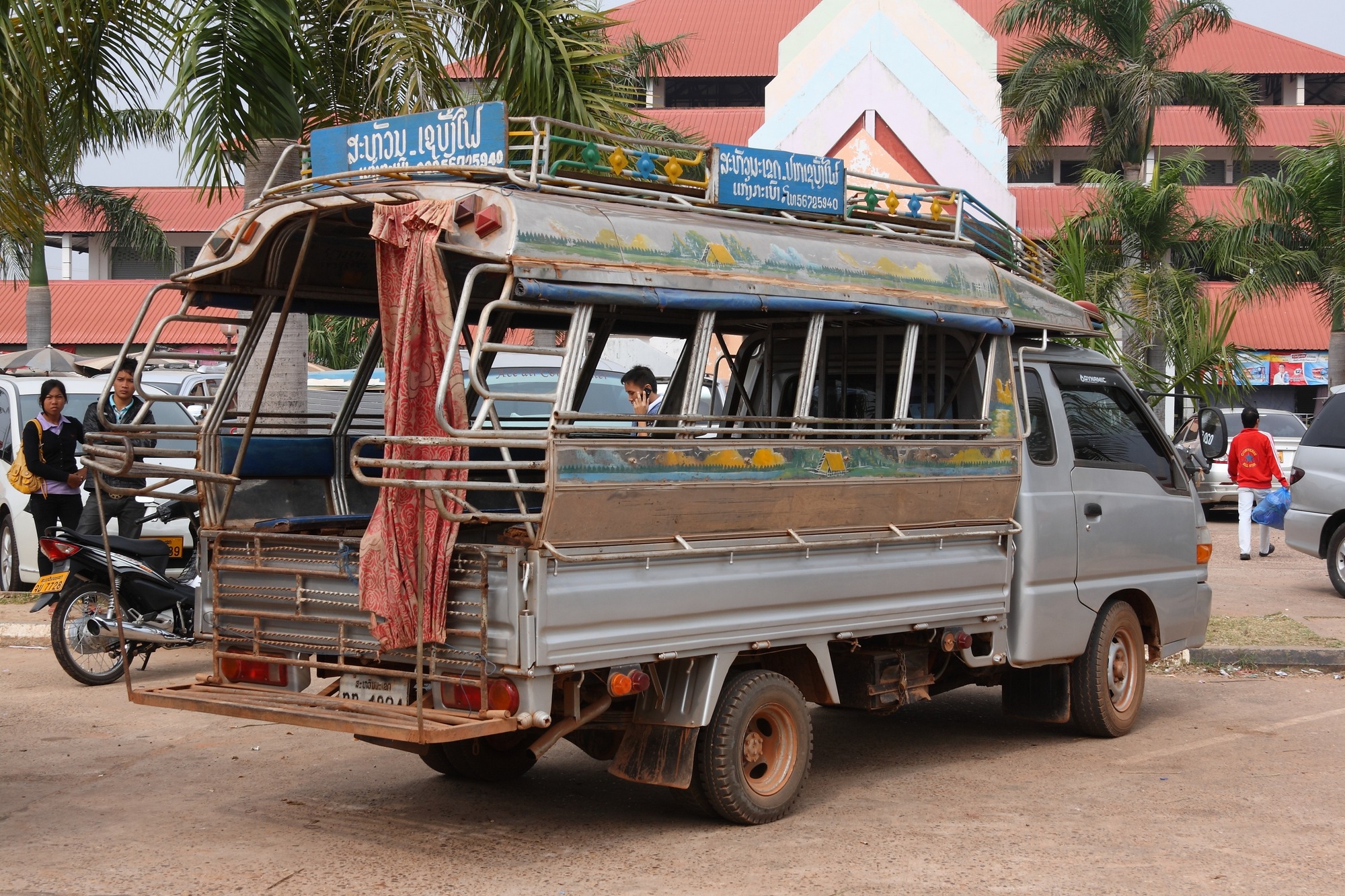
We reached the Loas border by bus from Thailand. After handing in the straightforward Visa-On-Arrival paperwork and $42USD (Canadians pay the highest amount for a Laos visa) we loaded our bags and bodies onto a songthaew (a small pickup truck modified to serve as a shared taxi) with about 8 other travellers and headed for the boat landing. We had the required stop at a random relative of the drivers food stall and were told this was the last place to get food for the day (this is a common happening in Asia when riding in tuk tuks – they give a great rate, but before the destinations is reached the driver stops at a shop or restaurant and the high pressure sales start. We’ve learned to insist on “NO STOPPING” when we negotiate for rides thanks to advice from Anup in India). We had PB & J sandwiches (thank you Molly and Grace) and bought some fruit at the night market the day before so we were all set. Back on the songthaew we continued our bumpy ride to the boat. Laos had the WORST roads we have ever travelled on. They rival the roads in earthquake damaged Nepal, but with no natural disaster to blame. But the motion sickness inducing roads could not stop us from loving this country.
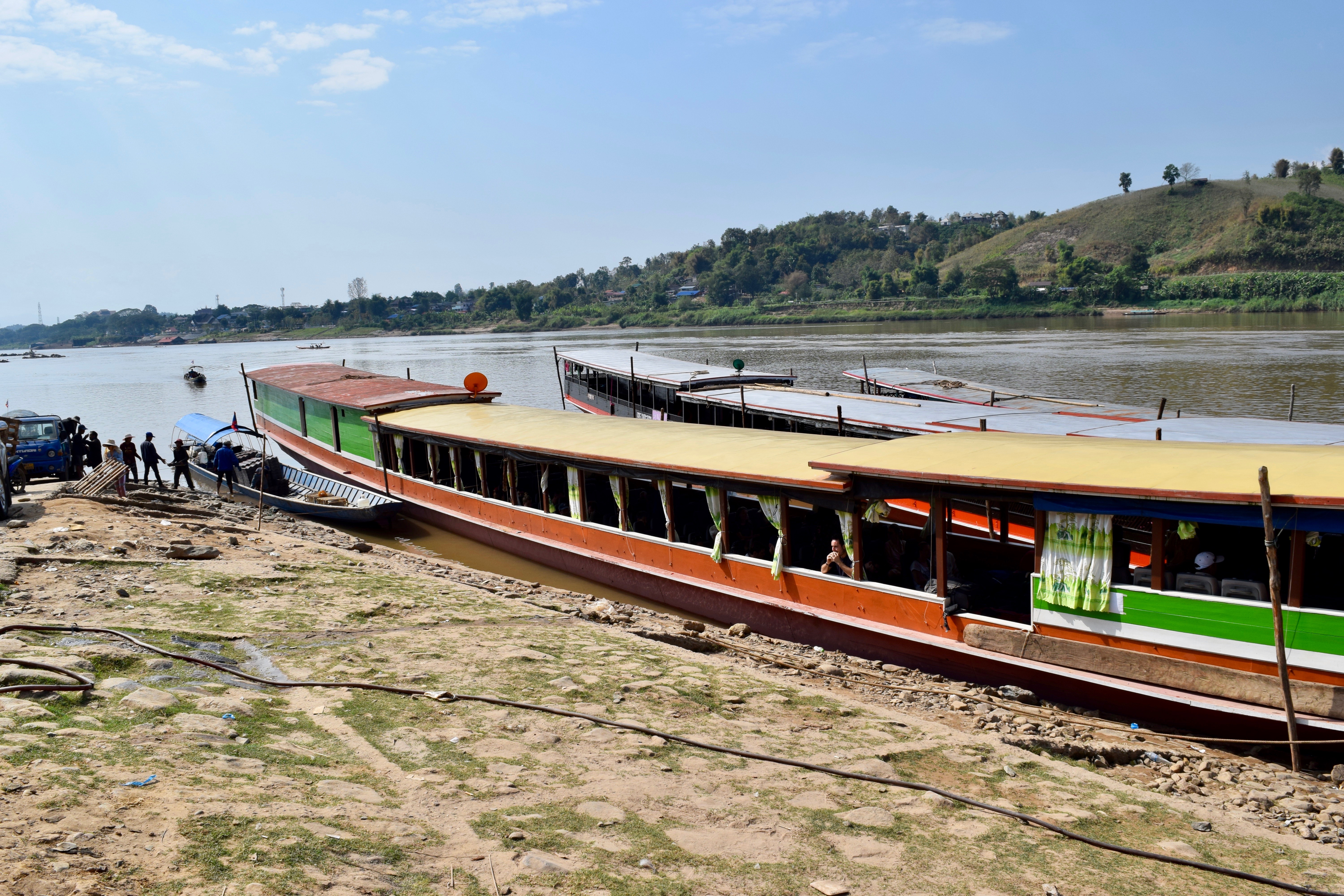
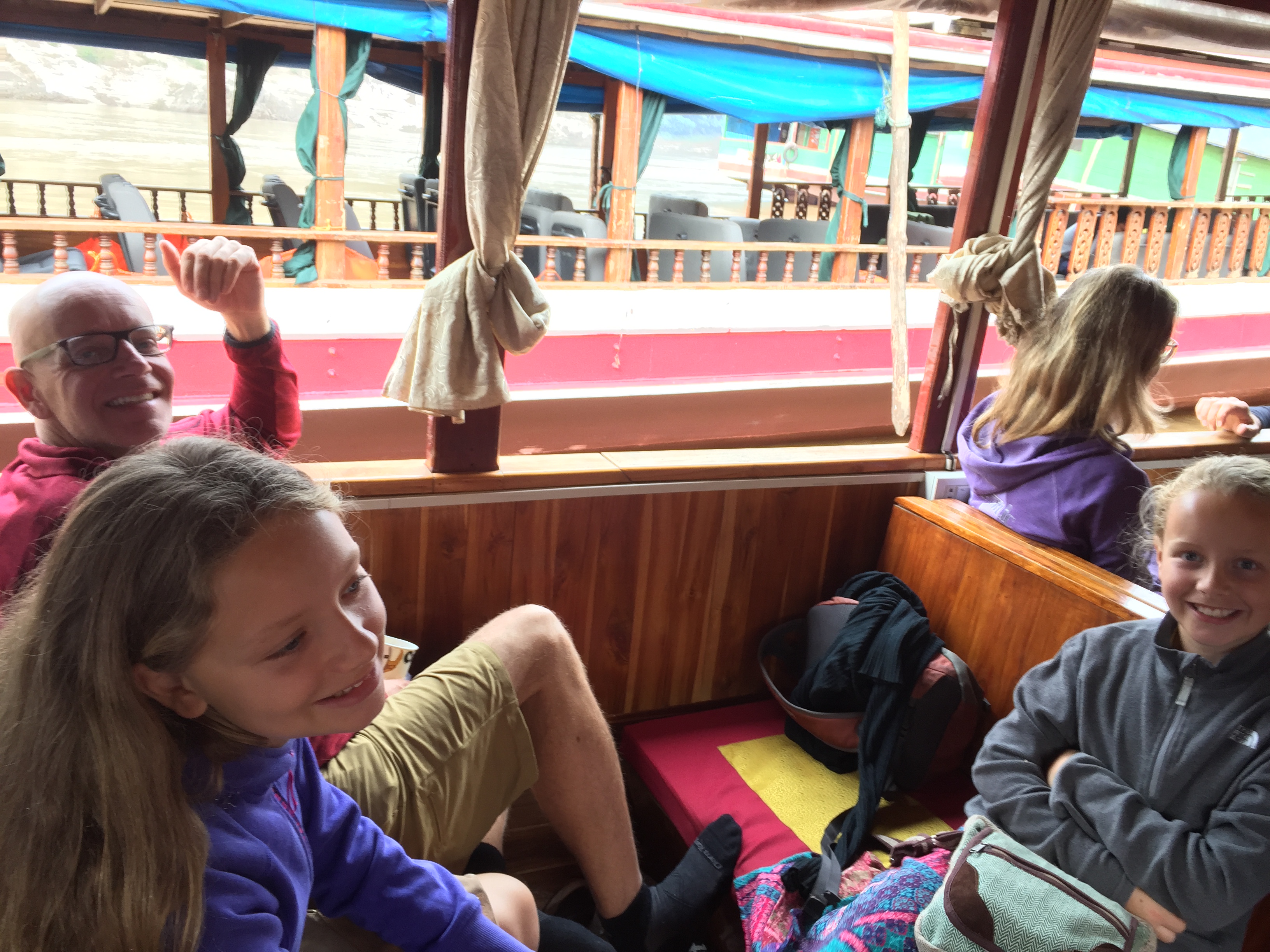
We arrived at the boat launch before the big busloads of people coming from Chaing Mai. There were a few boats there and we trusted that showing our tickets and following the direction of the pointing finger would get us to the correct one. As we boarded the boat, laden with our backpacks, we were handed plastic bags as the Laos man pointed to our feet and said “off”. The boats are wood and have beautiful wooden floors (even the cheap boat we were on), so everyone took off their shoes and moved aboard. The trap door on the first section of the boat was open and we deposited our backpacks in the hole on our way by. There was a man underneath taking them and shuttling them further under the boat. The seats on the boat were old coach bus seats attached to 2×4’s. Luckily they weren’t attached to the floors, so we were able to turn them to face each other and give us a little more leg space. The boat seemed empty and we thought maybe we’d each score our own seats!!
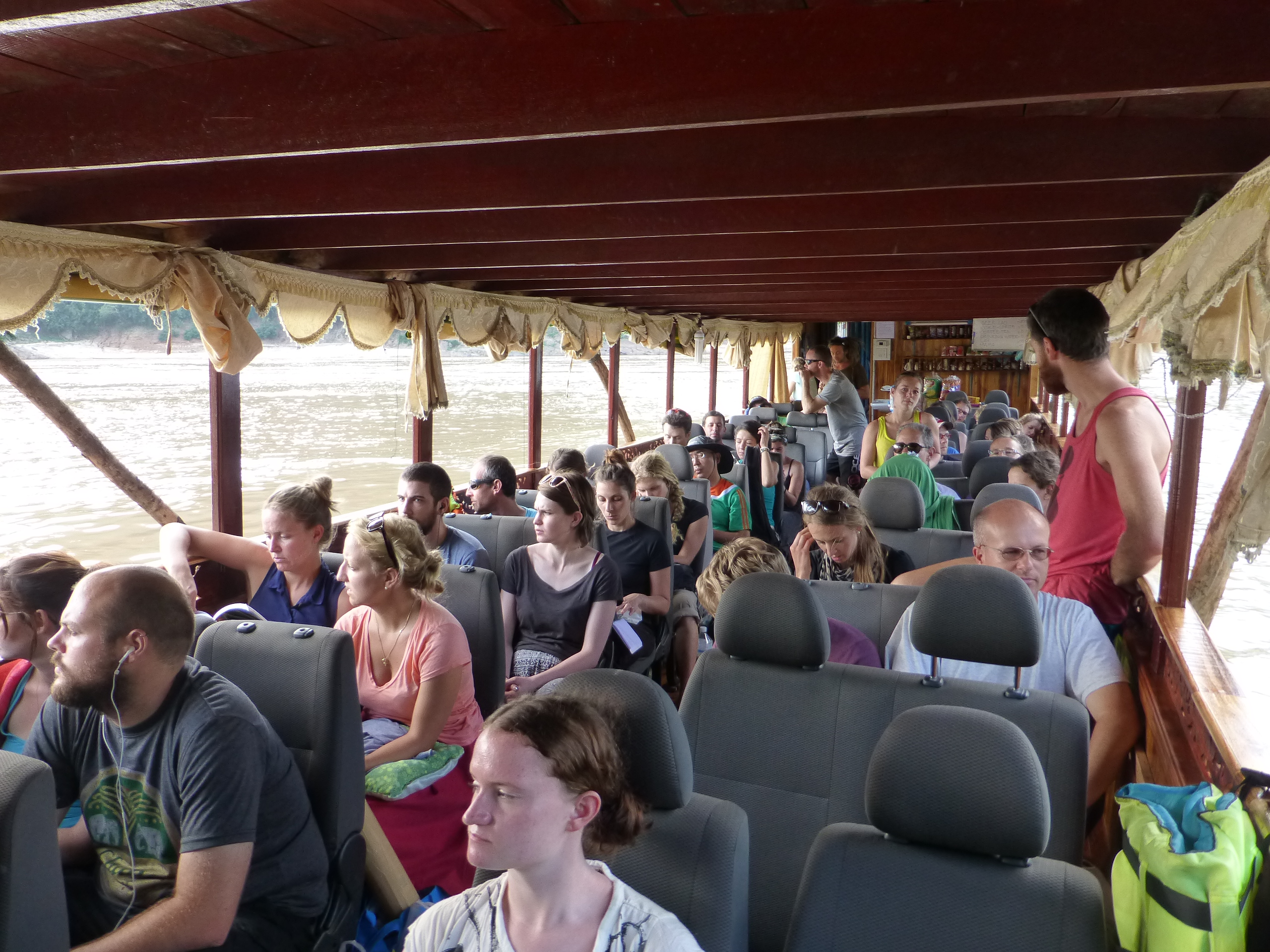
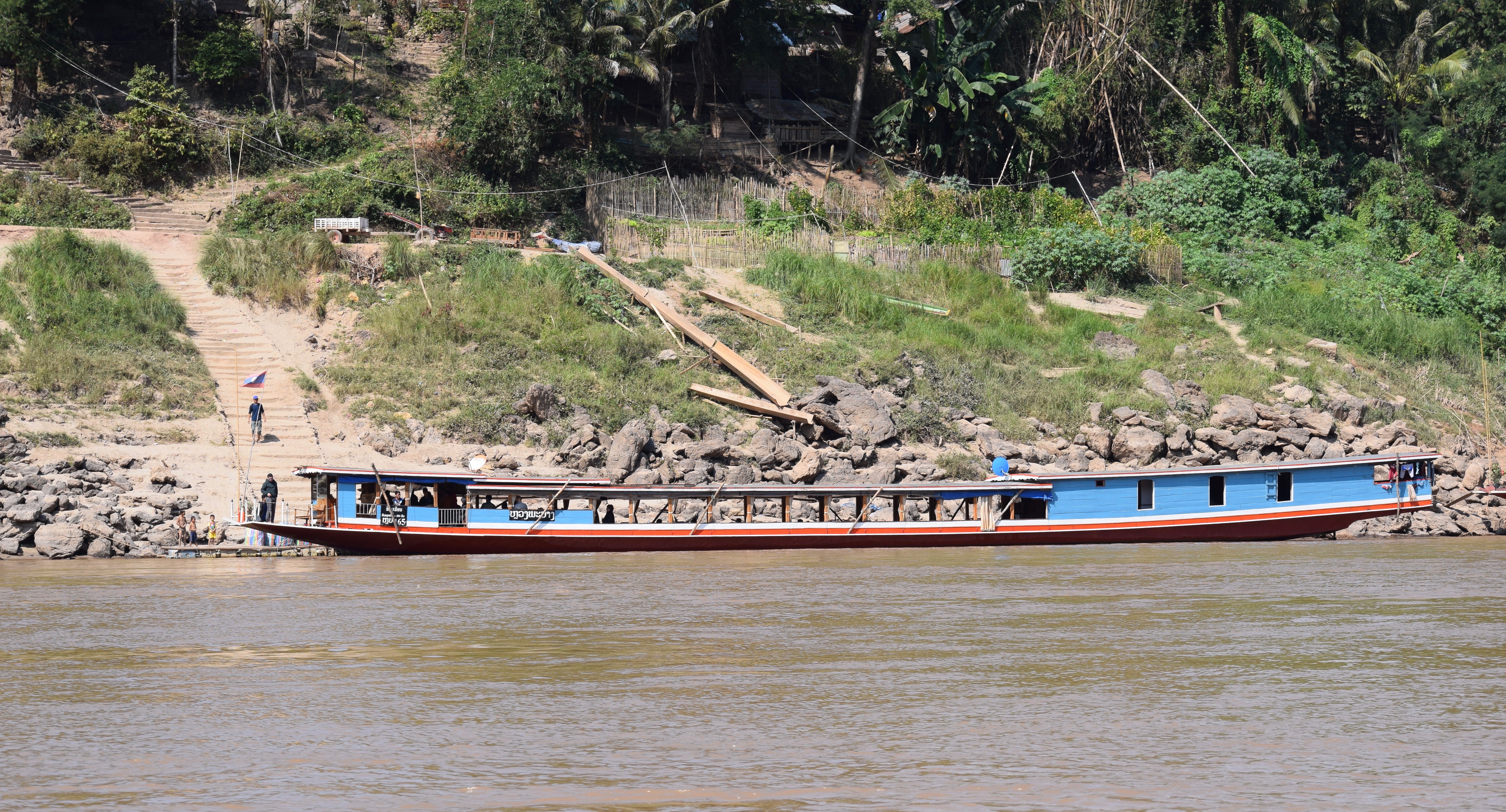
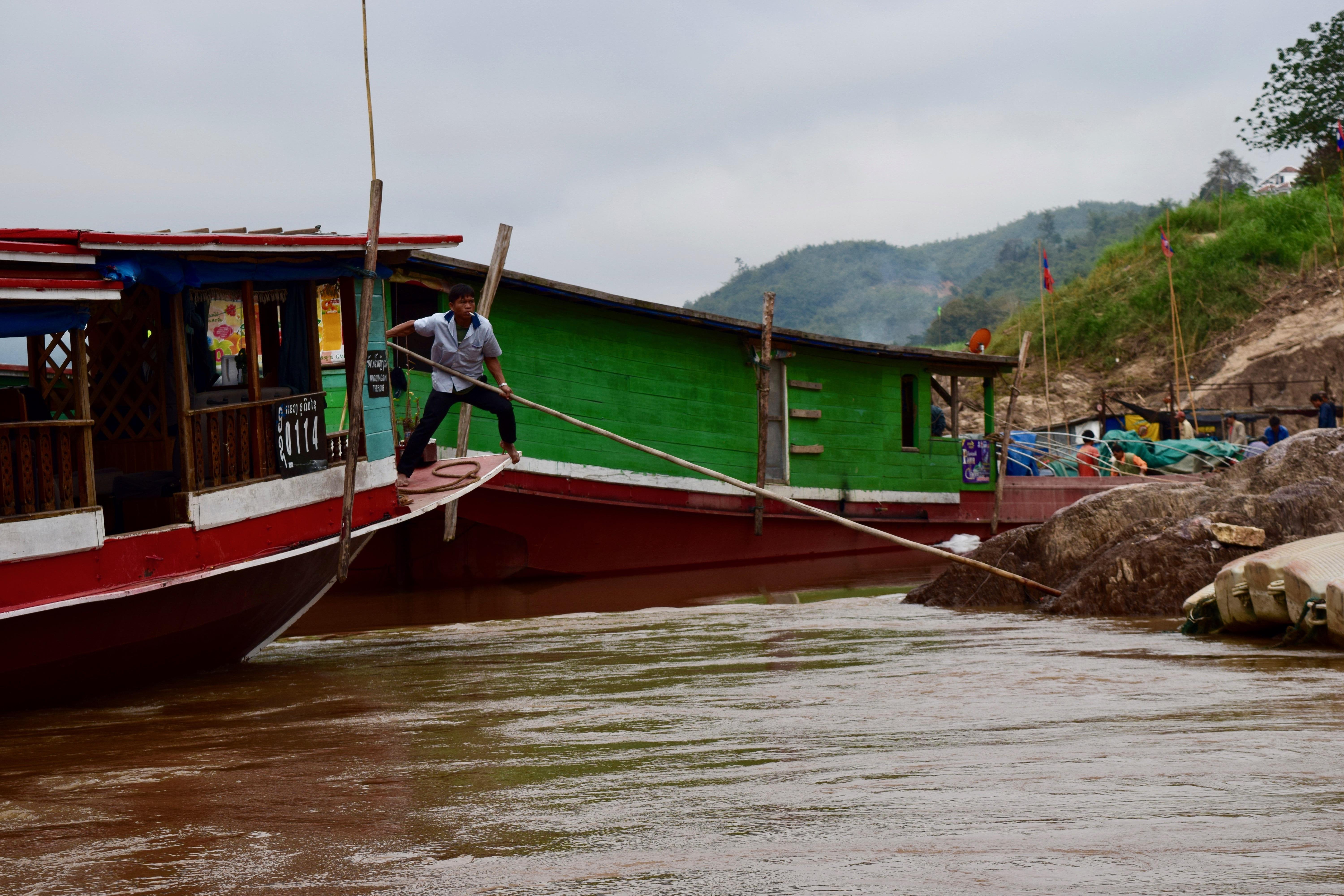
I’d read horror stories about how packed these boats can get. People sitting on floors, beside the engine and no one could move. Reading those posts almost made us book a more expensive boat ($200/person vs $40). I’m glad we didn’t, even though the boat did fill up.
A big bus of people pulled in just before we were supposed to leave. So, we had to wait for them to load in and then watch as they tried to figure out where to sit. A group of young British travellers had the worst seats on the boat, in the back, near the engine. But, they made the best of it. They boarded with huge bottles of Coke and lots of rum to go along with it. They were singing and laughing all the way down the river!!
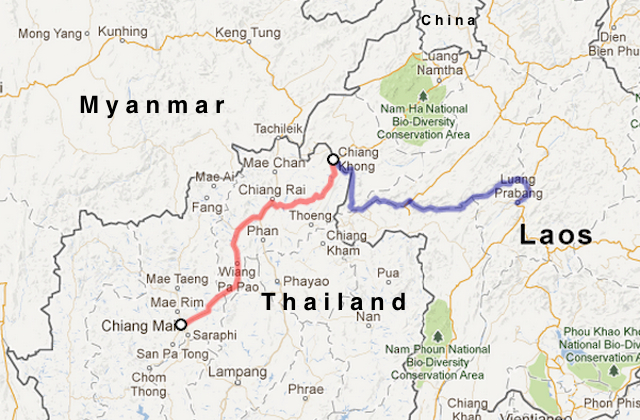
We stopped in Pakbeng (about half way) for the night after about 6 hours of cruising down the river. I had booked a guesthouse using Booking.com the night before and there was a songthaew waiting for any of their guests getting off the boat. It was getting dark and Pakbeng is just a place to sleep on the river journey, so we ordered some food from our hosts and lunch for the next day, played a game of Catan (we packed ours from home in a ziploc bag and have played many times throughout our journey) and chatted with others at the guesthouse about their adventures and exchanged suggestions of things to see and do.
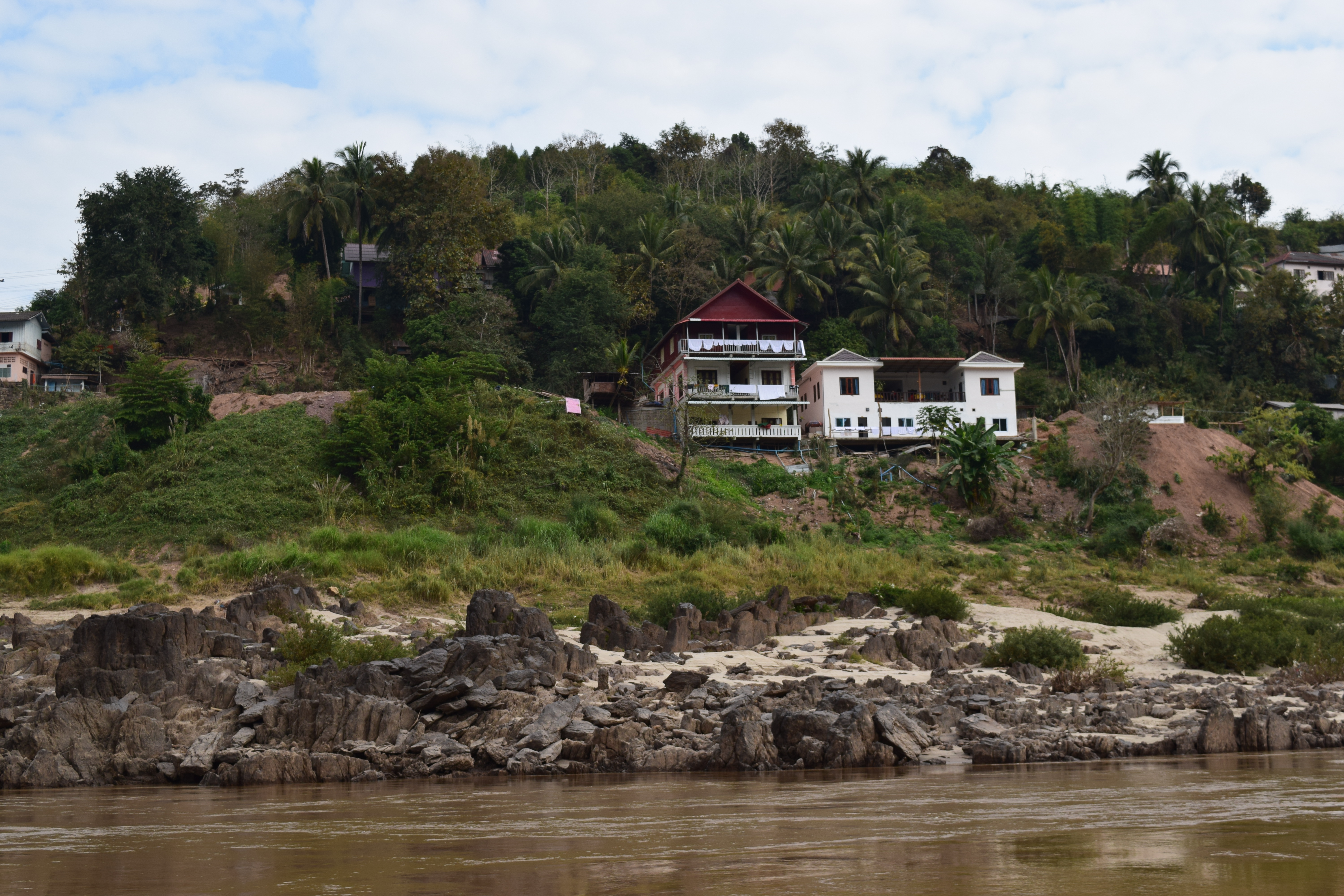
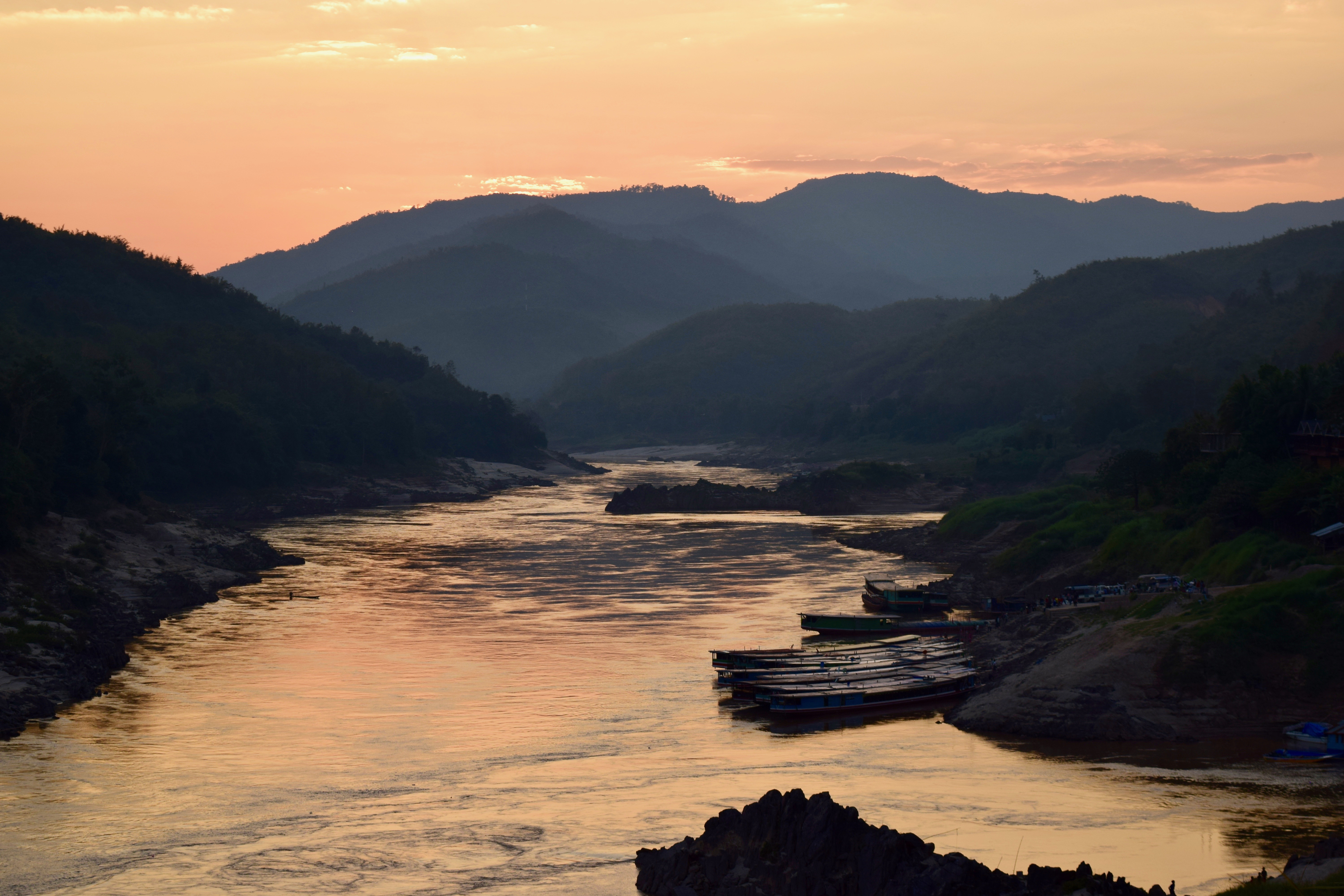
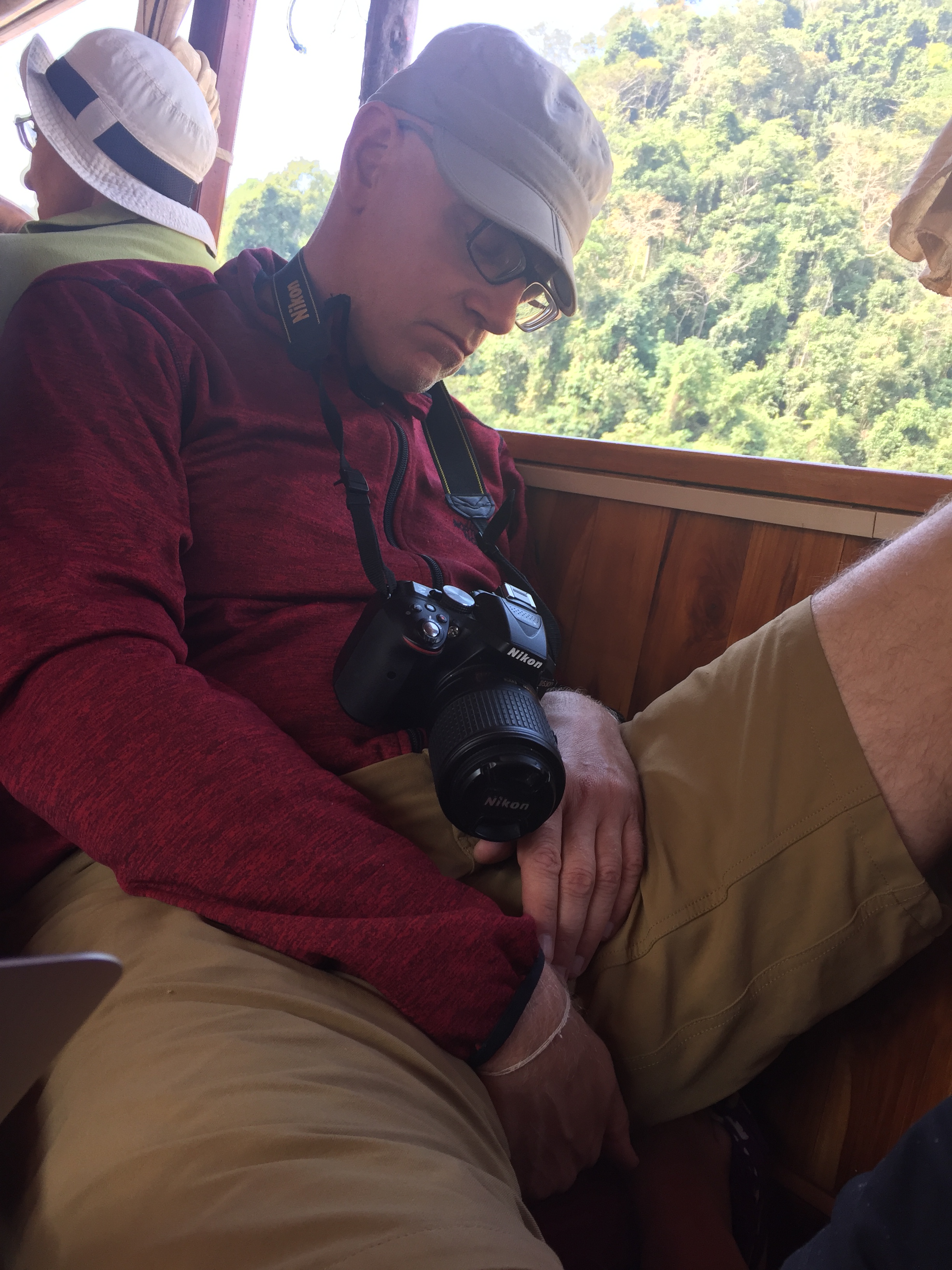
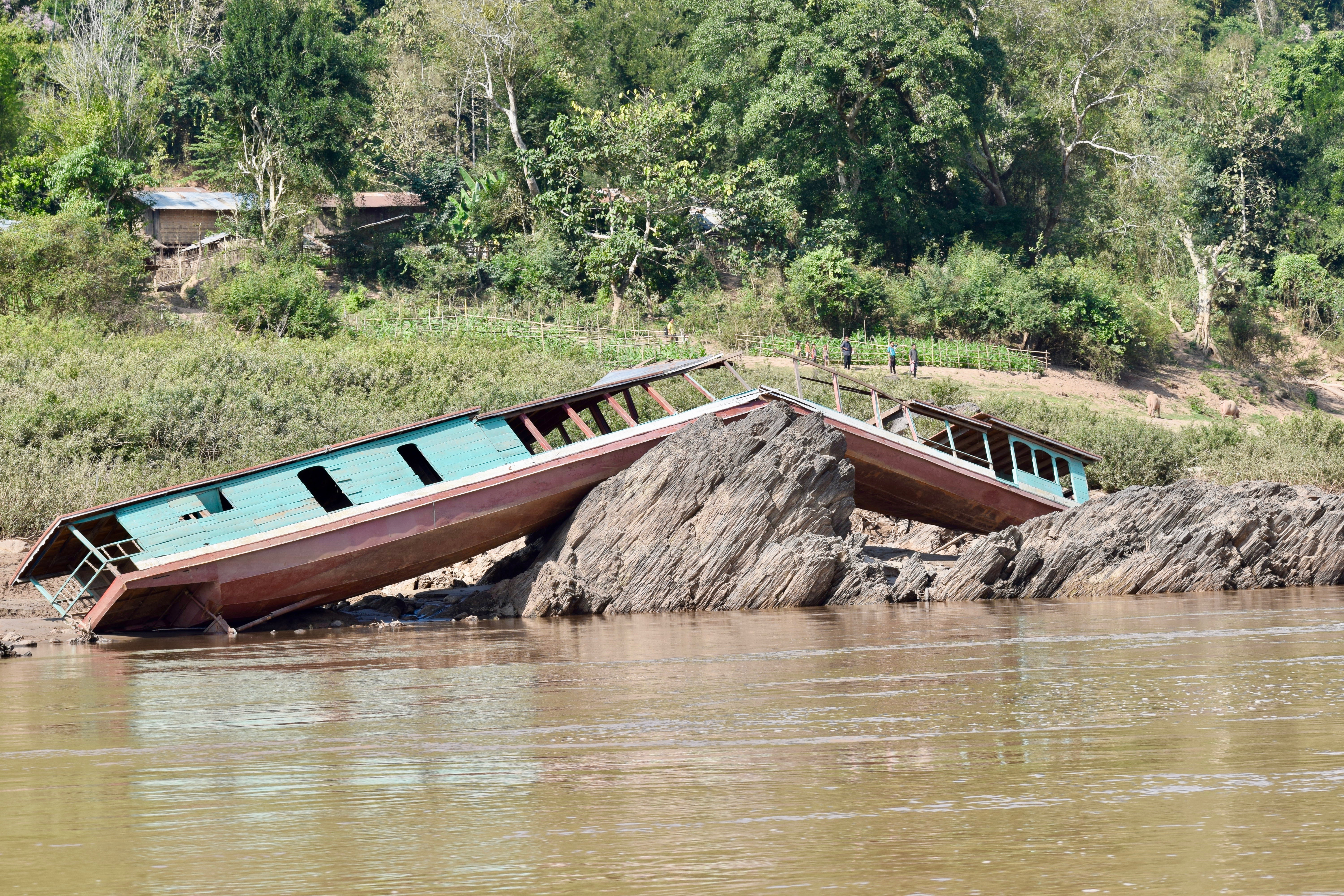
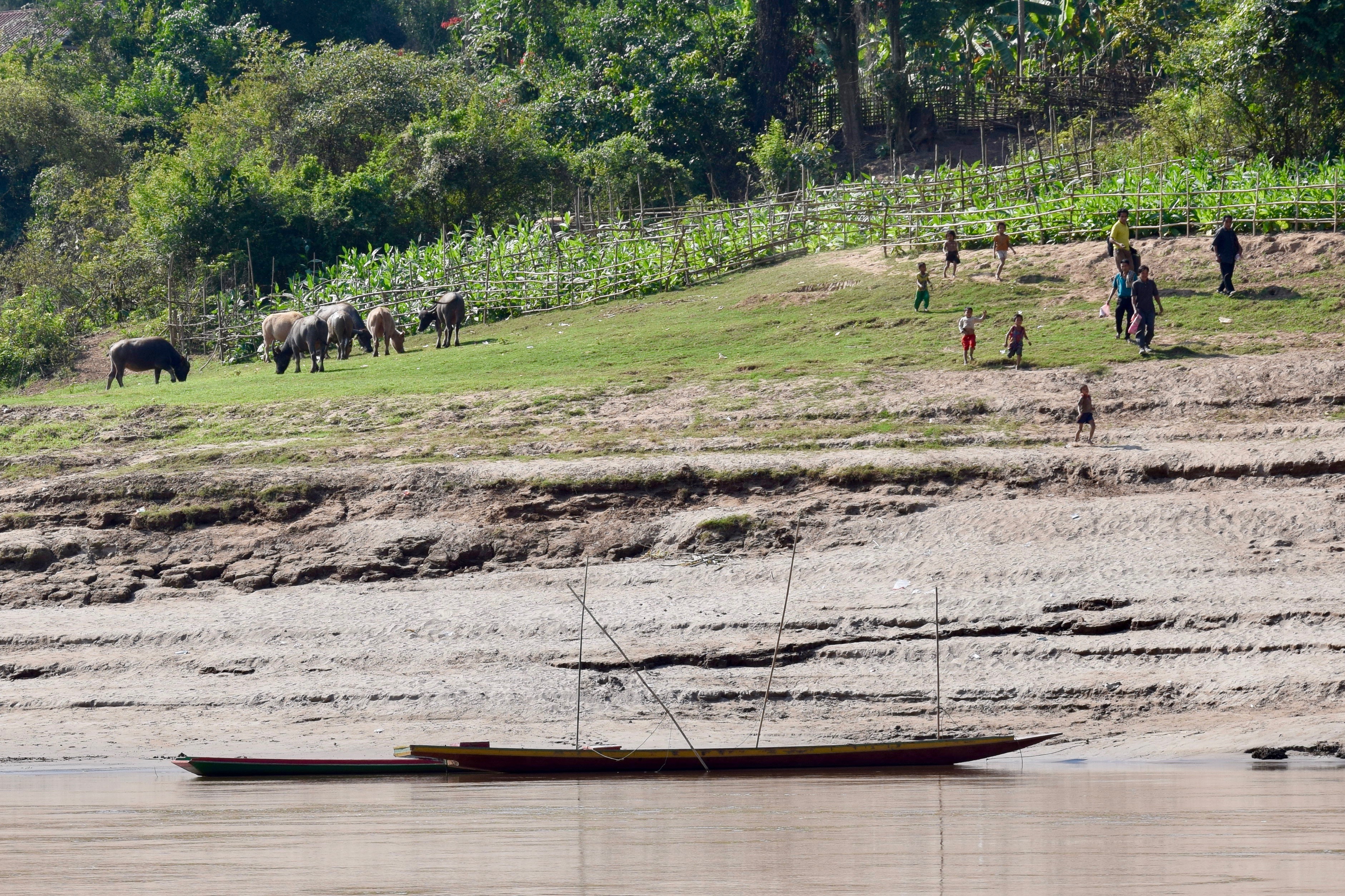
We were up bright and early the next day to have breakfast and get to the boat early so we wouldn’t have to sit near the engine. It was a different boat. It looked nicer than the first one, but the seats were less comfortable. We used the time on the boat to catch up on some school work and reading, but meeting other travellers and learning about where people come from or where they were going made the journey a pretty neat experience. The scenery along the way added something special as well. We saw wild elephants at the river side, villagers going about their daily life, fishermen, boat wrecks, water buffalo and beautiful karst mountains.
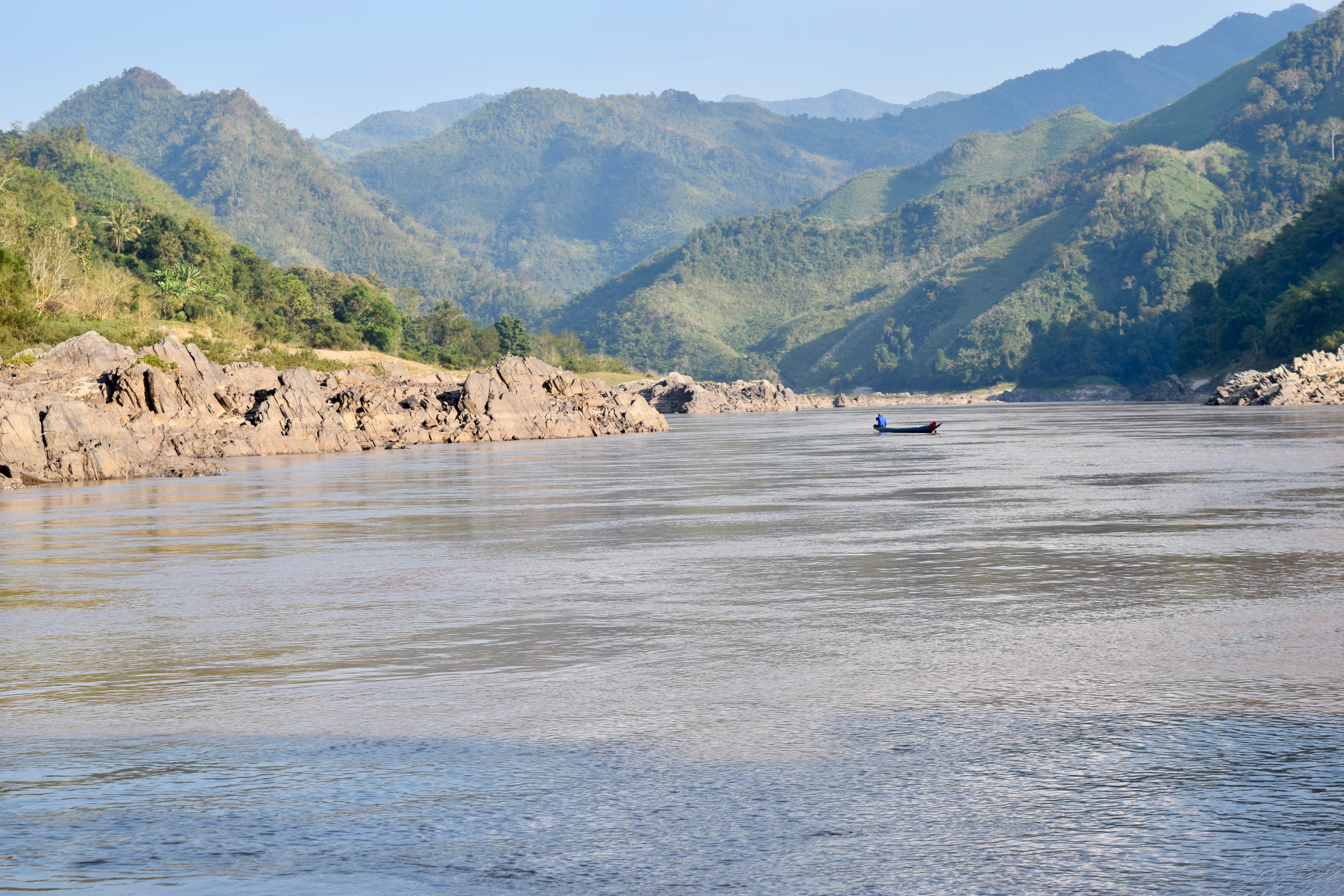
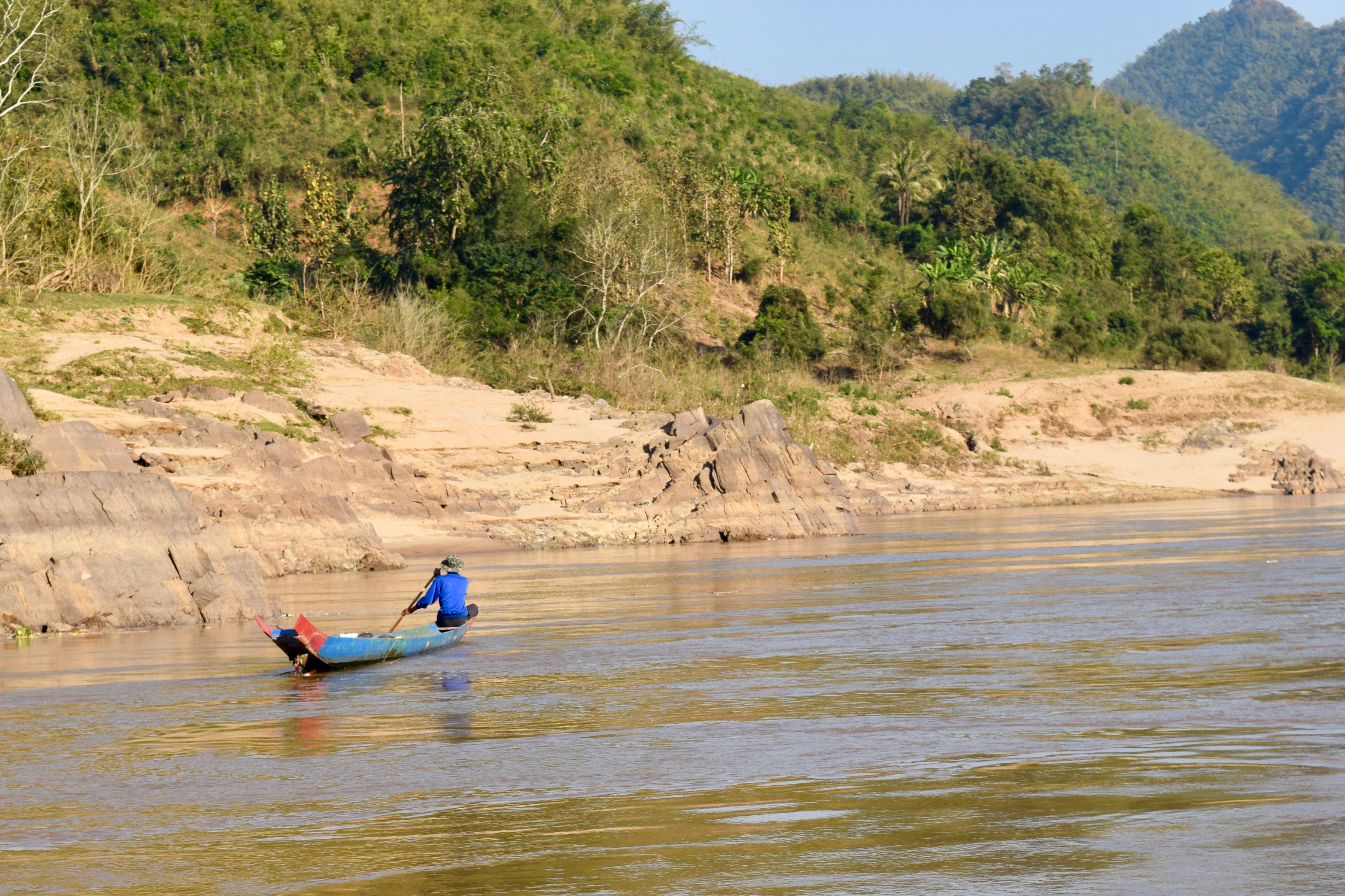
The boat dropped us off about 10km outside Luang Prabang and once again we loaded ourselves into a songthaew and headed to our guesthouse. We stayed in Luang Prabang for a week. There was so much to see and do in the city as well as in the surrounding countryside and we needed to plant ourselves in one place for a bit of a rest. Laos is the perfect country to lower the ol’ blood pressure; you may even have to check for a pulse!
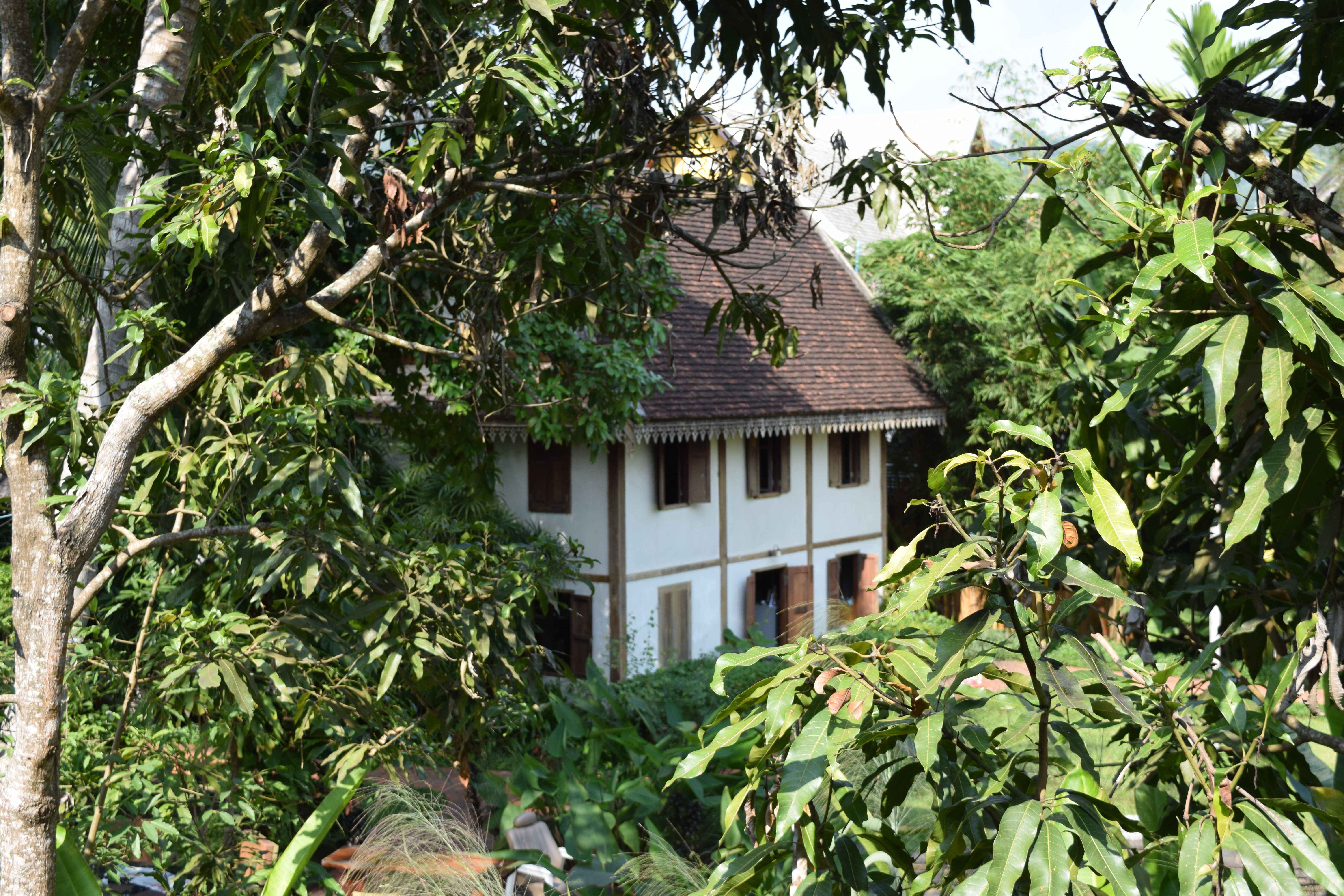
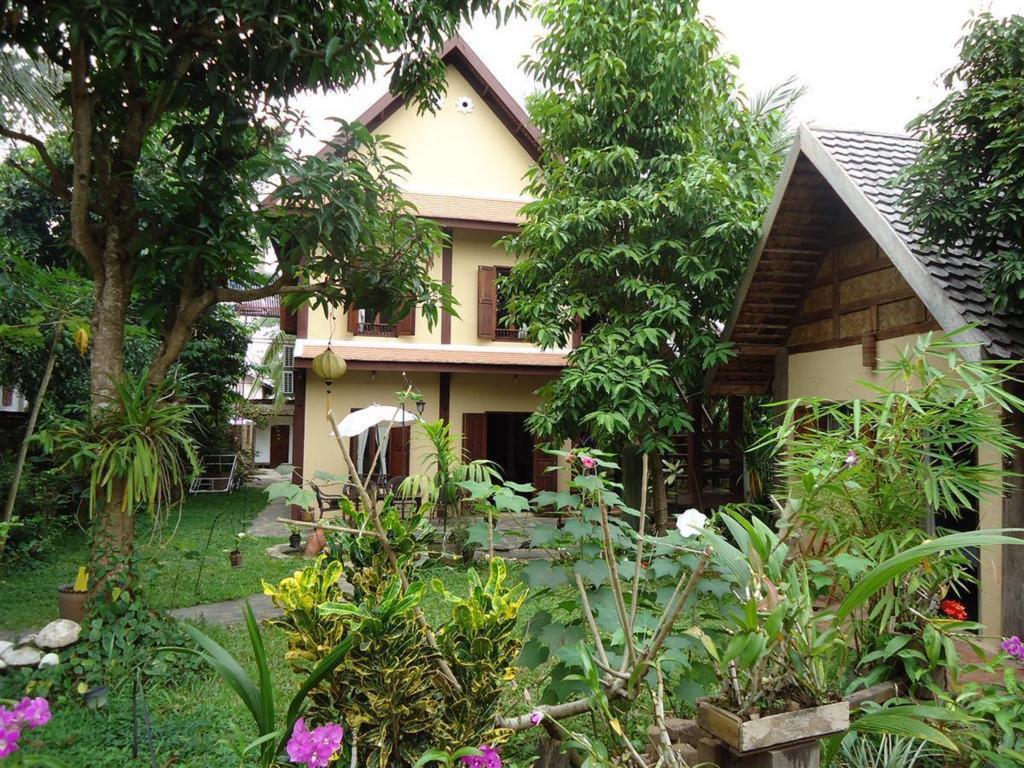
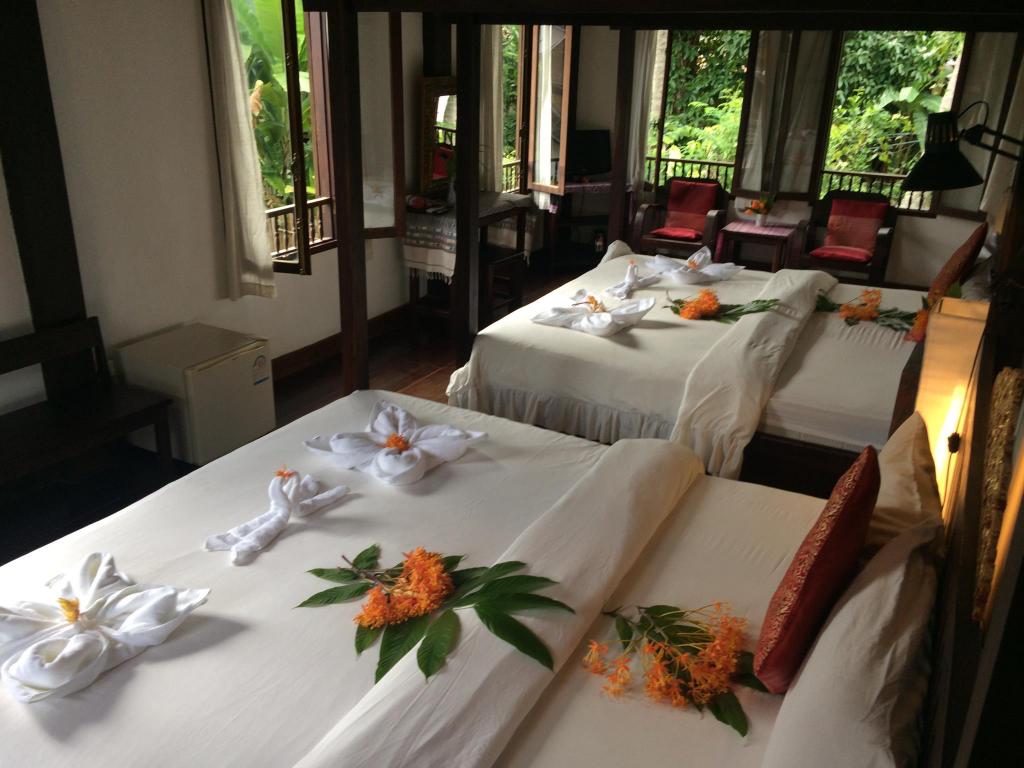
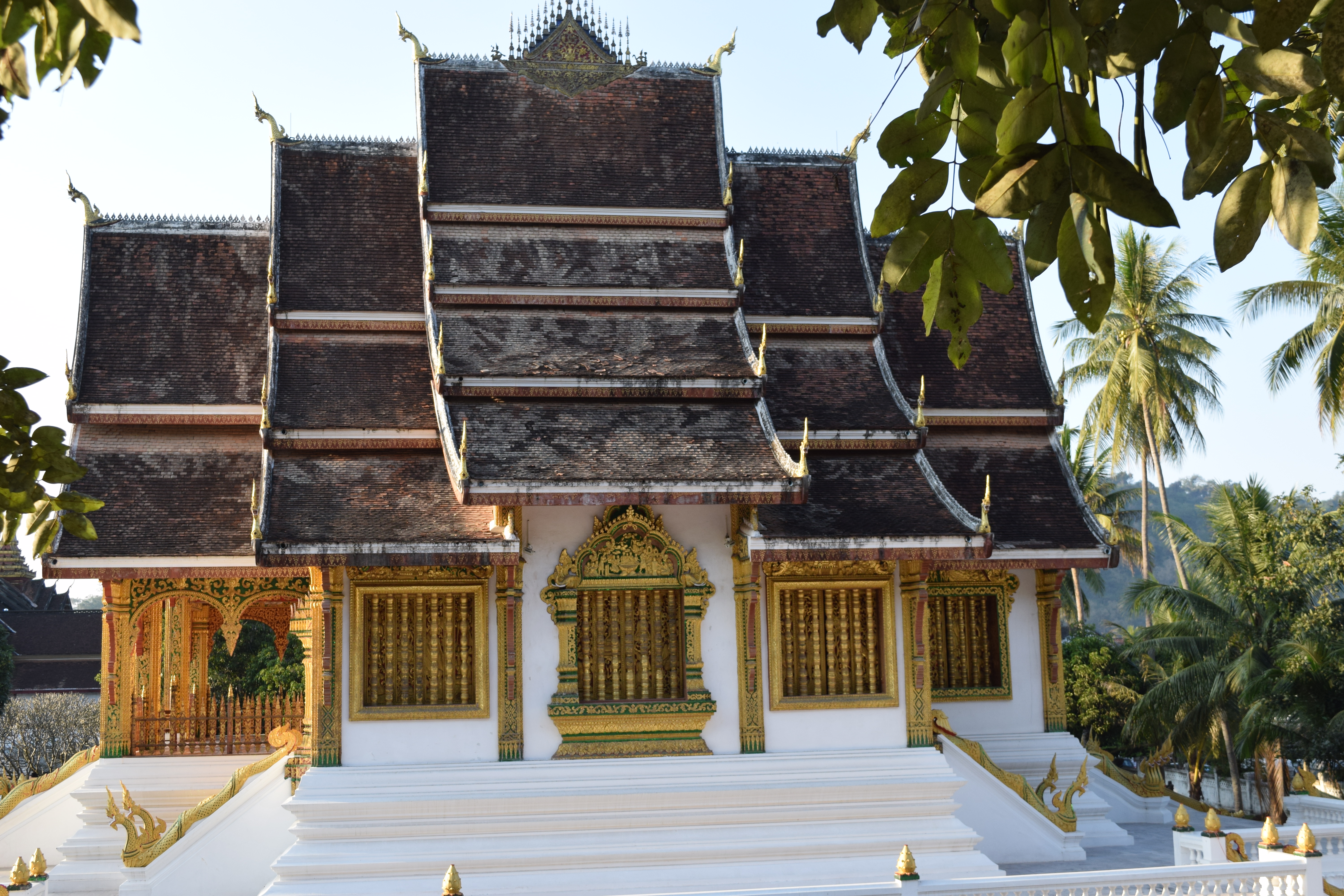
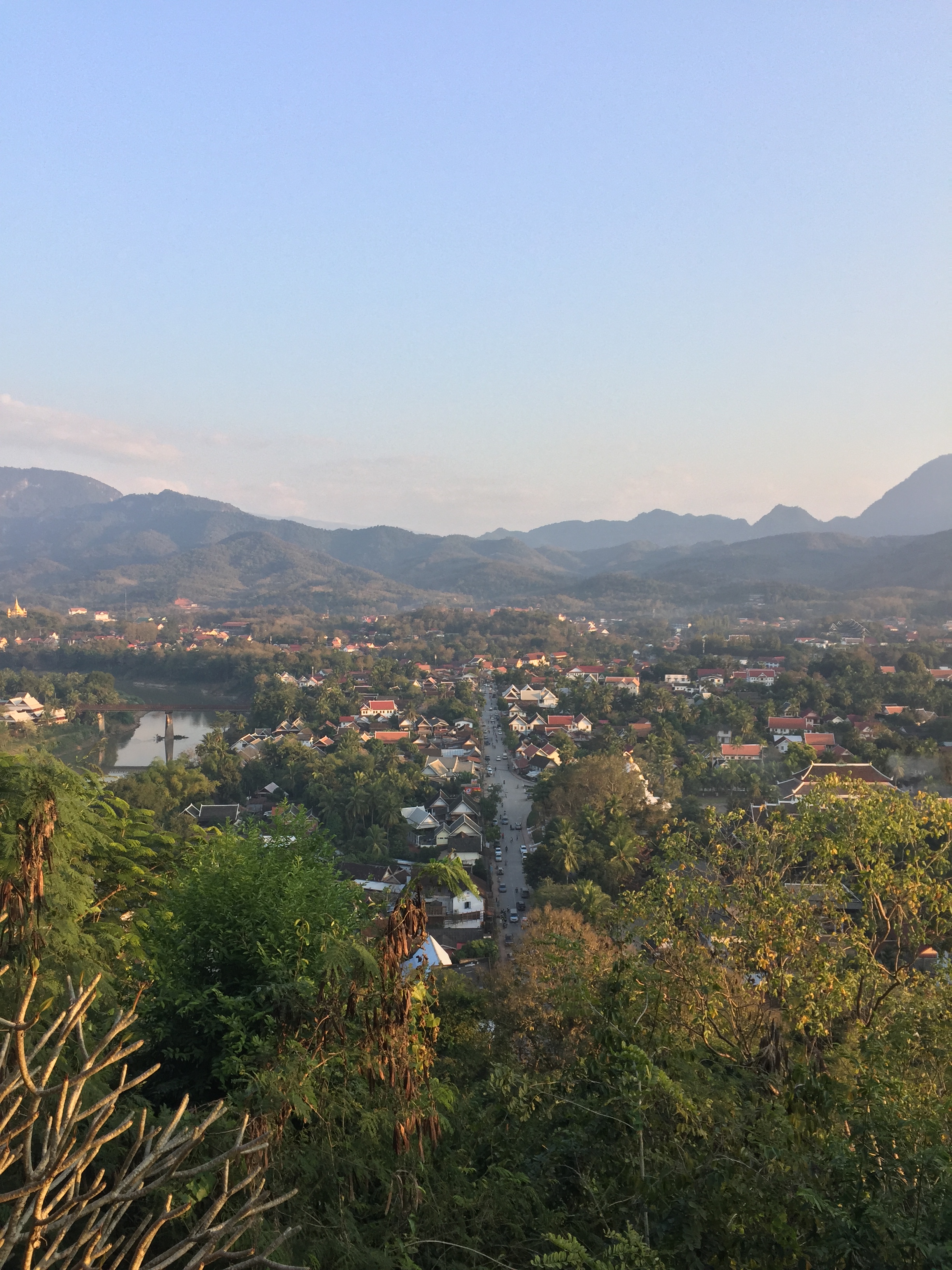
Luang Prabang is situated where the Mekong and the Nam Khan River meet and is a UNESCO World Heritage site. We stayed in the old part of the city at the Khoum Xieng Thong Guesthouse, a restored heritage property. The rooms and grounds were beautiful, it was close to everything in the city and breakfast was included!! We were situated near two Buddhist temples and open got to hear their drumming and chanting from our room….especially at 5am!
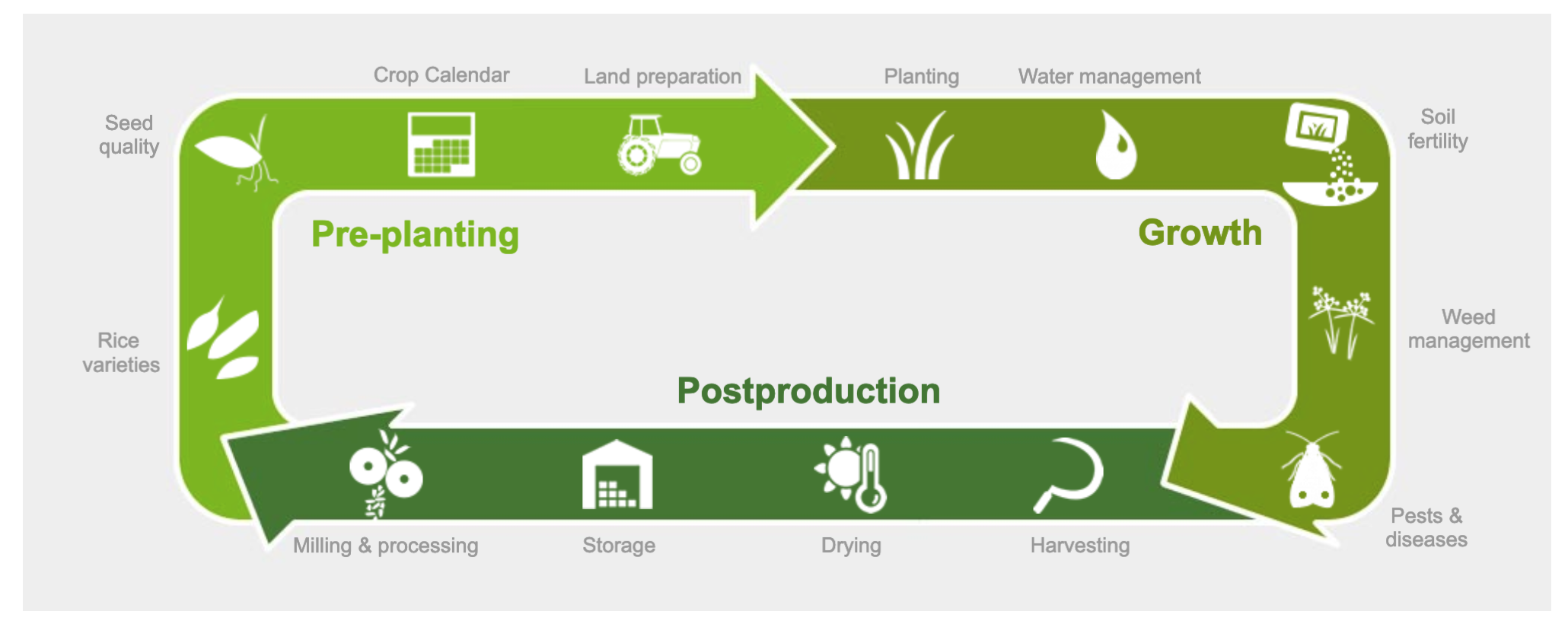
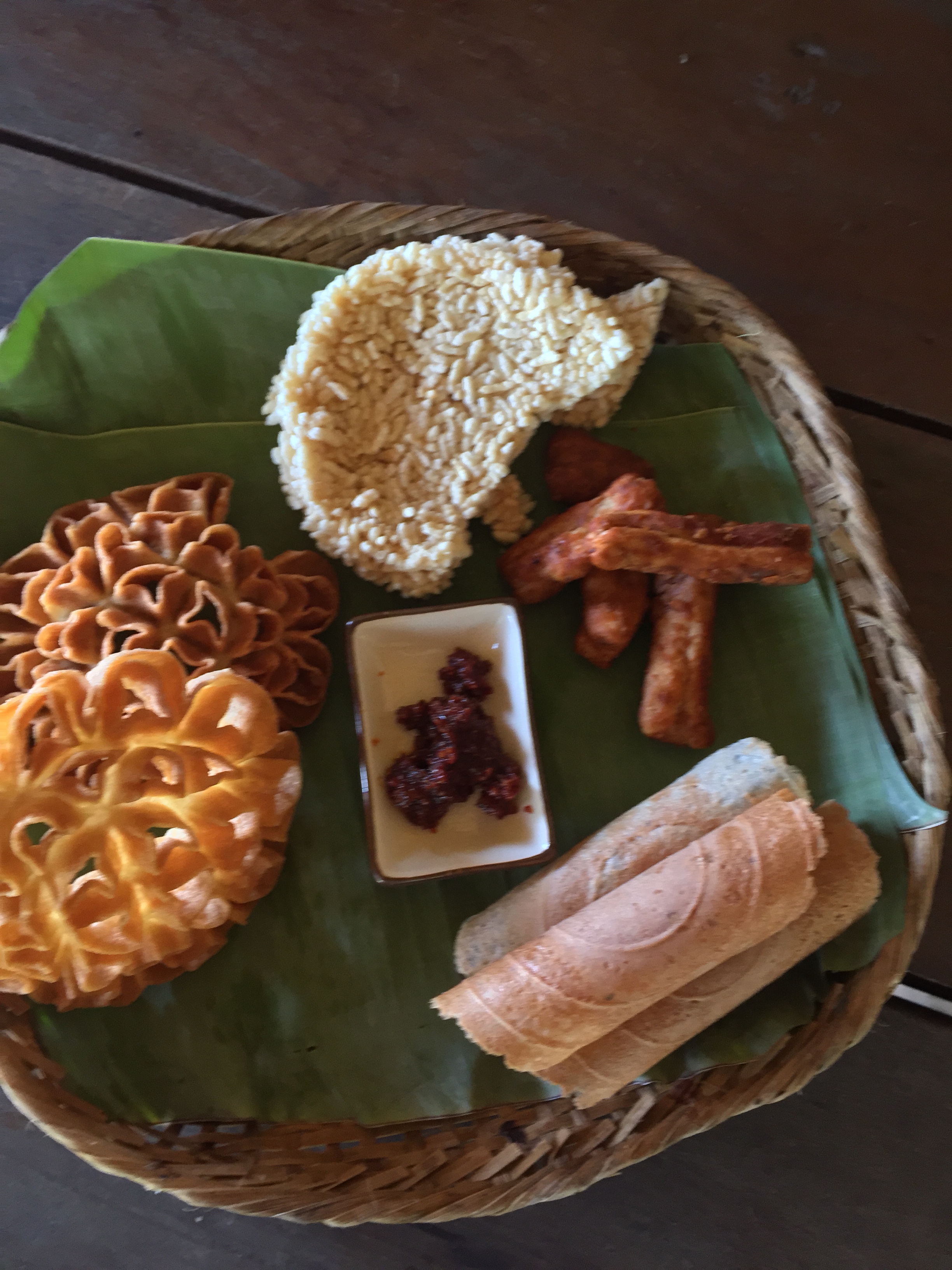
One of our goals for the trip is to make sure the girls are learning about the history and culture of the places we visit. What better way to learn about a culture than to learn about its food. We visited the Living Land Farm to learn about the rice growing process and it’s impact on the people of Laos.
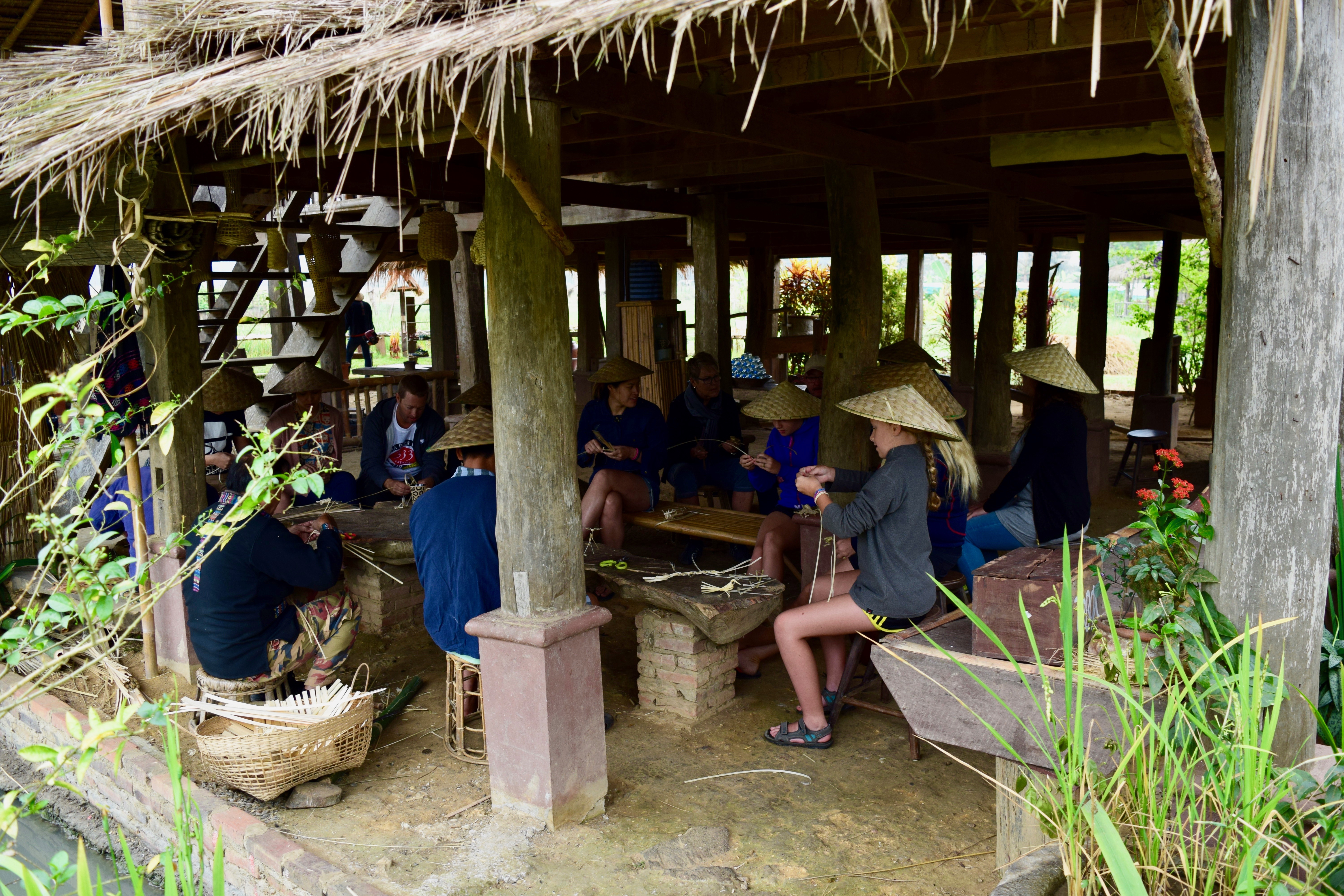
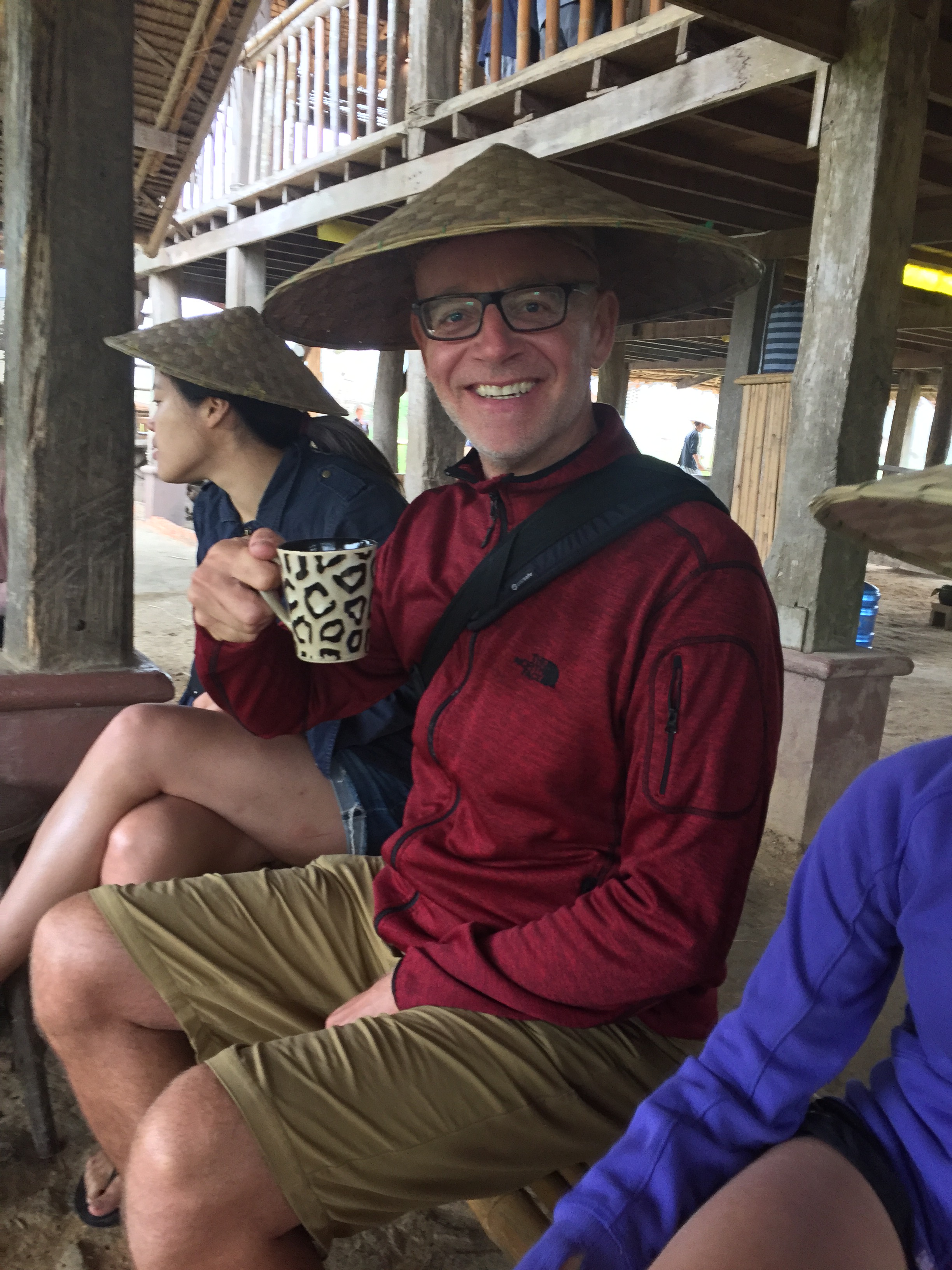
We arrived bright and early and started right into our first lesson….weaving bamboo. Not all jobs on a farm involve working in the fields. Bamboo is used to make hats, rice cookers, fish traps, mats and even the walls of the buildings. The weavers showed us how to make some fun small items….it’s not easy. They spend their days making things necessary to carry out daily life on the farm.
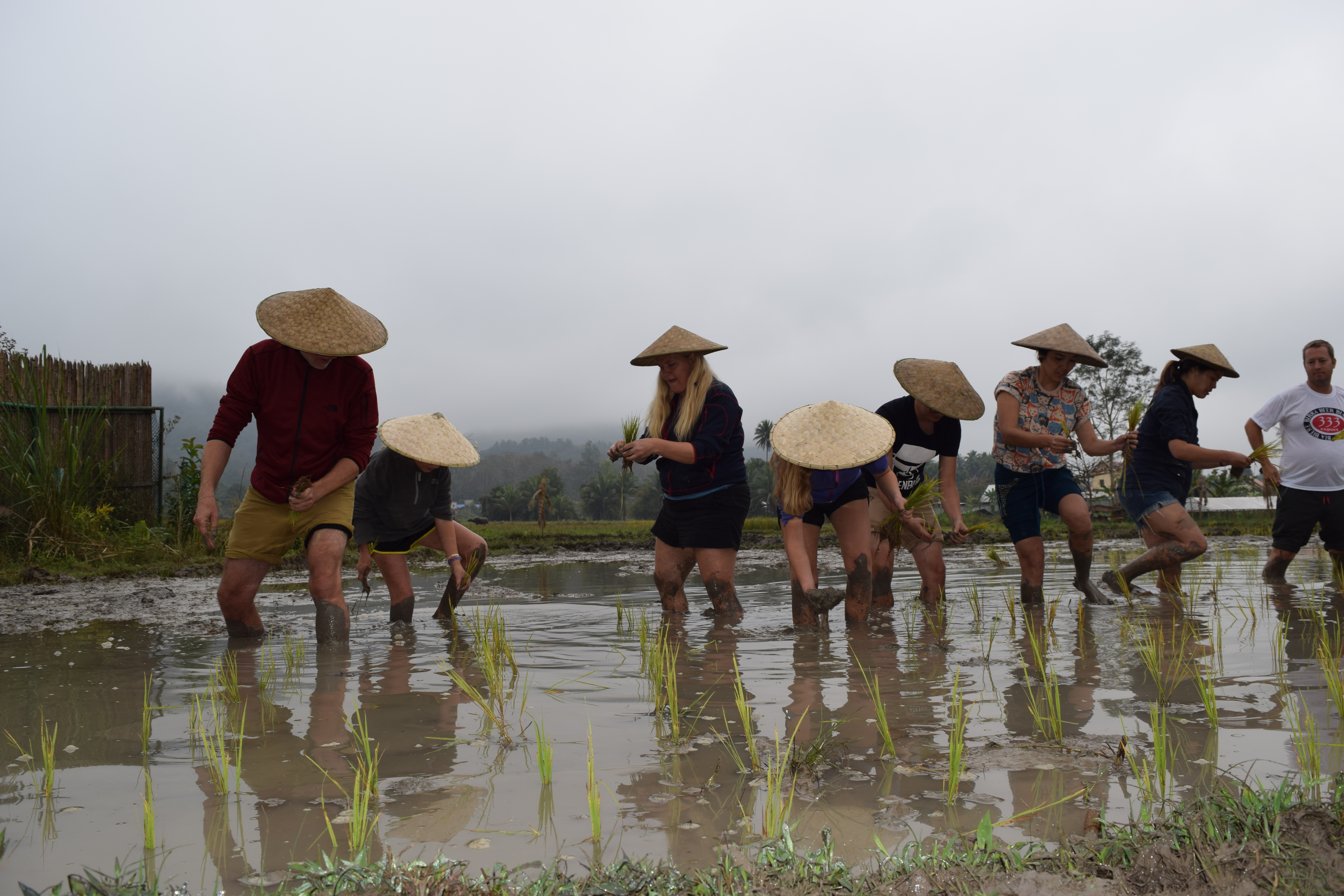
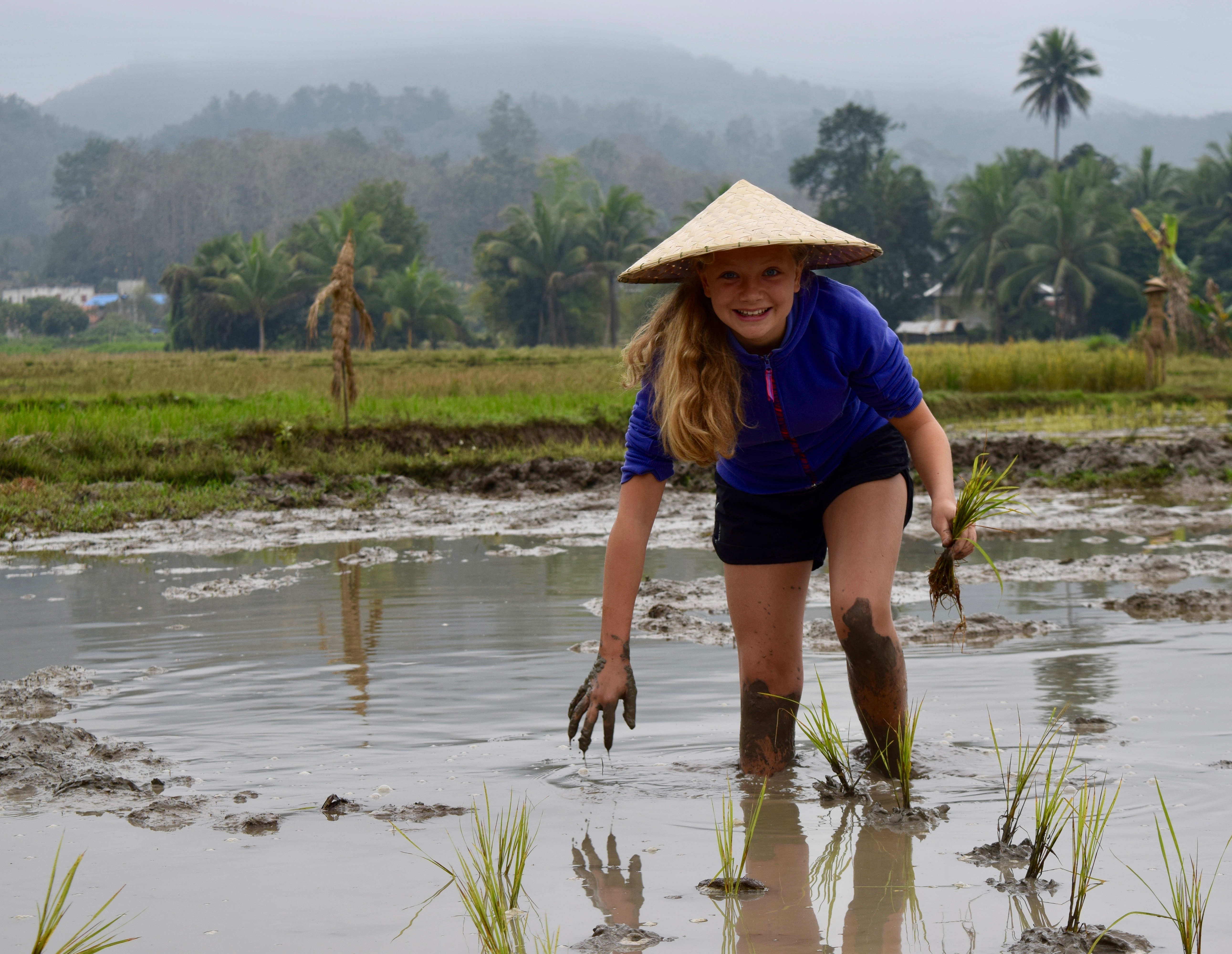
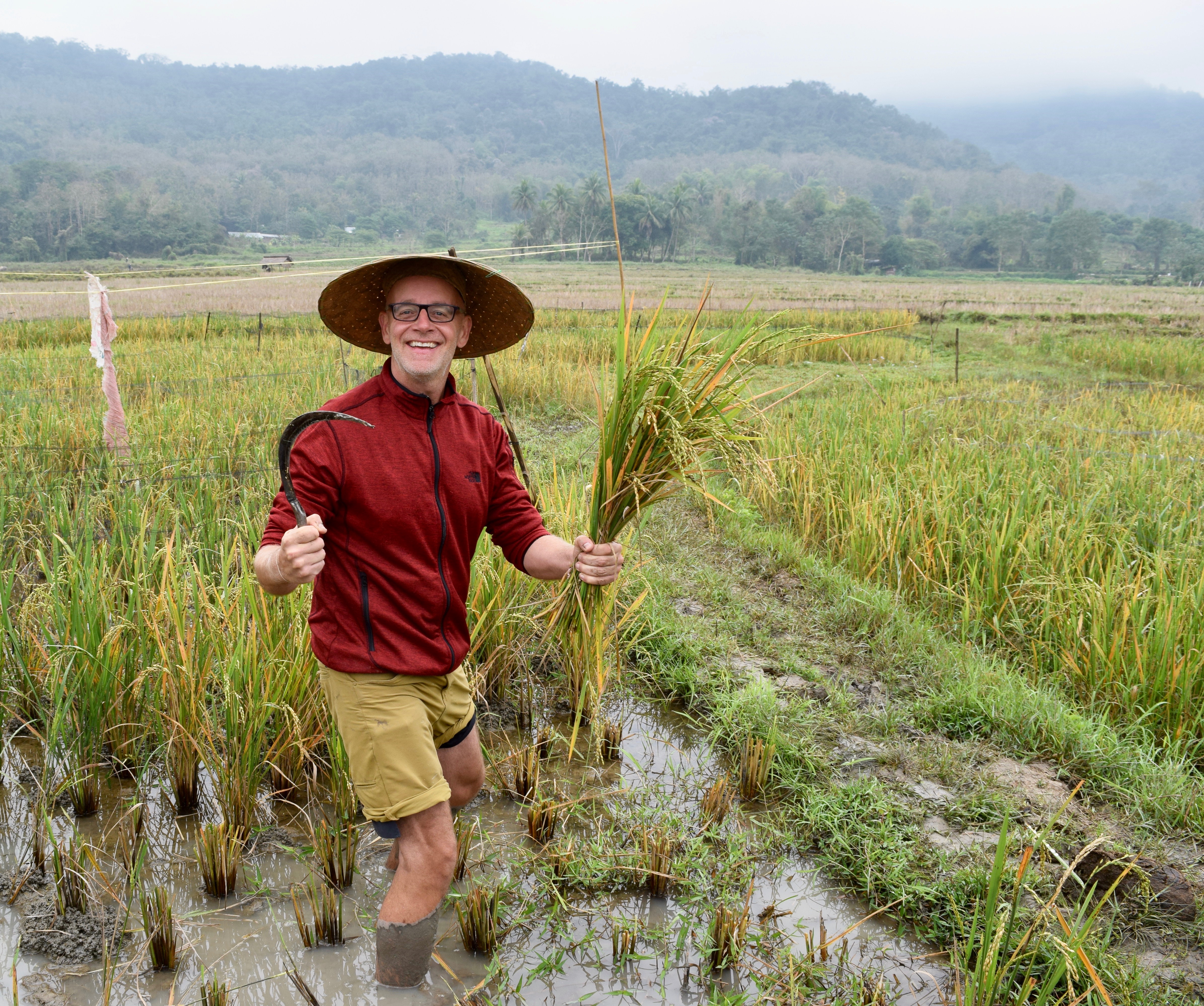
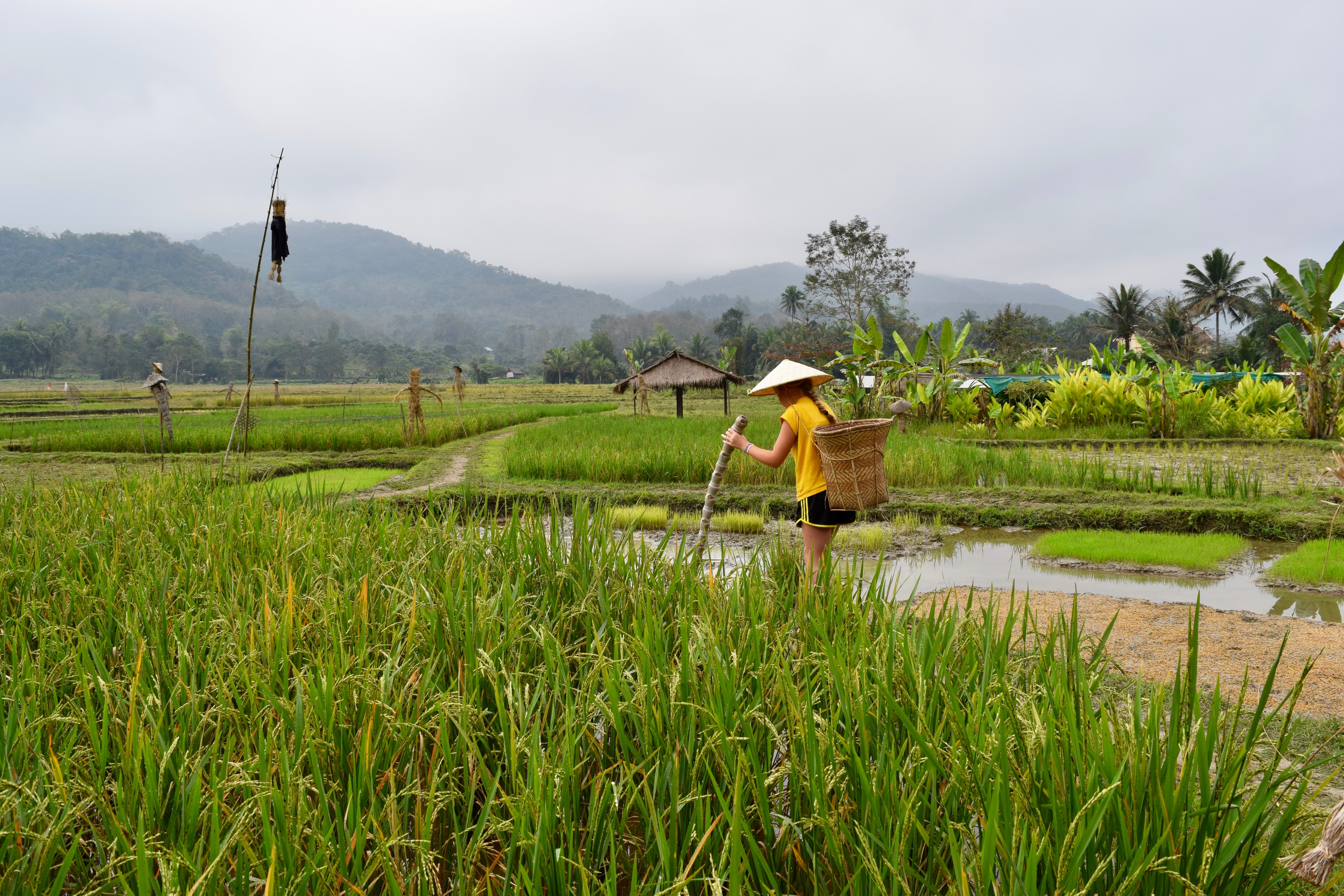
Then we moved into the fields to try our hand at being rice farmers. We learned all the steps from choosing and planting the seeds, to preparing the land, to transplanting seedlings and harvesting, to drying and milling. We did it all. With mud up to our knees and the memory of snails around our toes we finished our work, cleaned up and headed for a traditional Laos lunch to finish off our day.
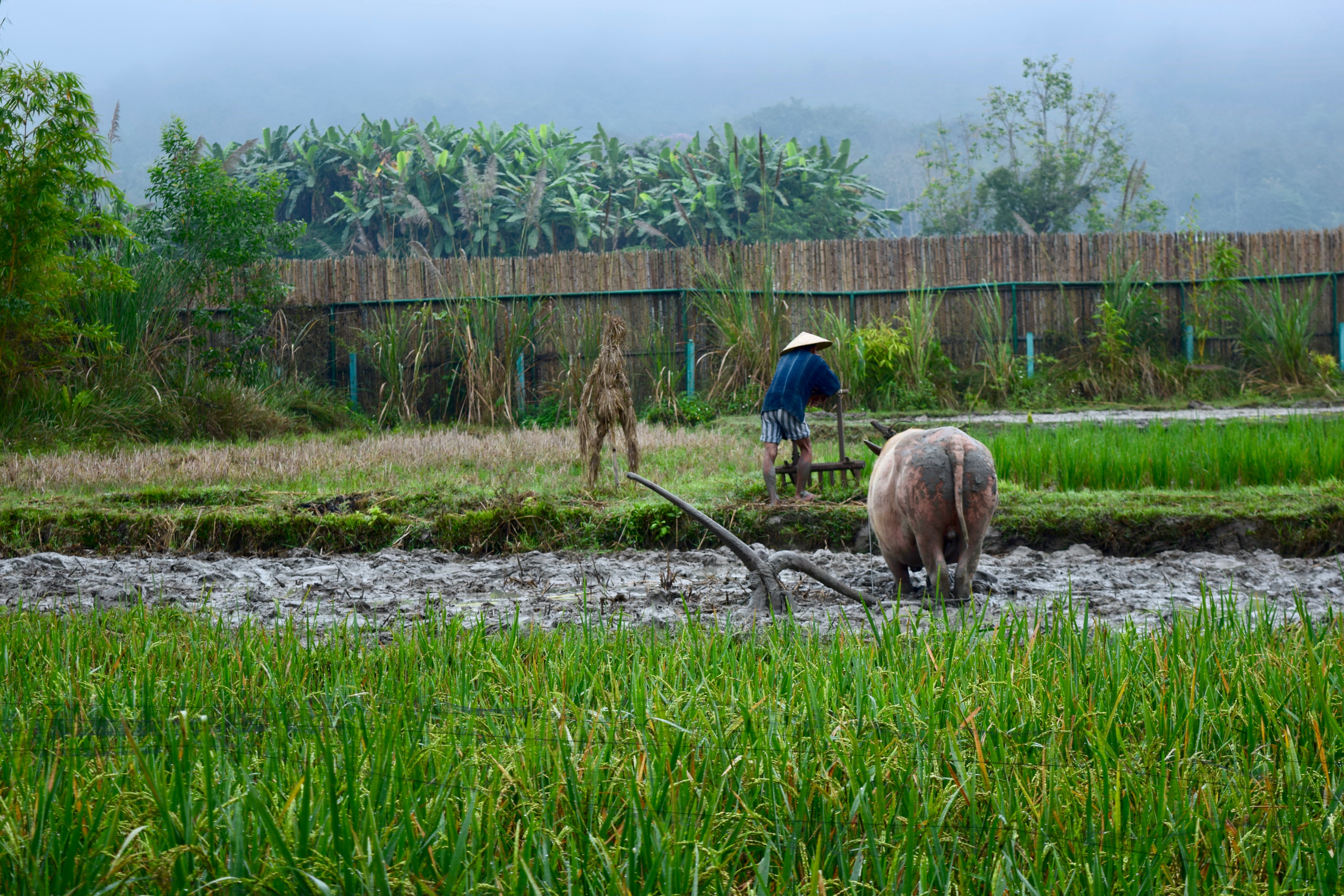
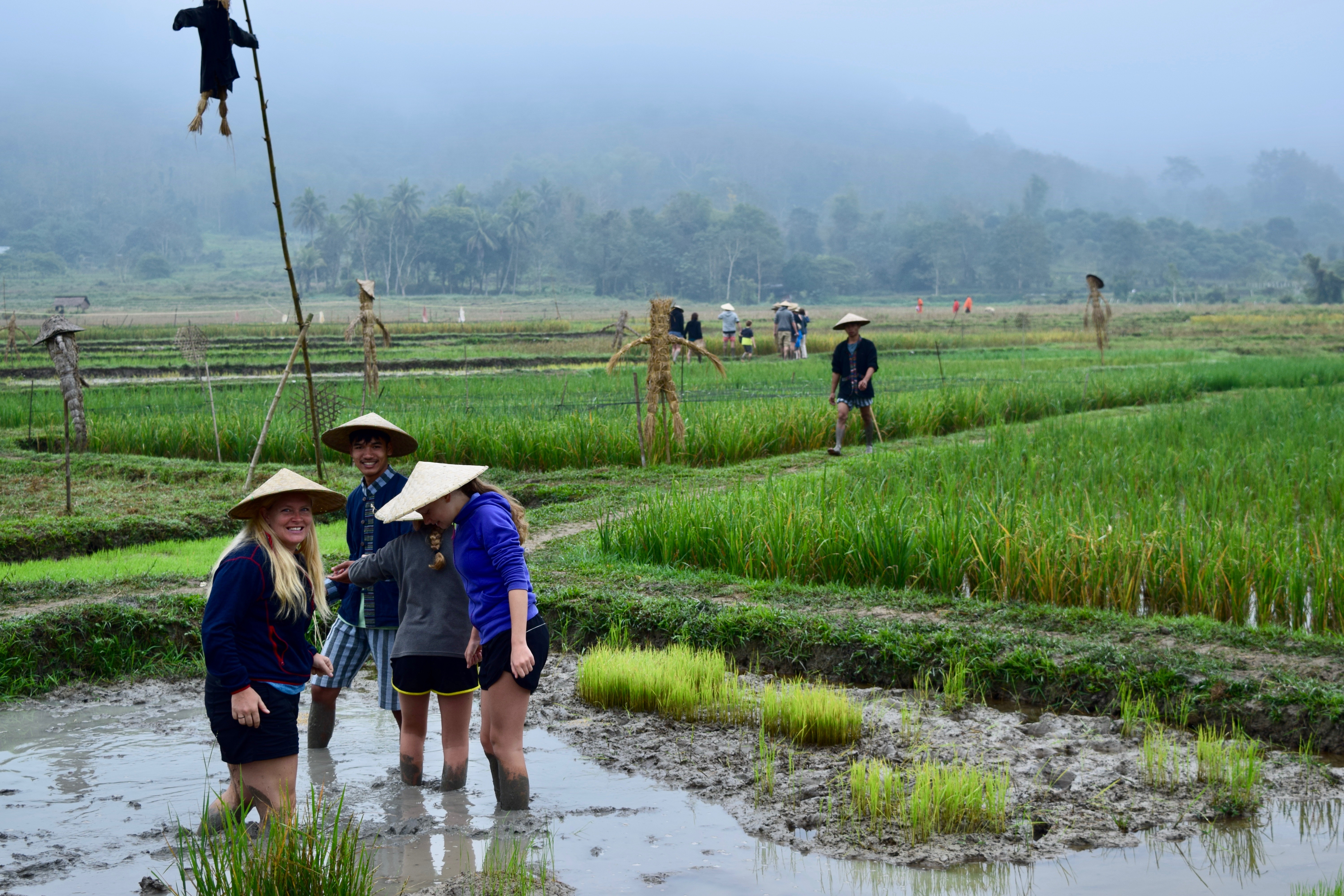
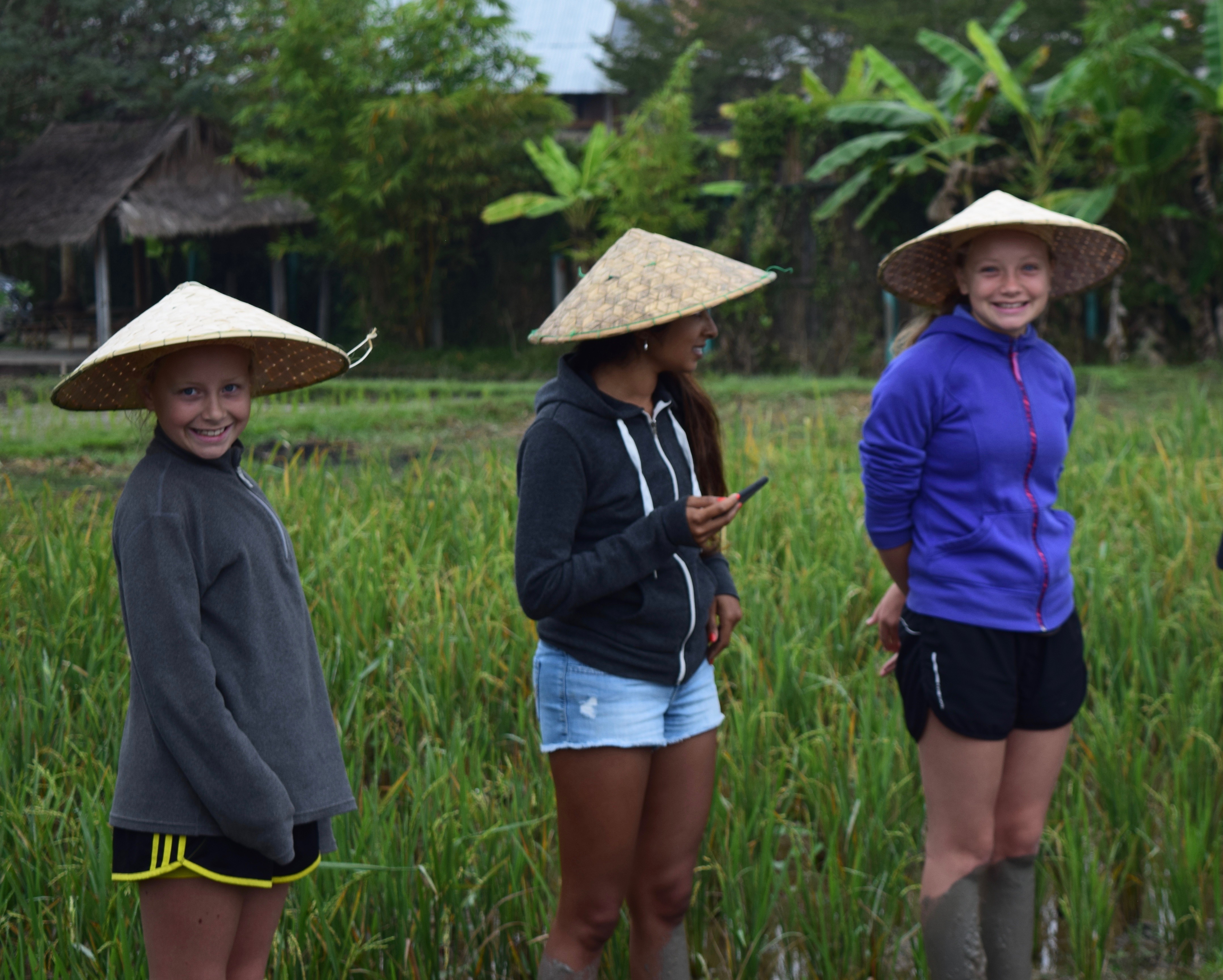
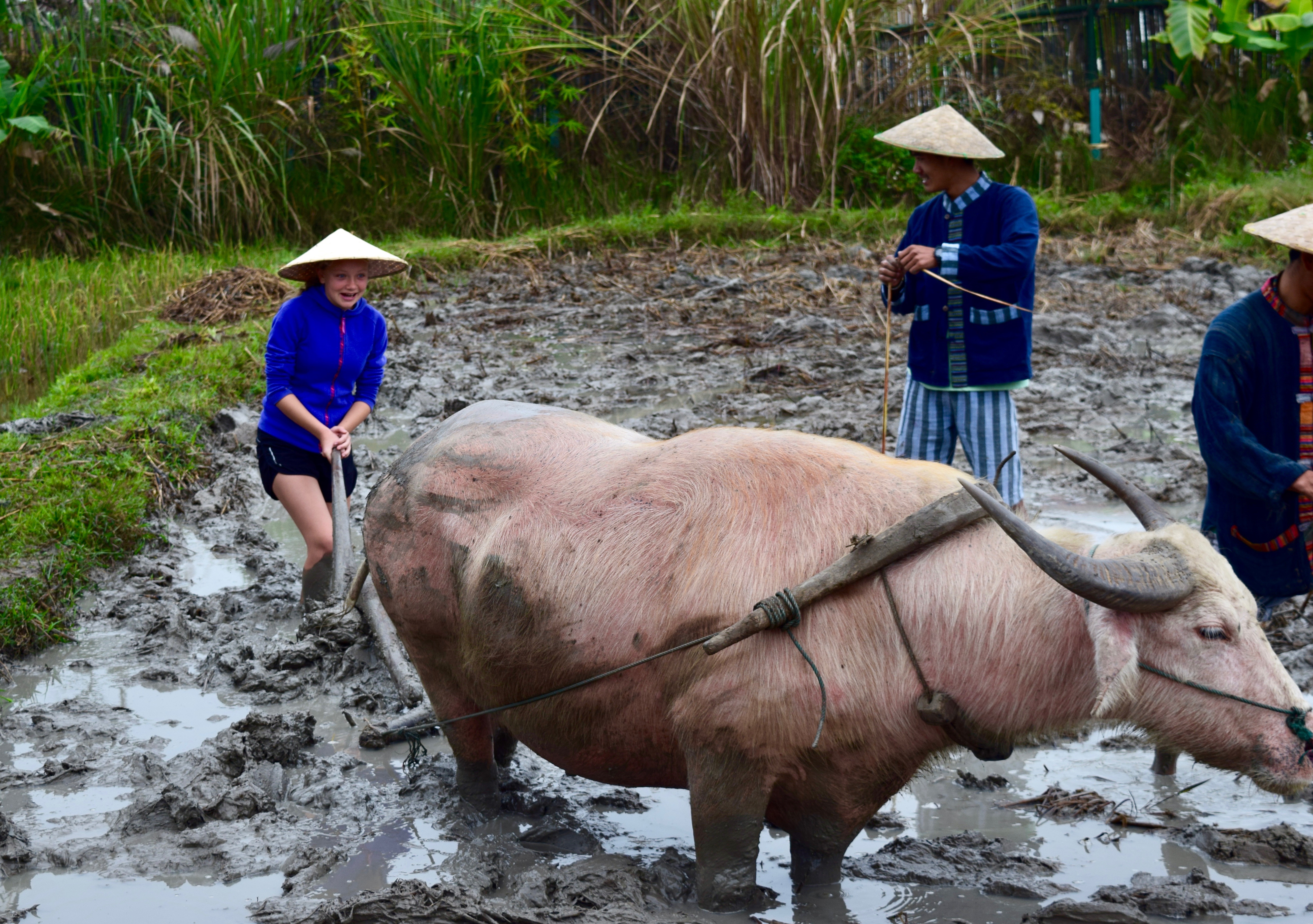
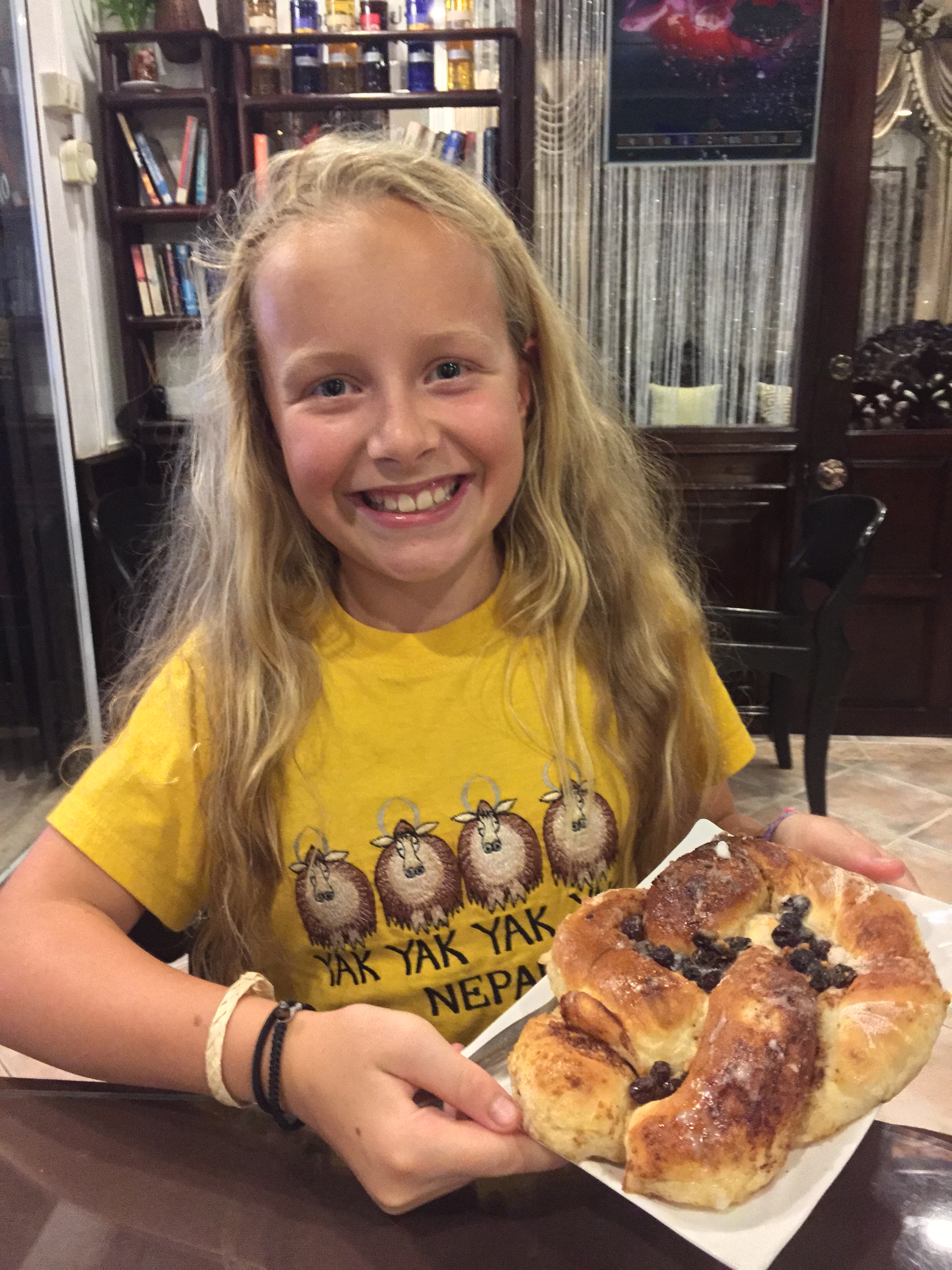
Our farmer guide spoke excellent english so we got talking to him about his skills and the Laos education system. He took extra classes outside of school in order to improve his english and now he gives free classes to village children four nights a week. Being able to speak english really improves their chances of getting a job in the tourist industry, which sadly is the best way to make a living in Laos. We offered to come and help out with his classes that night and he was really excited about it!! It wasn’t long after we arrived that evening that we found out why….once he showed us to the classroom area and the students (ranging in age from 8-16) started to arrive, he turned to us and said “ok, you can teach whatever you want.” Mark and I looked at each other, a little shocked. We were expecting to help with the class, not teach it. Had we known we were teaching, we would have prepared a lesson before showing up. Anyway, we winged it and it turned out great. Grace worked with the younger kids using pictures to teach words and have the students write them out in english. Mark and I each taught a little section and then worked in 3 smaller groups on a writing and speaking lesson. Molly was out assistant, working with one of the groups. In the end there were a lot of laughs (Mark can make anything fun) and we were surprised at how fast the time flew by. We had planned to come back to help again, but the instructor was going away for the weekend and this was the last session before it was time for us to leave Luang Prabang. The girls did a great job so we headed for town and let them pick a treat from the market area.
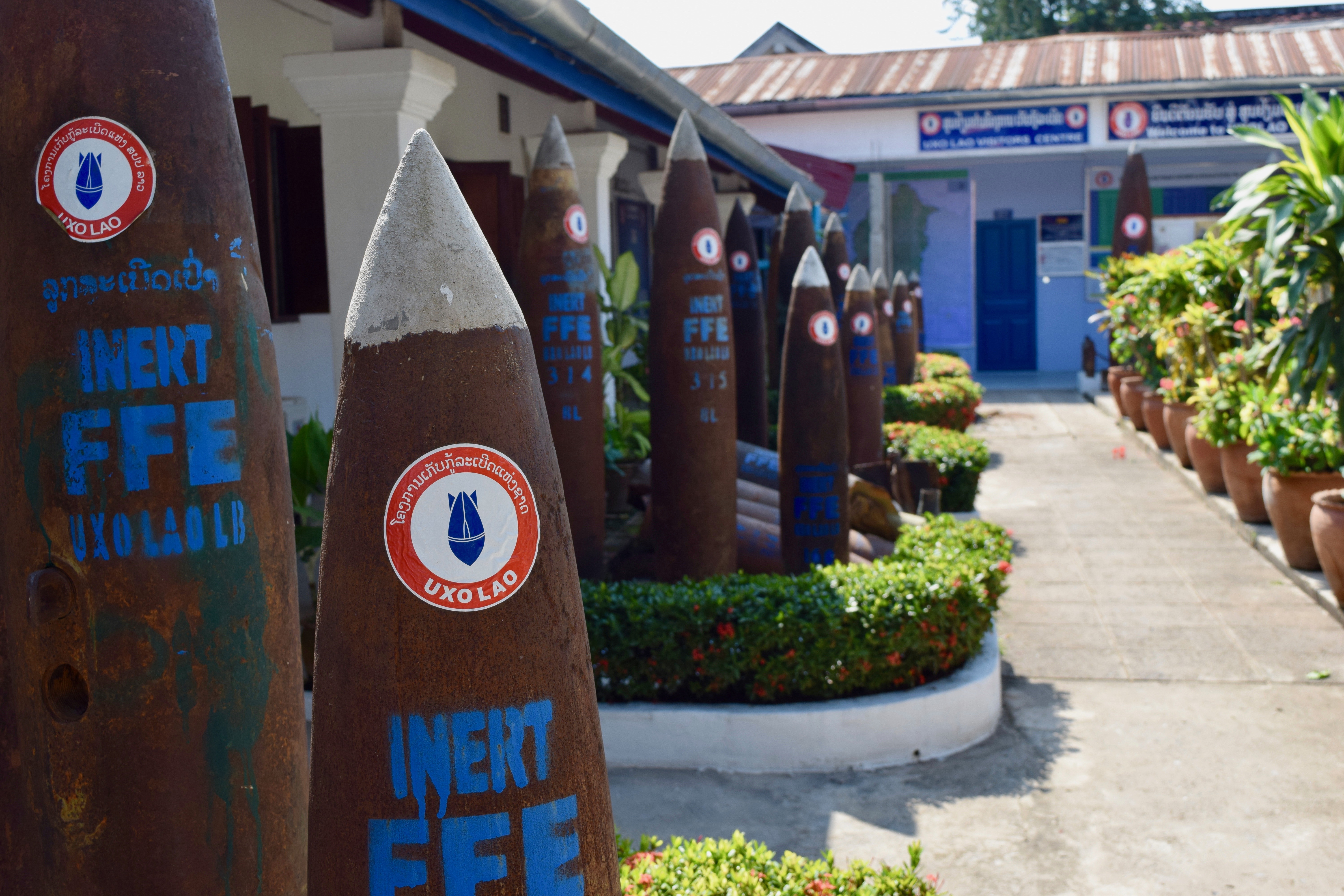
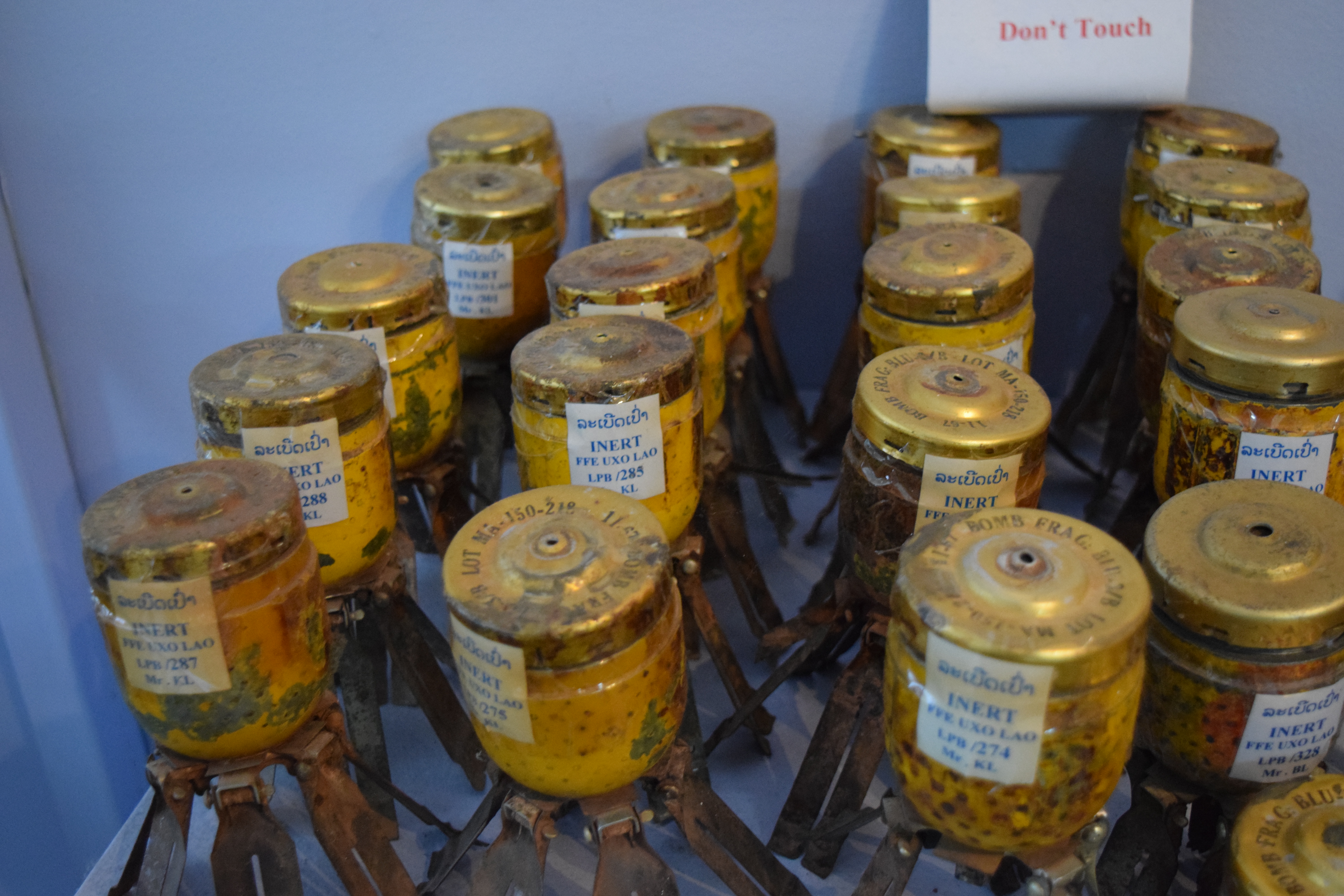
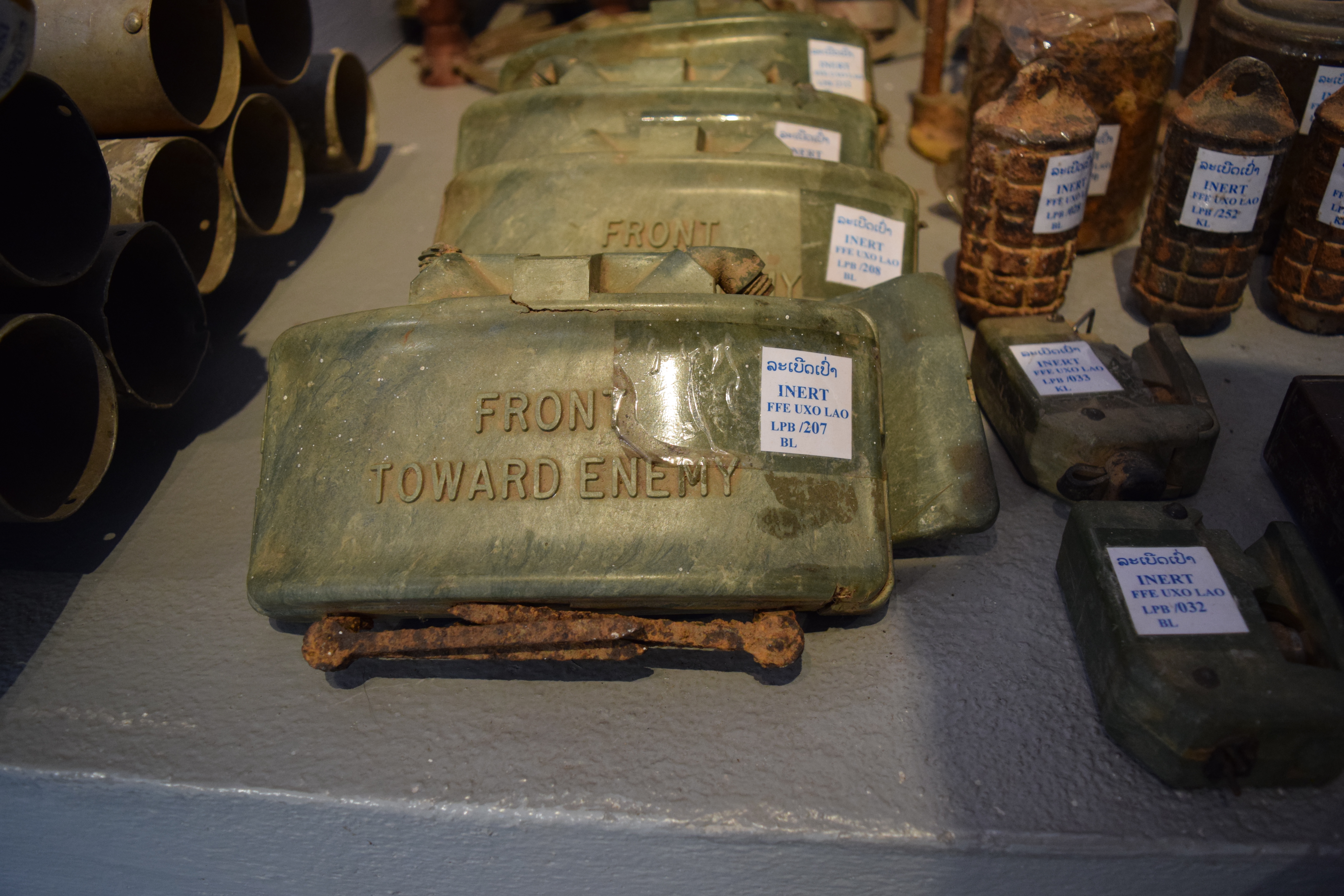
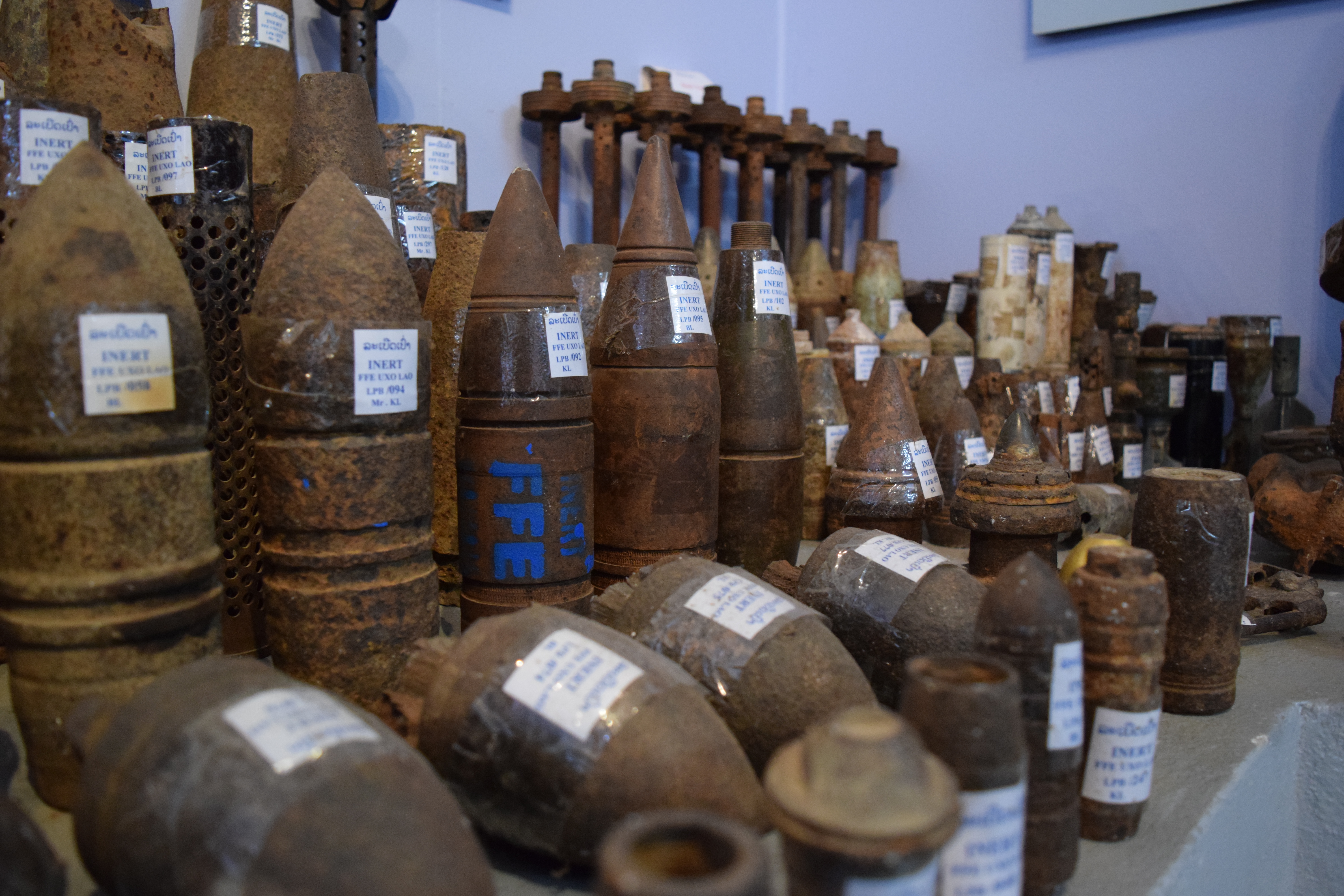
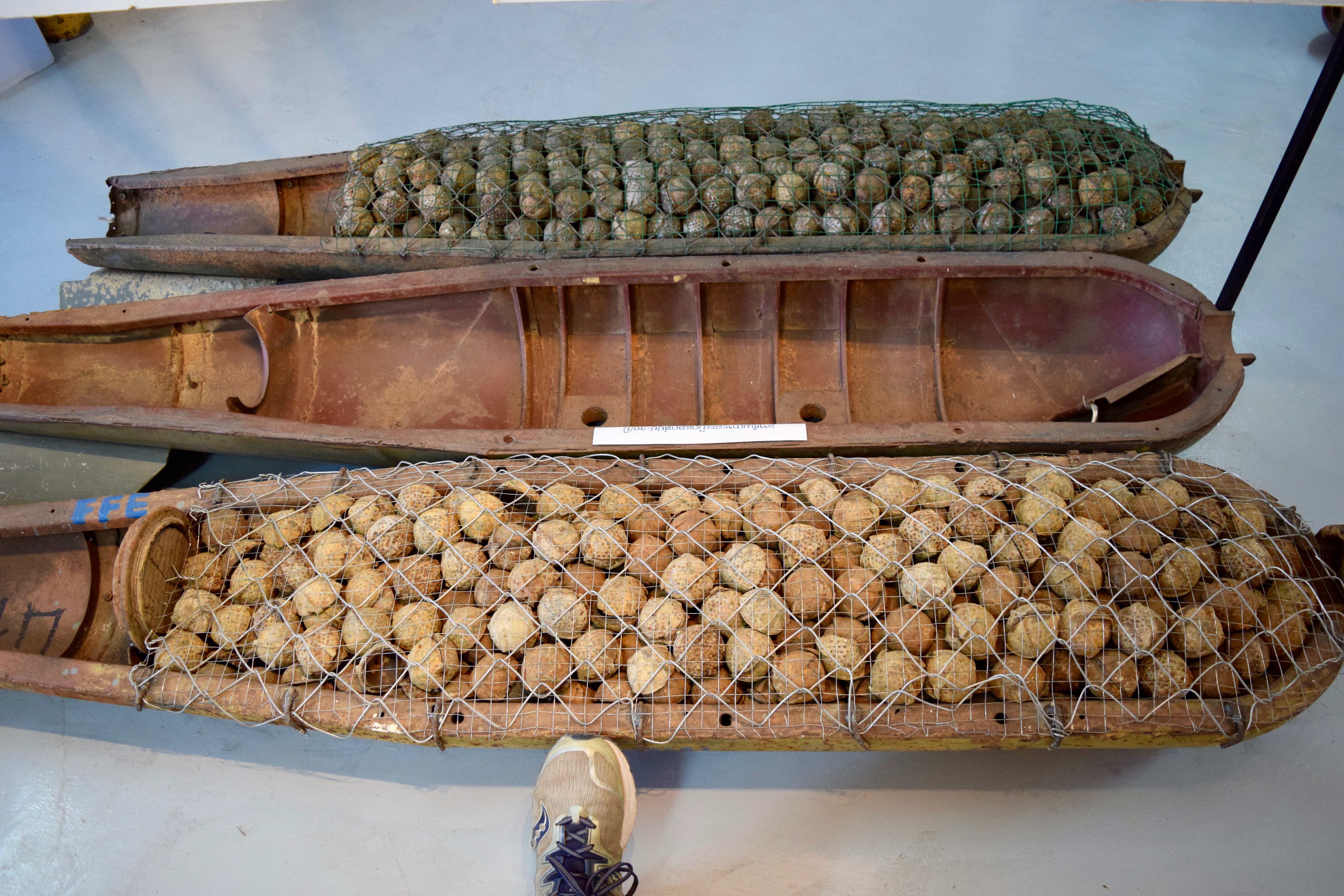
While working at the rice farm we learned about how farming in Laos is a really dangerous job. Unexploded bombs from the Vietnam War are littered in the soil throughout the country. Per capita, Laos is the most heavily bombed country in the world. During the Vietnam War there were more than 580,000 bombing missions (2 million tons of bombs) dropped on Laos. 270 million cluster munitions were used, but an estimated 80 million malfunctioned and are buried in the ground. The US dropped more bombs on Laos than all the bombs dropped in WW2 combined. About 25% of the villages in Laos are contaminated with UXO’s (unexploded ordinance). Famers digging in their fields, children playing in the forest or school grounds, women working in their gardens are all in danger of dying or being seriously wounded. Many farmers have lost everything because they’ve had a limb blown off and can no longer make a living farming. We went to the UXO Visitors Centre to learn all about “The Secret War”; seeing the real bombs and hearing the survivors stories was an eye opening experience for us all.
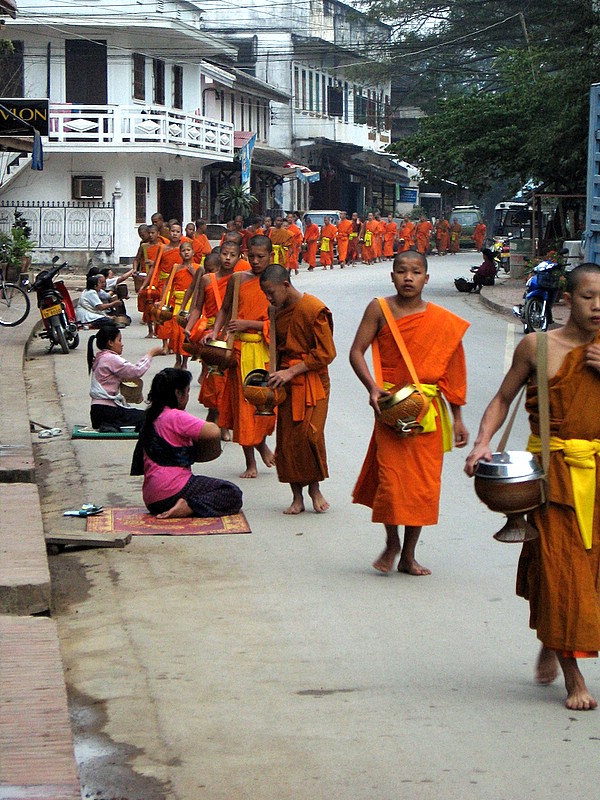
One of the other glimpses into Laos culture we got was witnessing the morning alms. Morning alms are a longstanding tradition in Laos Buddhist culture. The people of Luang Prabang of offer food to monks every morning from around 6-7am. The saffron-robed monks and novices walk the streets with their alms bowls. Lao people prepare sticky rice and other foods; they place a portion in the bowl of each monk who passes by. The ceremony is undertaken in complete silence. As you can imagine it is a beautiful and touching site and it has become quite a tourist attraction in Luang Prabang. We were lucky to be staying beside two temples and were able to see it happening on our street without many others around. We chose not to take any photos and were pretty disgusted by some tourists who completely disregarded the guidelines for behaviour given at all hotel and guesthouses. There are lots of photos and videos online of this unique Buddhist tradition.
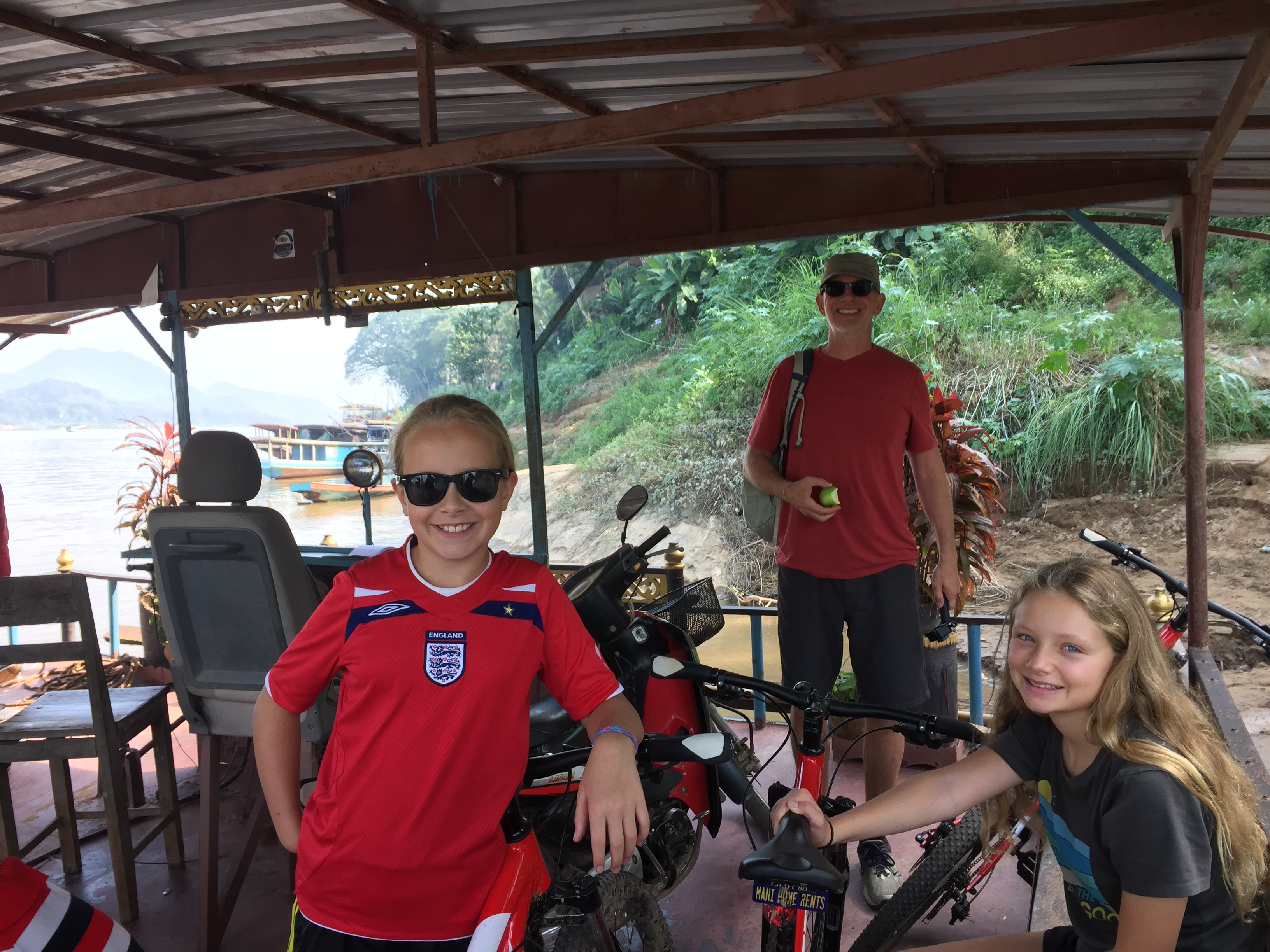
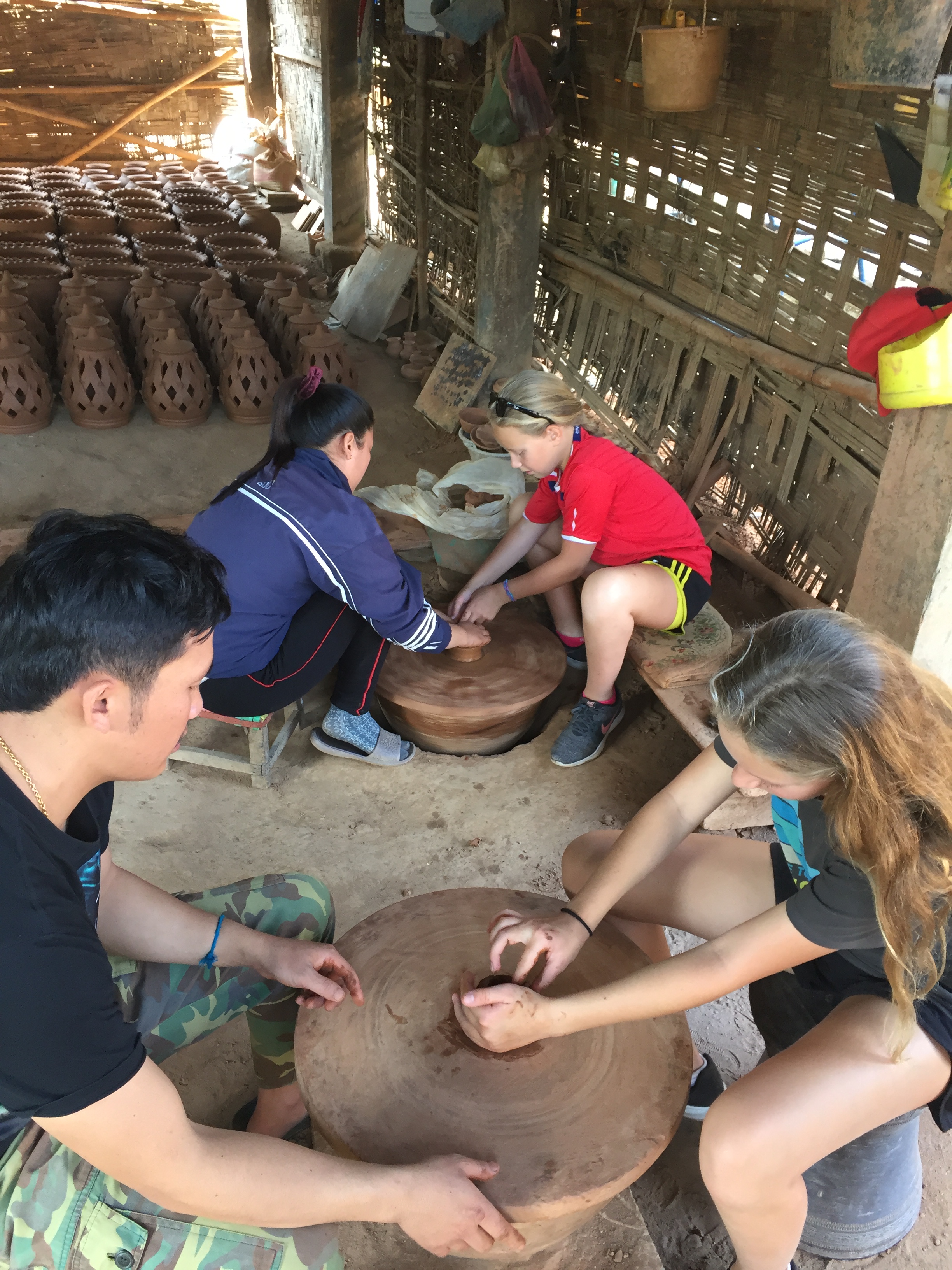
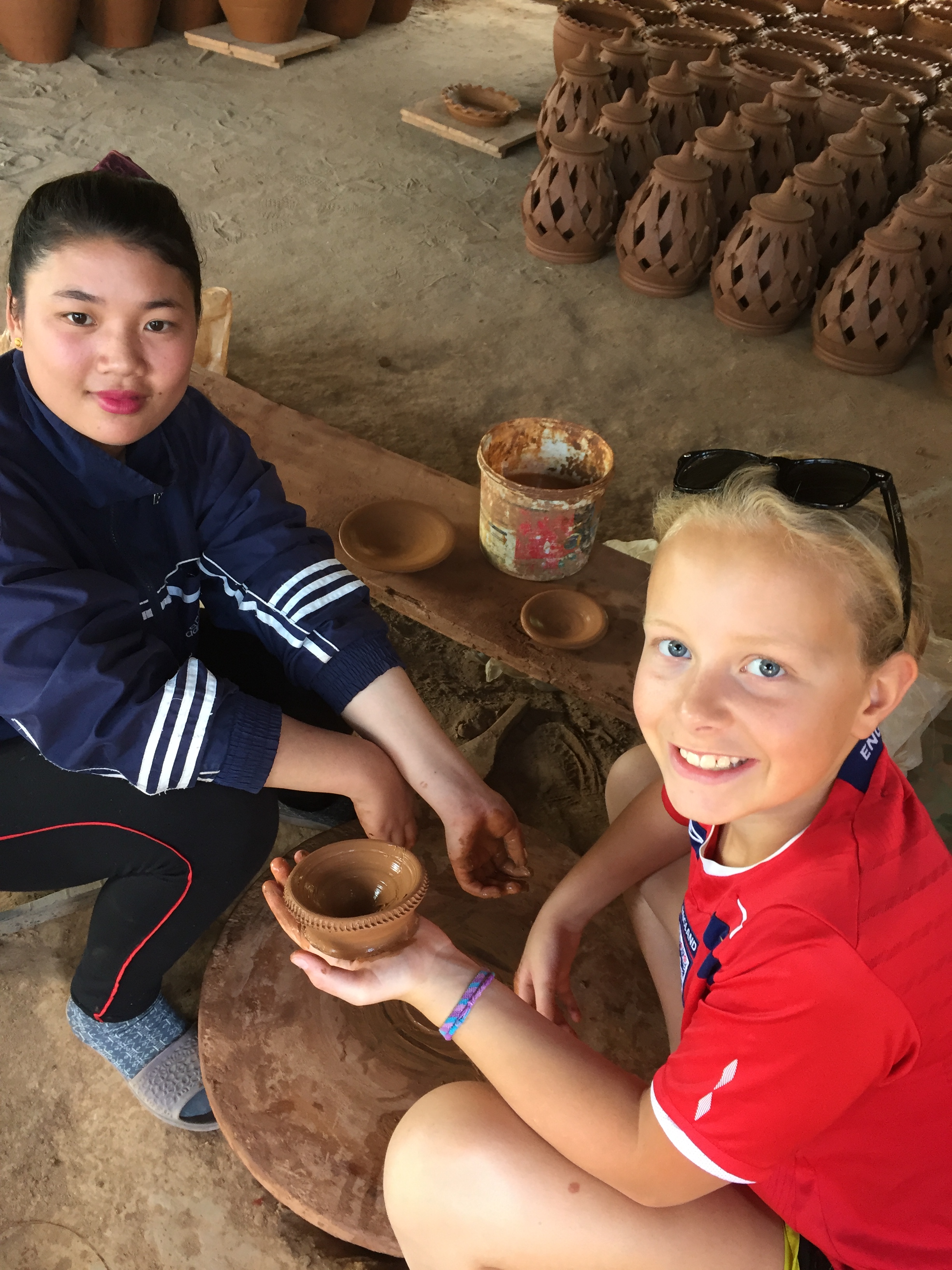
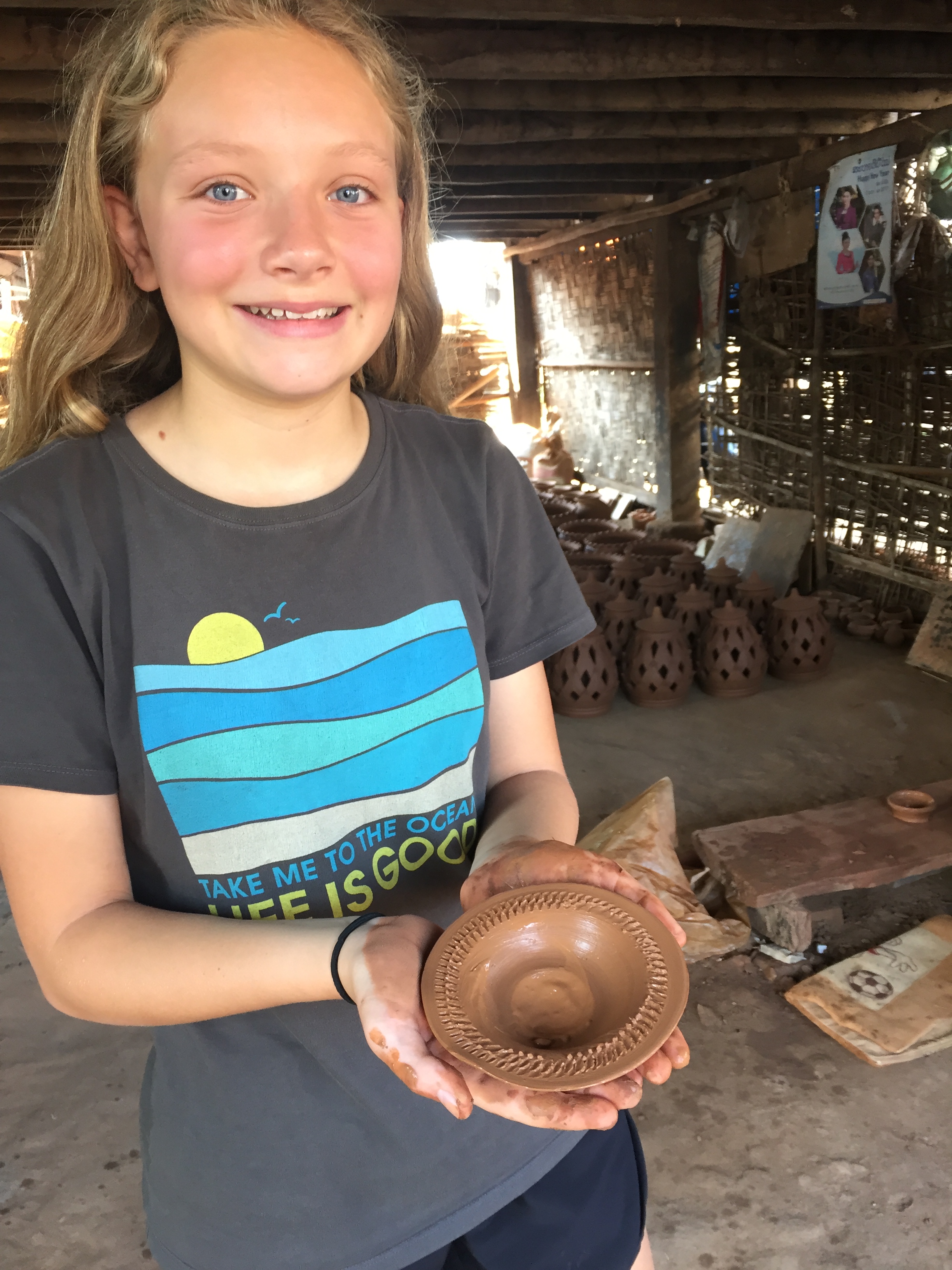
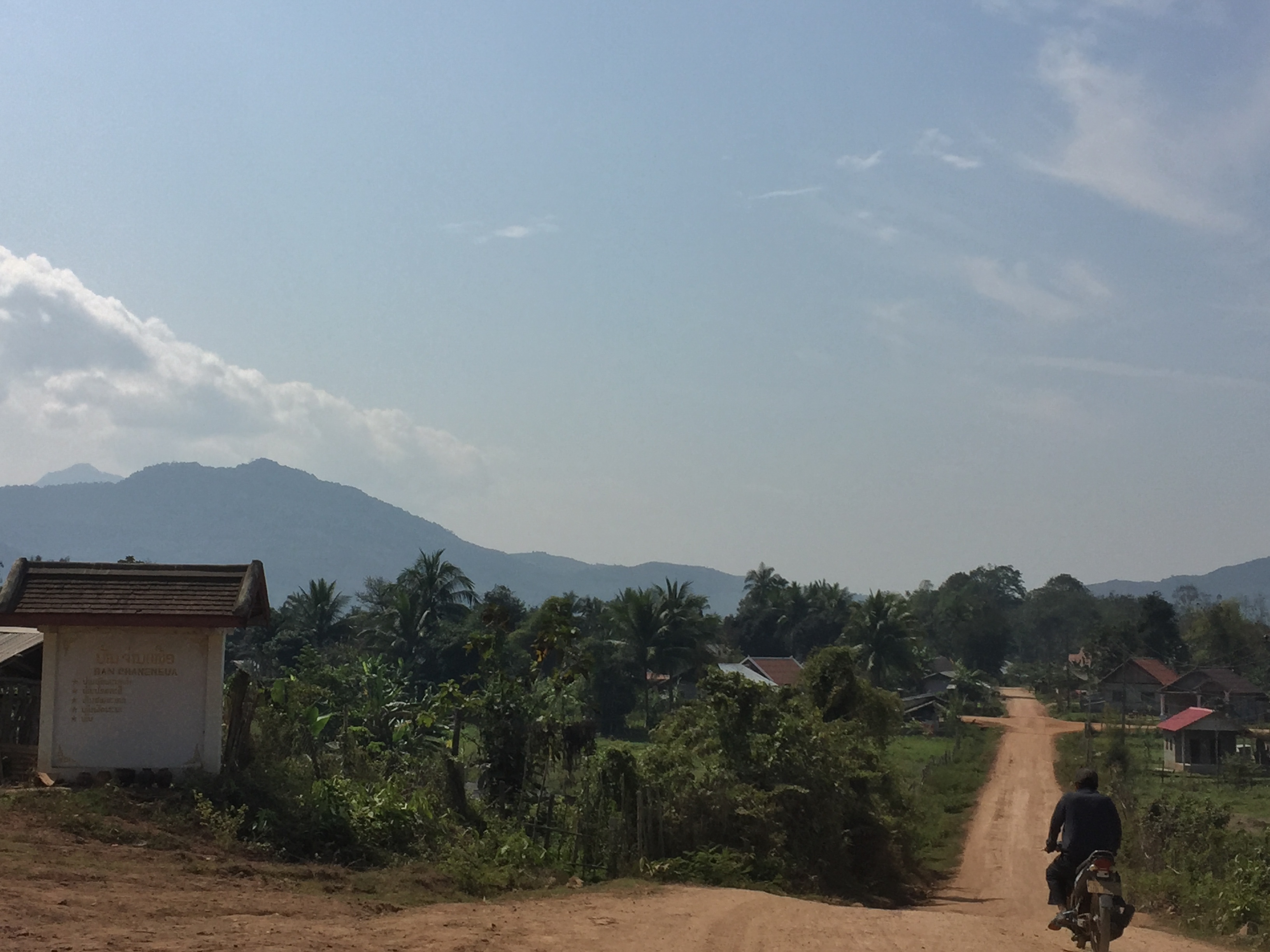
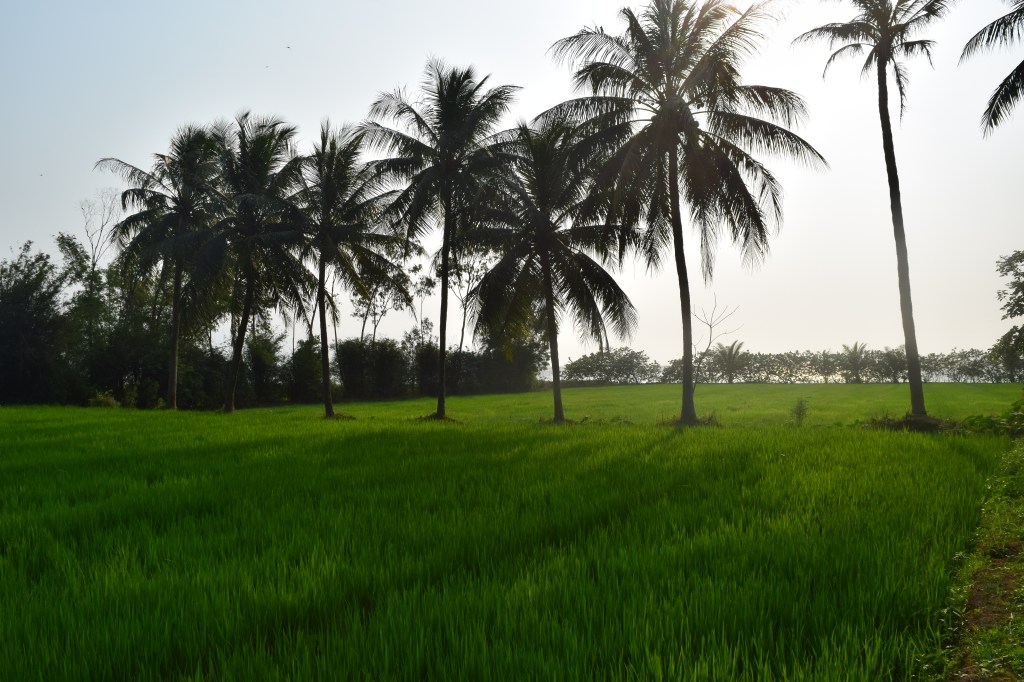
The rest of our week we rode bikes around the city, admiring the beautiful temples, eating good food and enjoying the slower pace which made riding bike safe (relatively)! One day we loaded our bikes on a ferry (I use this term loosely) and crossed to the other side of the Mekong to bike into the countryside. There were noticeable fewer foreigners over there and it felt like a different world from the city just across the river. The road we followed led us to a village of pottery makers. The girls and I got our hands dirty trying to make a small bowls using the rustic tools the villagers had.
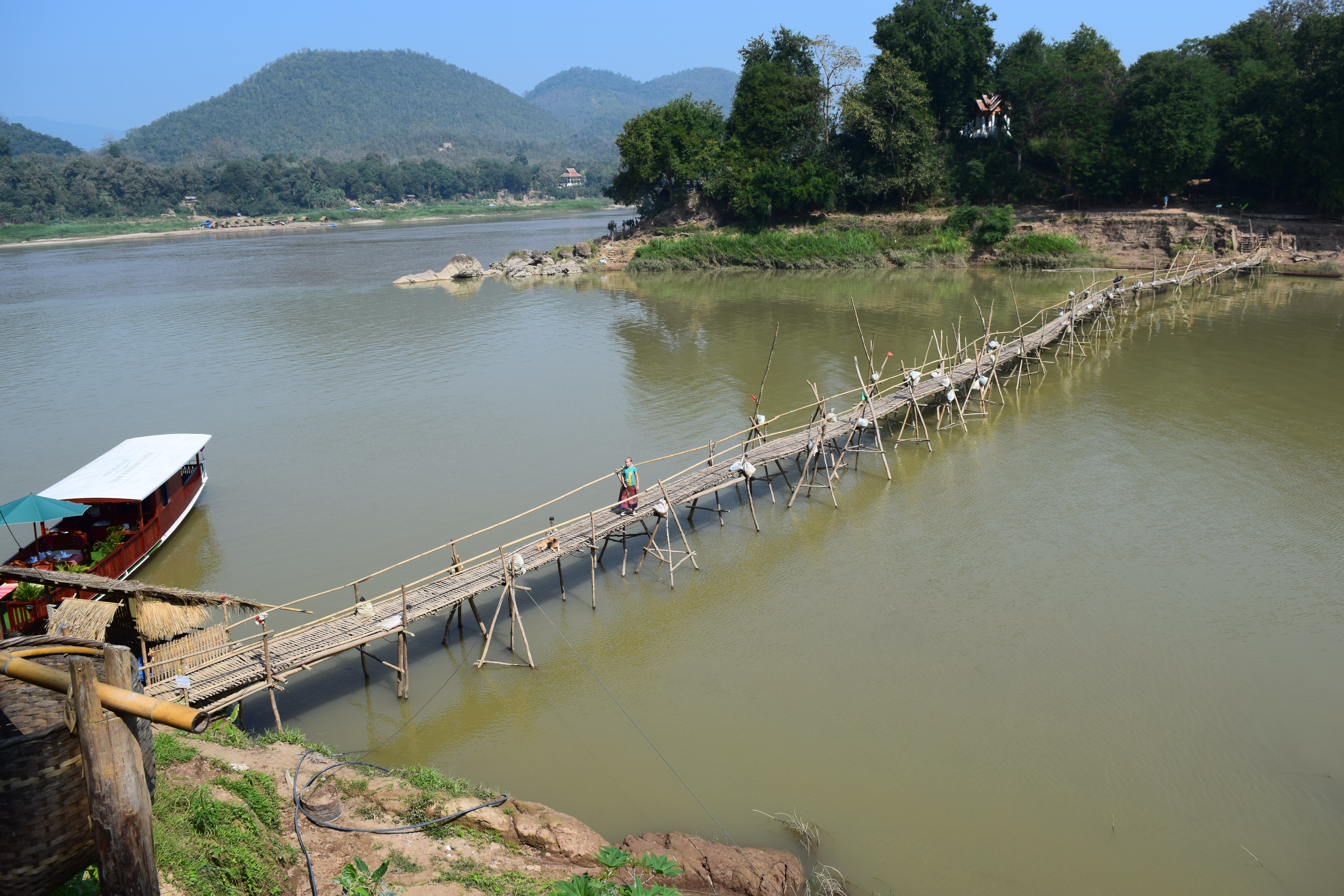
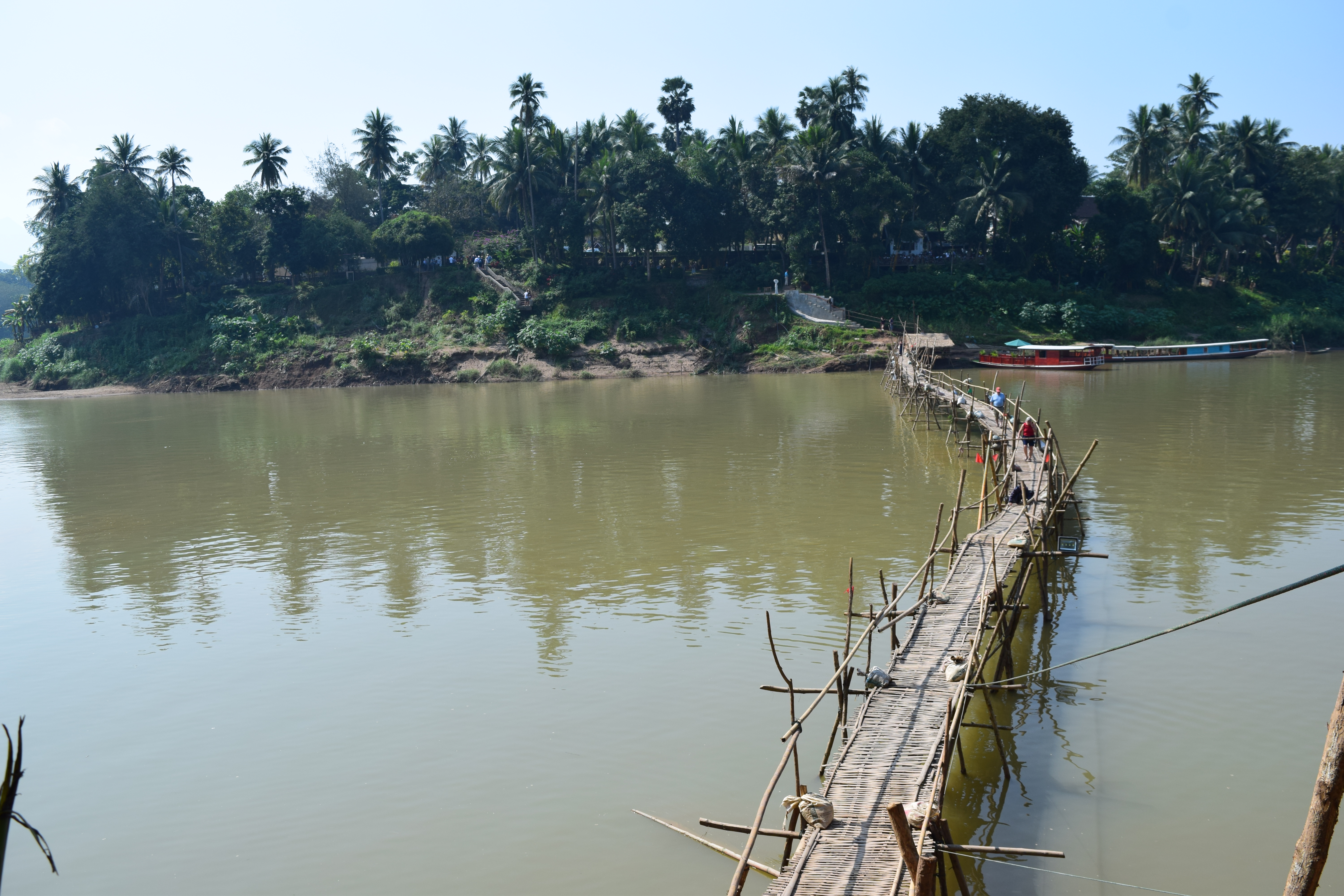
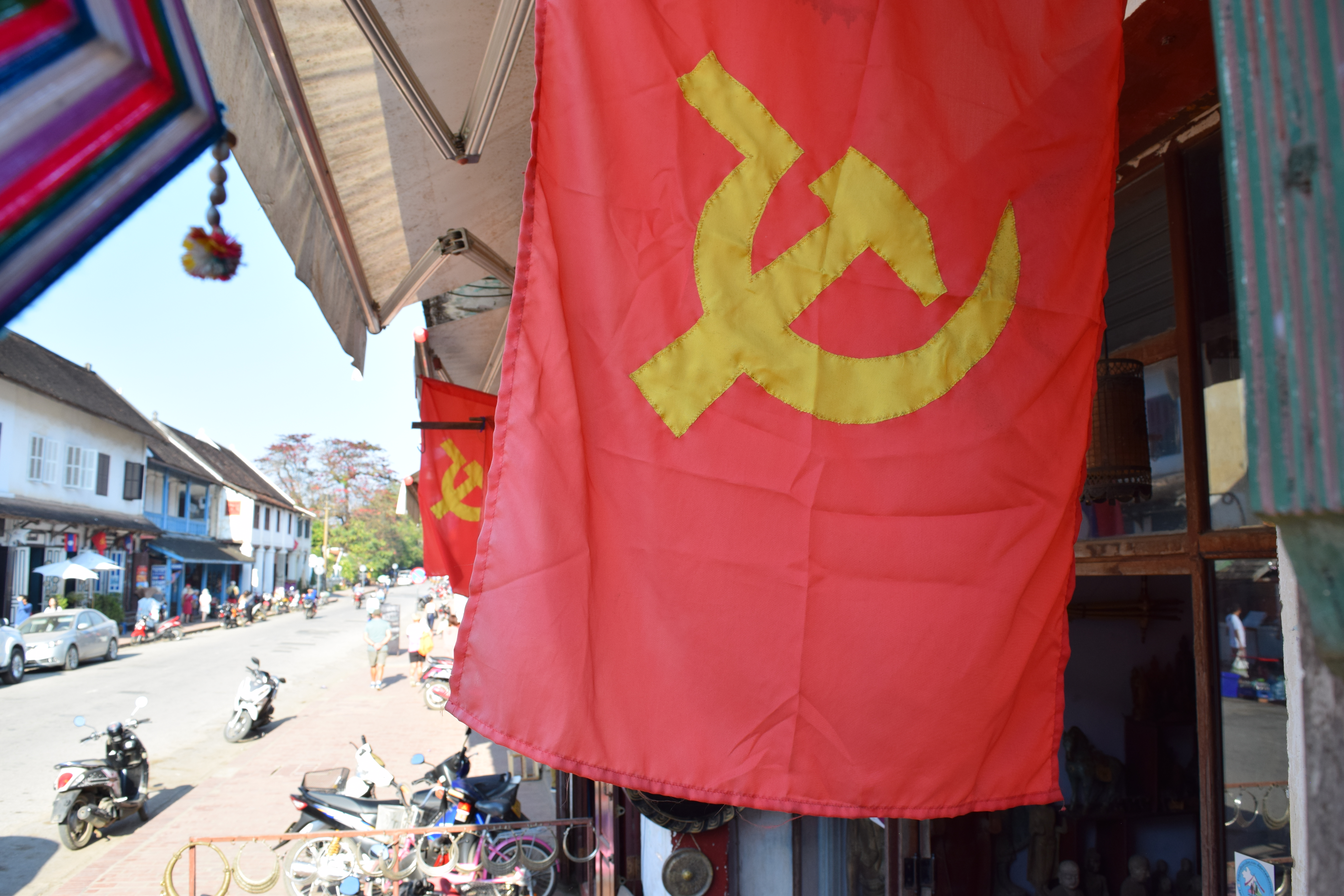
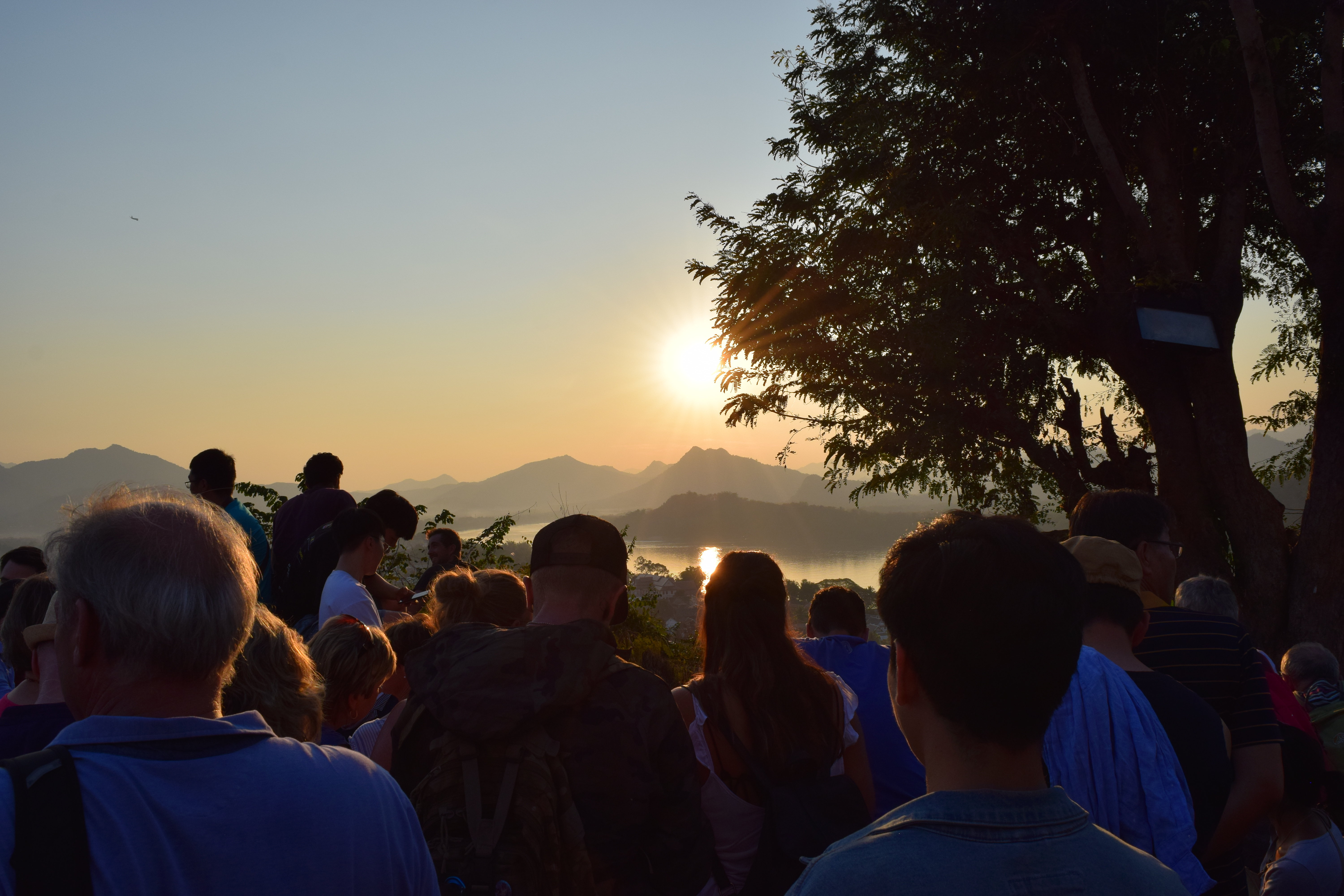
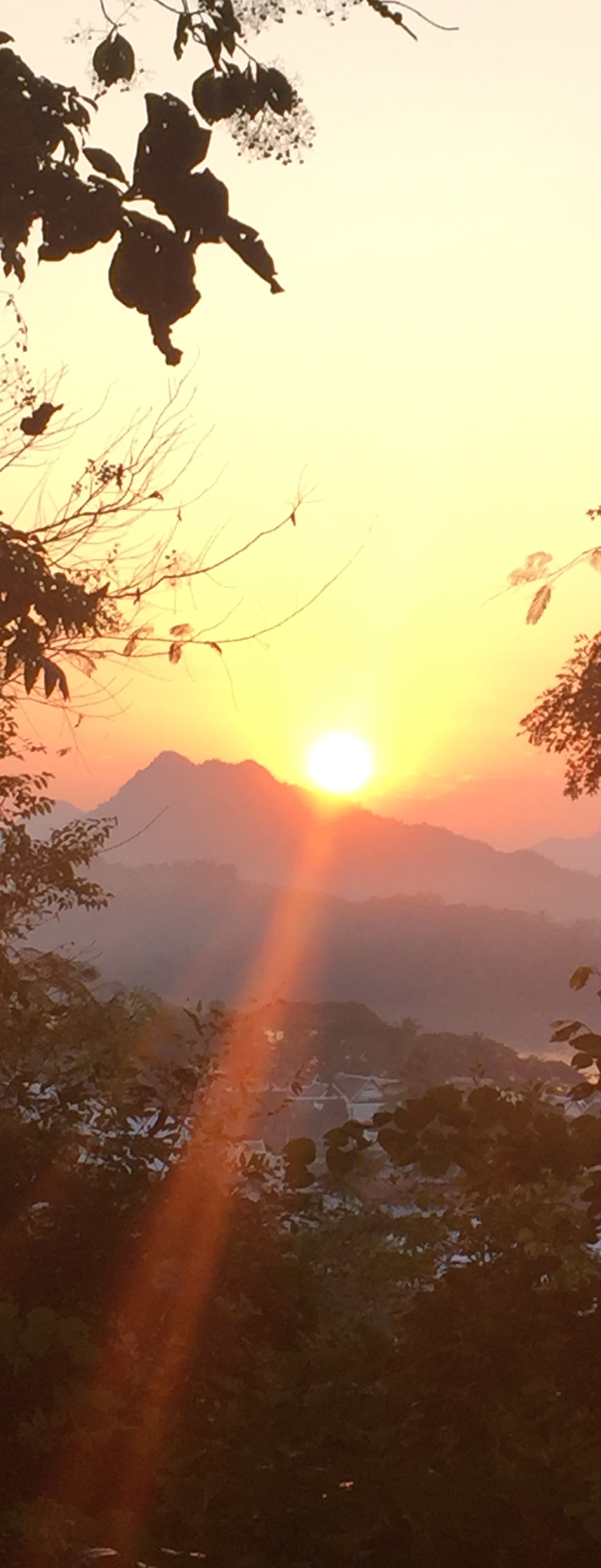
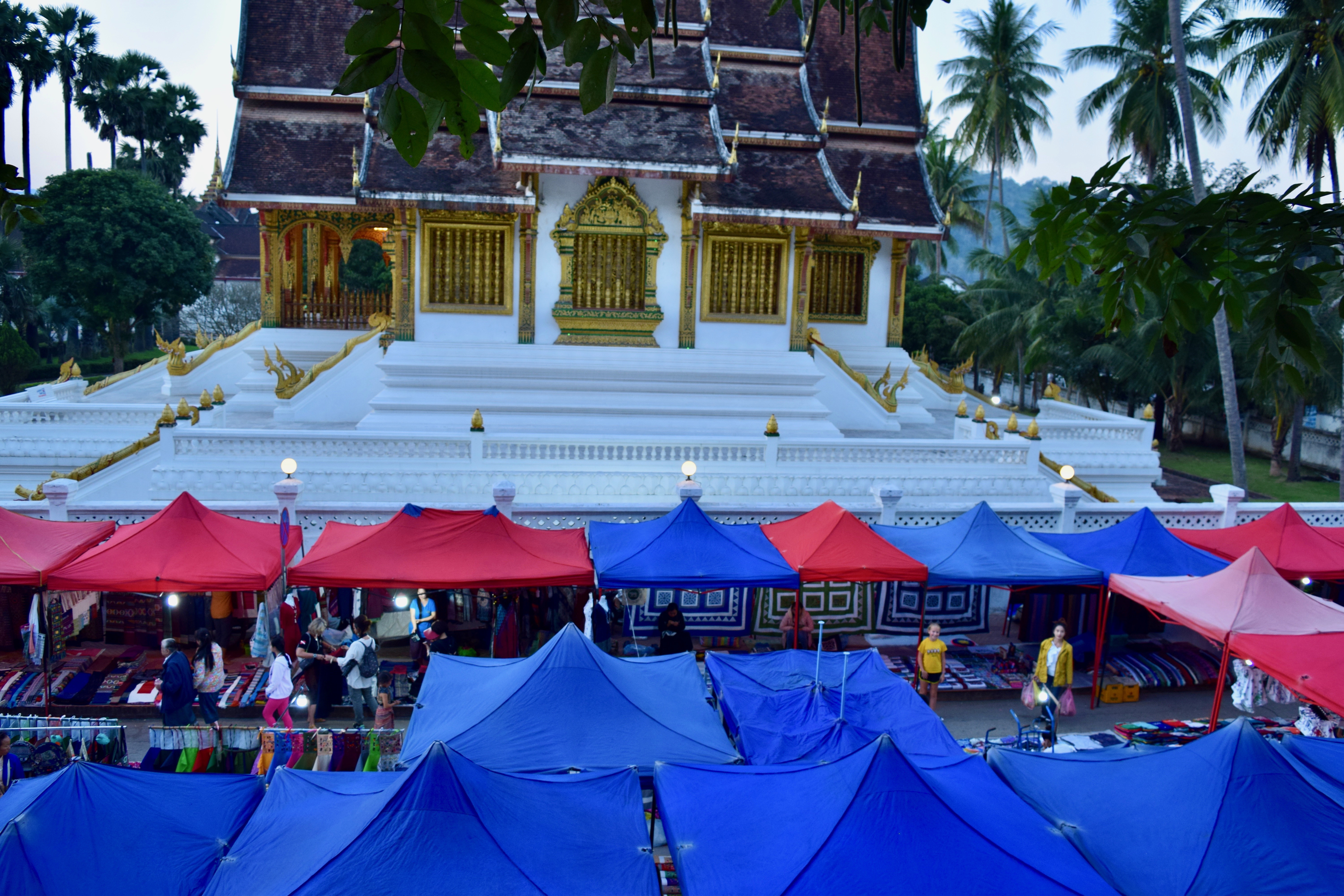
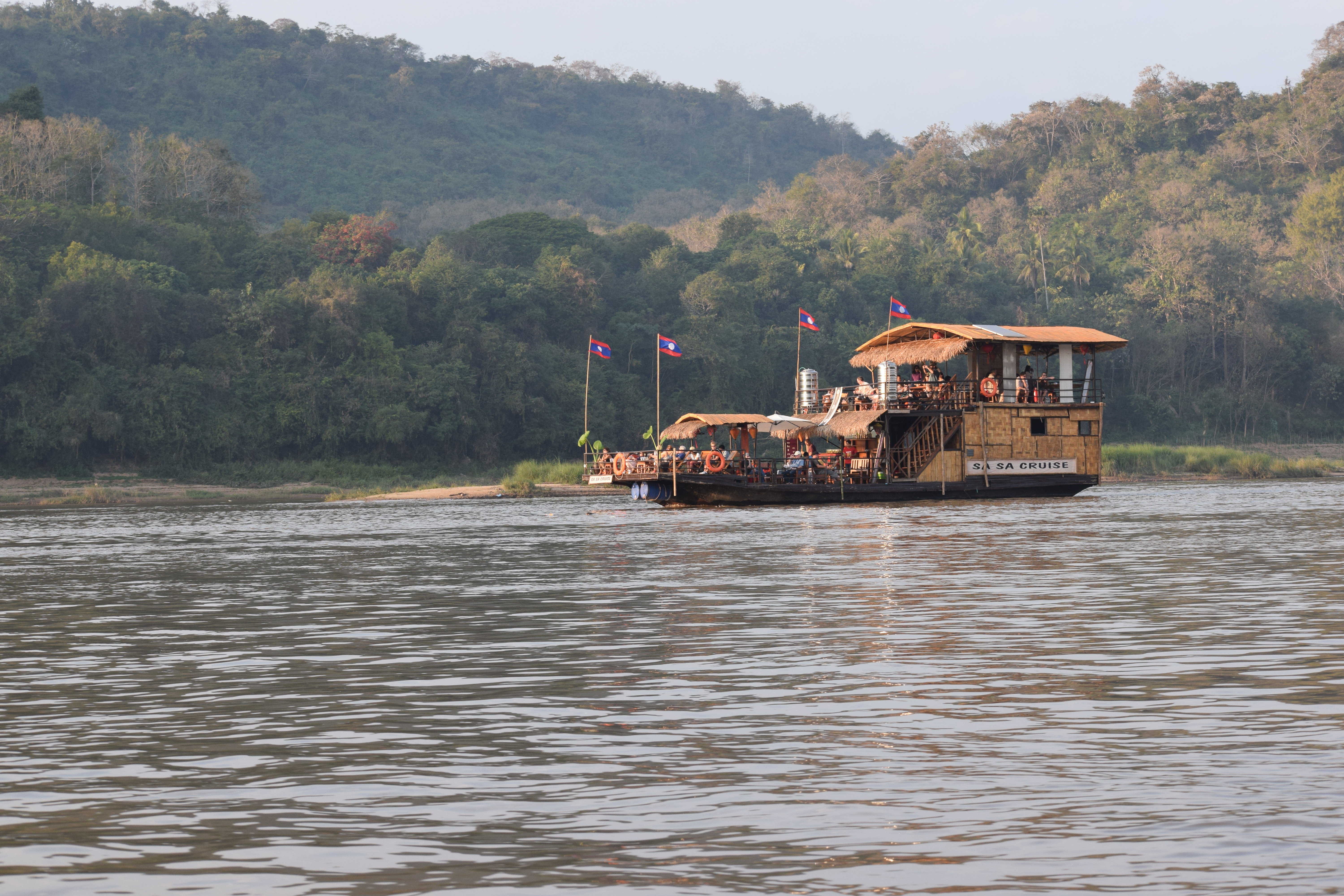
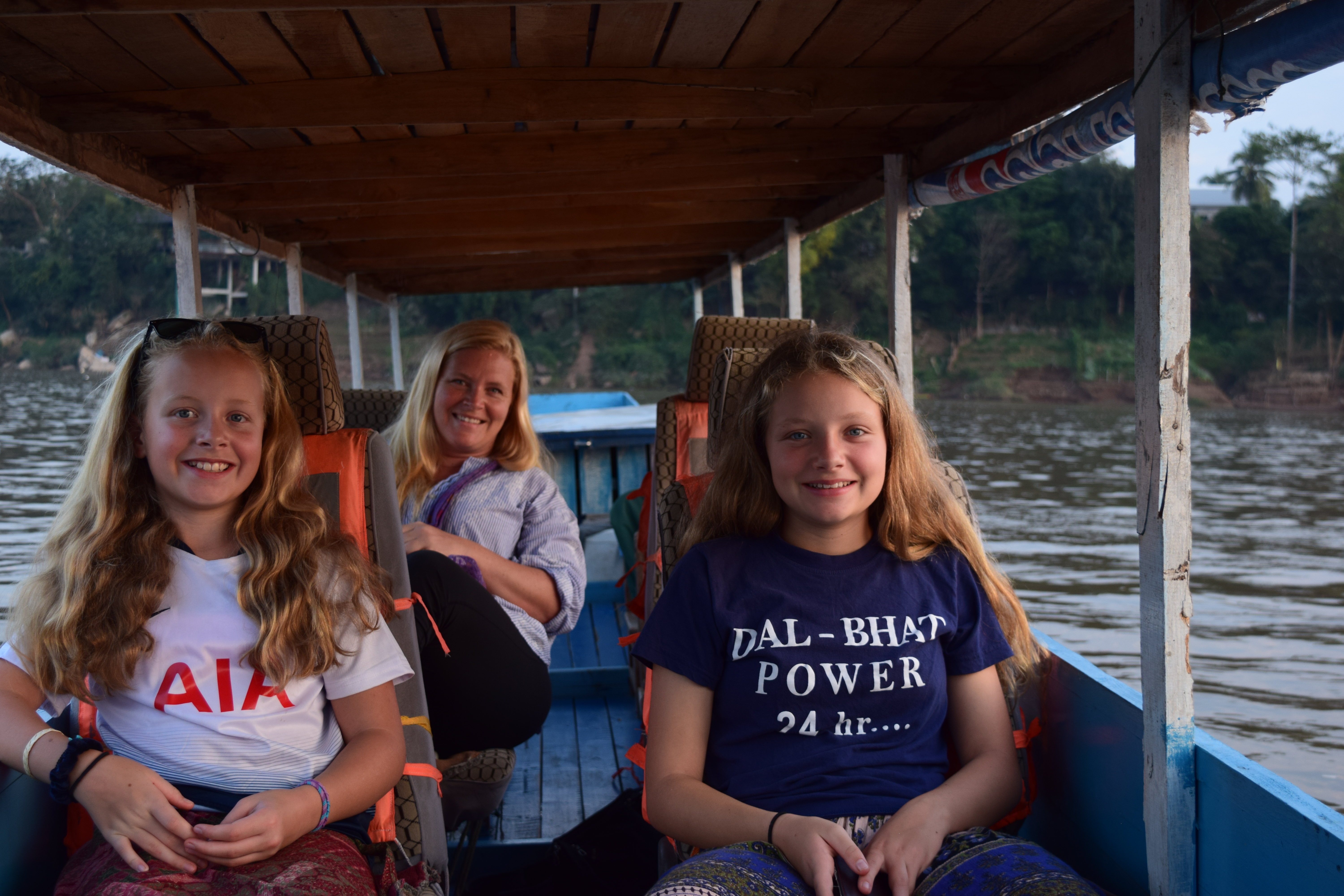
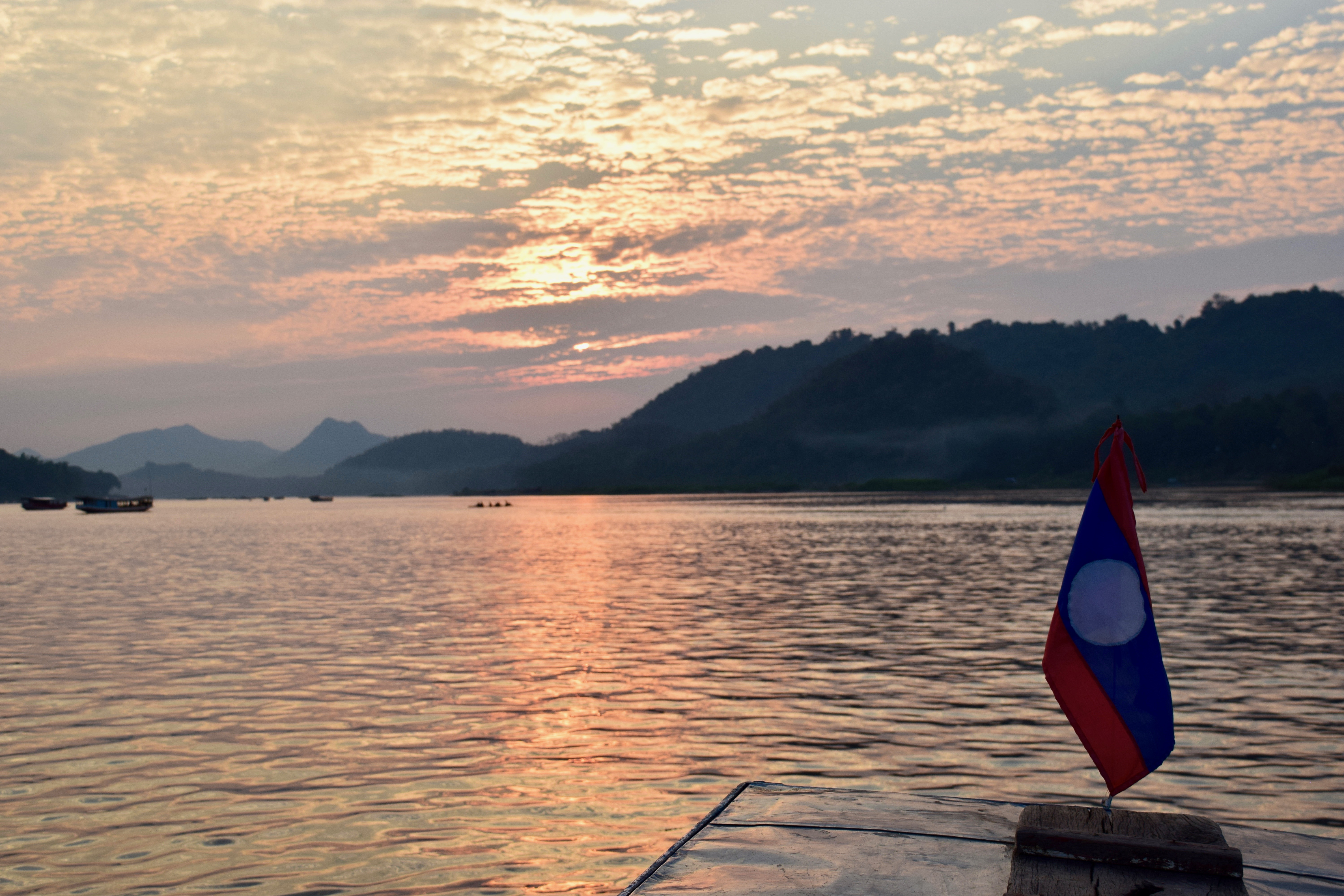
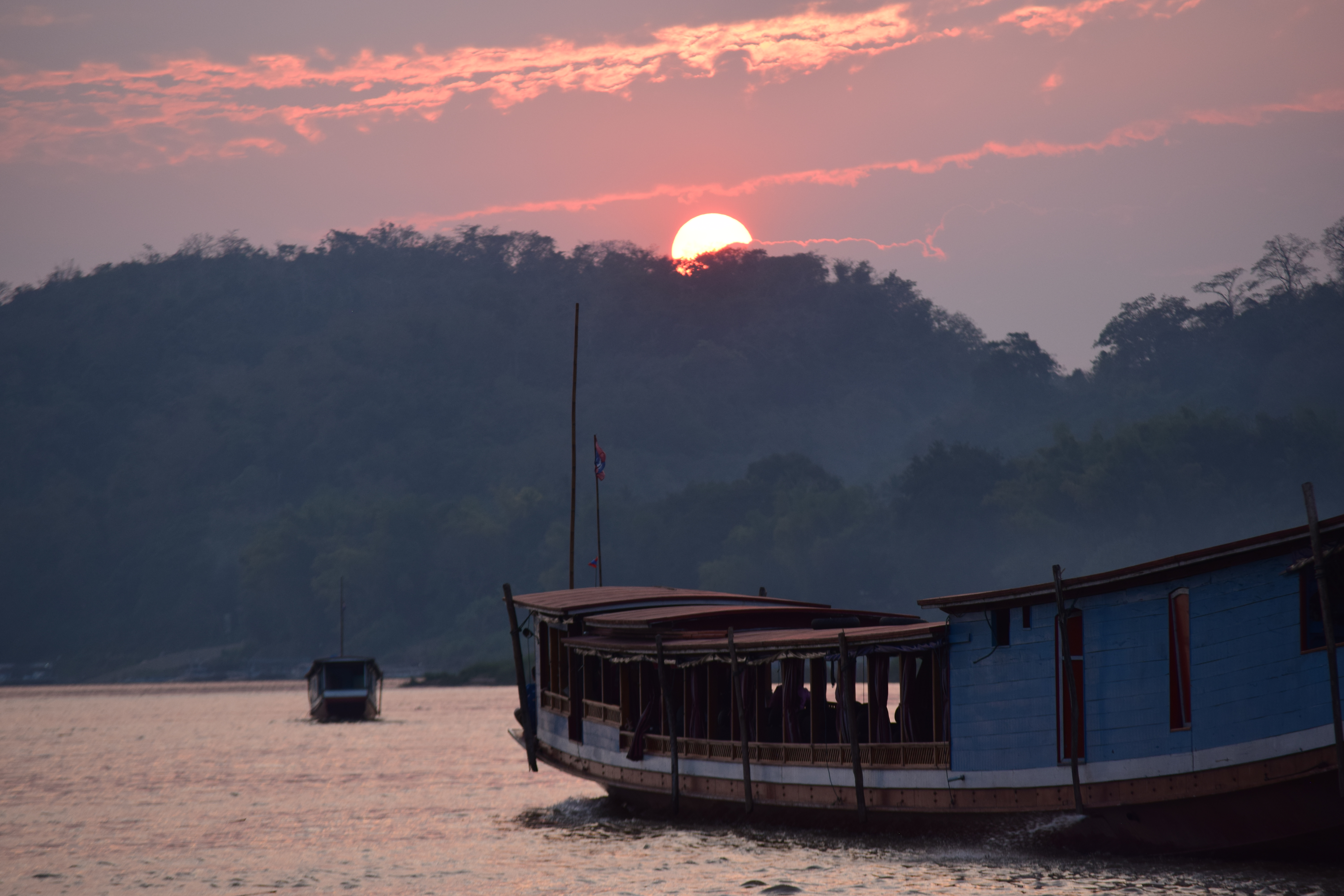
On one of our bike explorations of the city we stopped to watch a man climbing a tree, picking coconuts and lowering them to the ground. As we were loitering, one of the many boat drivers approached us to see if we wanted to take a sunset cruise on the Mekong. After some humming and hawing and haggling we decided to go and we were not disappointed.
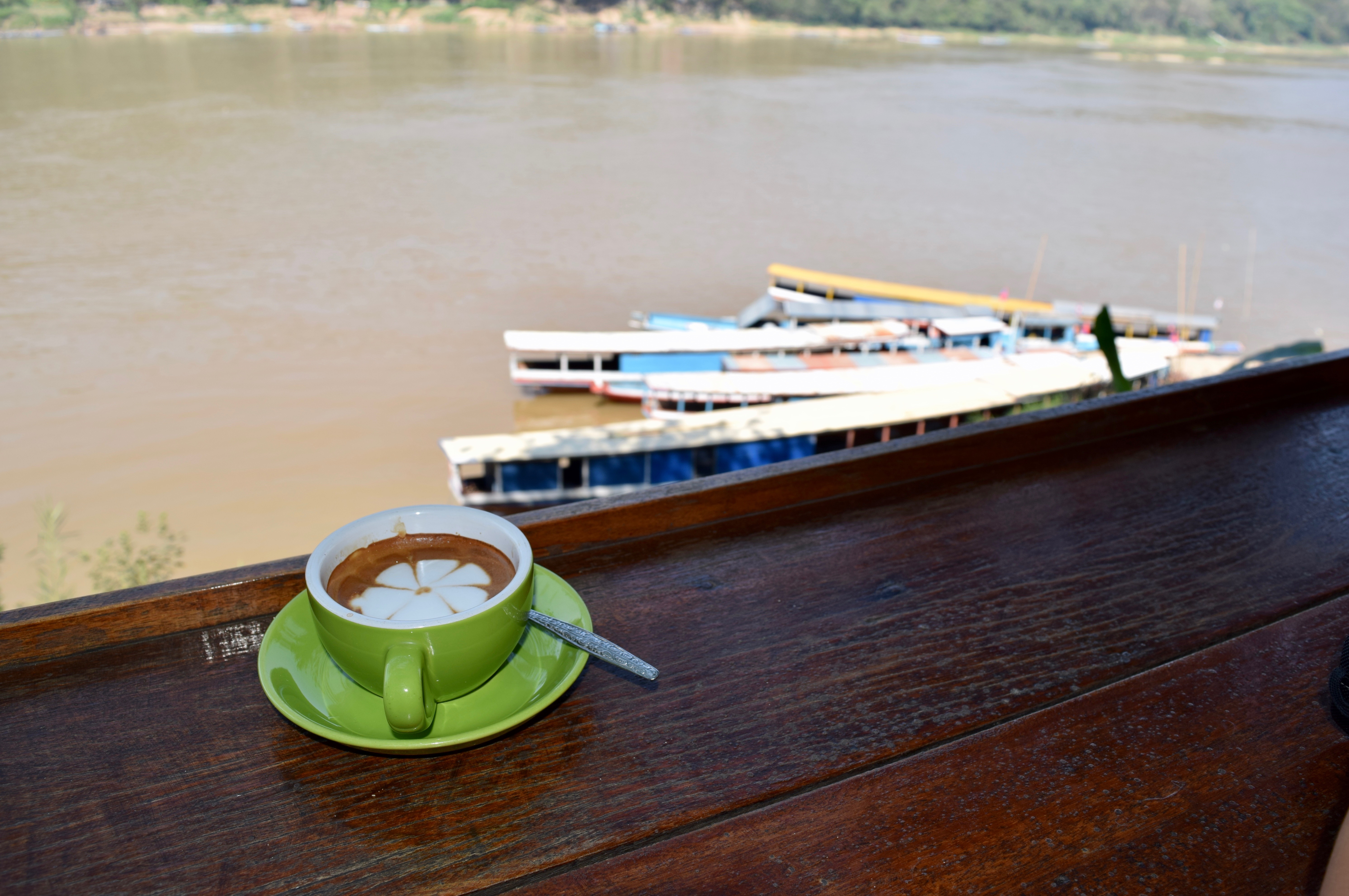
One of the things we were glad we didn’t miss was the Kuang Si Waterfall. It’s about 30km outside of Luang Prabang so we took a bumpy songthaew ride out there. Vendors have taken full advantage of the space outside the waterfall selling sandwiches, beer, bathing suits, souvenirs and BBQ’ed meats.
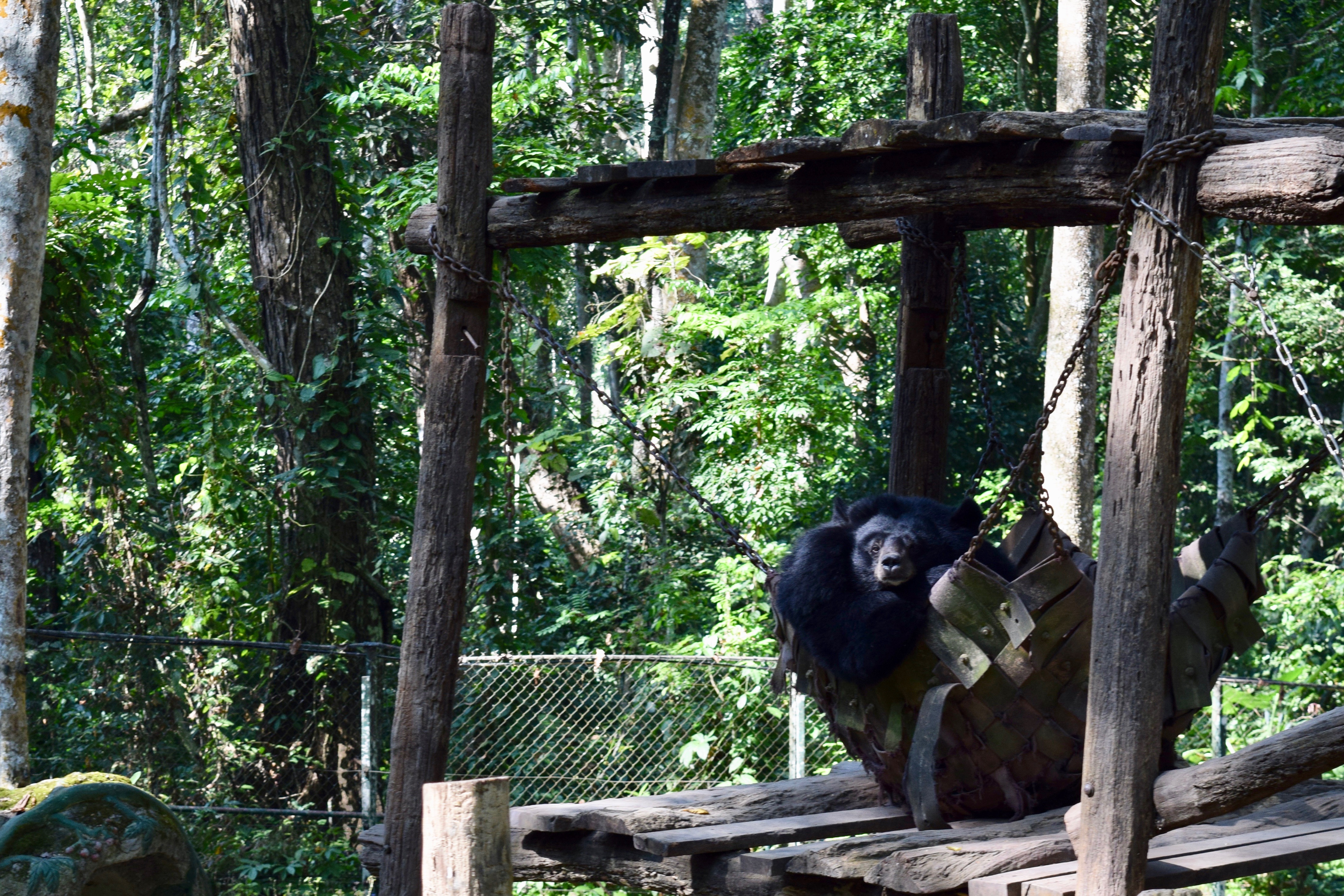
On the walk to the falls you pass through a rescued bear sanctuary. The bears live in fairly large enclosures in the middle of a jungle. The sanctuary was set up by the ‘Free the Bears’ organization for bears rescued from being held captive and milked for their bile. It was also an Atlas Obscura find!
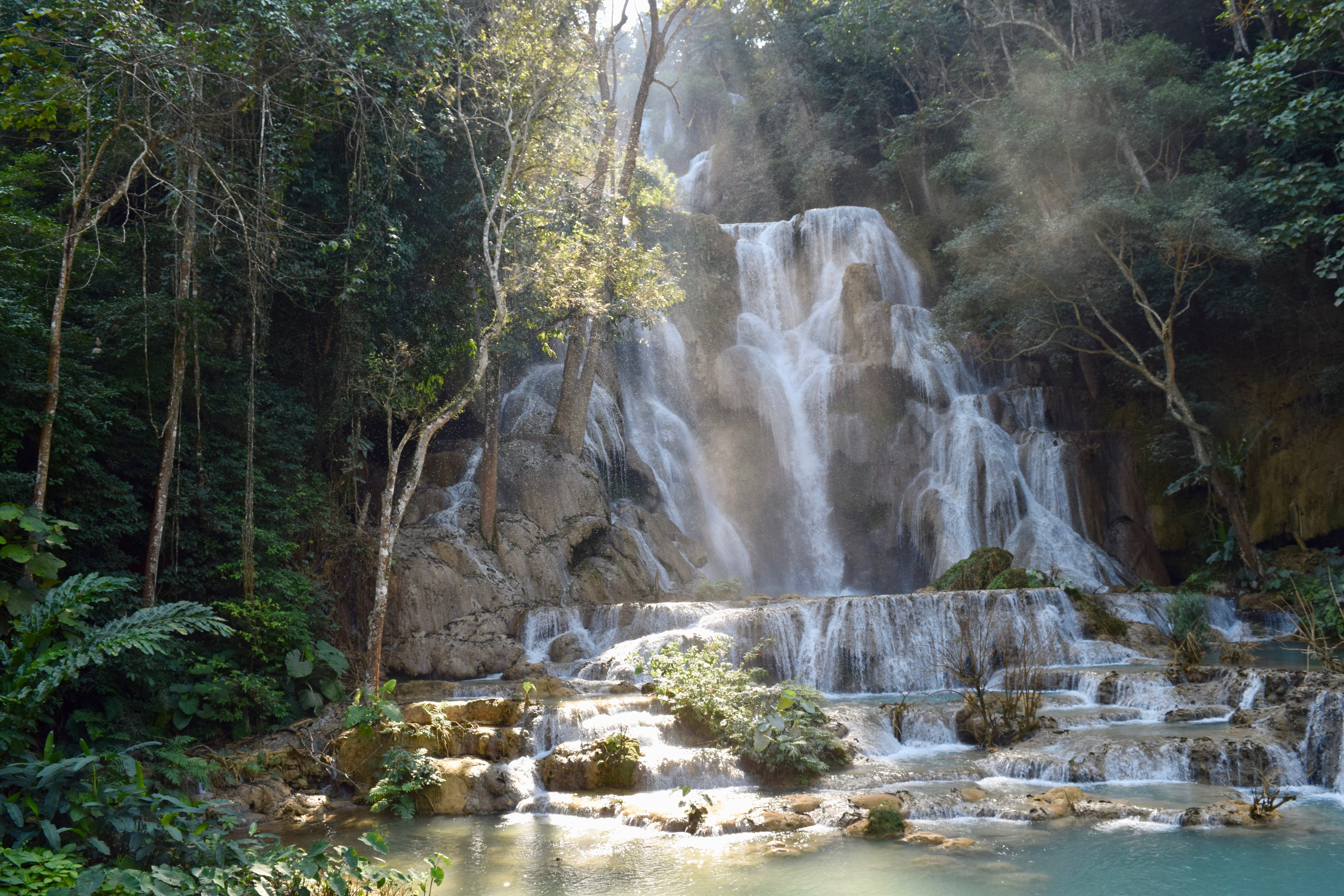
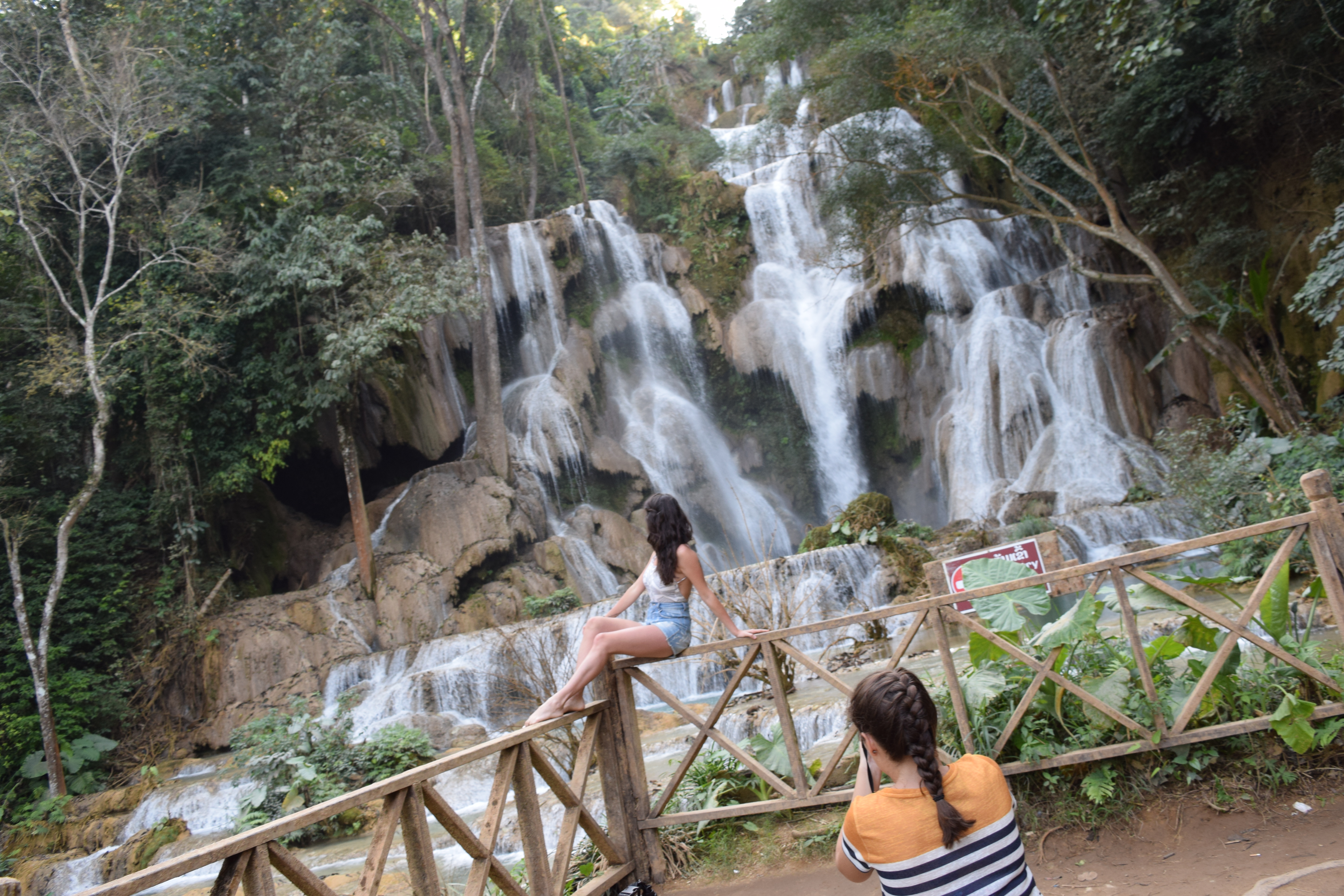
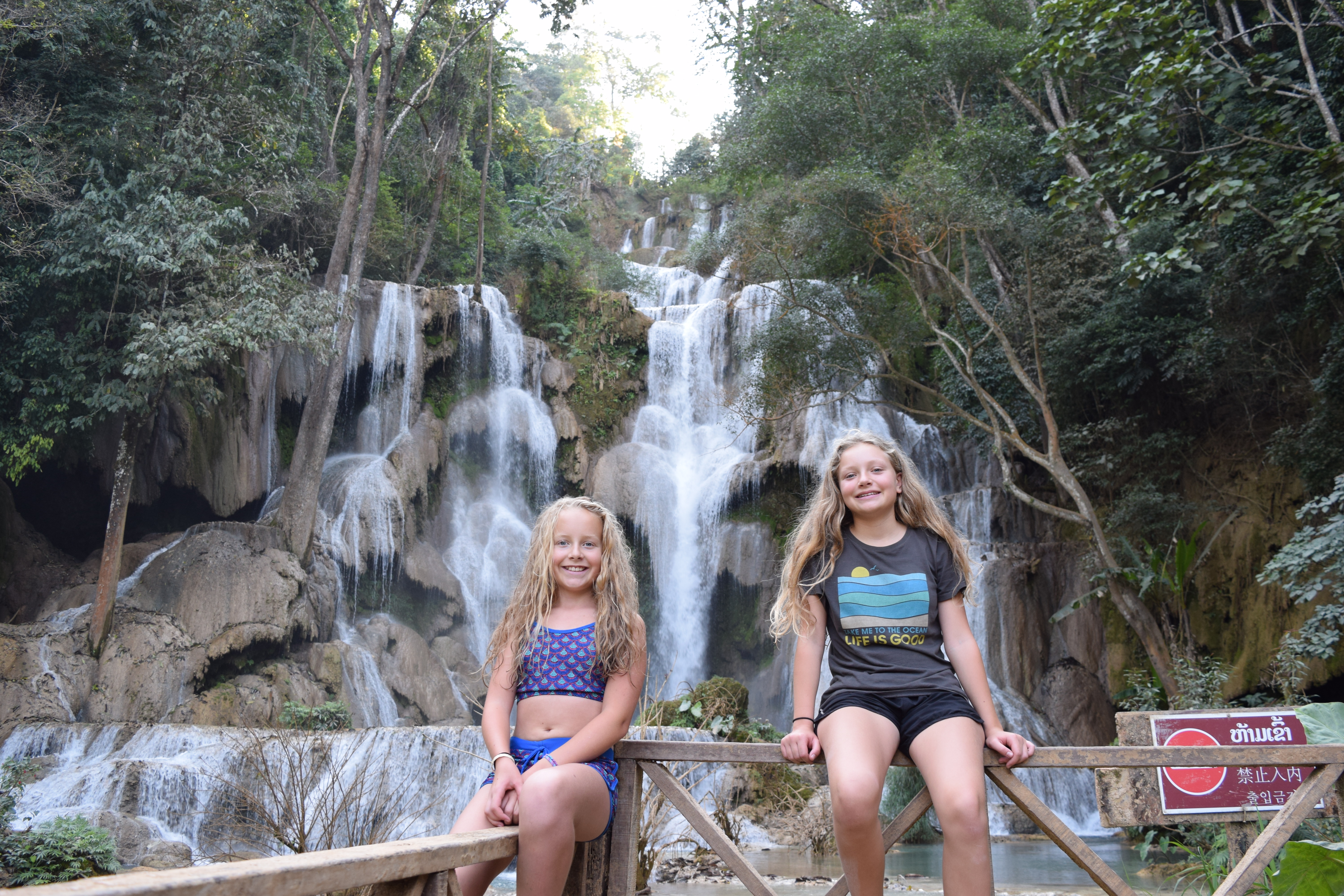
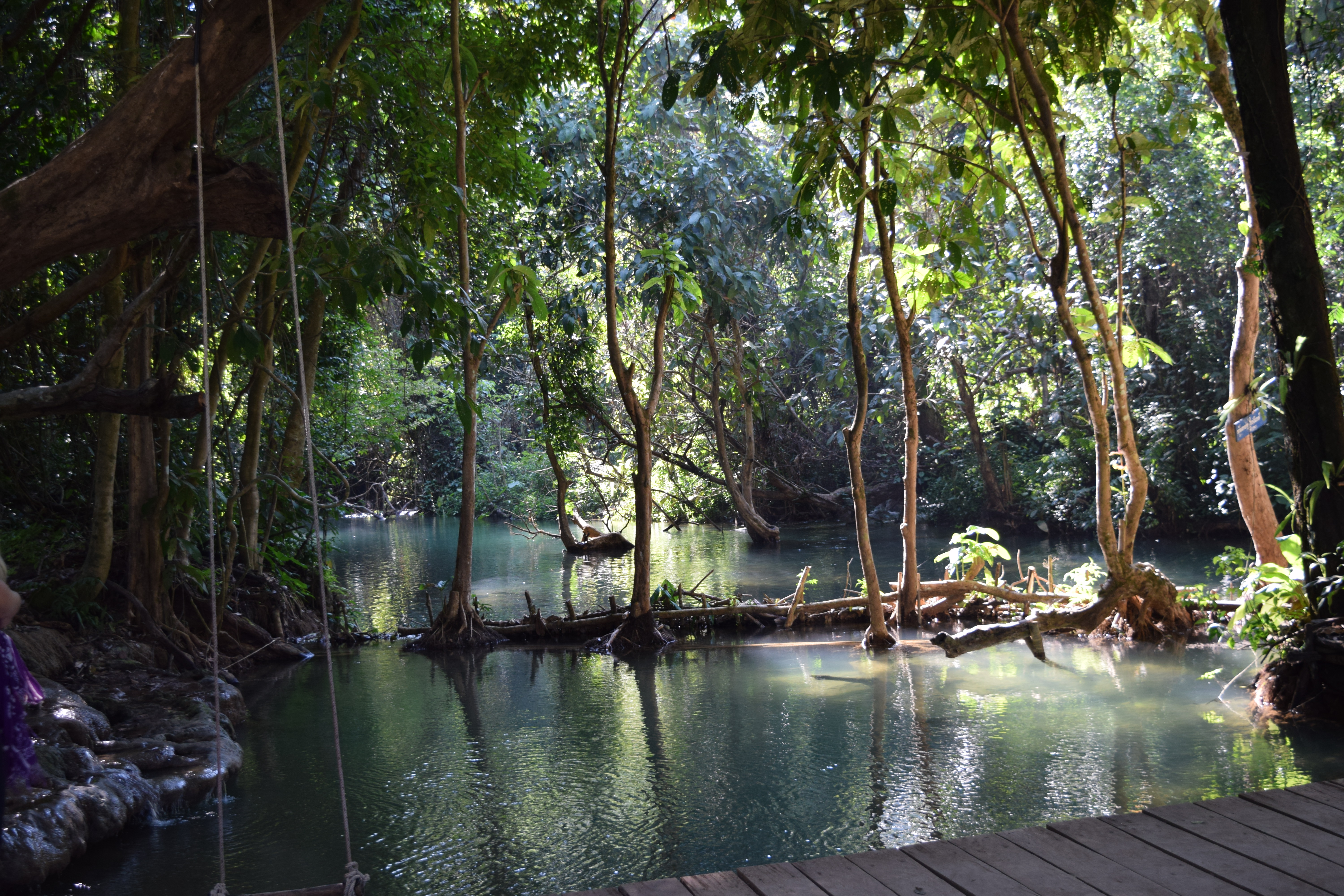
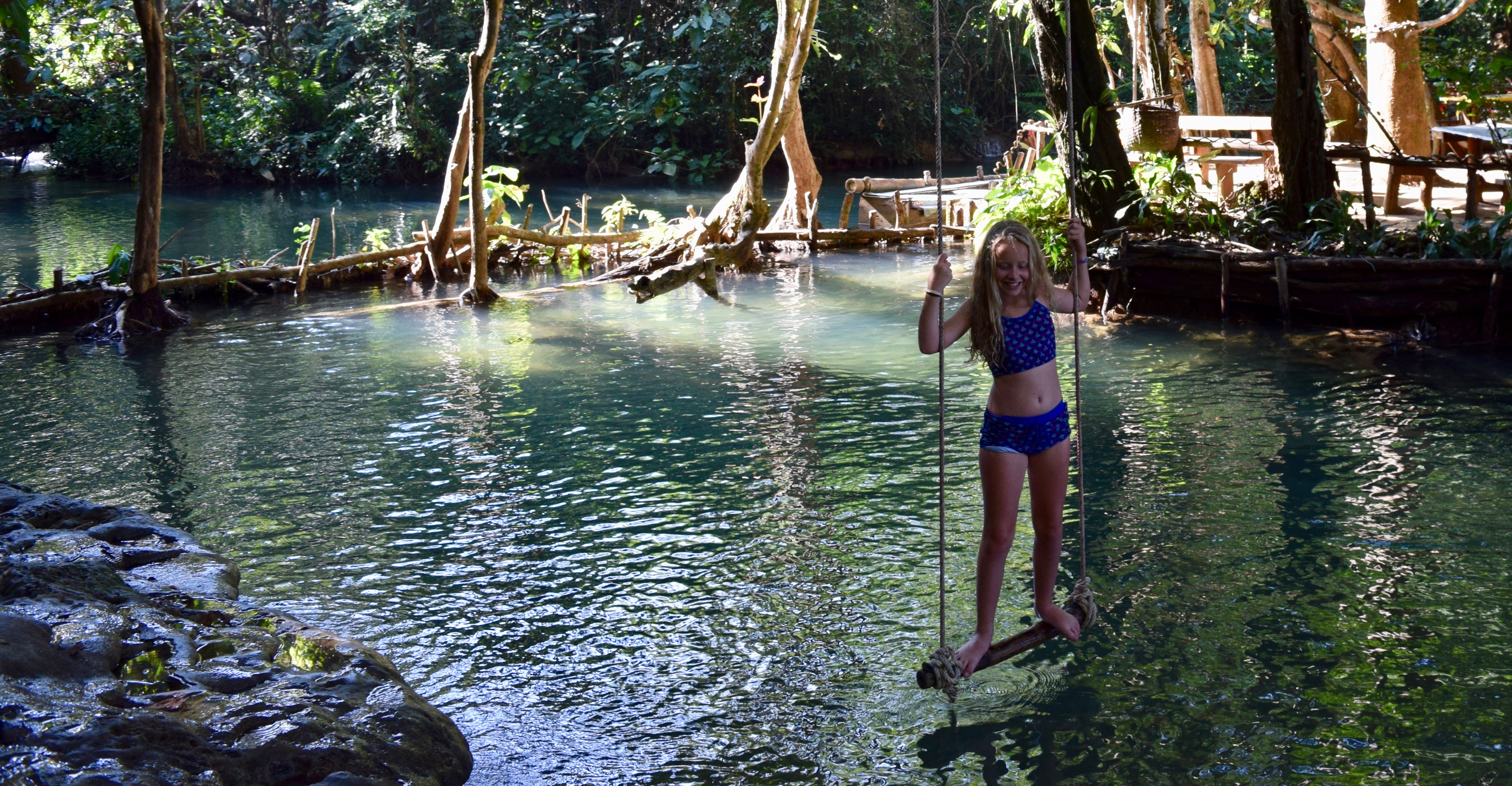
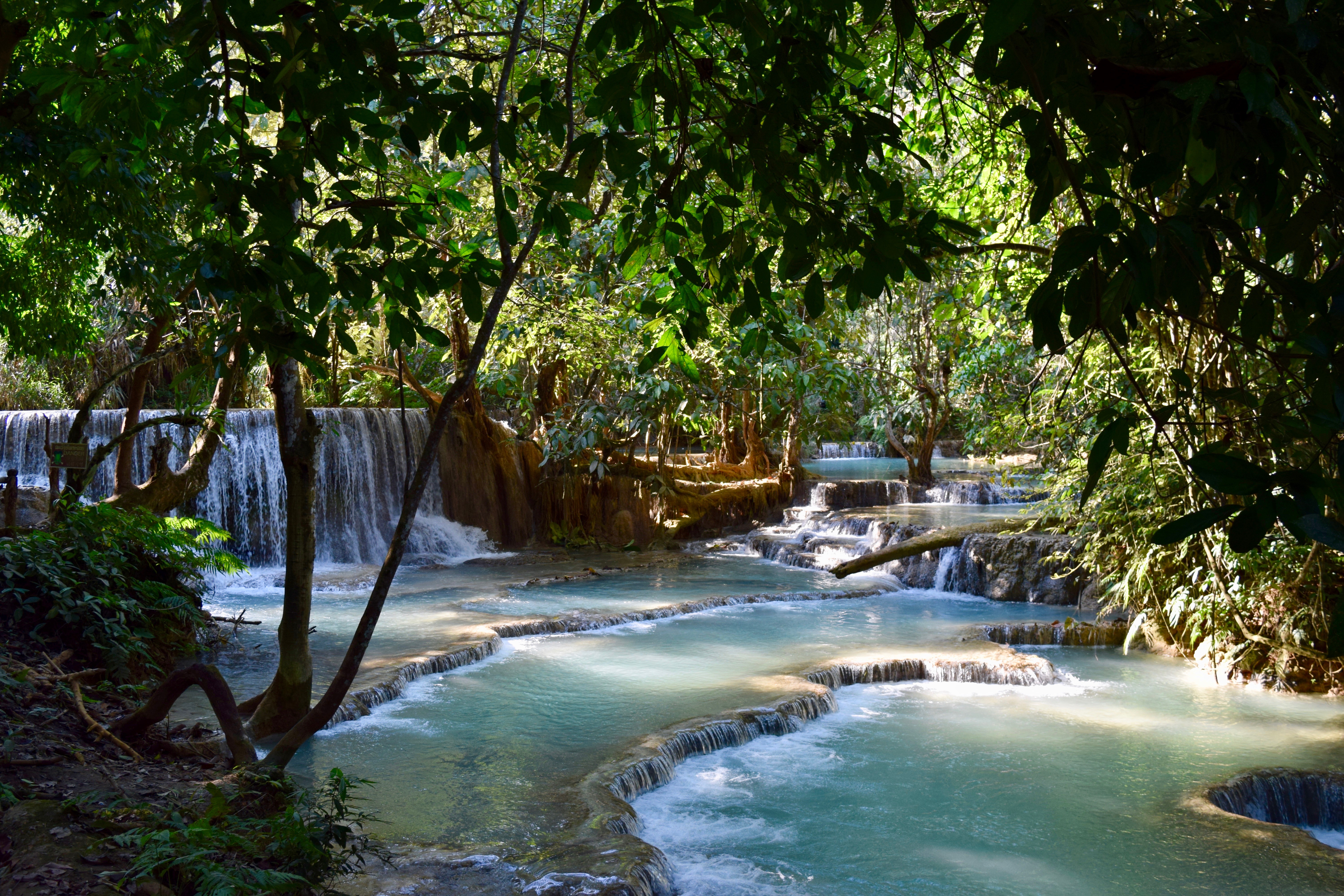
We spent the afternoon hiking to the top of the falls (hot and sweaty) and swimming in the cold turquoise water at the bottom surrounded by the lush jungle.
The Superbowl was happening while we were in Luang Prabang and we found a sports bar that was showing it live. On our last day we woke up before dawn and made our way to watch the Pats vs. Rams with about 30 other fans. It was a festive atmosphere even at 6am and a great result!!
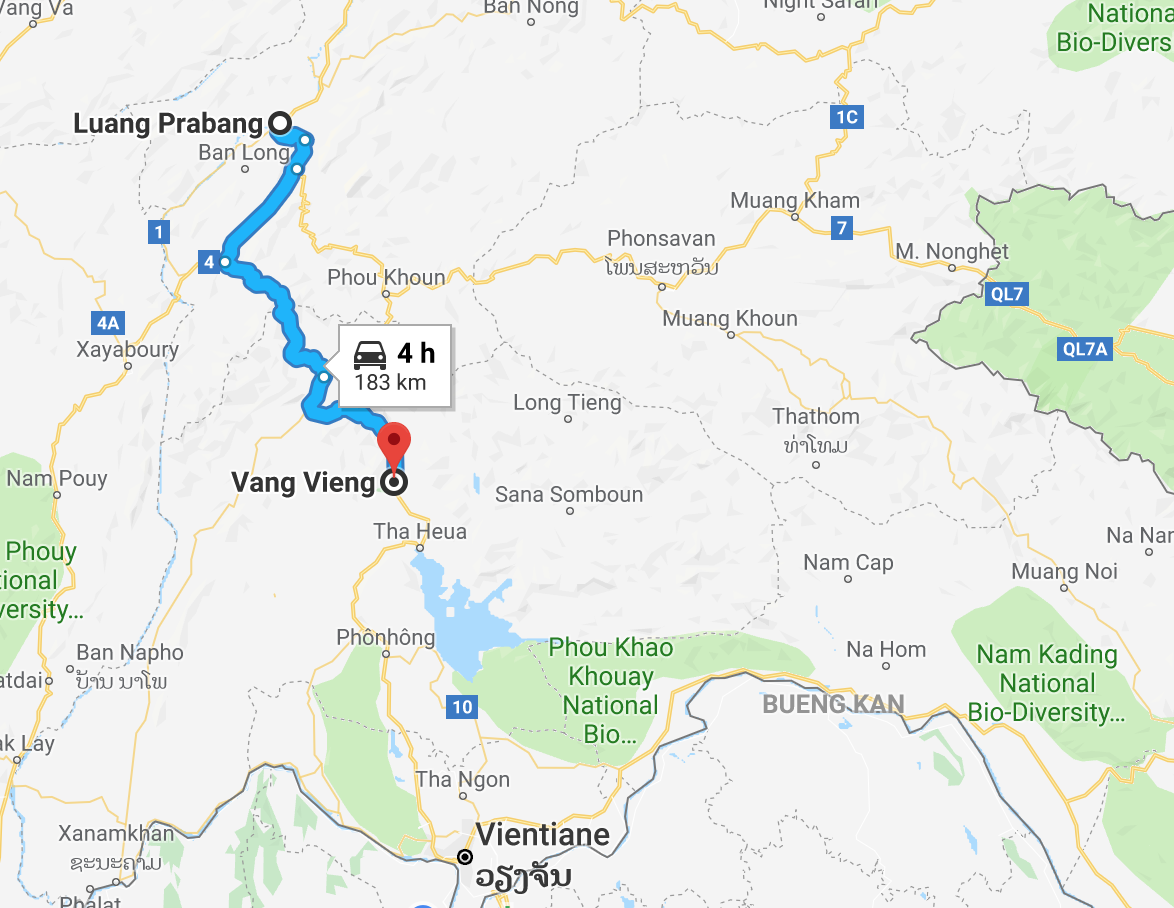
After the Superbowl breakfast party we loaded into a minivan (15 people, including a driver, and is not a lot bigger than a Dodge Caravan – cheap but squishy) and headed for Vang Vieng. The van wound it’s way through the mountains, hitting every pothole and bump in the road along the way, and in Laos that means the entire ride was rough. As we entered town the ride got even rougher (if that was possible), we had a flat tire. A Songthaew came along, loaded us up and took us to our hotel.
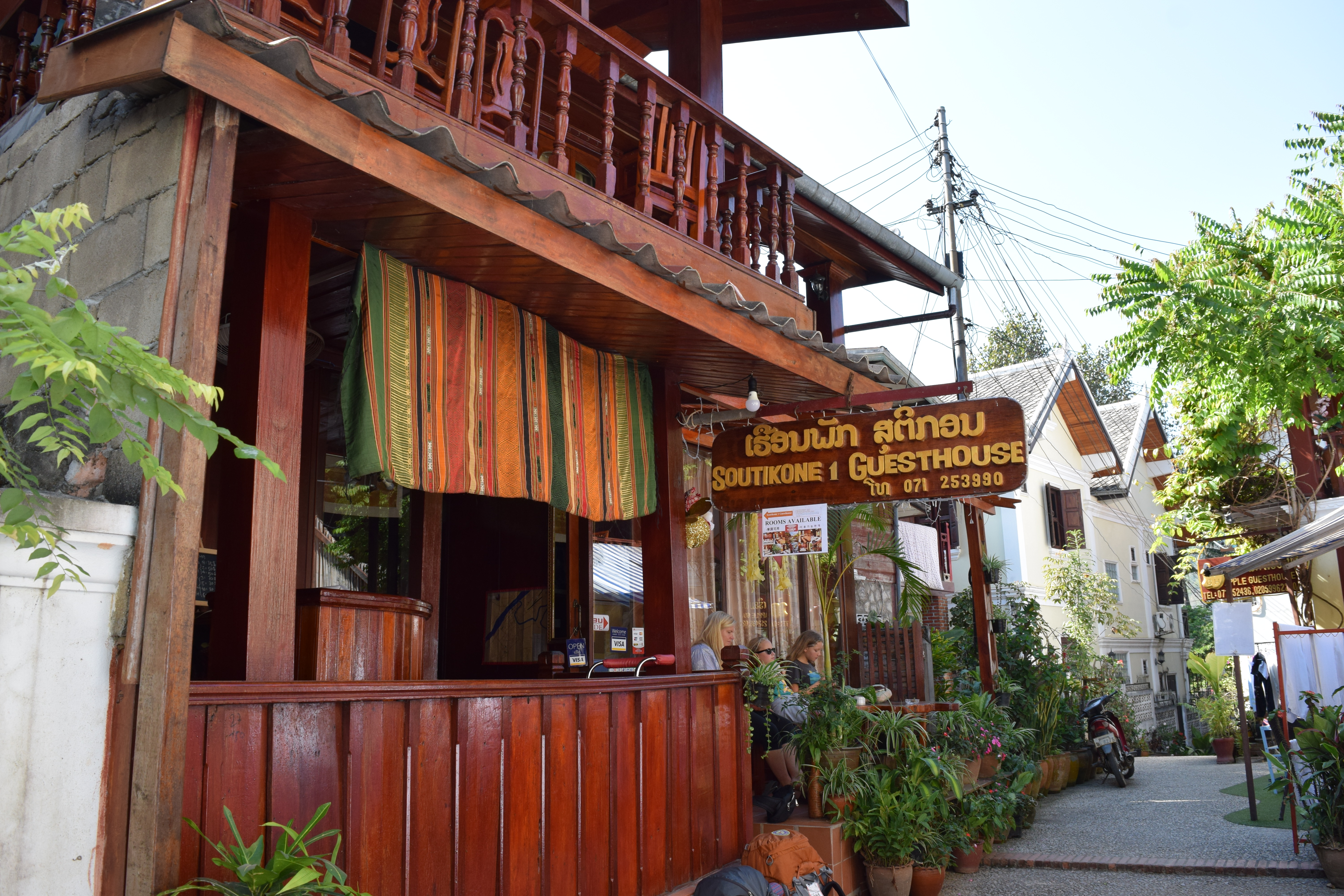
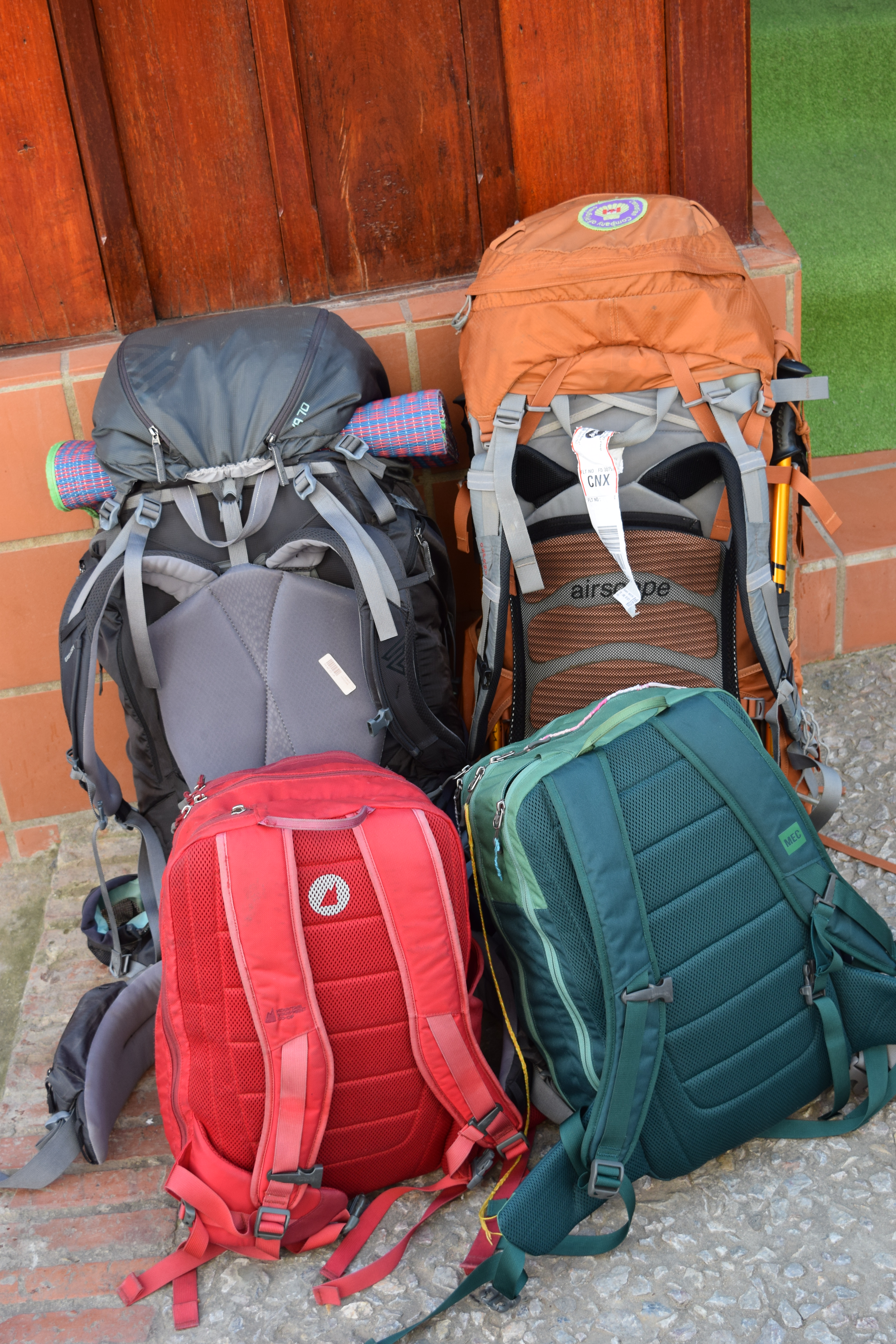
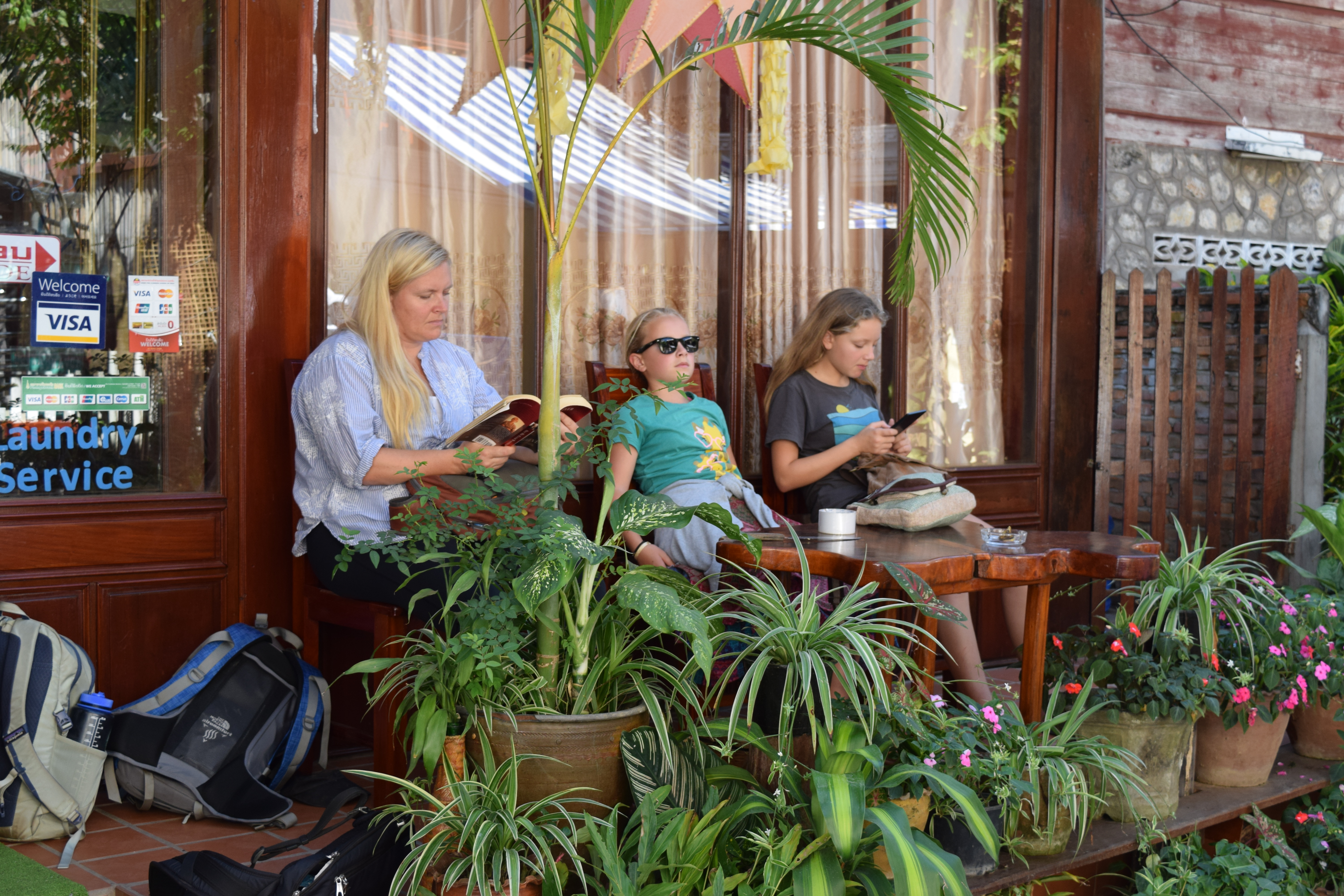
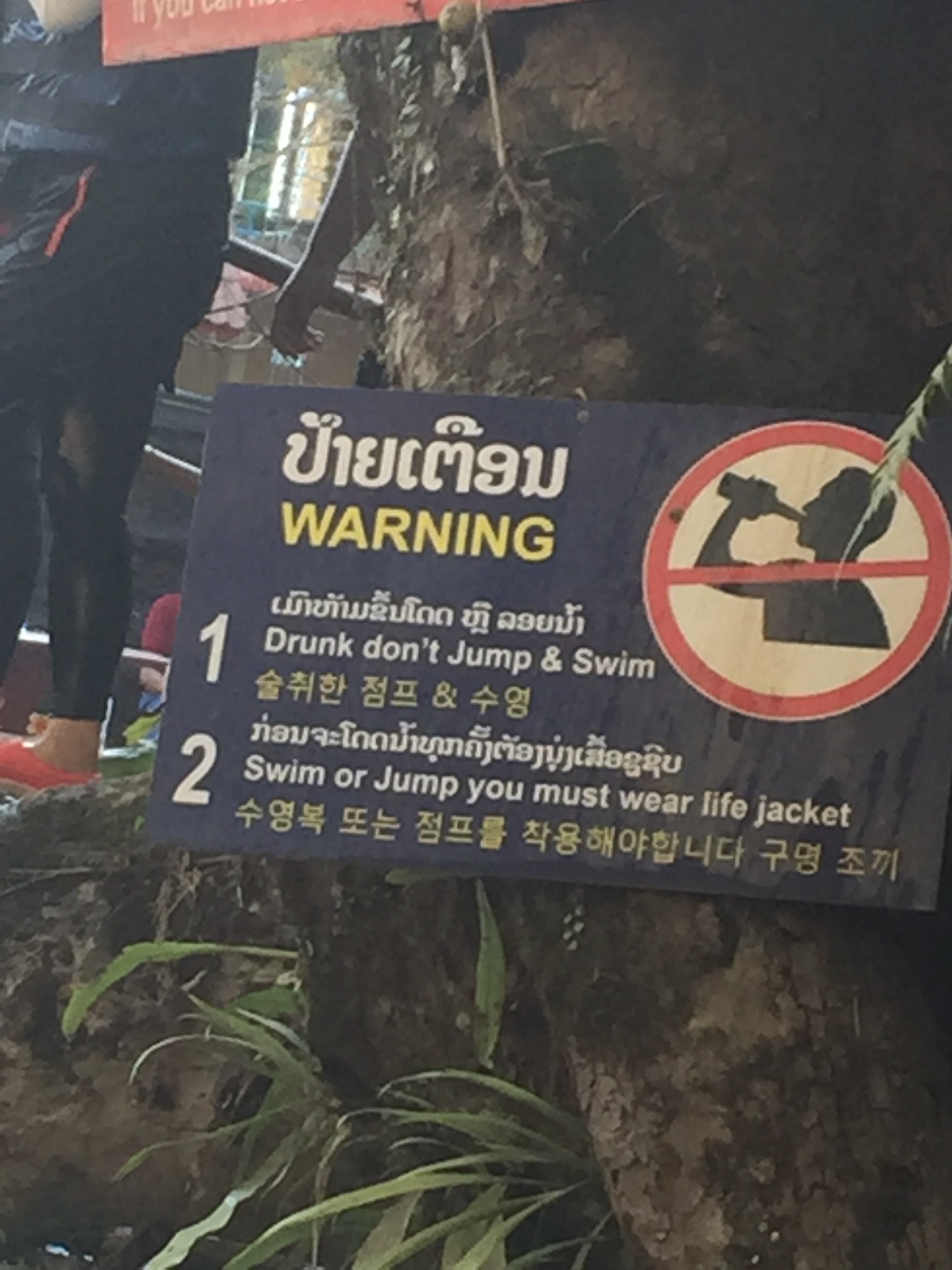
Vang Vieng was once know as a party hub for backpackers, and to some extent it still is. But the once famous activity of partying your way down the river floating on inner tubes has really been hampered by the closing of all but two if the riverside bars in 2011. Floating down the river is still allowed, but in 2011 there were 27 recorded deaths in the river. There are no big rapids, the river itself is pretty peaceful. But before 2011 there were over a dozen bars in a less than 2km stretch. Who could blame the locals for trying to make some money from tourists with cash to spend. Alcohol, water, rope swings and no rules didn’t mix well. The Australian and British governments began to pressure the Laos government to do something, so they shut it down. The locals rebounded, now they market to people with a little more money who are looking for outdoor adventure type activities. Caving, kayaking, river floating, hiking, zip lining are all accessible within a 30 minute drive.
We spent a day floating our way through a cave on inner tubes, then a 2 hour kayak drift/paddle down the Nam Song river with beautiful karst mountains around us, clear river water beneath us and butterflies, dragonflies and birds zipping past us.
We finished off our afternoon with a trip to the Blue Lagoon 1 (yes there are more than one and they haven’t mastered creative marketing with the names yet). This place was crowded, but fun. There were zip-lines and ledges to jump from into the beautiful water. The safety standards is Laos are non-existent. There were a few really close calls where people jumping from 20 feet up almost collided with people swinging out on a Tarzan rope. Mark made sure to direct traffic when the girls wanted a turn.
Vang Vieng is surrounded by beautiful karst mountains covered in lush jungle. We hiked up one of the mountains to have a view of the area, the jungle was steamy, but the breeze at the top and the view were worth it.
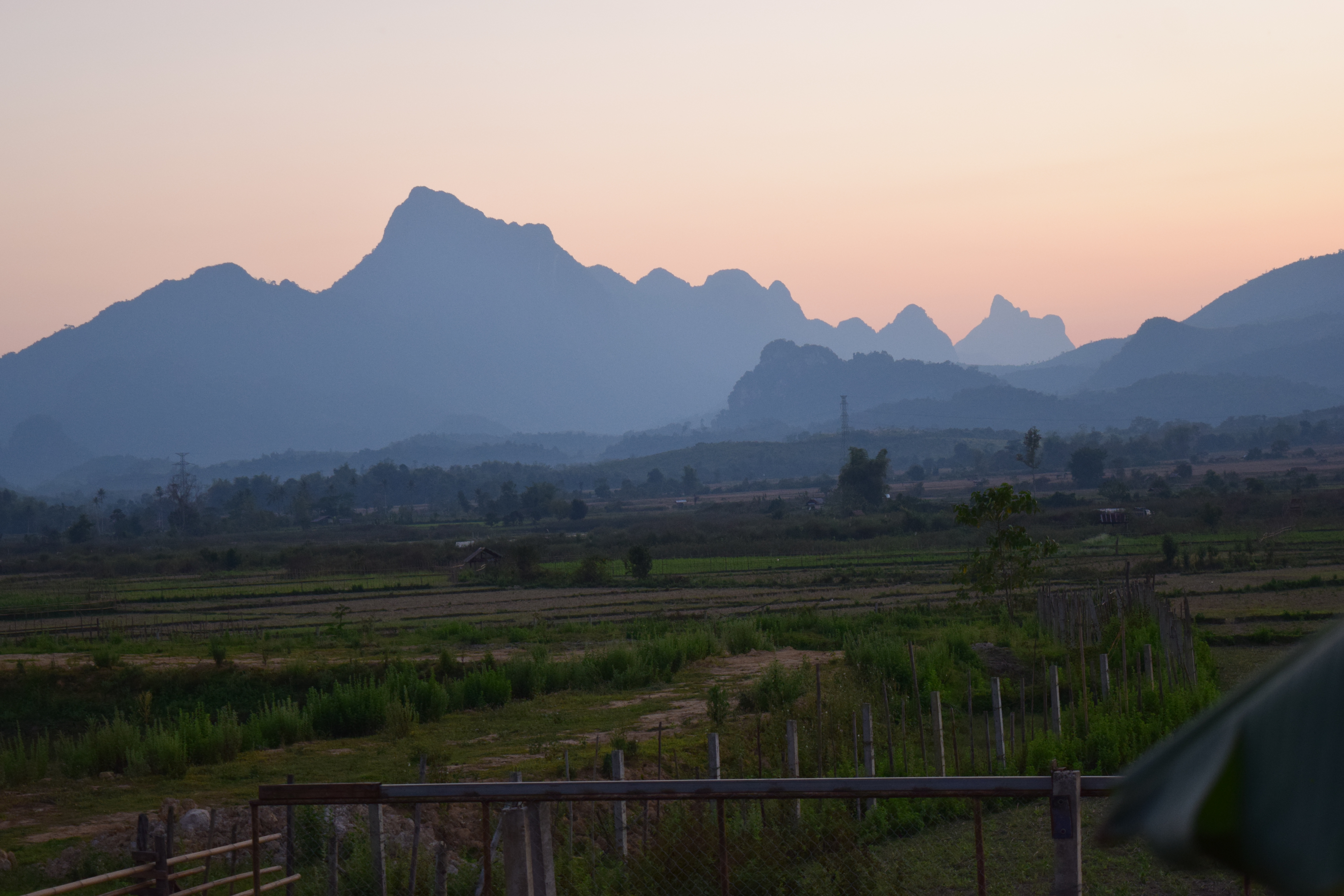
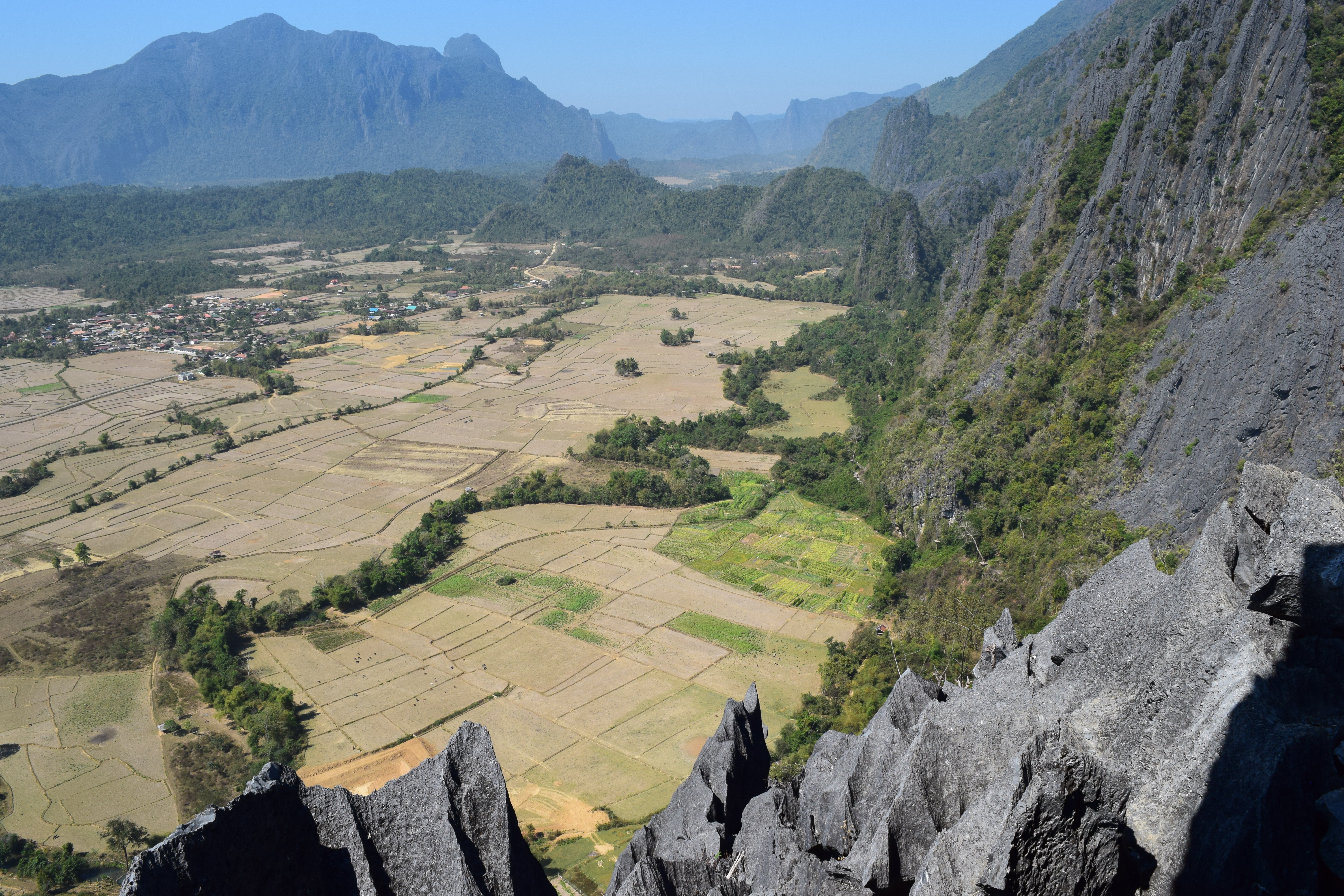
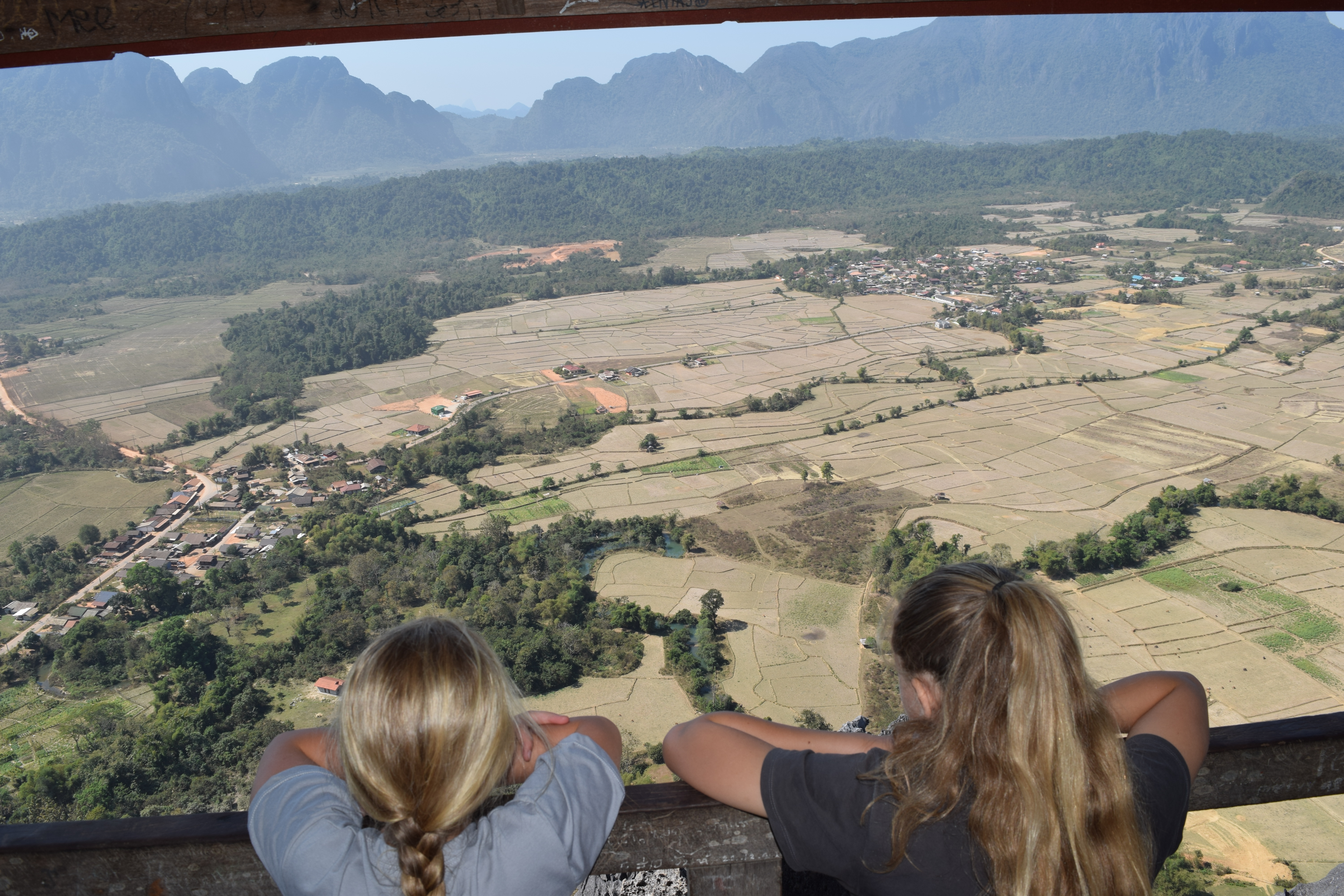
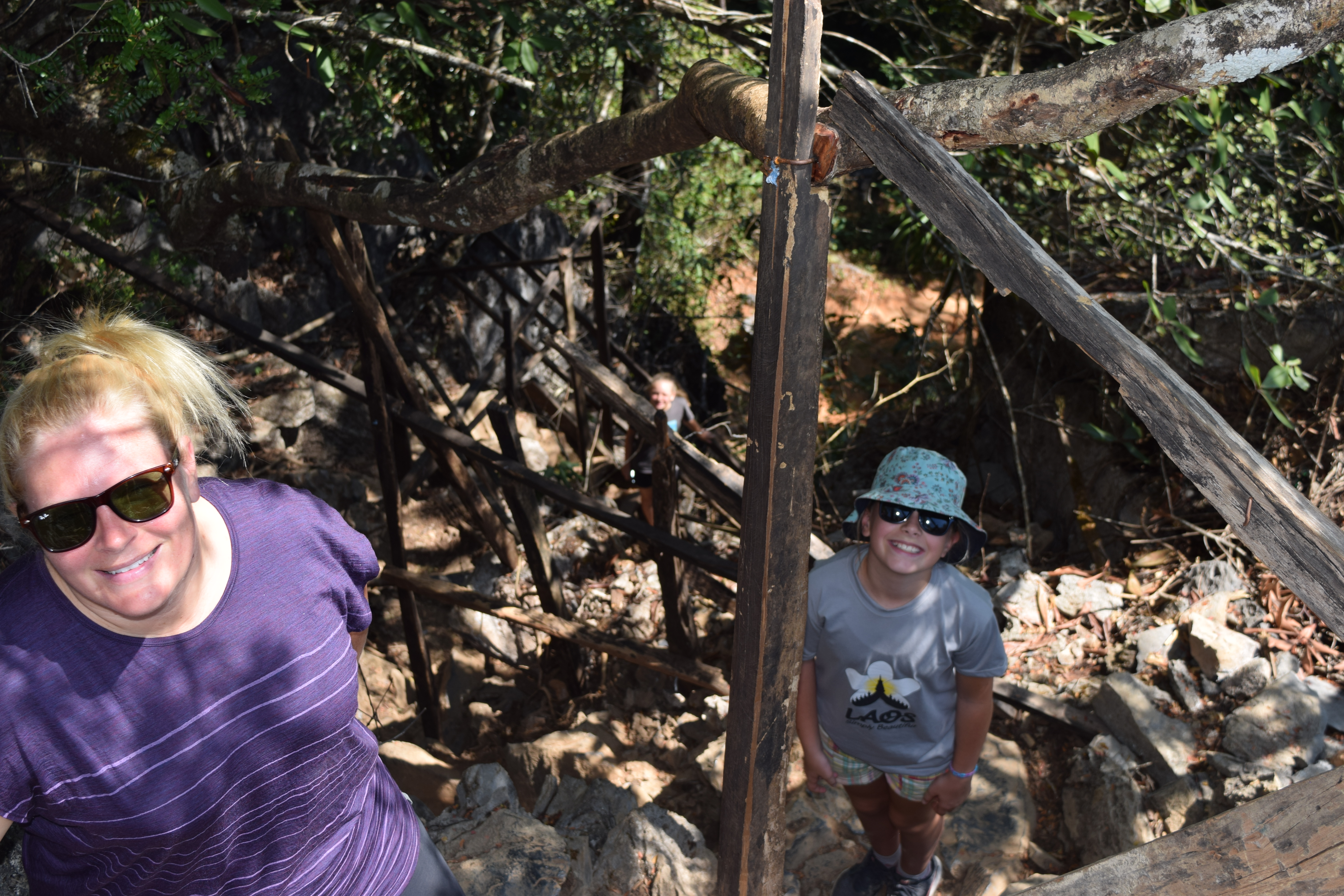
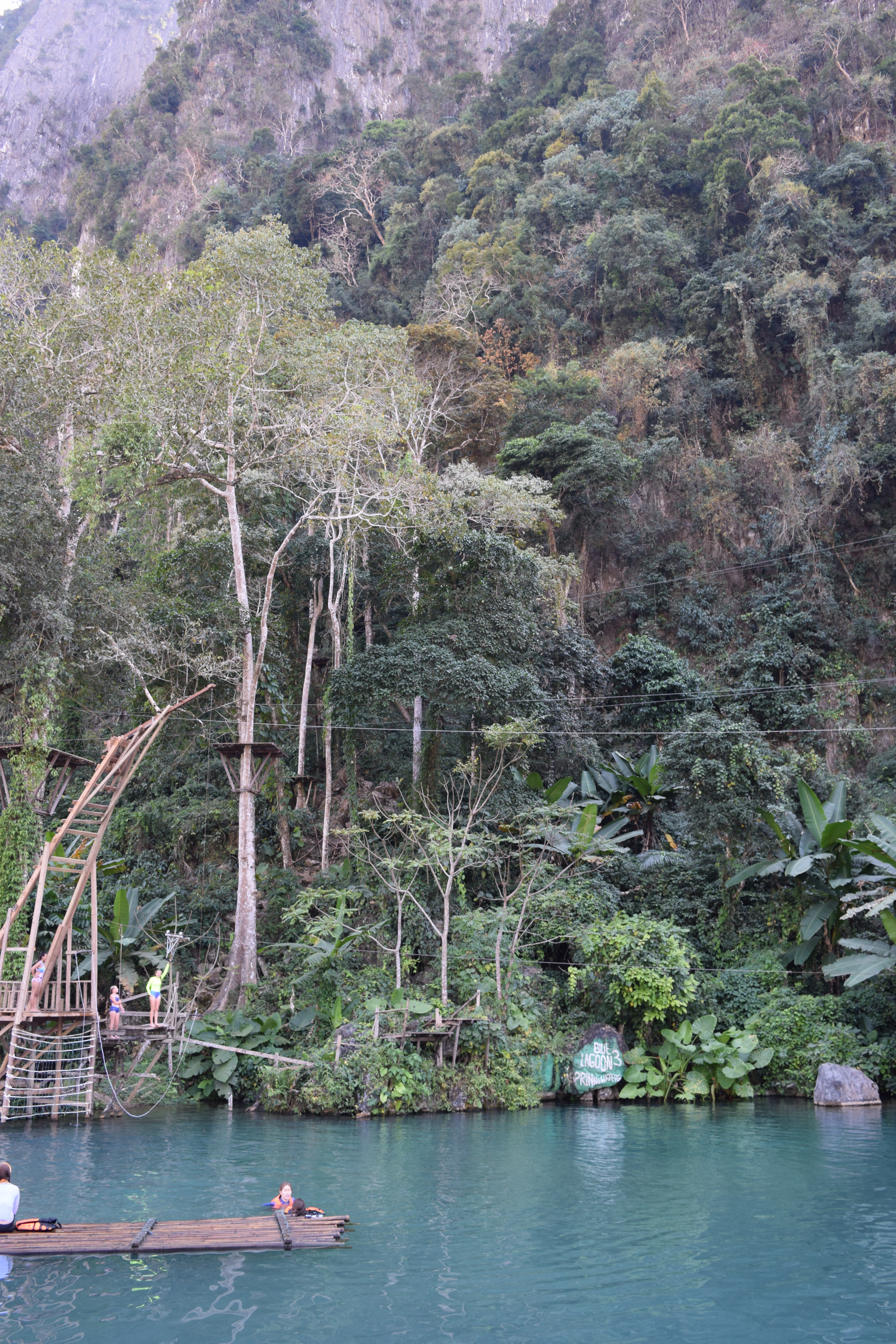
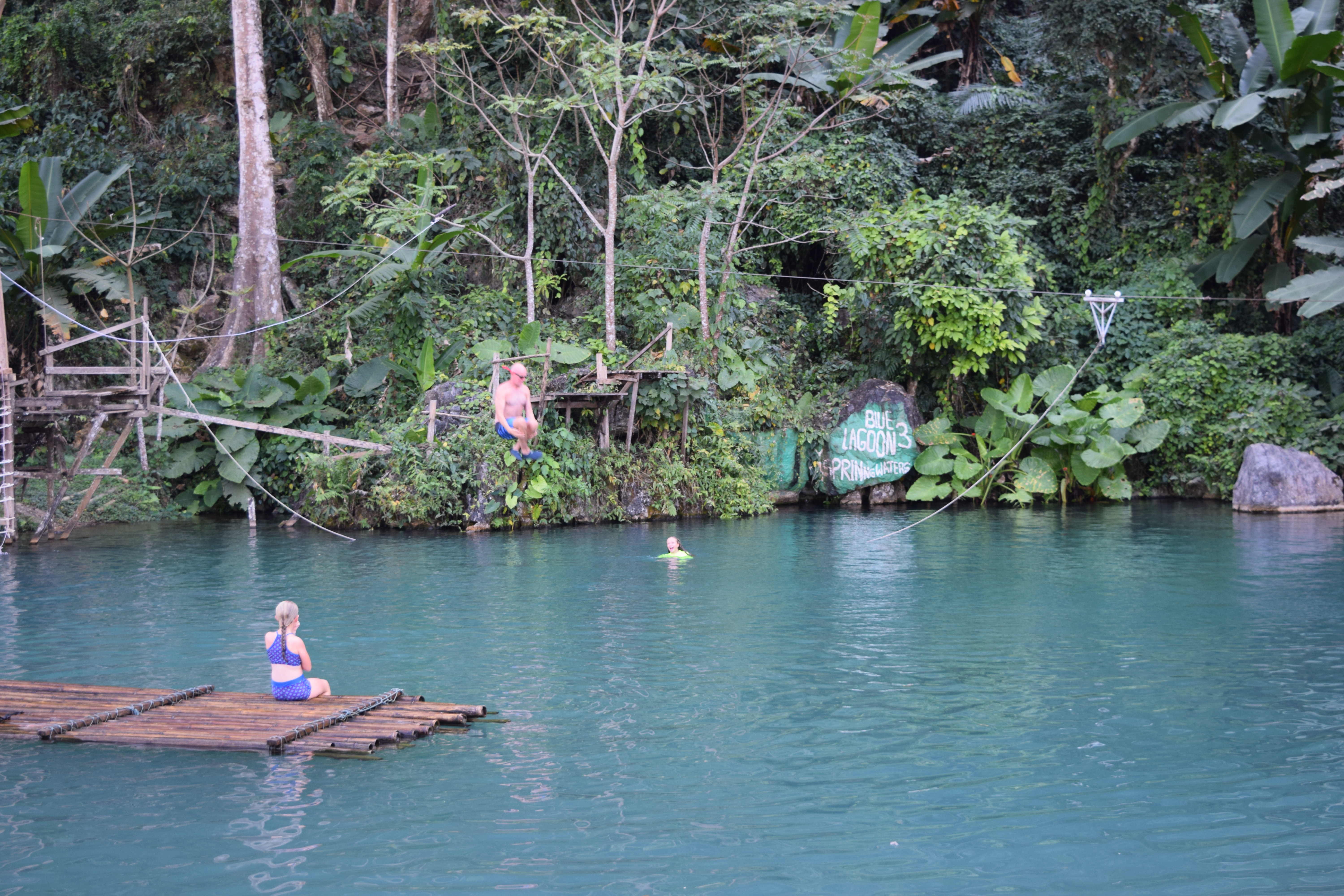
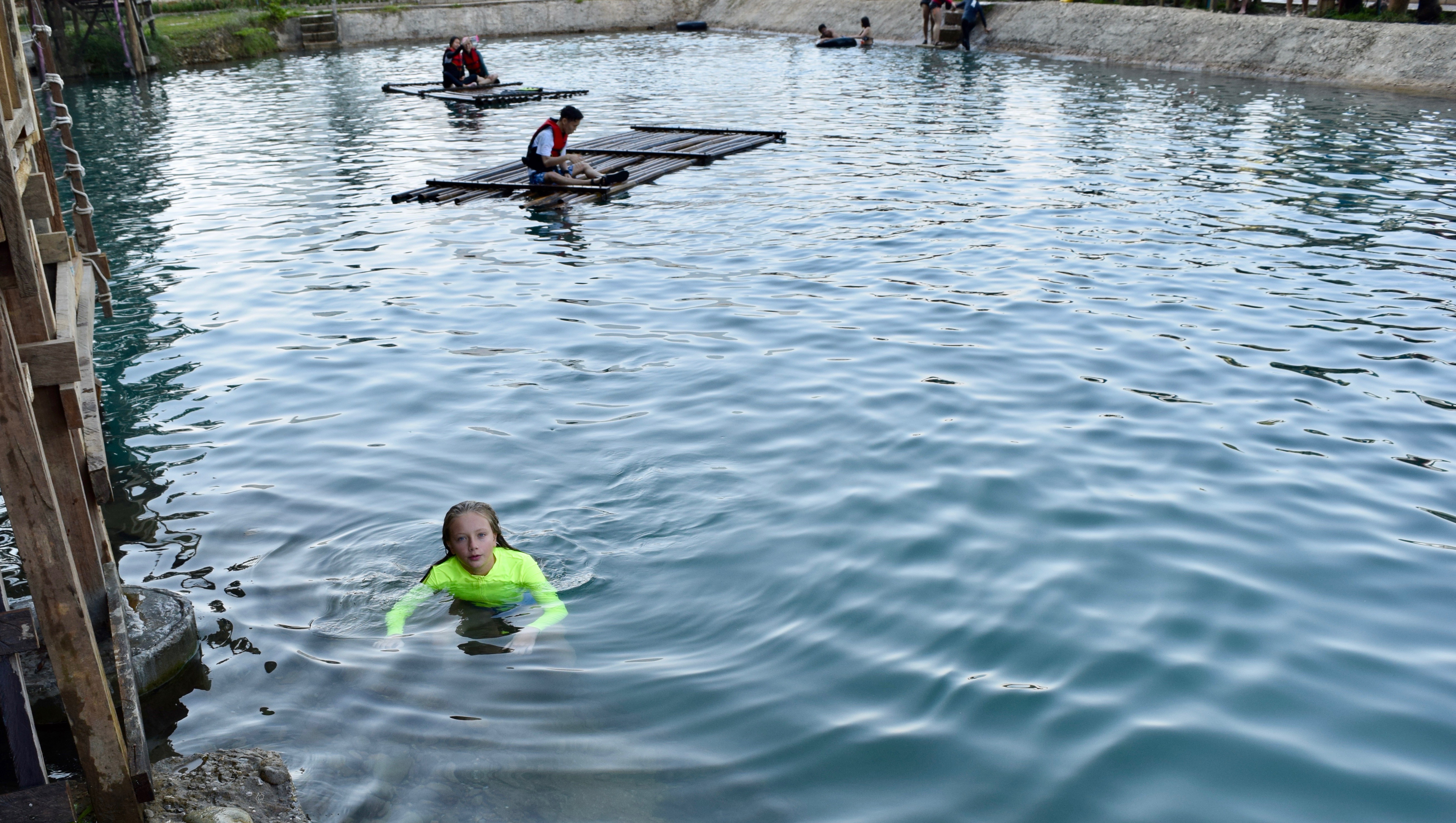
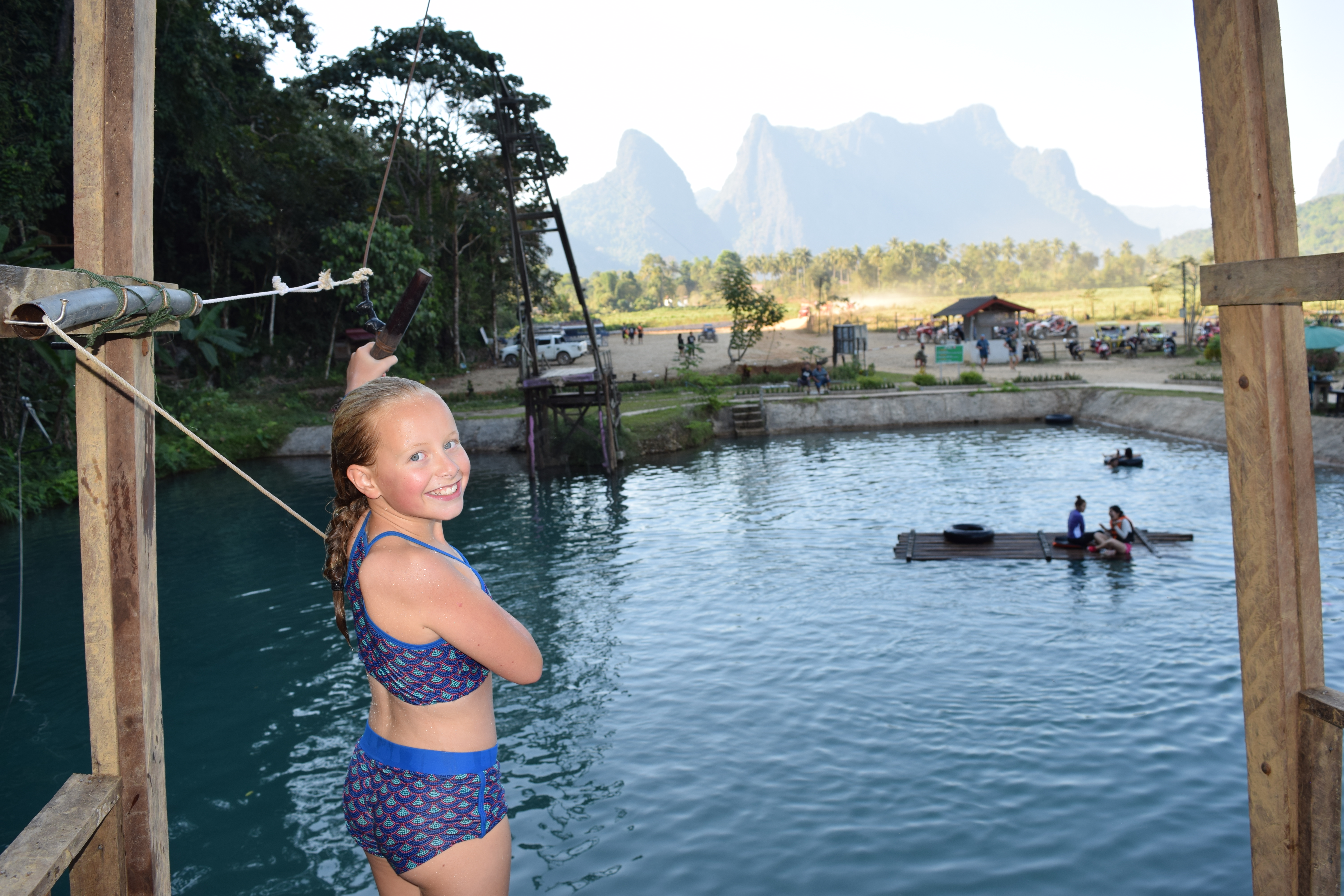
A dip in Blue Lagoon 3 was in order after that climb and 45 bumpy and dusty (it’s dry season) minutes later the girls were zip-ling and jumping the heat and dust away (Mark too!).
A long, bumpy bus ride got us to Vientiane (the capital) on a sunny afternoon. I hadn’t been doing so well with the bus/road combination in Laos, so the SEA equivalent of Gravol became a staple. But, a Gravol hangover meant a lazy afternoon by the pool.
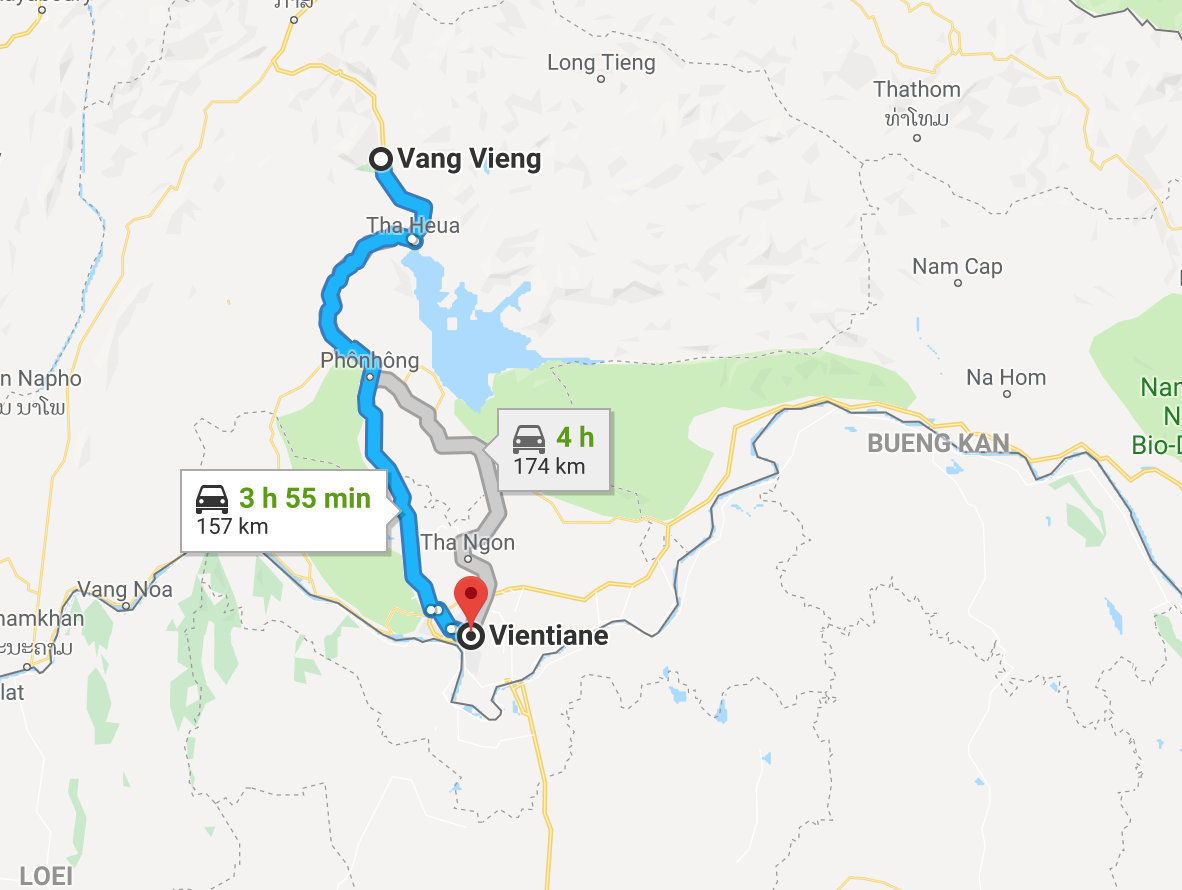
Vientiane is touted as a bike-able city. I disagree, there is a lot of traffic and no designated bike lanes or paths. Not that people would pay attention anyway. Well, I suppose it’s more bike-able than Bangkok, but that’s not saying much. Regardless, we stuck it out and toured the sites on our bicycles.
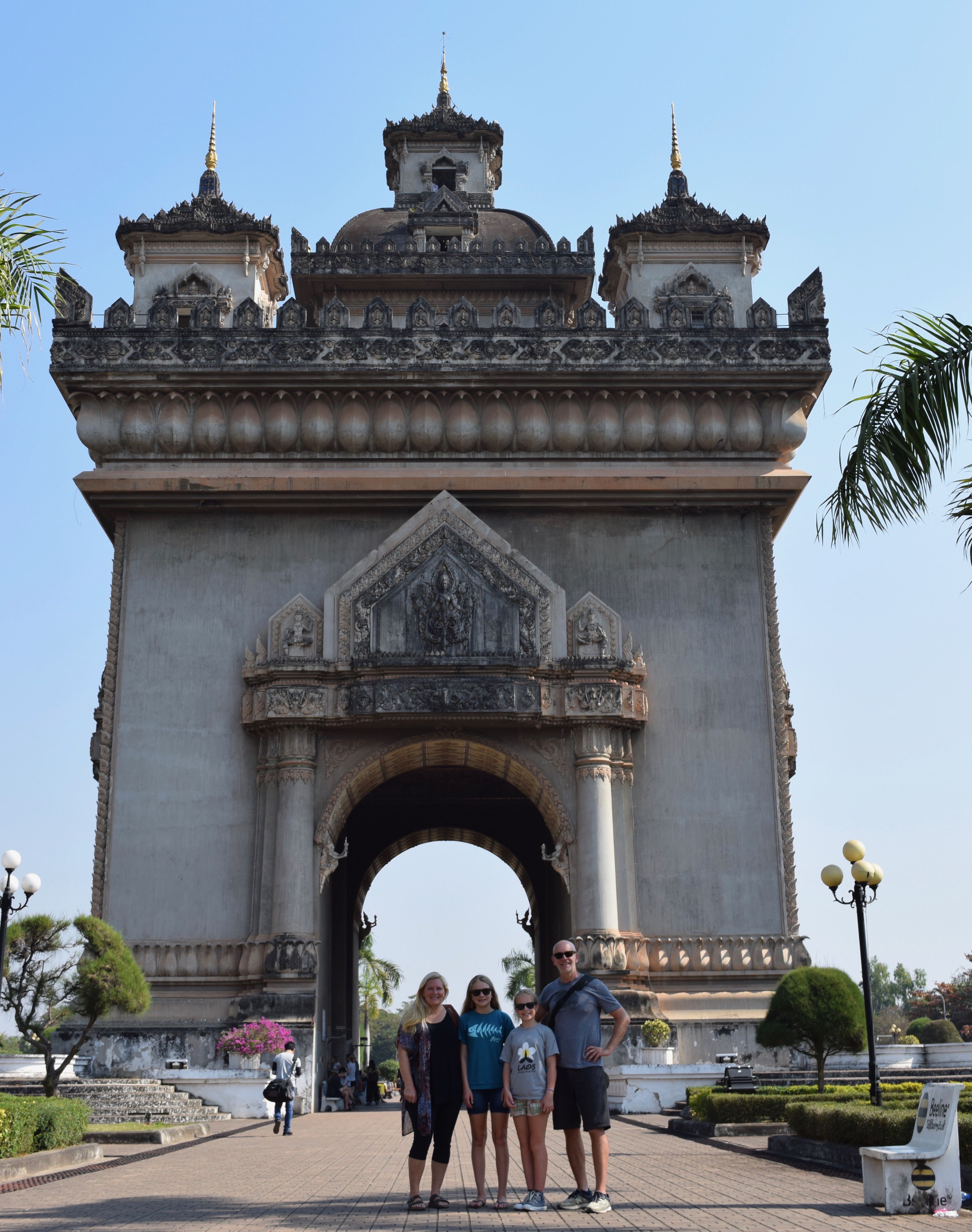
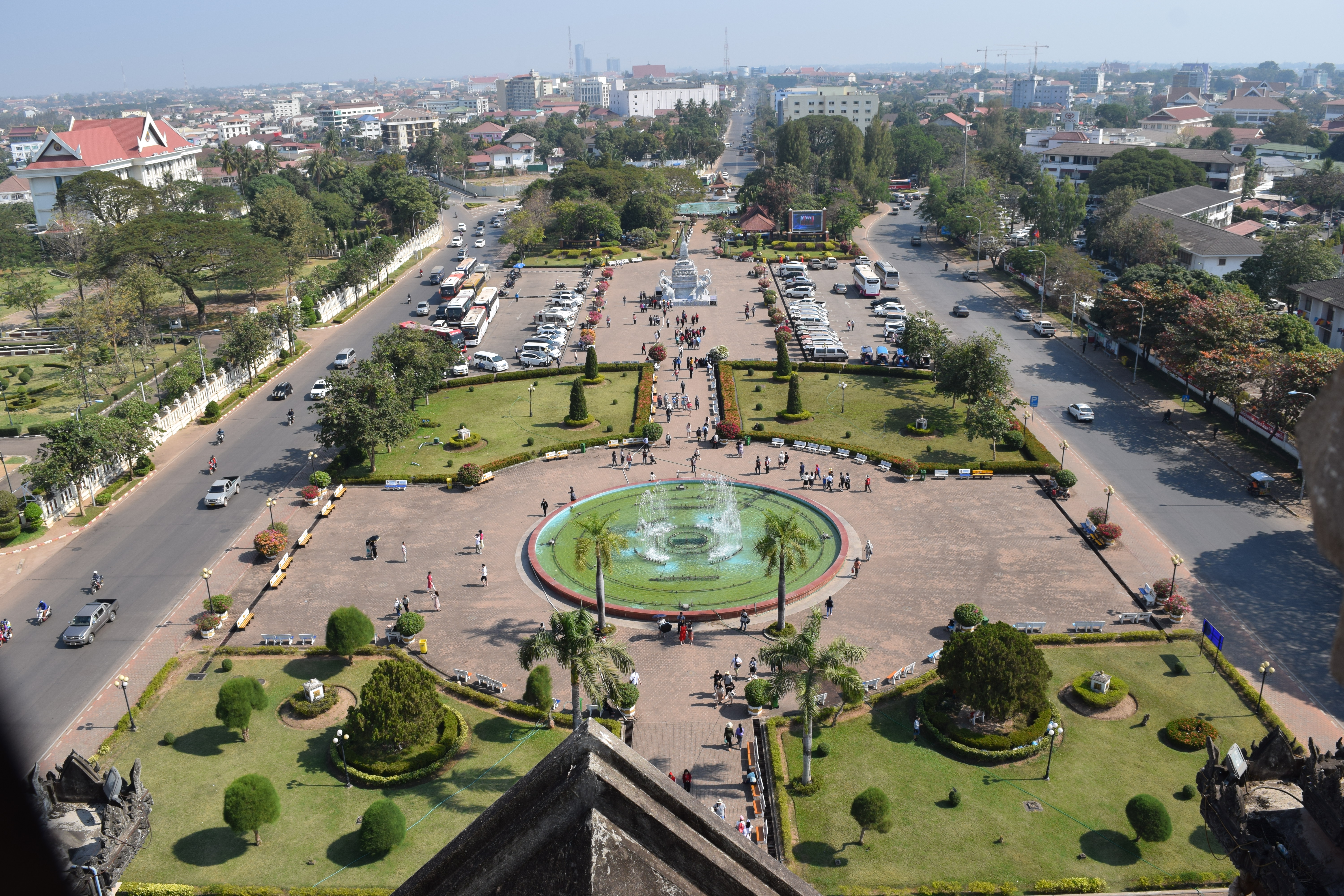
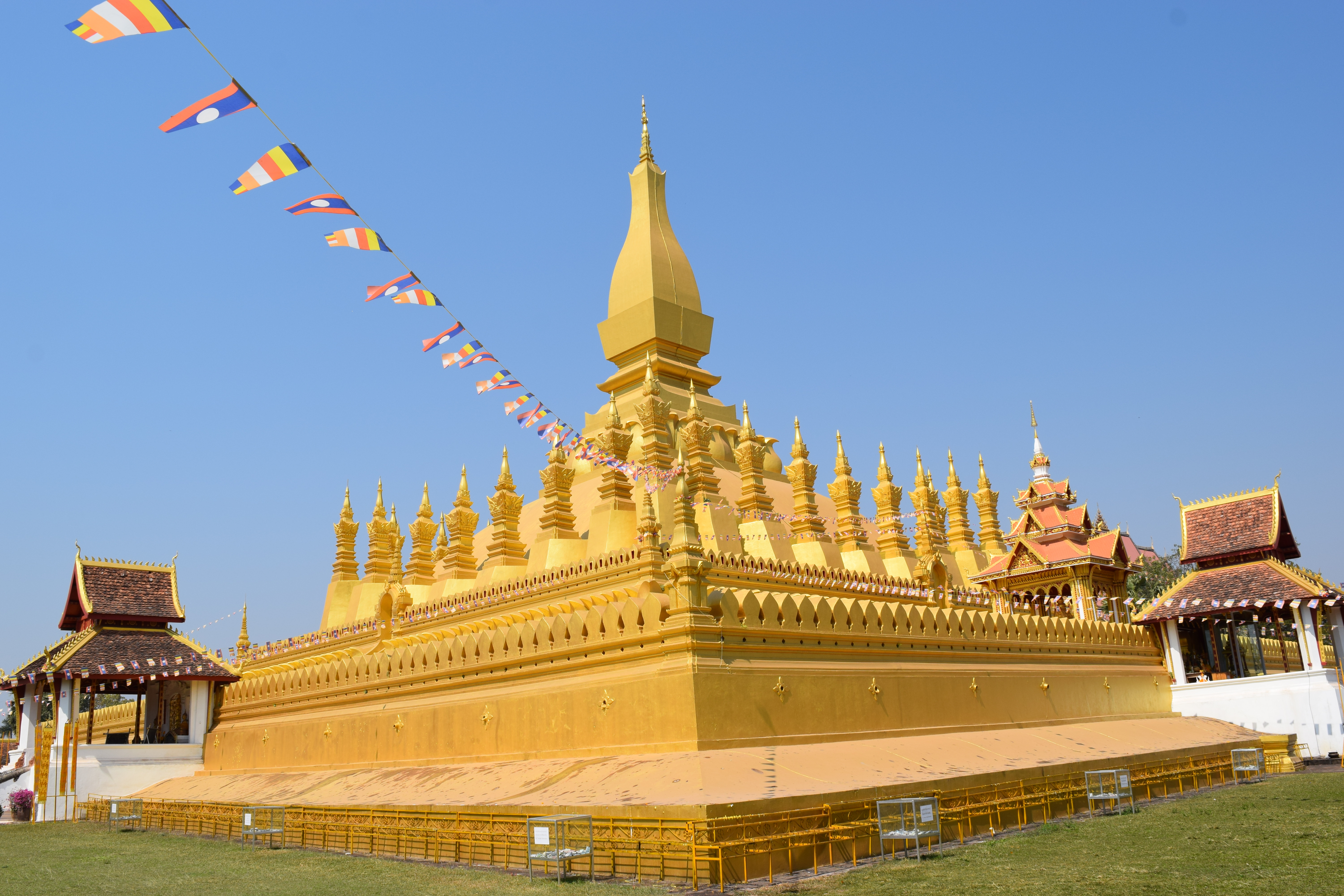
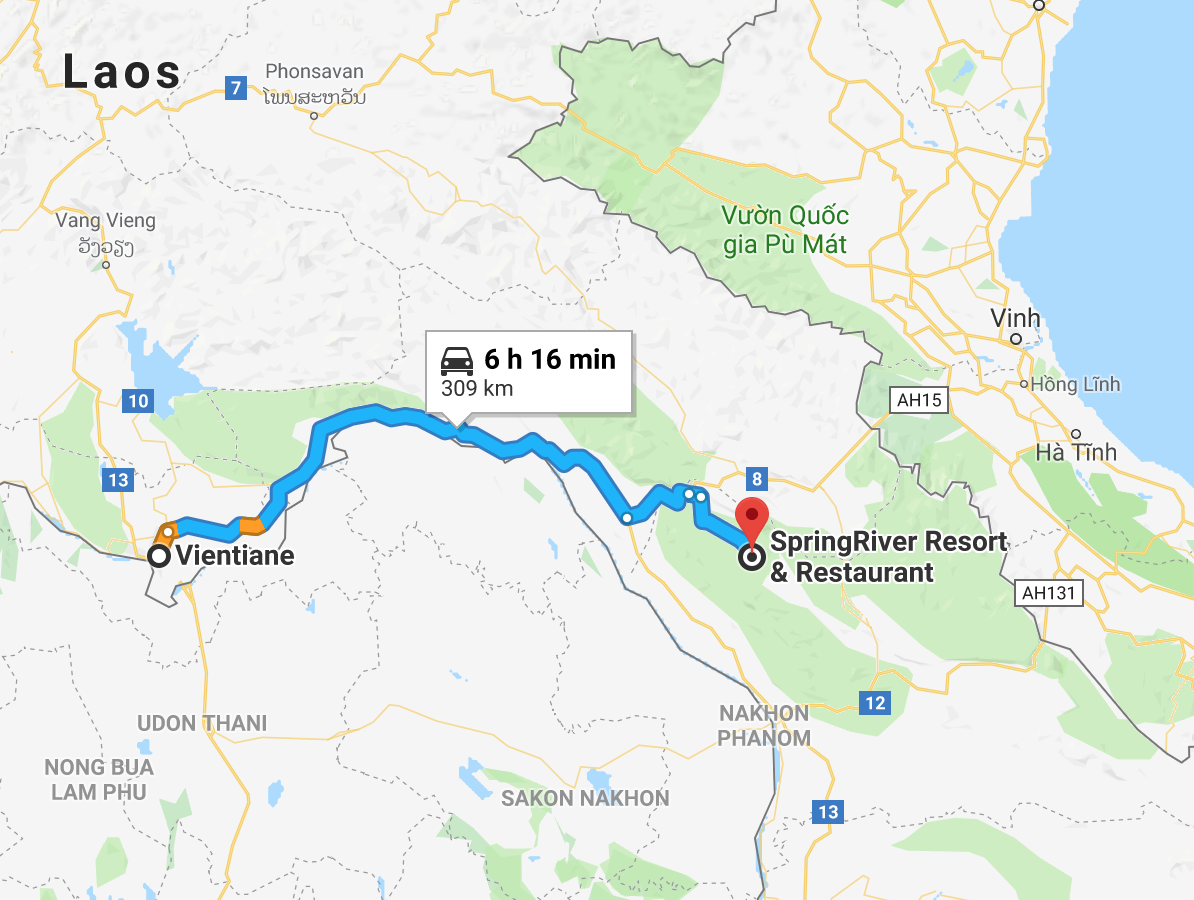
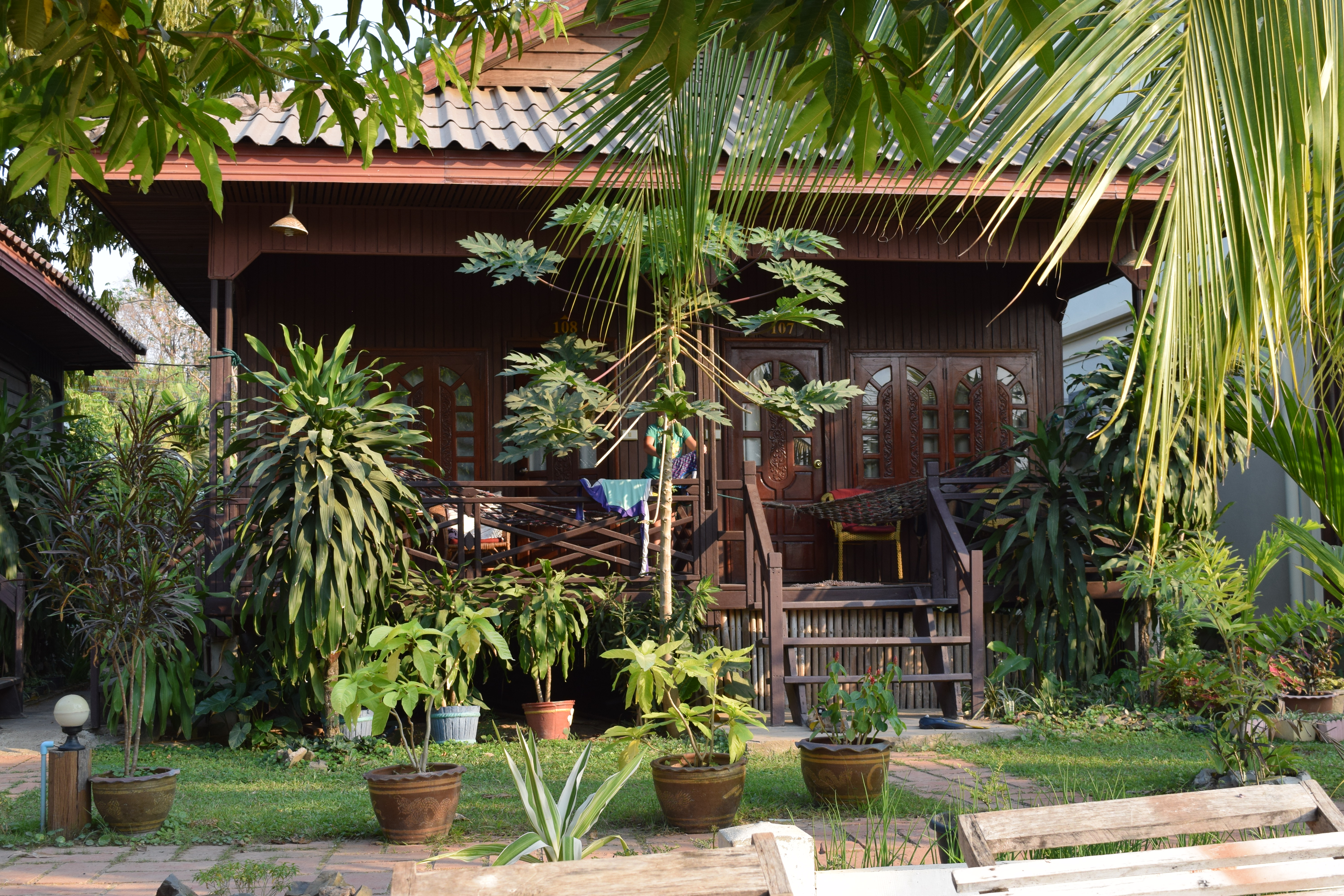
Our time in Vientiane was short, we wanted to get to the Kong Lor Caves which would take 2 days of travel there and back, plus one day seeing the cave, so we had to hit the road in a rental. 311km and 8 hours later we arrived. To fit in as a driver in Laos basically you just hit the gas as hard as you can when there is open road and then lock up the breaks for potholes and bumps (at least every 200m) and then there are the bridges….not sure if there are any engineering standards. Needless to say the drive wasn’t the highlight. But, this portion of the trip may be tainted in my memory….this is when I started to feel a little sick. At first I chalked it up to car sickness, but after we arrived at the Spring River Resort (which was a gorgeous spot with rustic cabins, set in the middle of the jungle, with wooden walkways leading to raised bungalow overlooking the river) I knew it was something else.
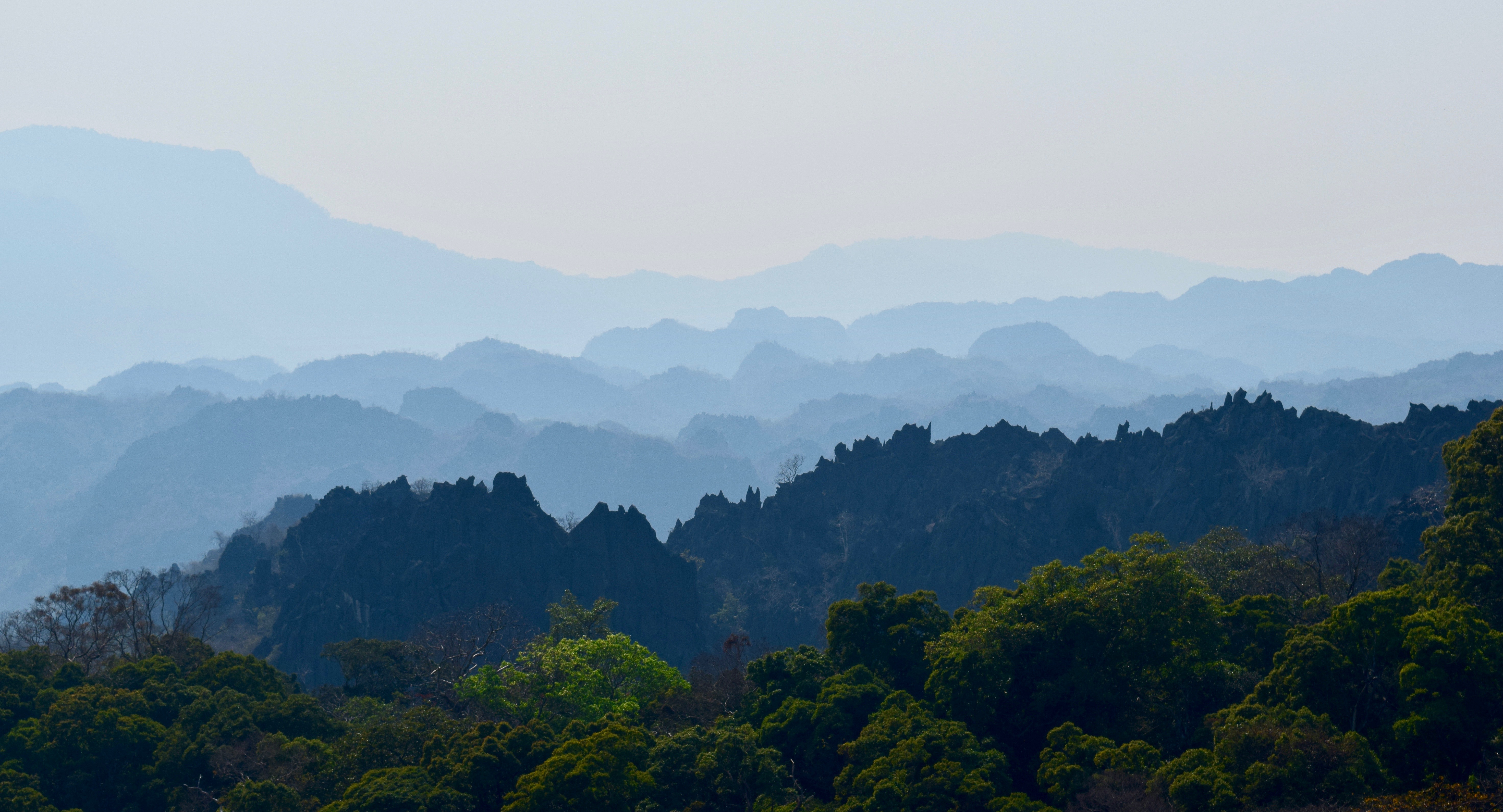
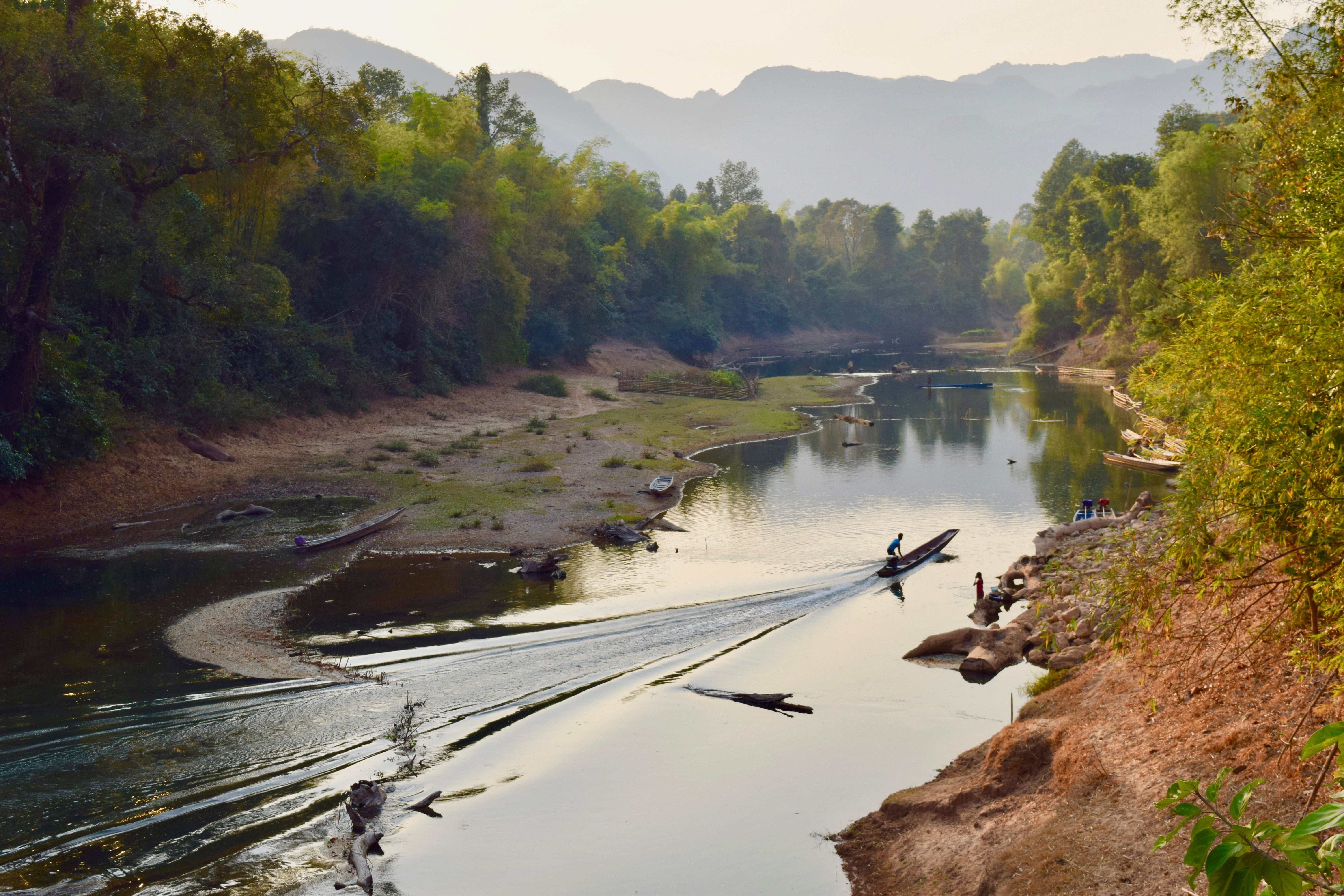
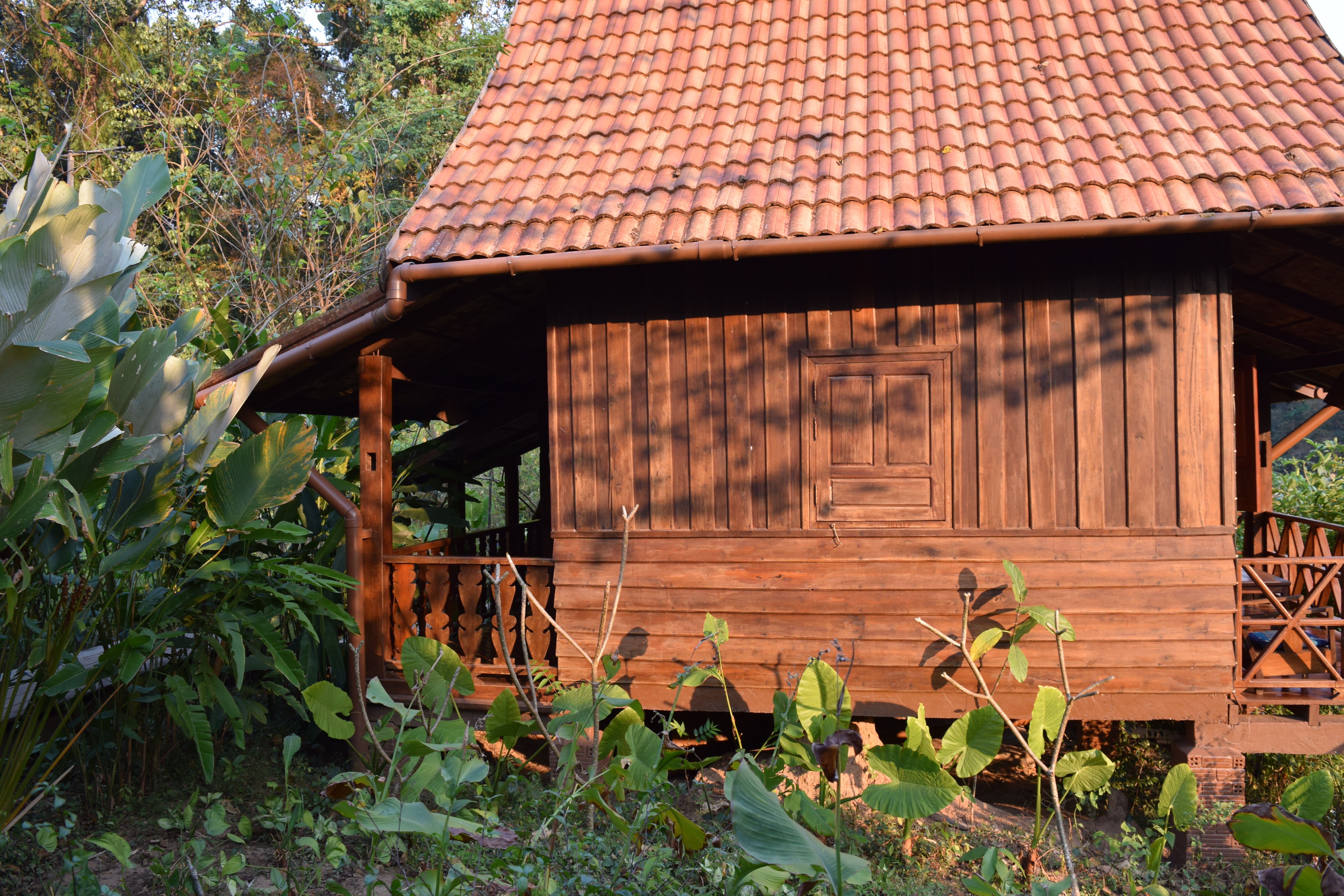
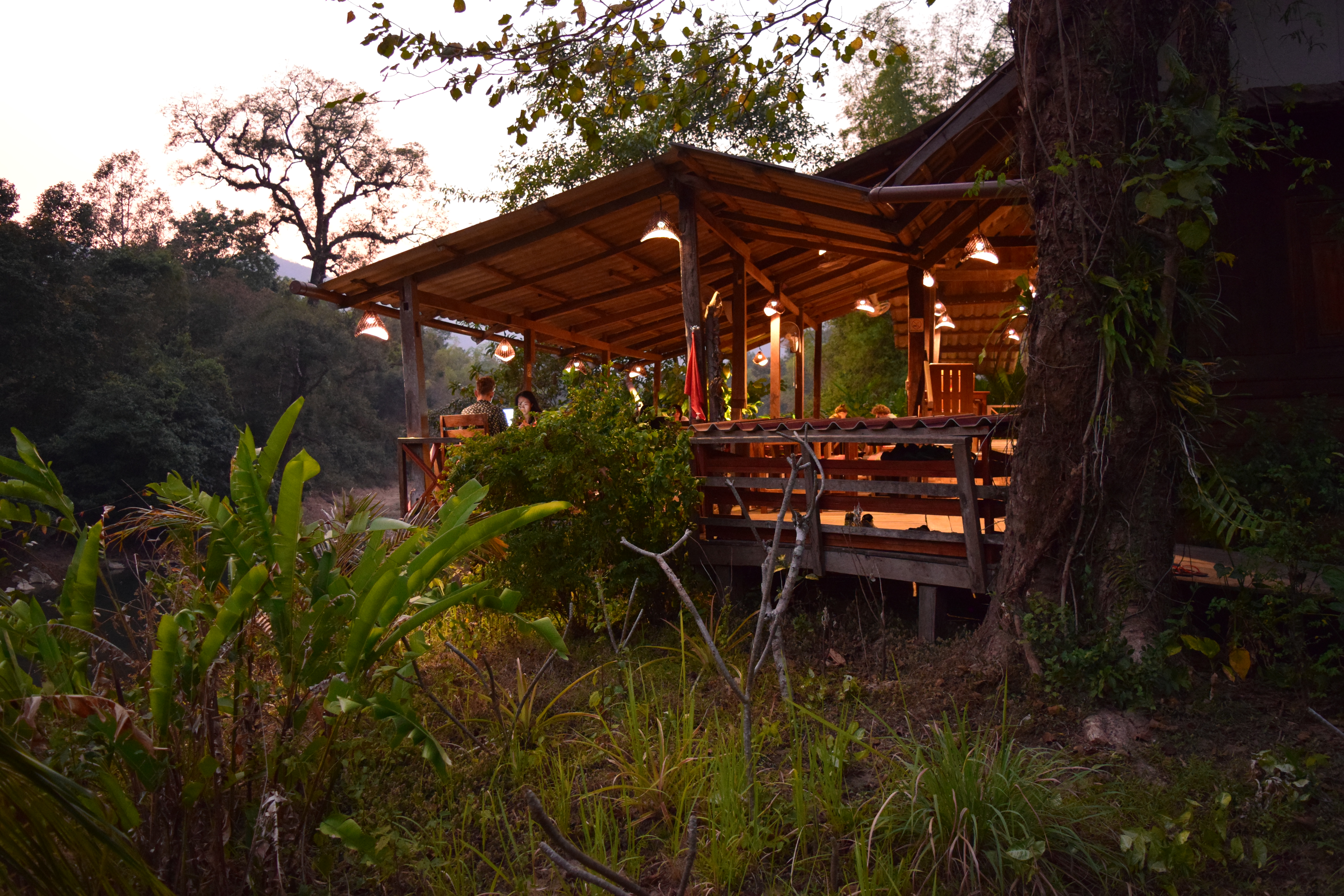
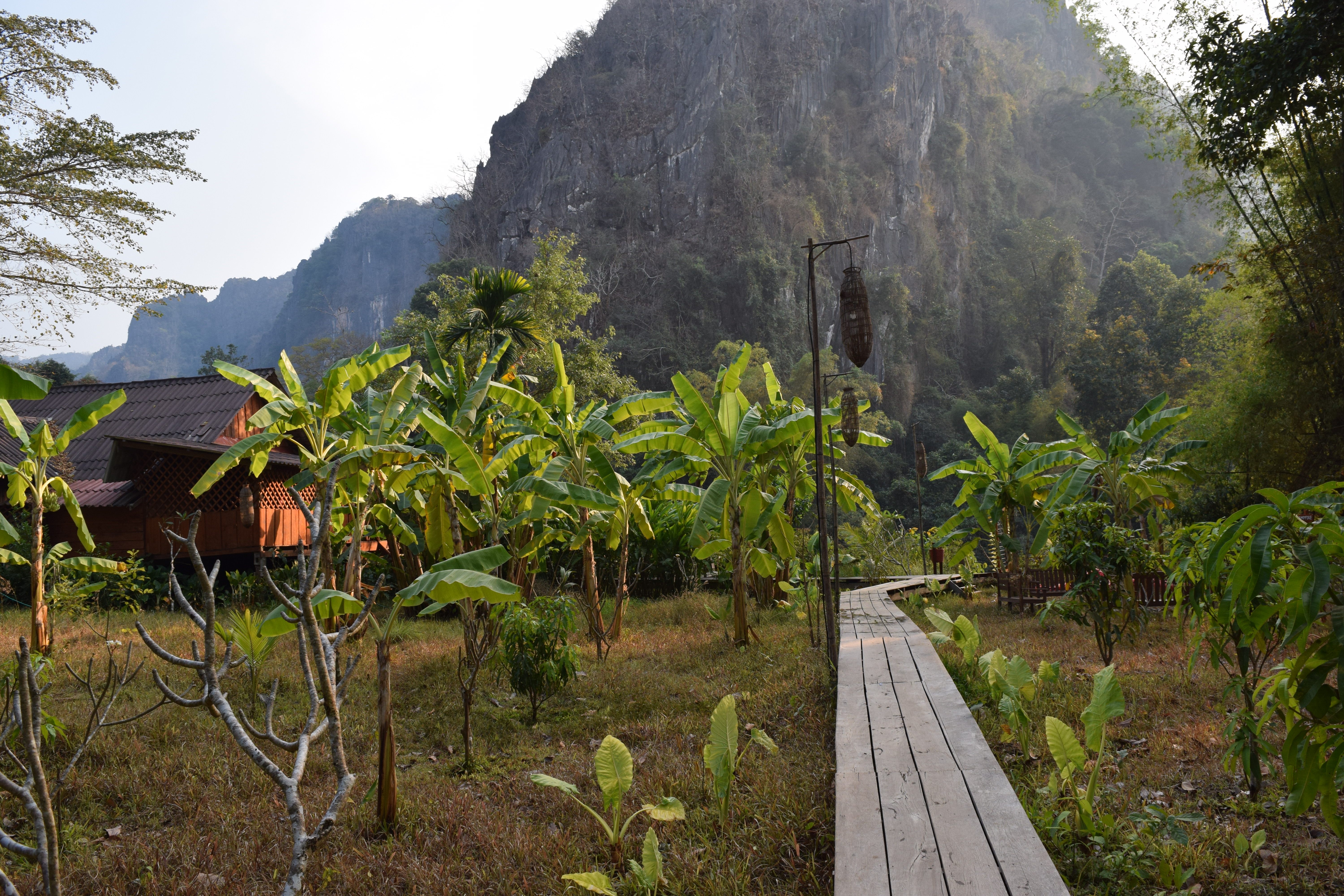
Mark and the girls took kayaks on the river to the lagoon and I tried laying down hoping to feel better. They enjoy the spectacular food and I managed to get down some plain rice. It was all downhill after that. The rest of my time was spent in bed too sick to read or even listen to my audiobook. I won’t go into details but after fainting on my way to the washroom (which saw me falling halfway off the raised walkway – all I could think of when I woke up was what kind of creatures might be taking shelter under the walk way. This actually gave me the strength to get myself up, otherwise I may have stayed there!) I started to get a little scared that it was something other than a nasty stomach bug. By this time I had missed the caves and I knew we were heading back to the capital the next day where I could see a doctor. The lady at the resort was so nice and tried to help wherever she could.
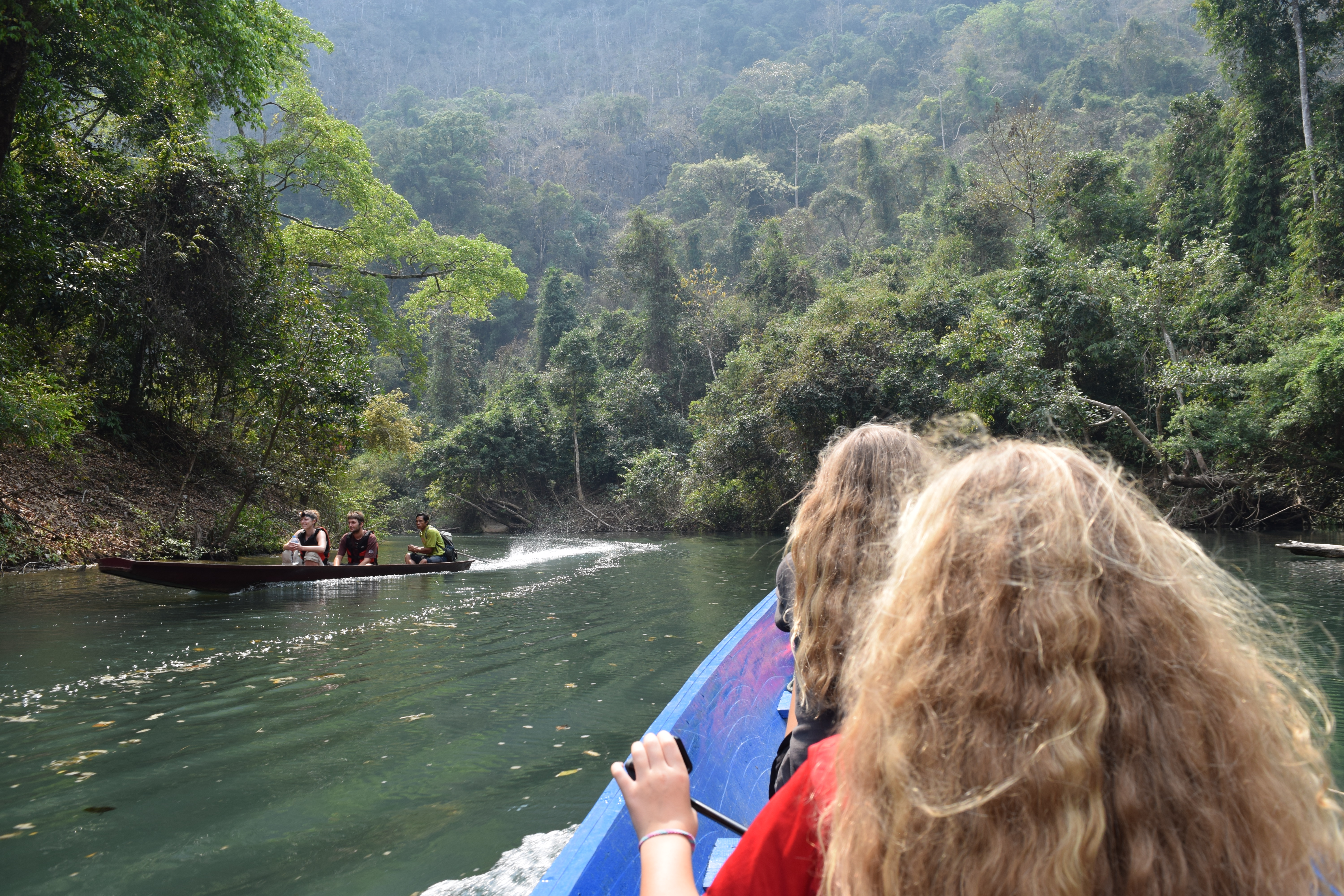
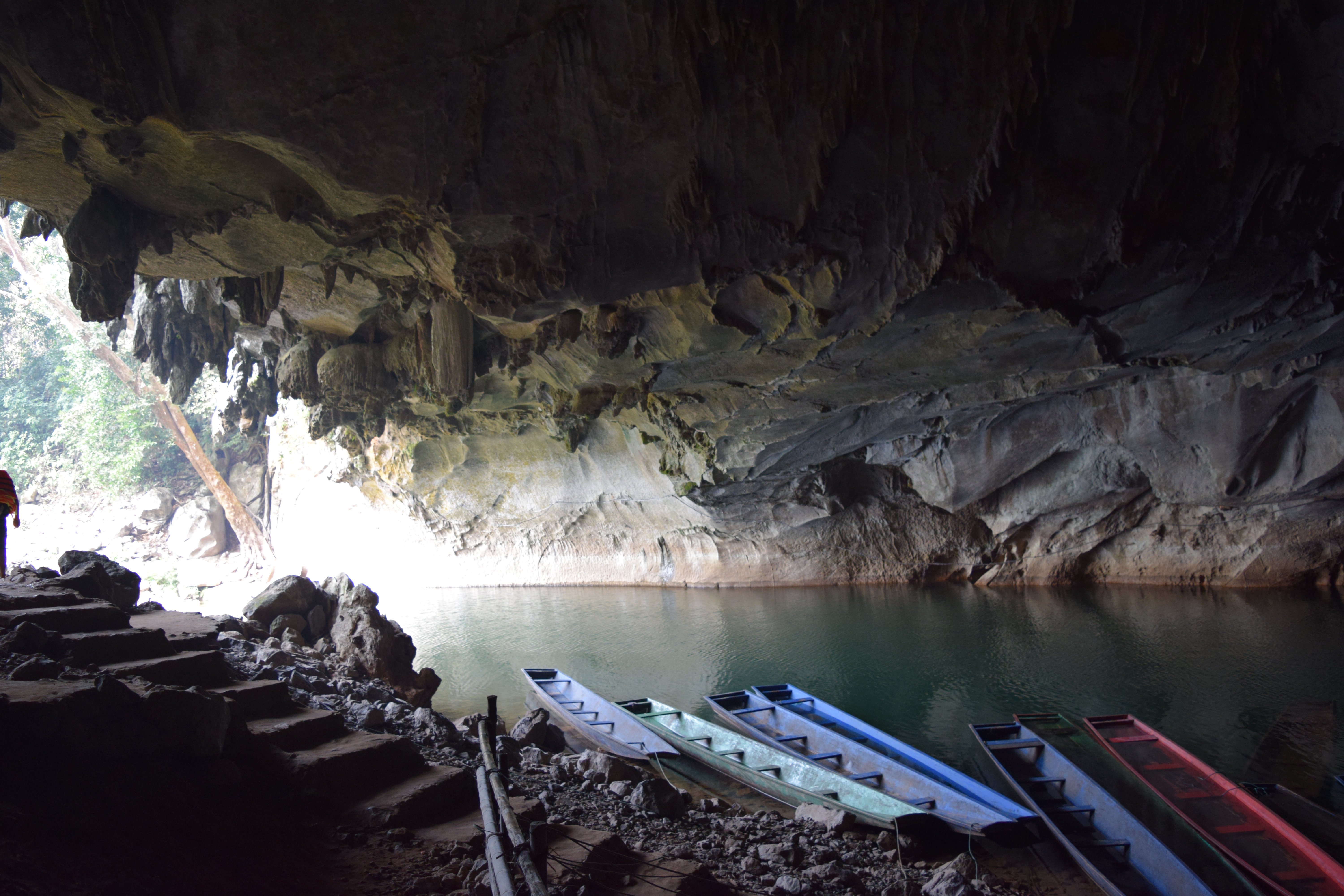
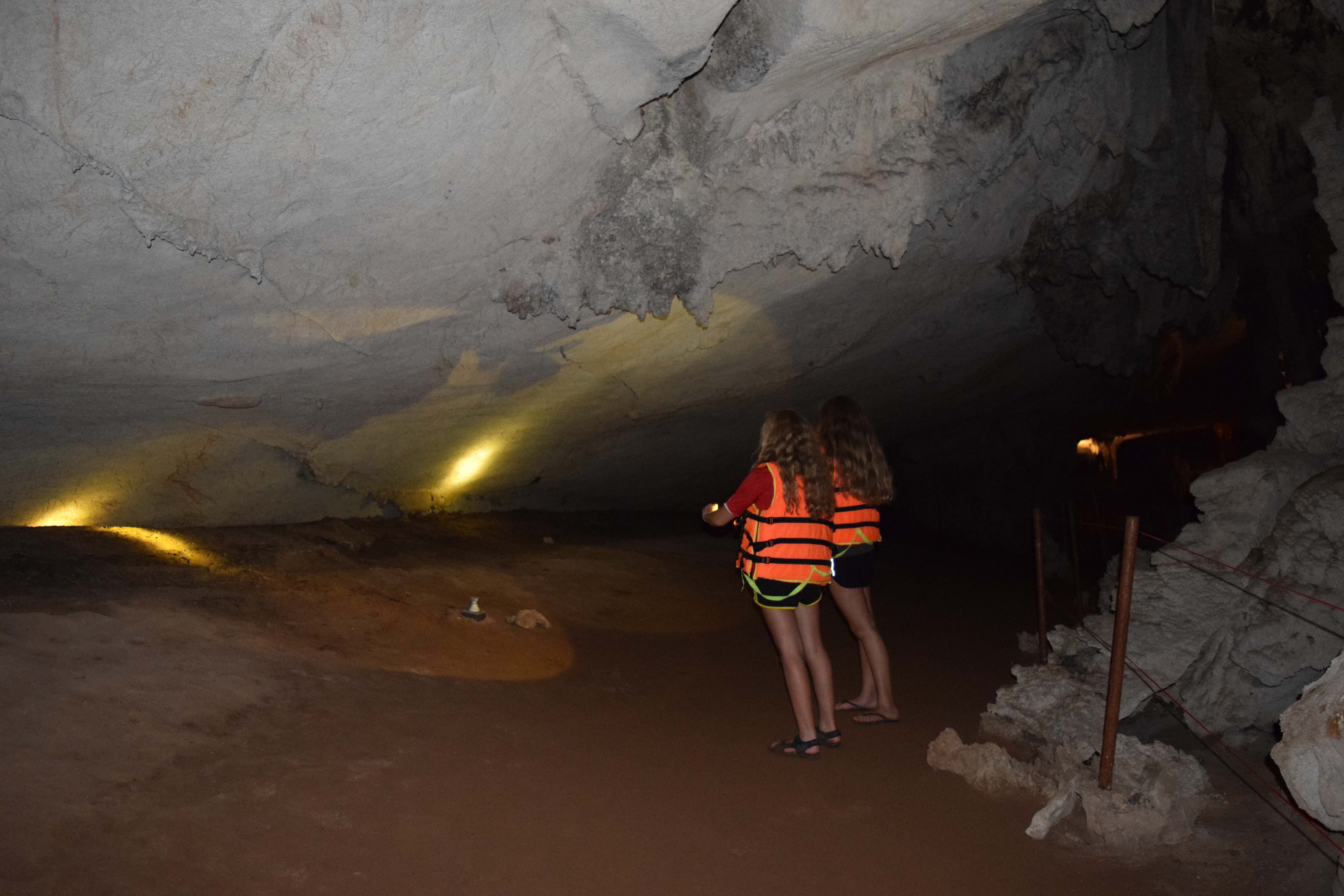
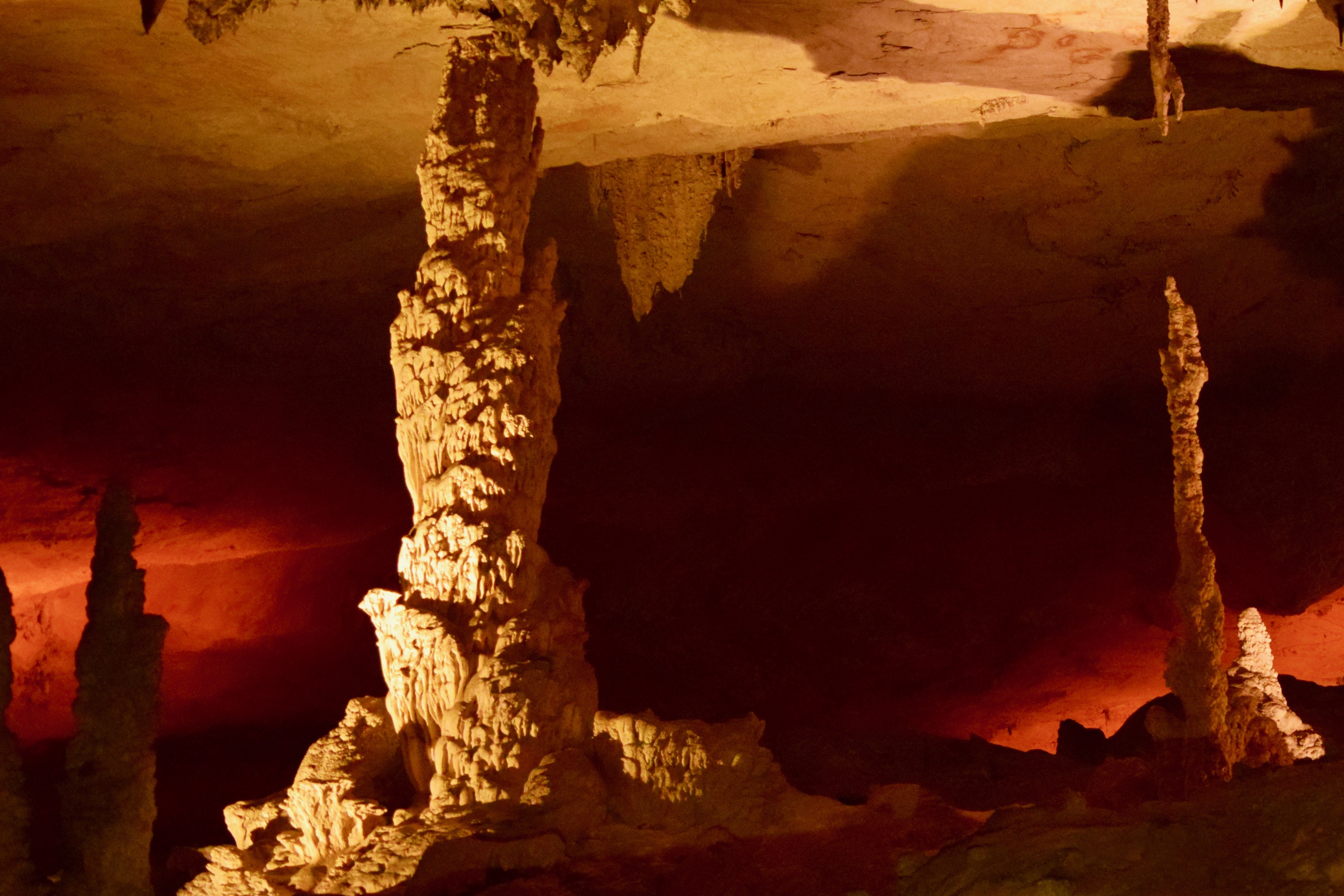
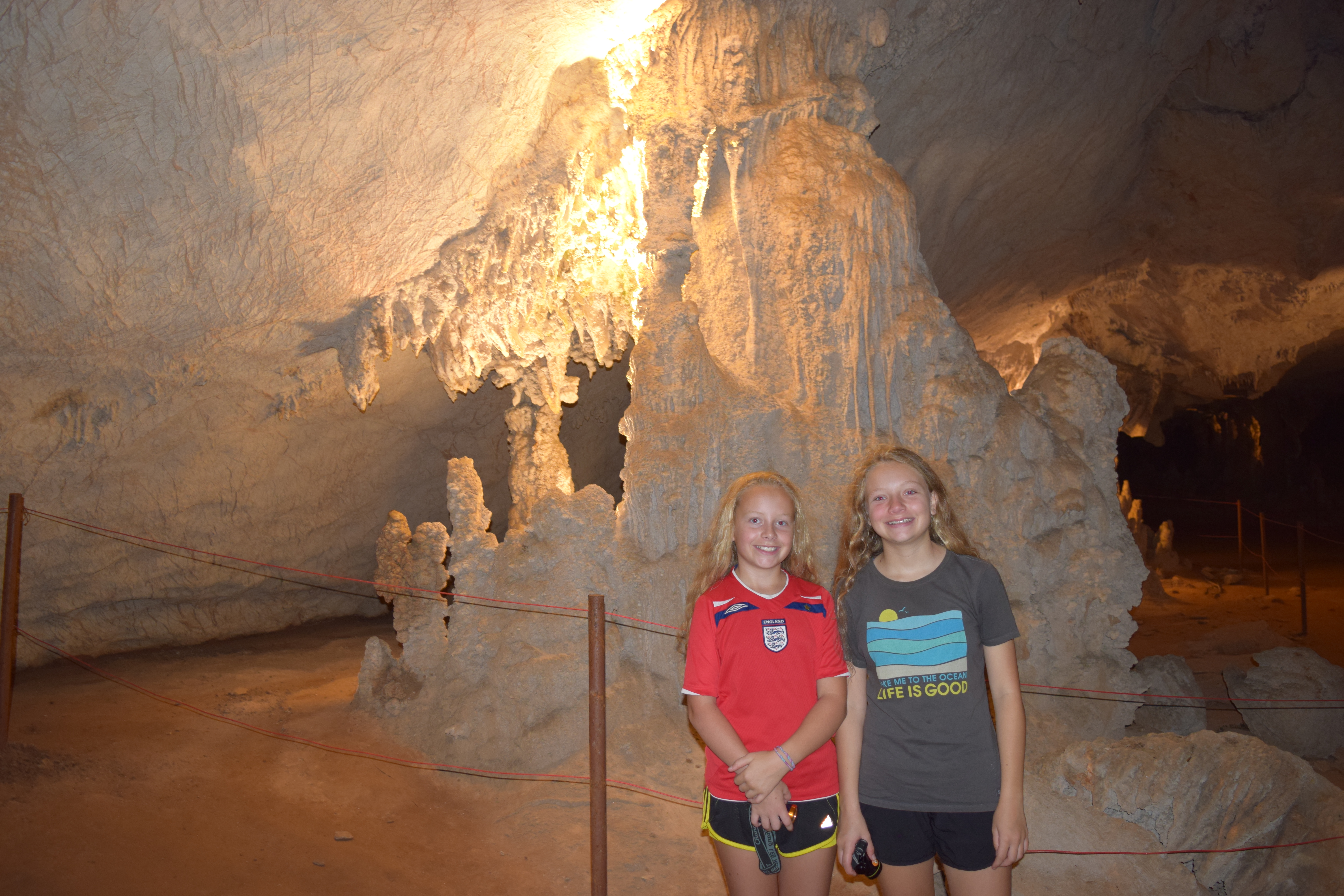
While I wallowed in misery, Mark and the girls took a dugout boat up the river for about 40 minutes to the Kong Lor cave. From there they found another boat driver to take them through the 7.5km cave to the other side and back. I got a full report about the huge caverns inside and all the stalactites and stalagmites they saw. Inside the cave they met a couple who had bought a motorcycle to travel around SEA. They had the motorcycle in their boat and planned to continue their road trip on the other side of the cave, but some shallow water was giving them some trouble, so Mark helped them lift and maneuver through the spot and then heard all about their adventures. I was disappointed to miss out on the cave, but glad they were still able to go without me.
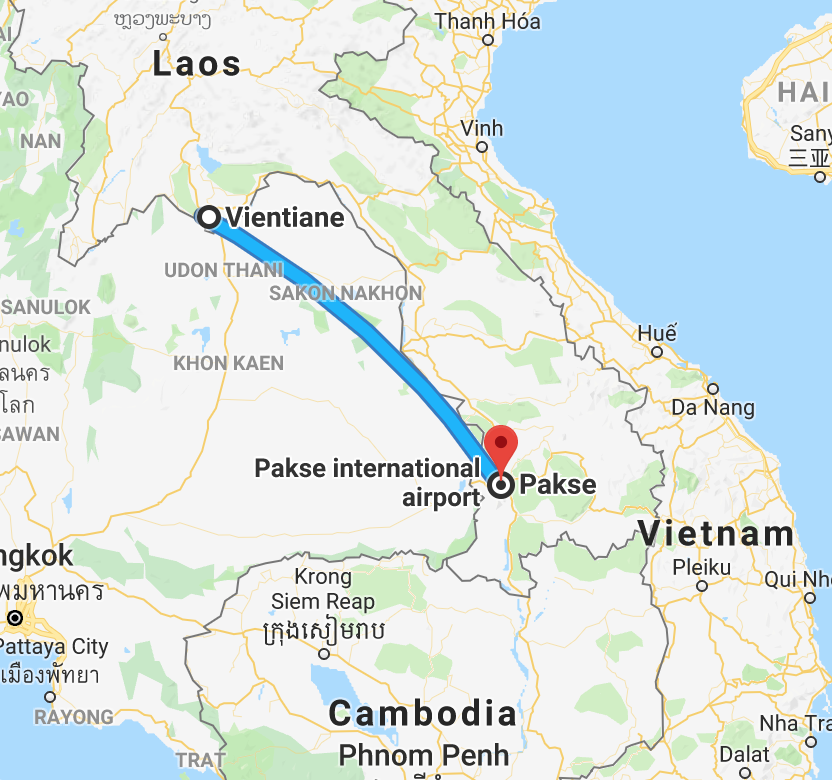
The next day, after medicating (good meds are easy to come by in SEA) as much as I could, we made our way back to Vientiane to return the car. We had a flight booked at 4pm to continue heading south, if we missed it we’d have been out the flight money and the hotel we had booked. I decided to do whatever I could to get on the flight and see a doctor in the next city, Pakse. Mark had looked into it and there was a good international clinic there. I’m actually surprised they let me on the flight, I was a wreck. Someday I’ll be a “Remember when?” story for all the other people on that flight……”Remember that woman on the flight to Pakse? What was up with her?” Anyway, I made it, we stayed in an awesome hotel – that I didn’t see much of – it had great pool and a manager that arranged to get me to and from the clinic, they brought me fruit when I started feeling well enough to eat and helped Mark and the girls have a good time while I recuperated.
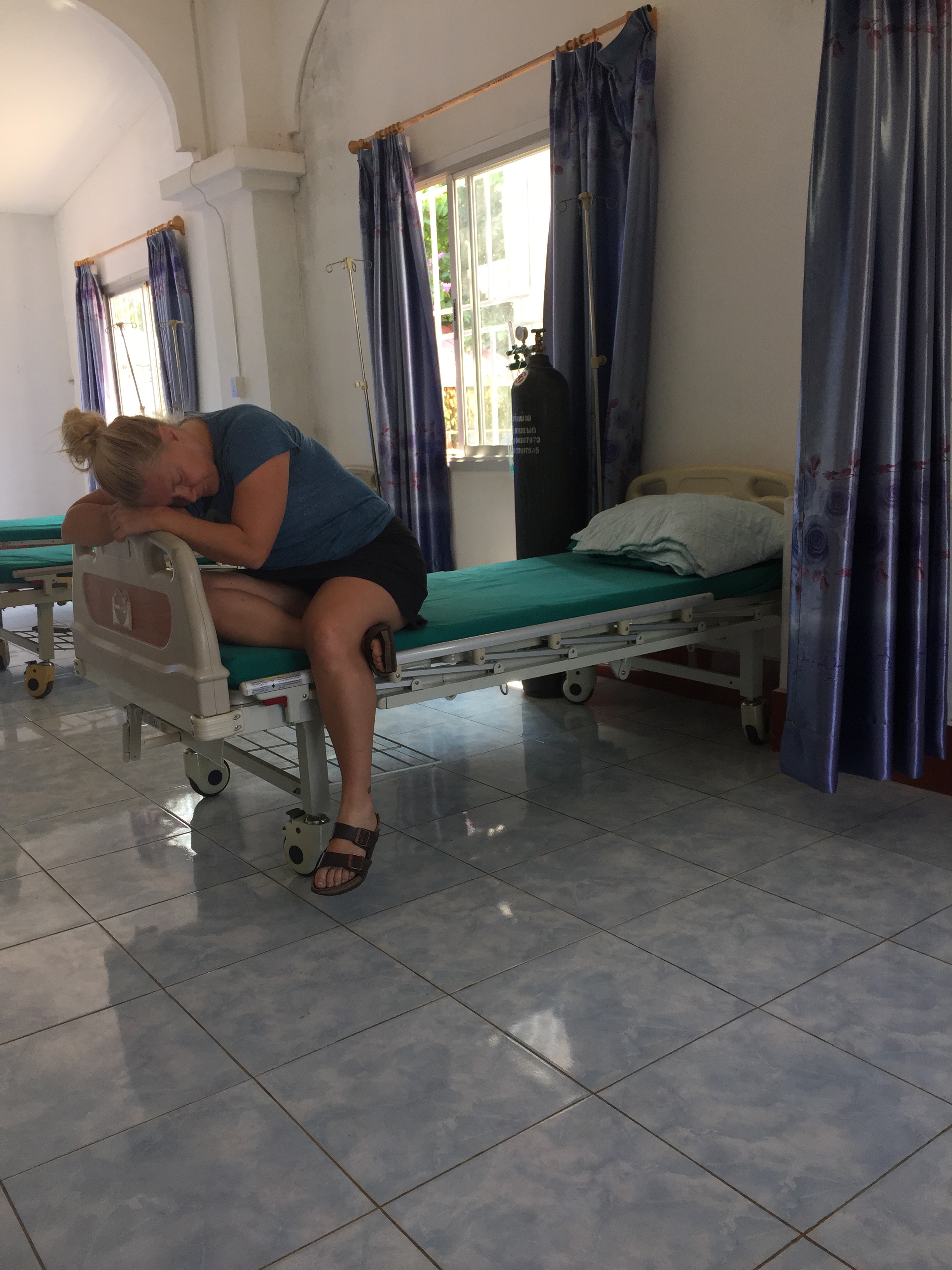
Getting really sick far away from home is scary. I wanted my mom (she was ready to get on a plane and come to me!), I wanted my own doctor, I wanted my bed. I’m thankful for my sister, Elaine, who is a nurse. Her advice and willingness to be “on-call” 24/7 when we needed her was so comforting. The care I received was fine, I had confidence in the doctor, but getting medical care in a developing country really makes you appreciate what we have in Canada.
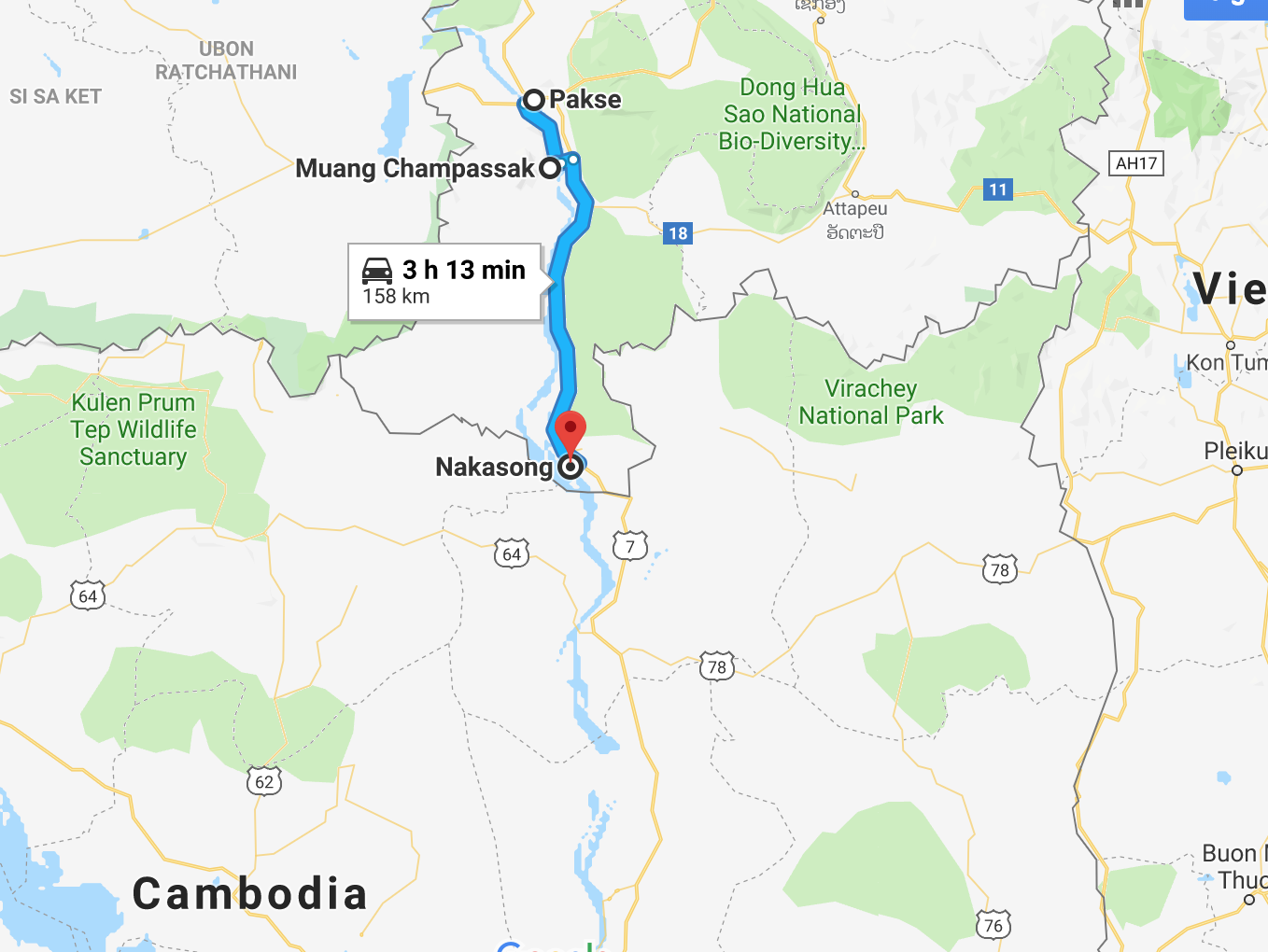
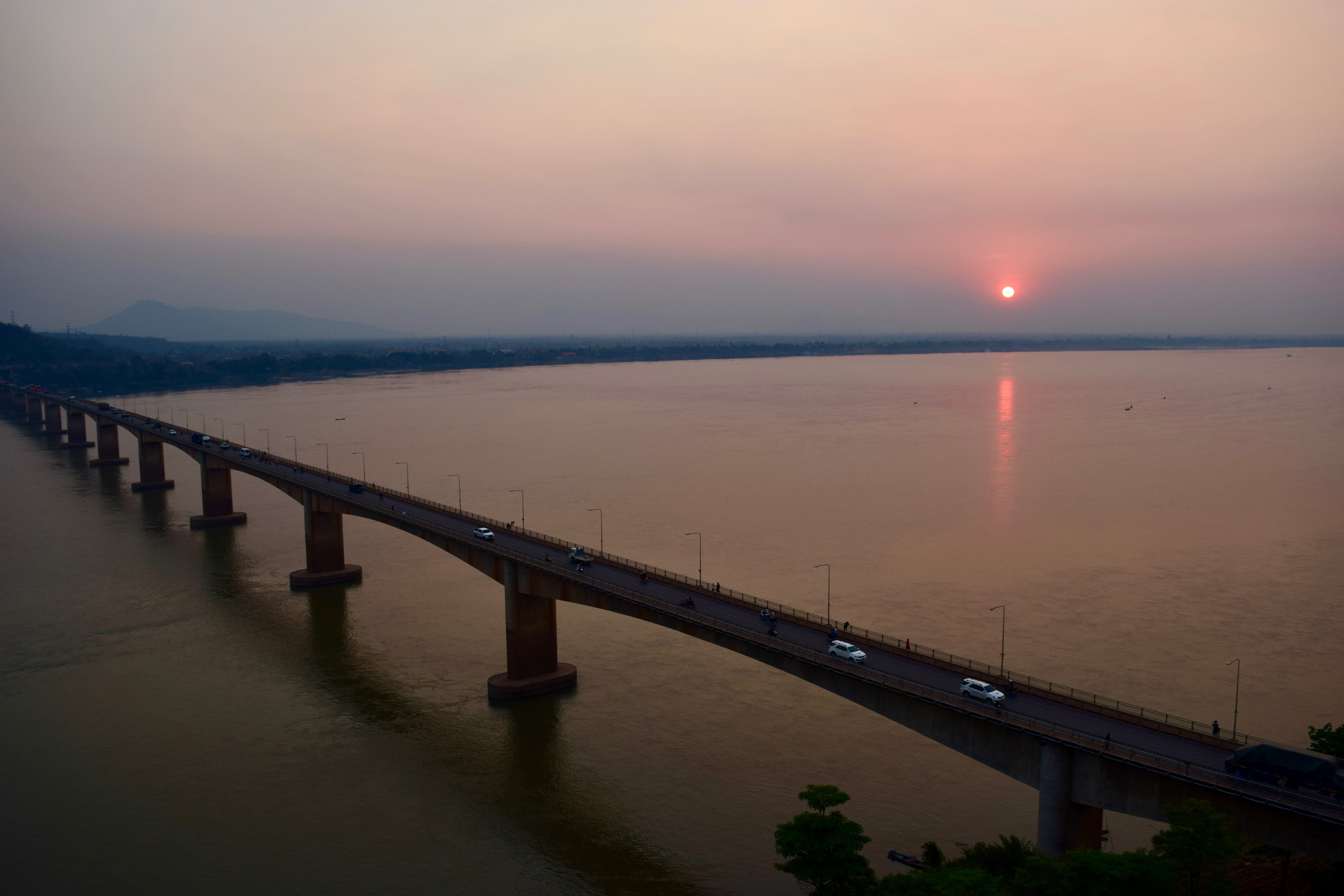
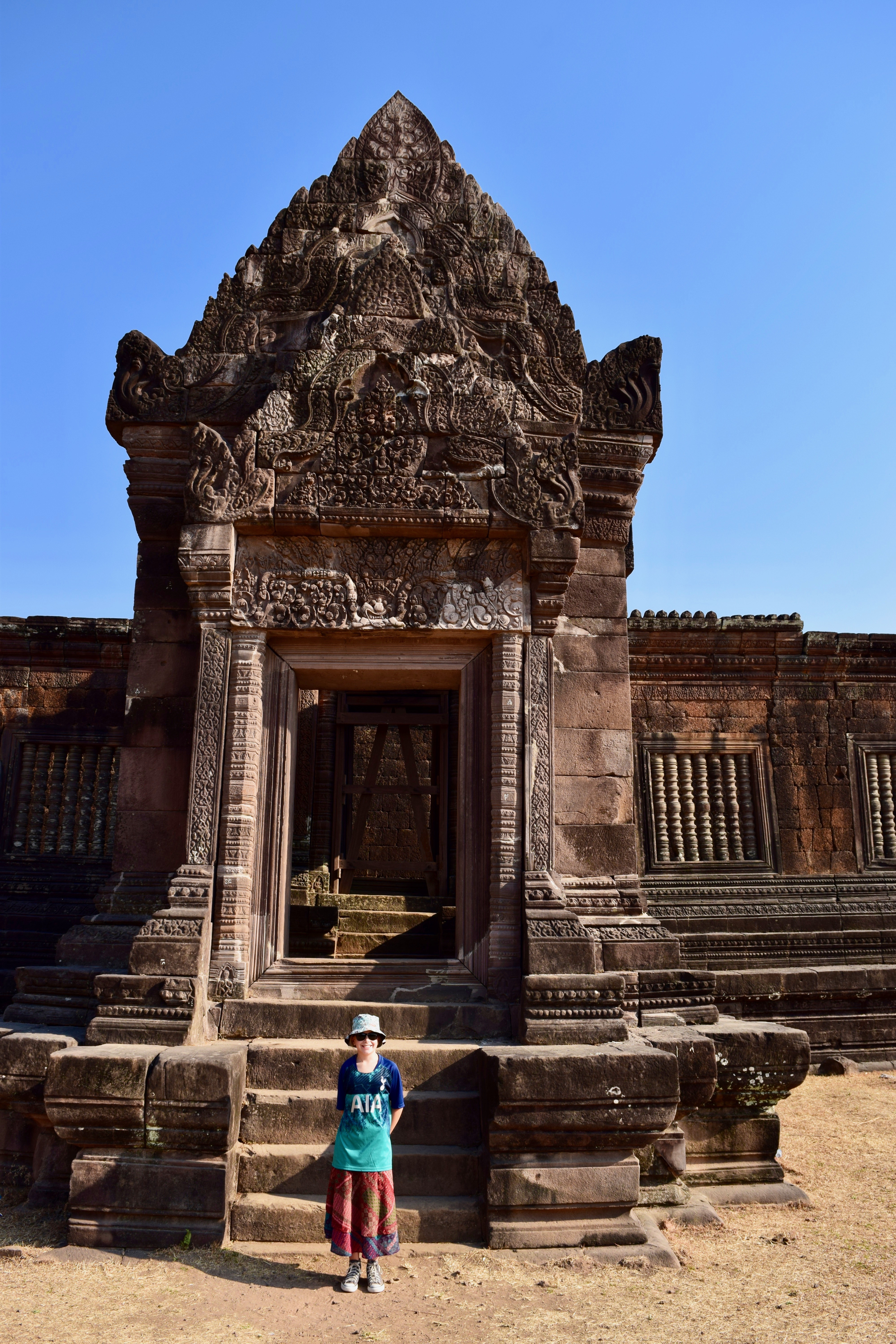
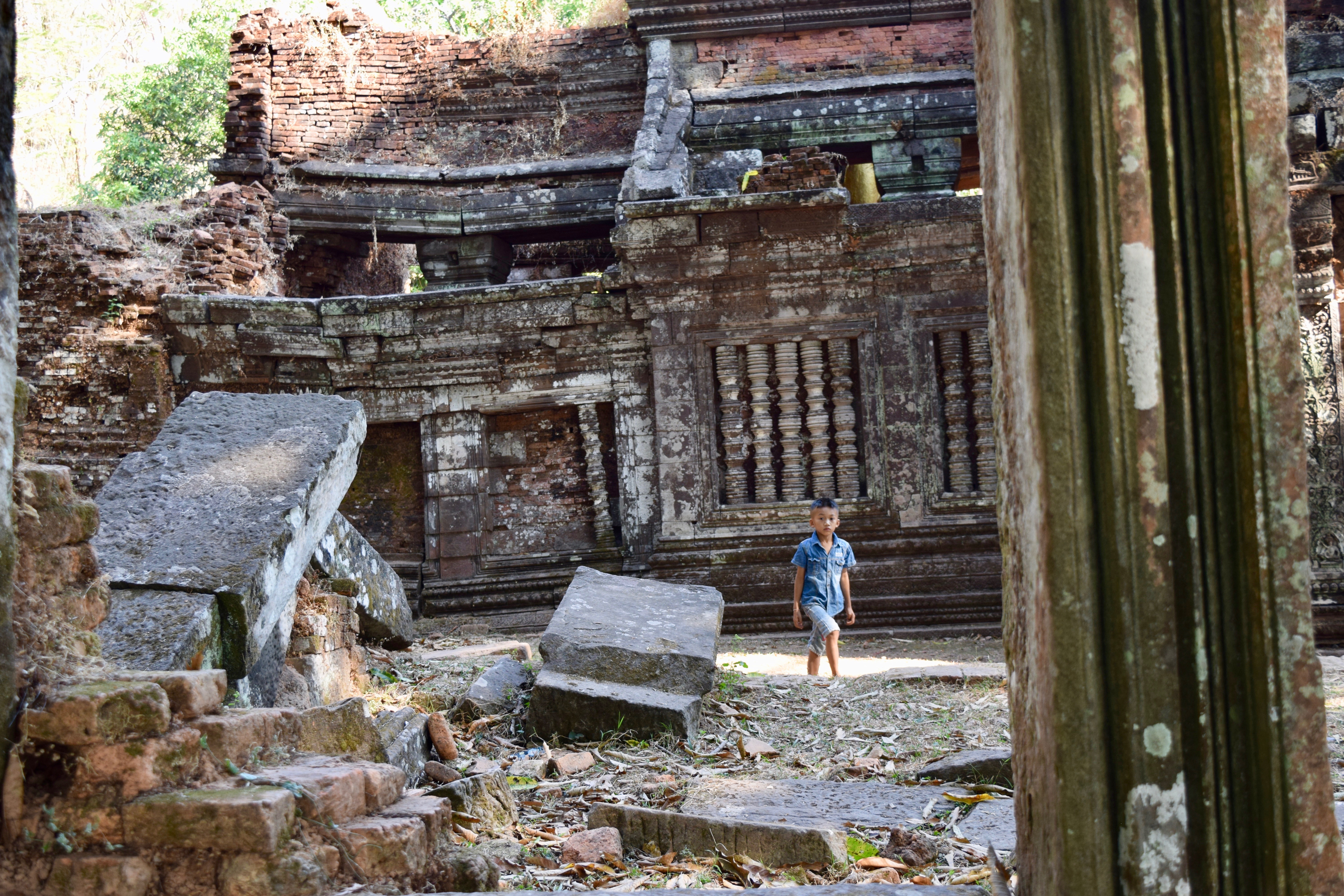
A short way down the road from Pakse was Champasak. We decided to break up our journey to the 4000 Islands into 2 days; I still wasn’t 100% and Mark wanted to see Wat Phu, a UNESCO World Heritage site and one of the most impressive Khmer temples outside of Cambodia. We probably should have taken the bus to the Don Khone (one of the bigger islands in the 4000 islands area) to save some money but I still didn’t trust my stomach on a public bus for 4 hours. So, we arranged to have a private van take us to the boat launch where we would get our boat to the island.
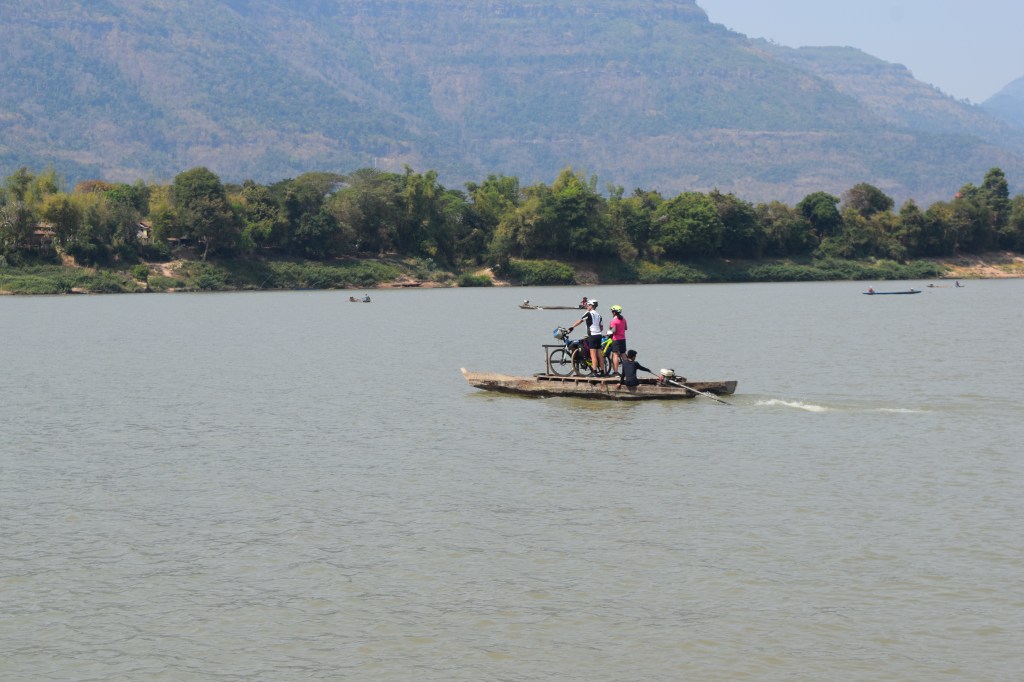
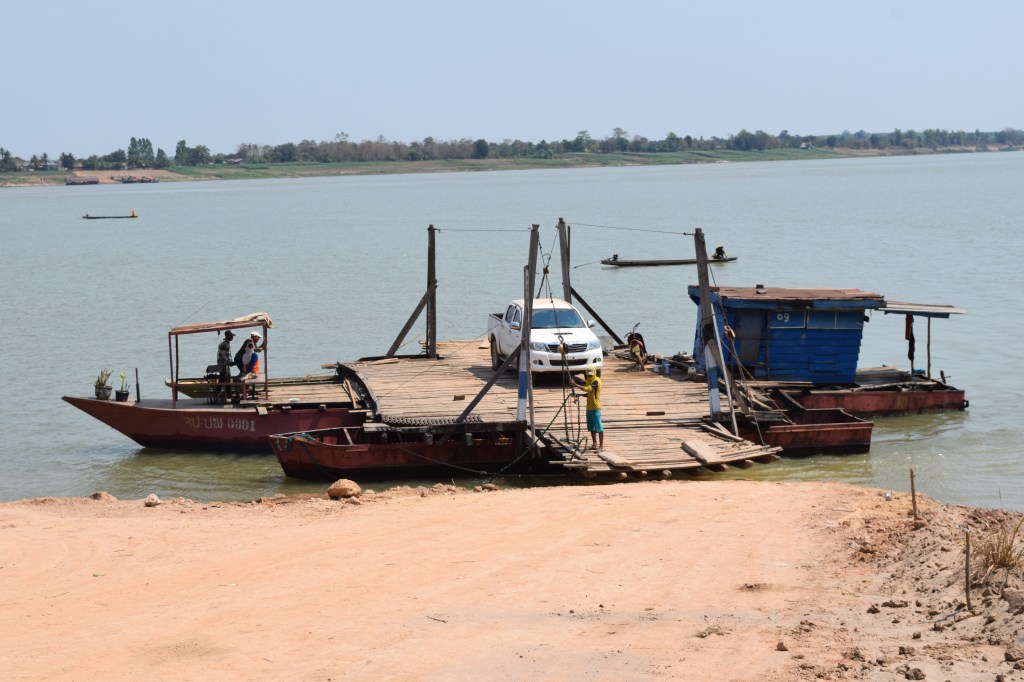
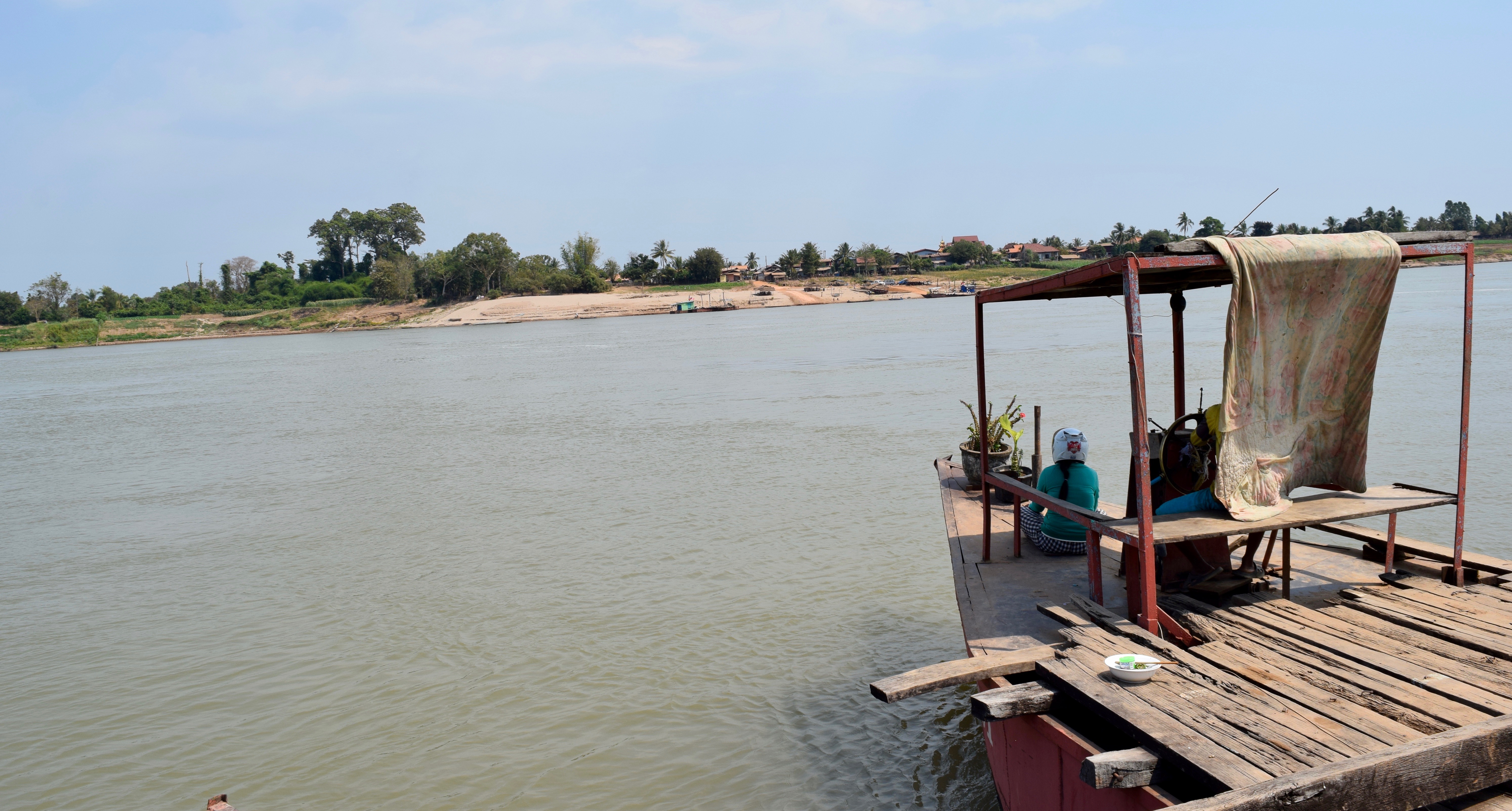
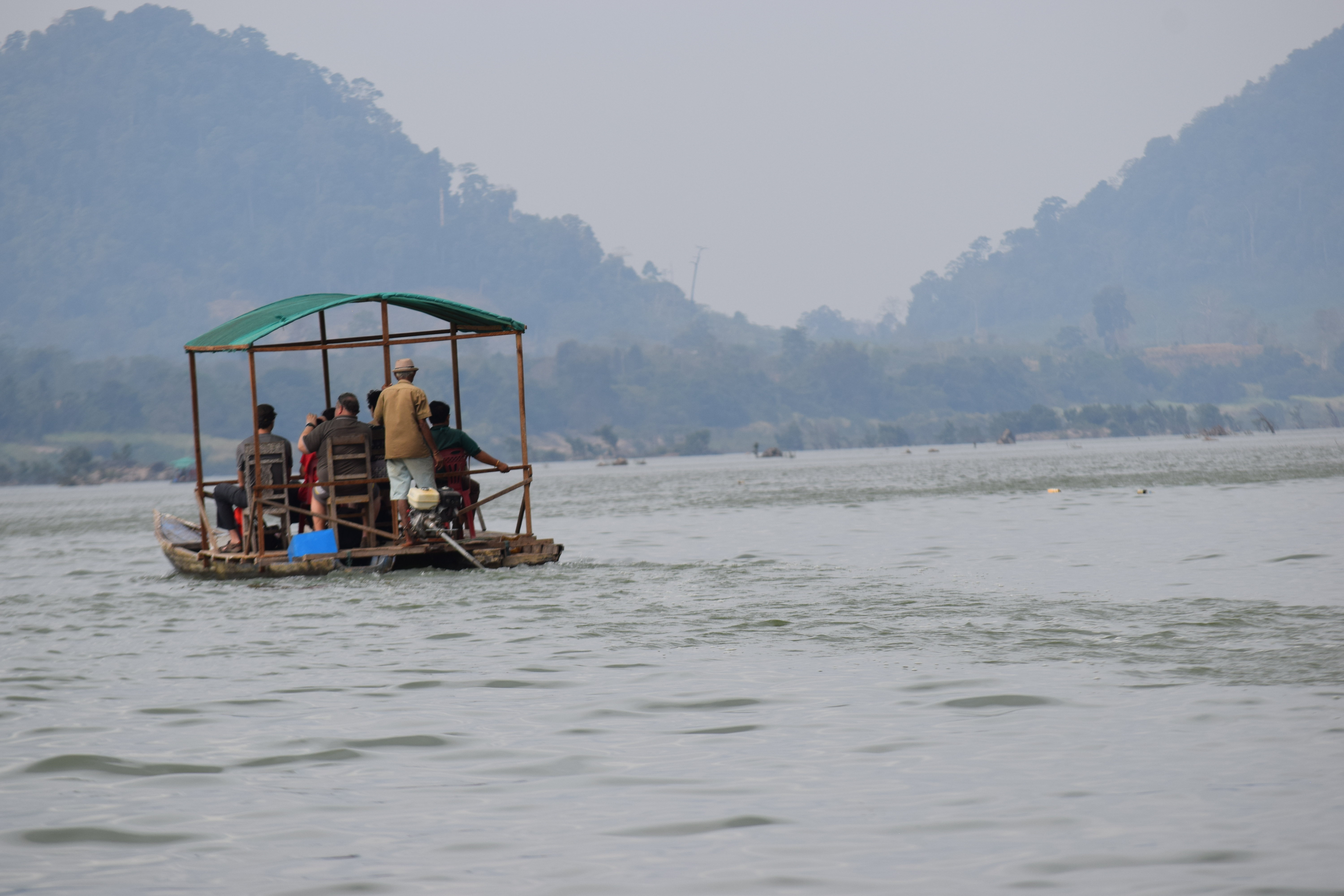
The ferry we used to cross the Mekong was of questionable safety standards, it was basically some boards attached to wooden boats and a motor. But, it was quick and the water was pretty low so we didn’t panic.
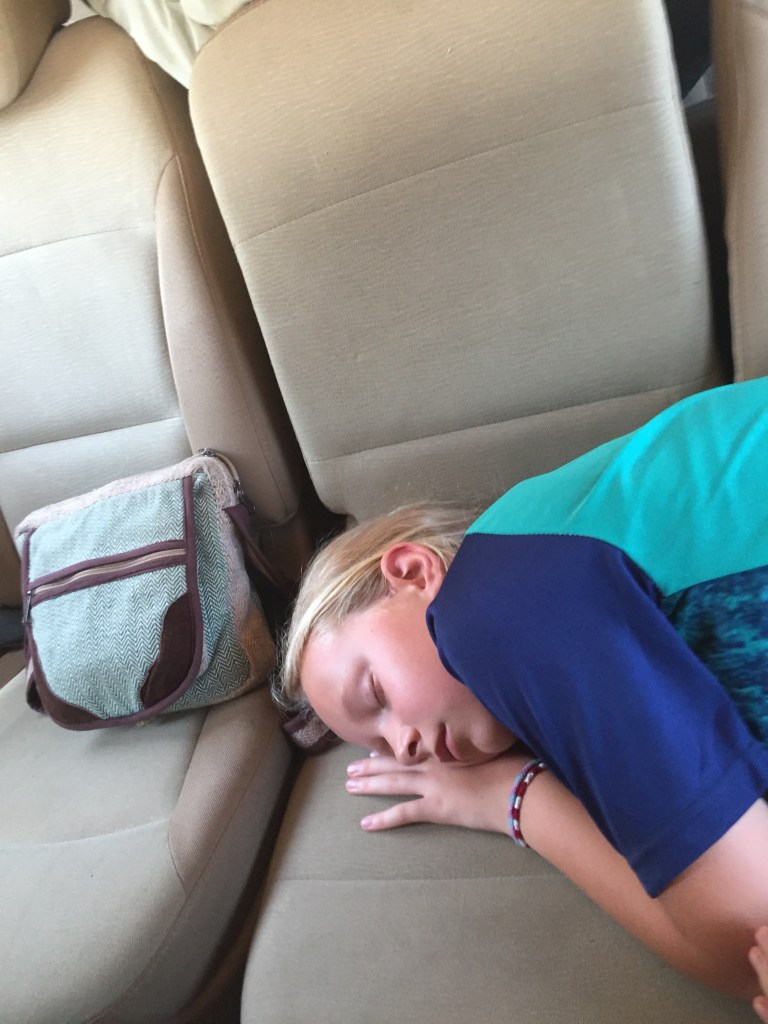
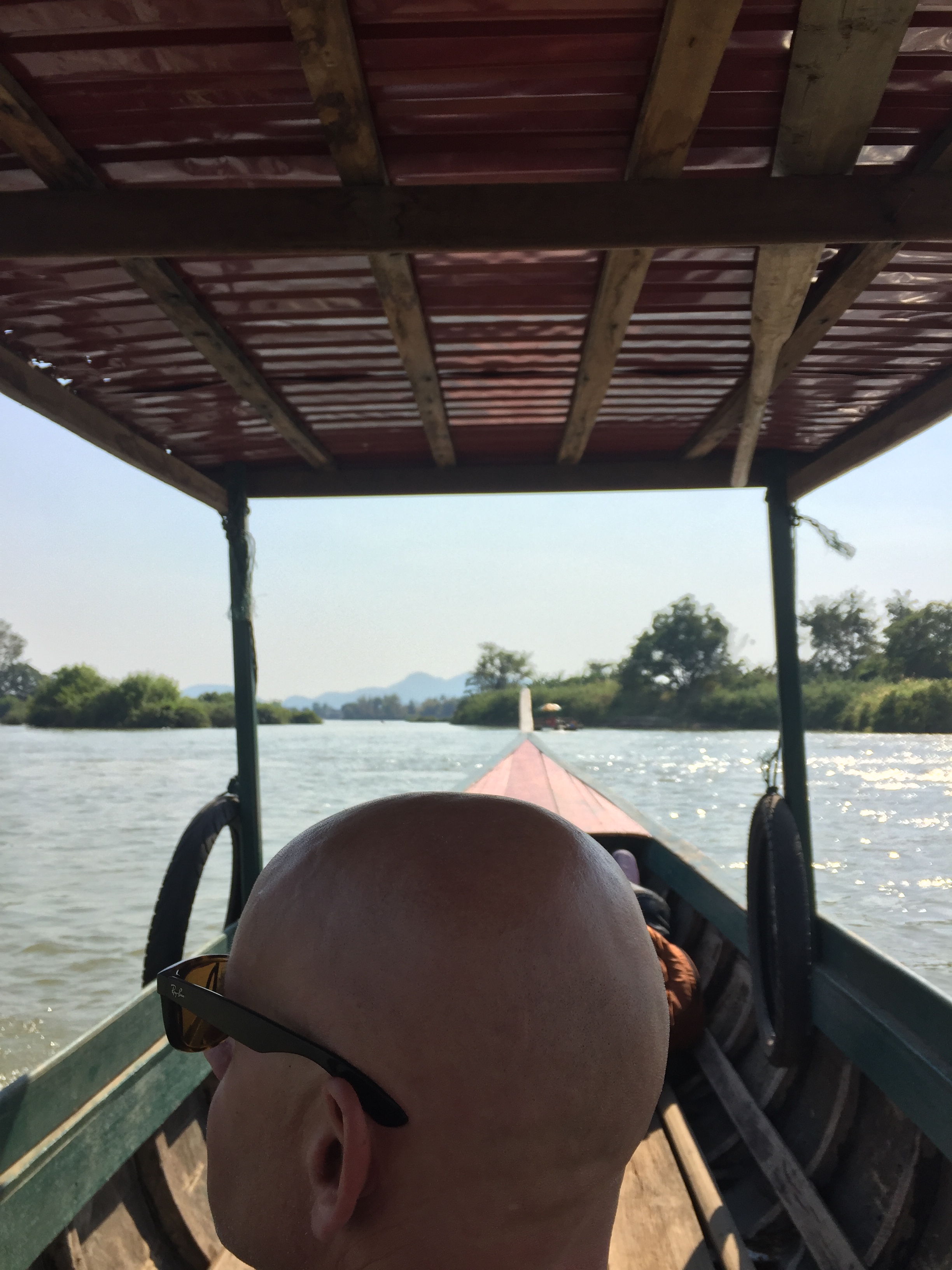
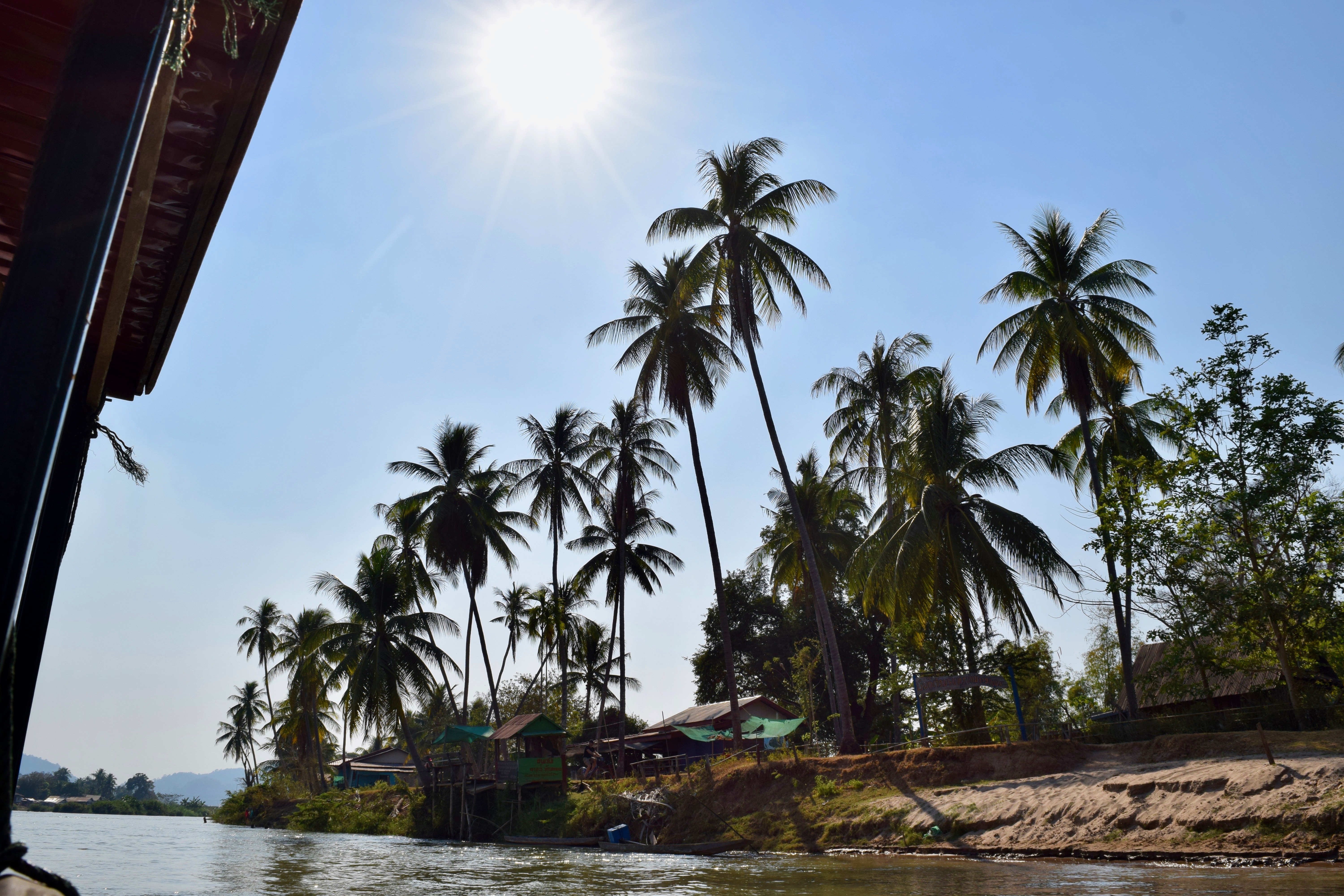
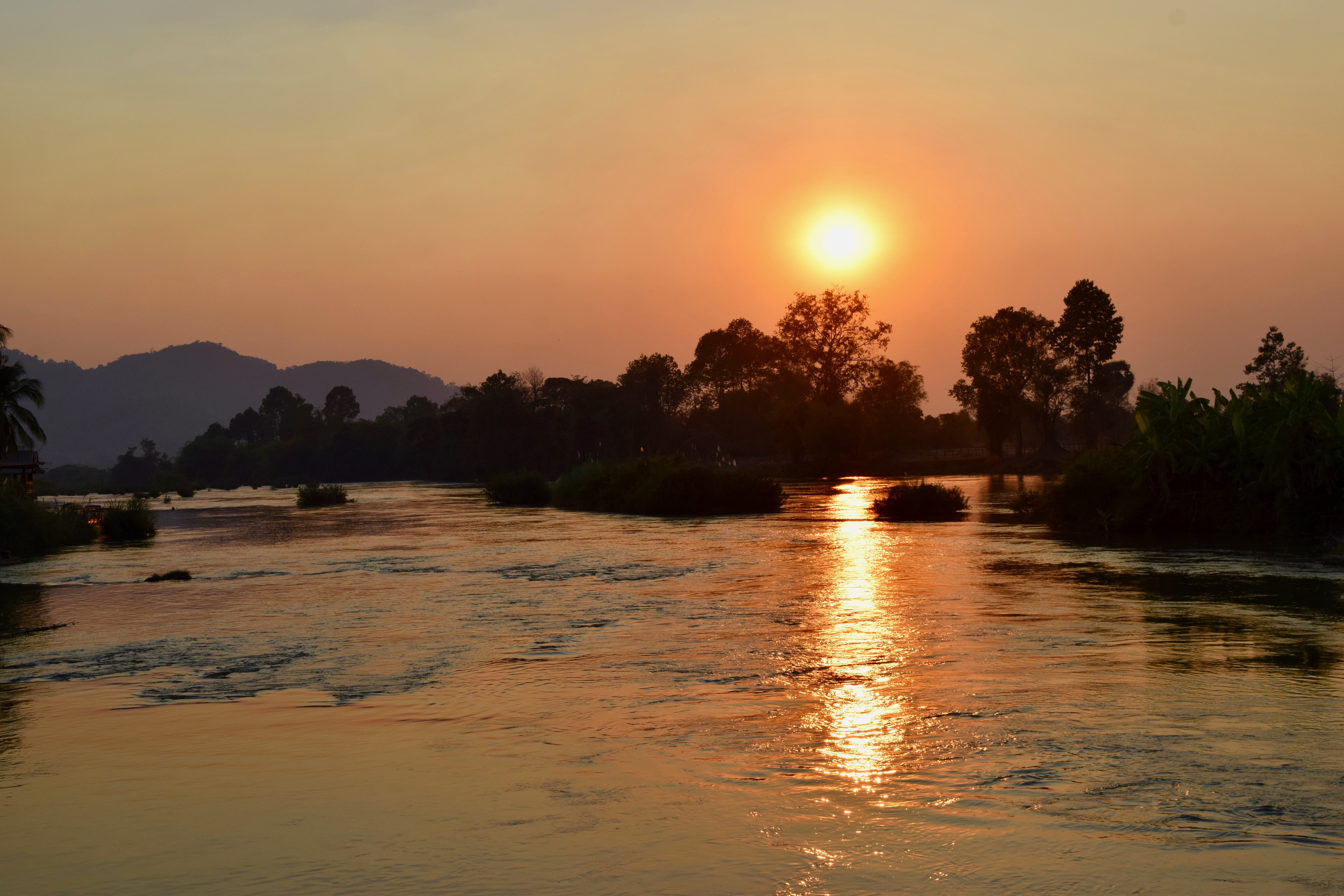
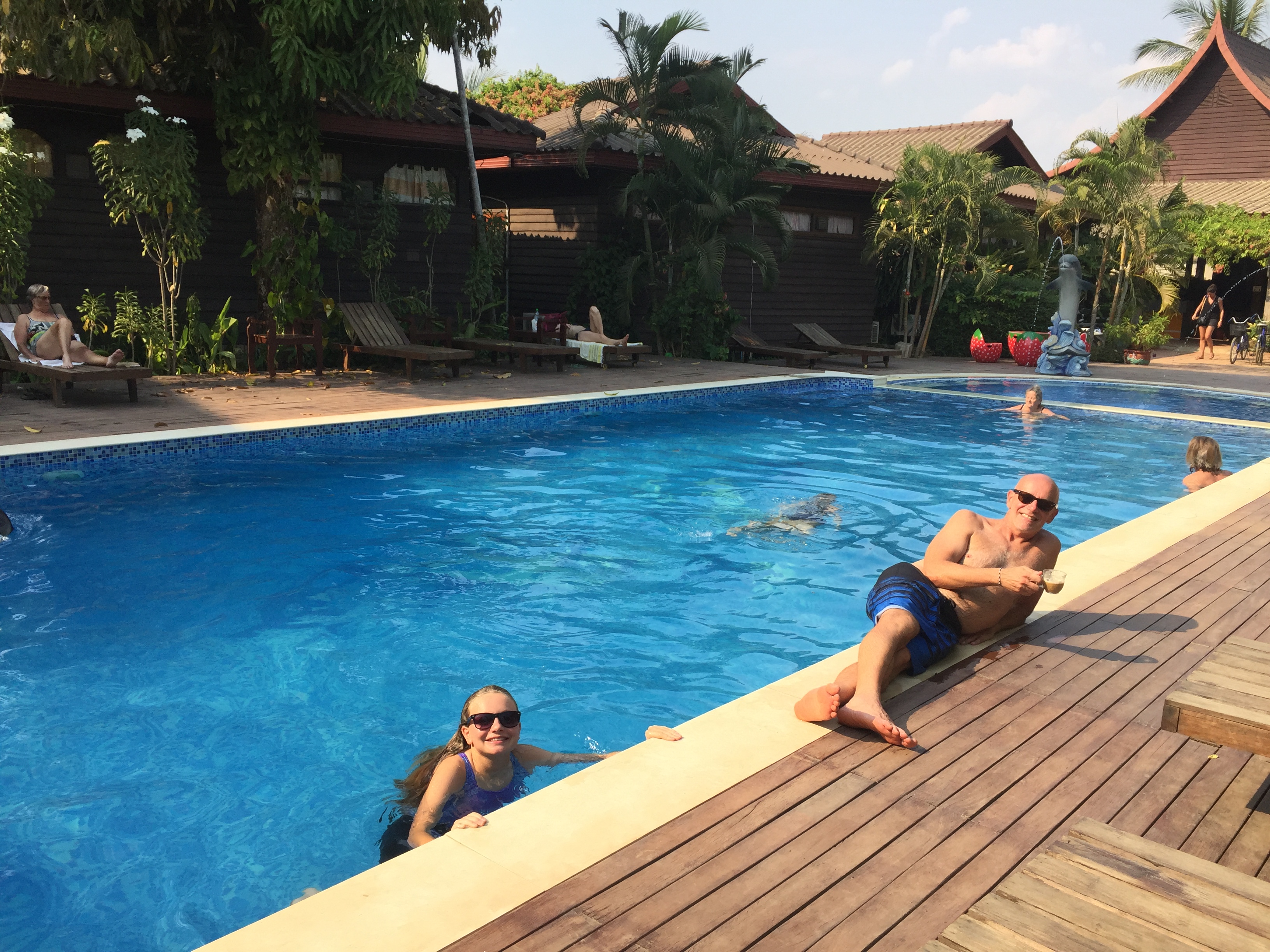
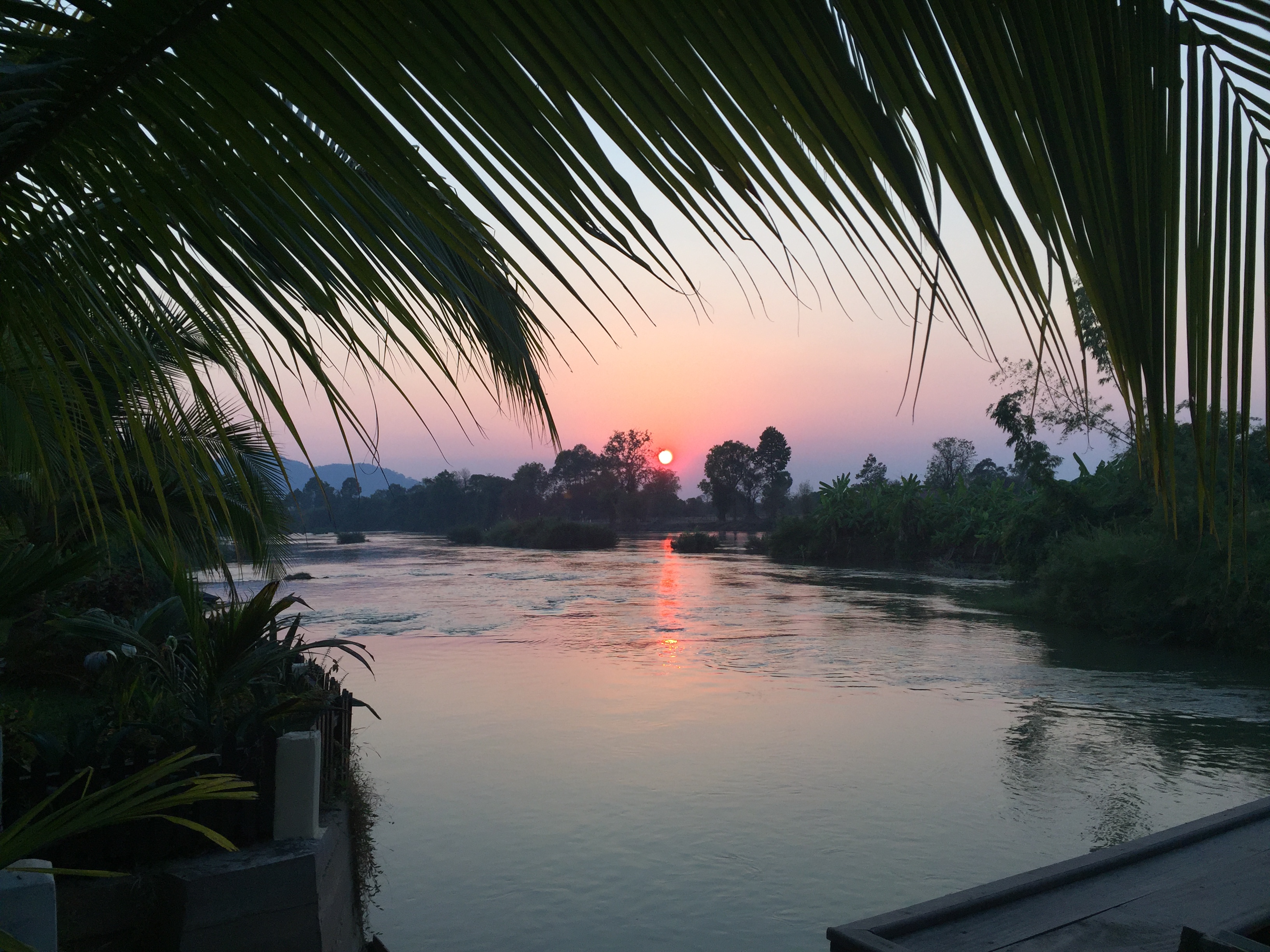
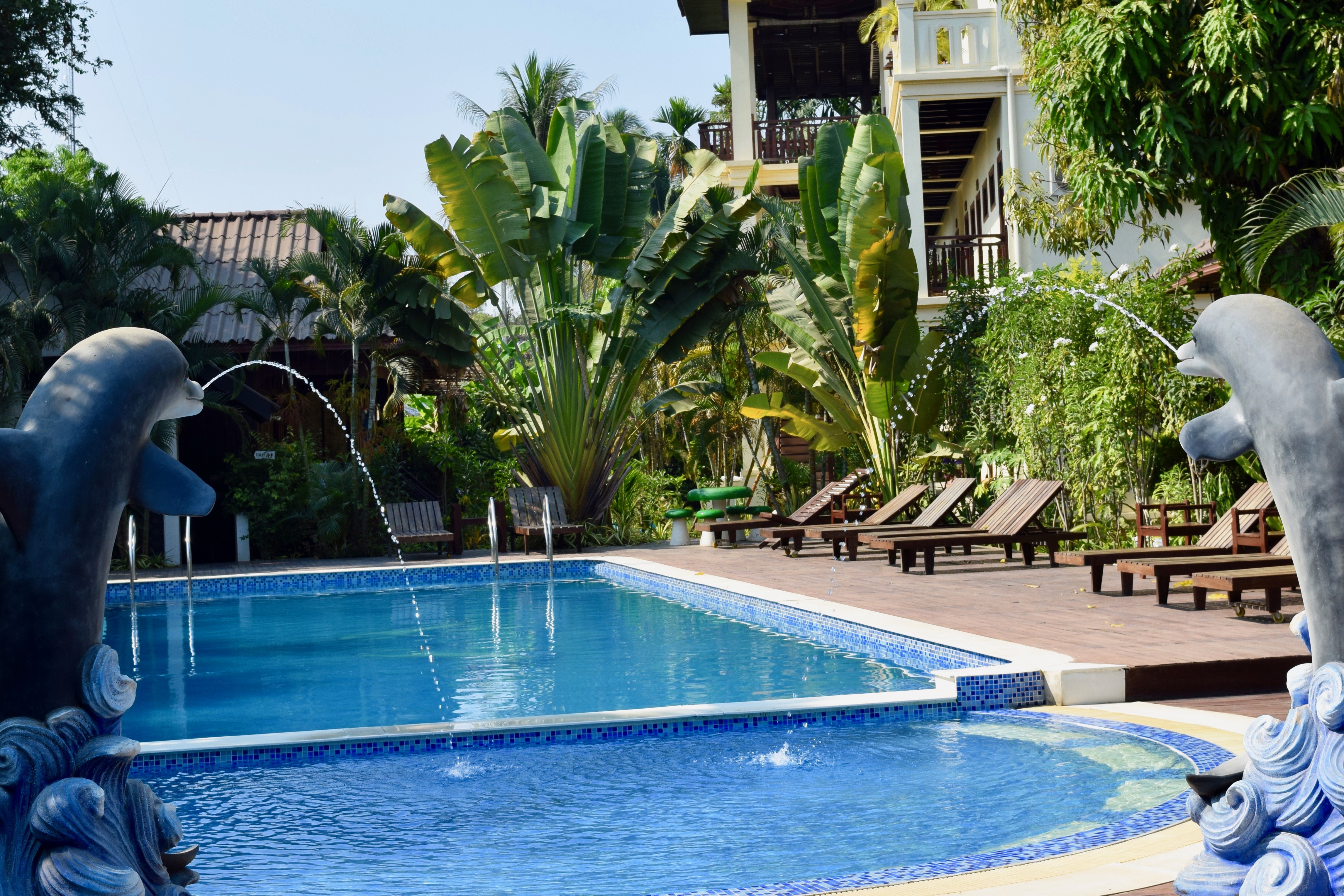
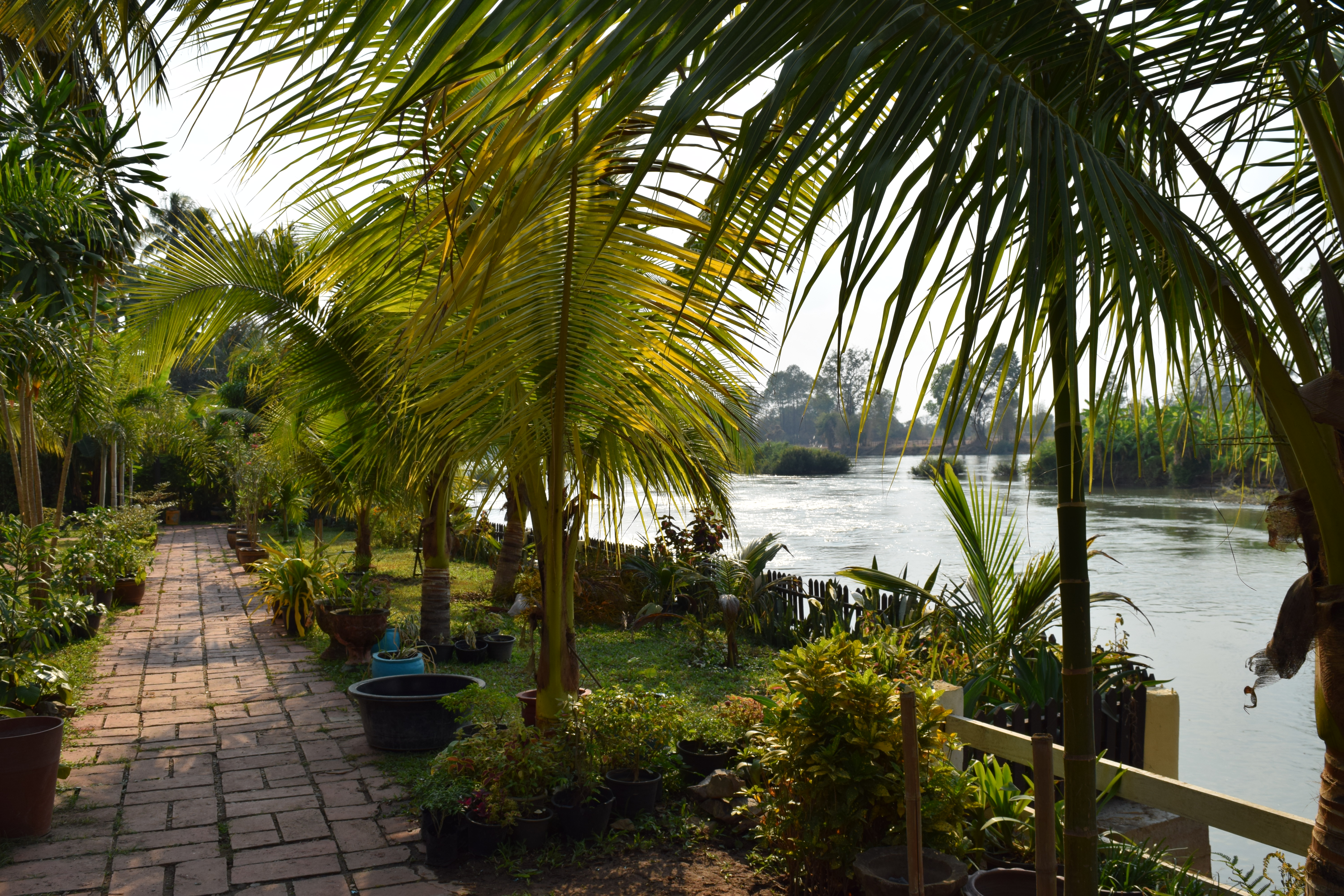
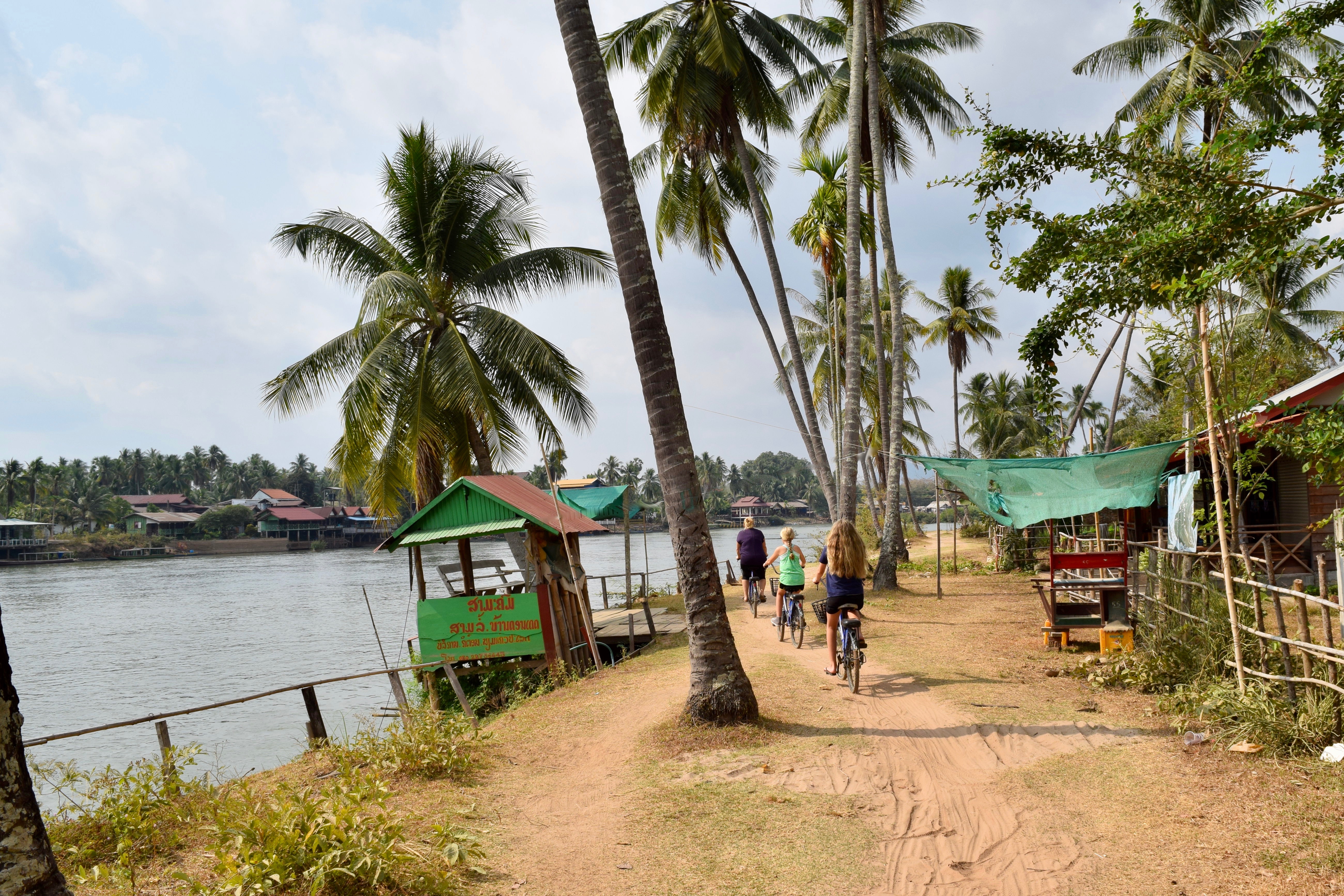
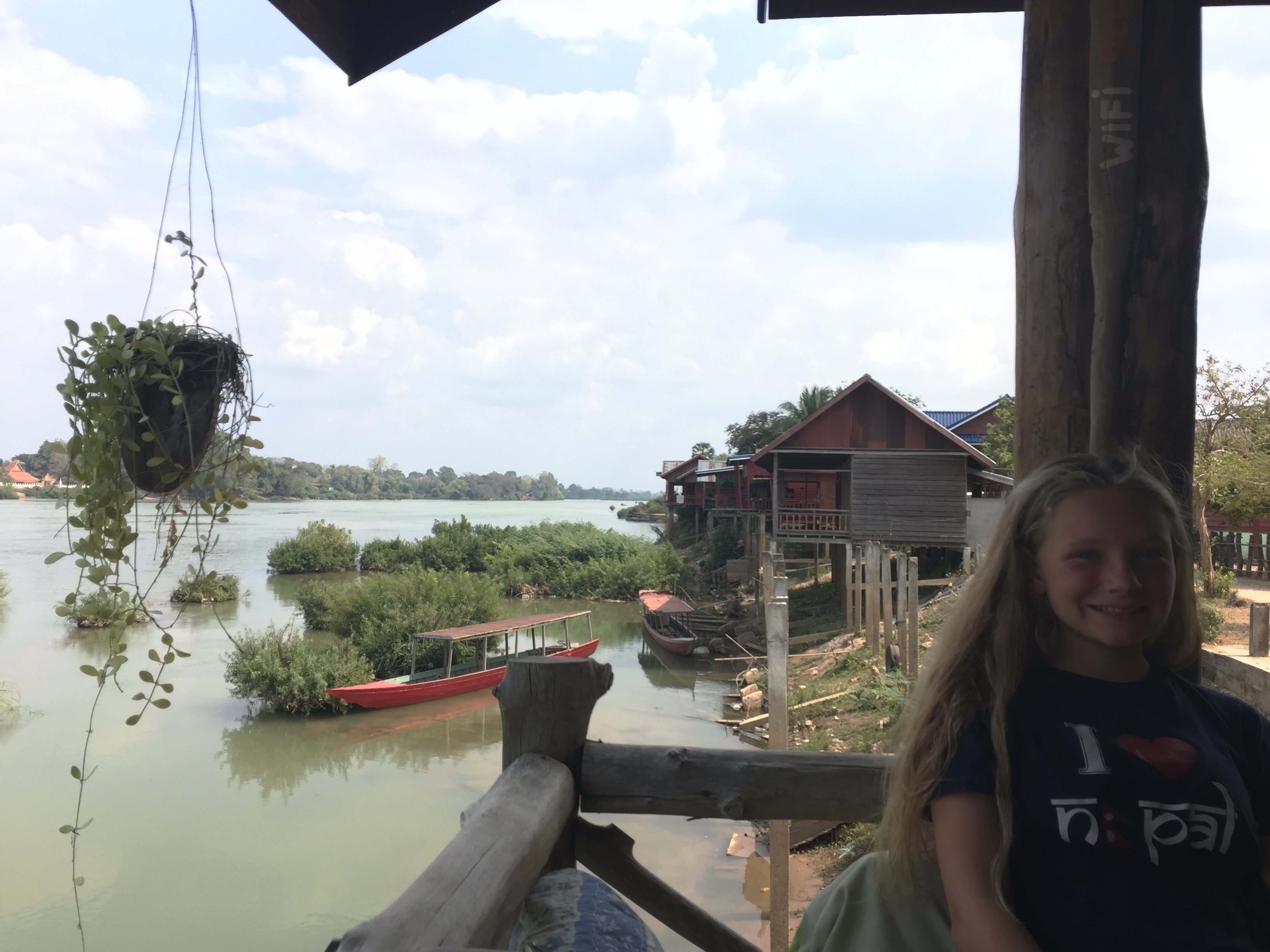
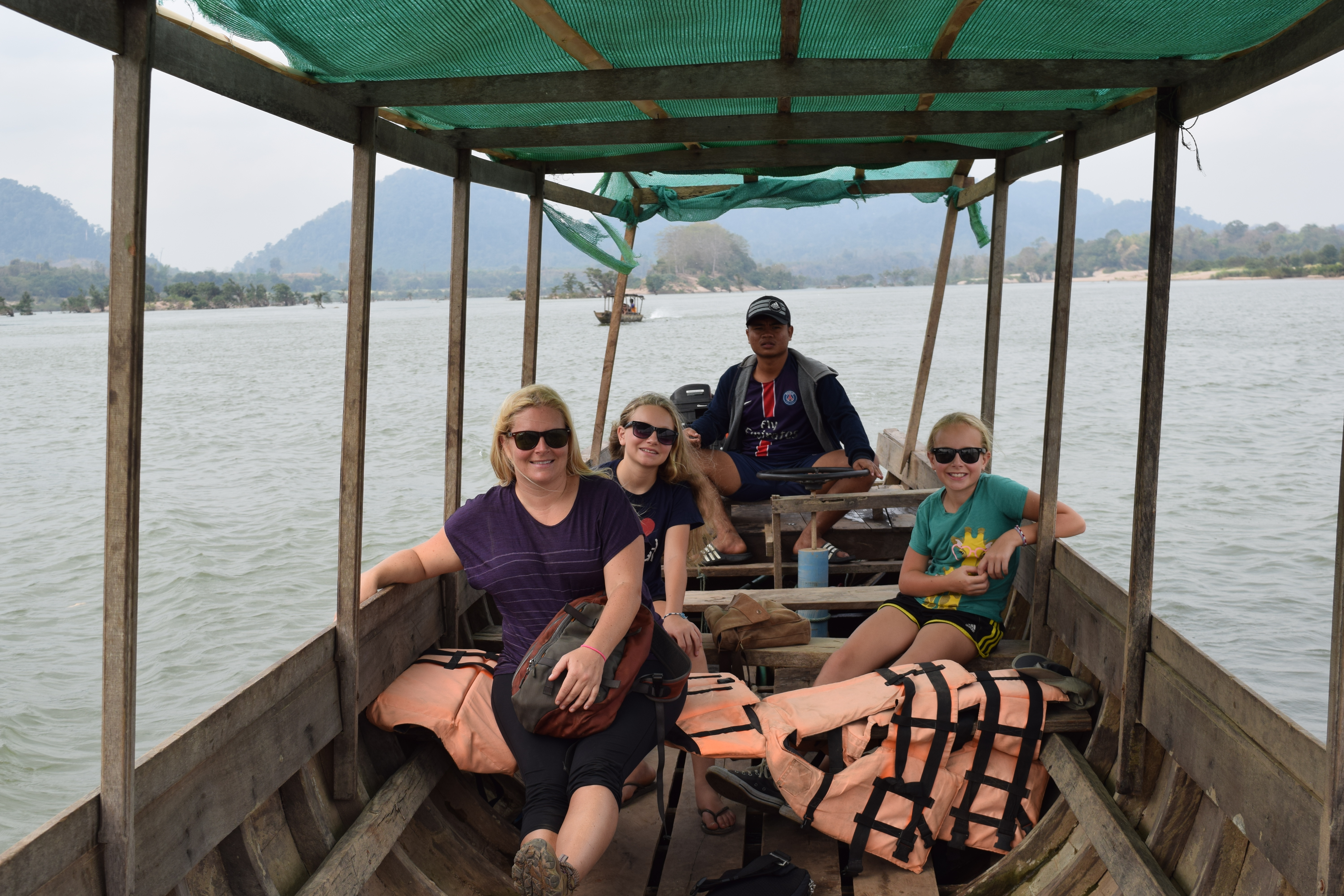
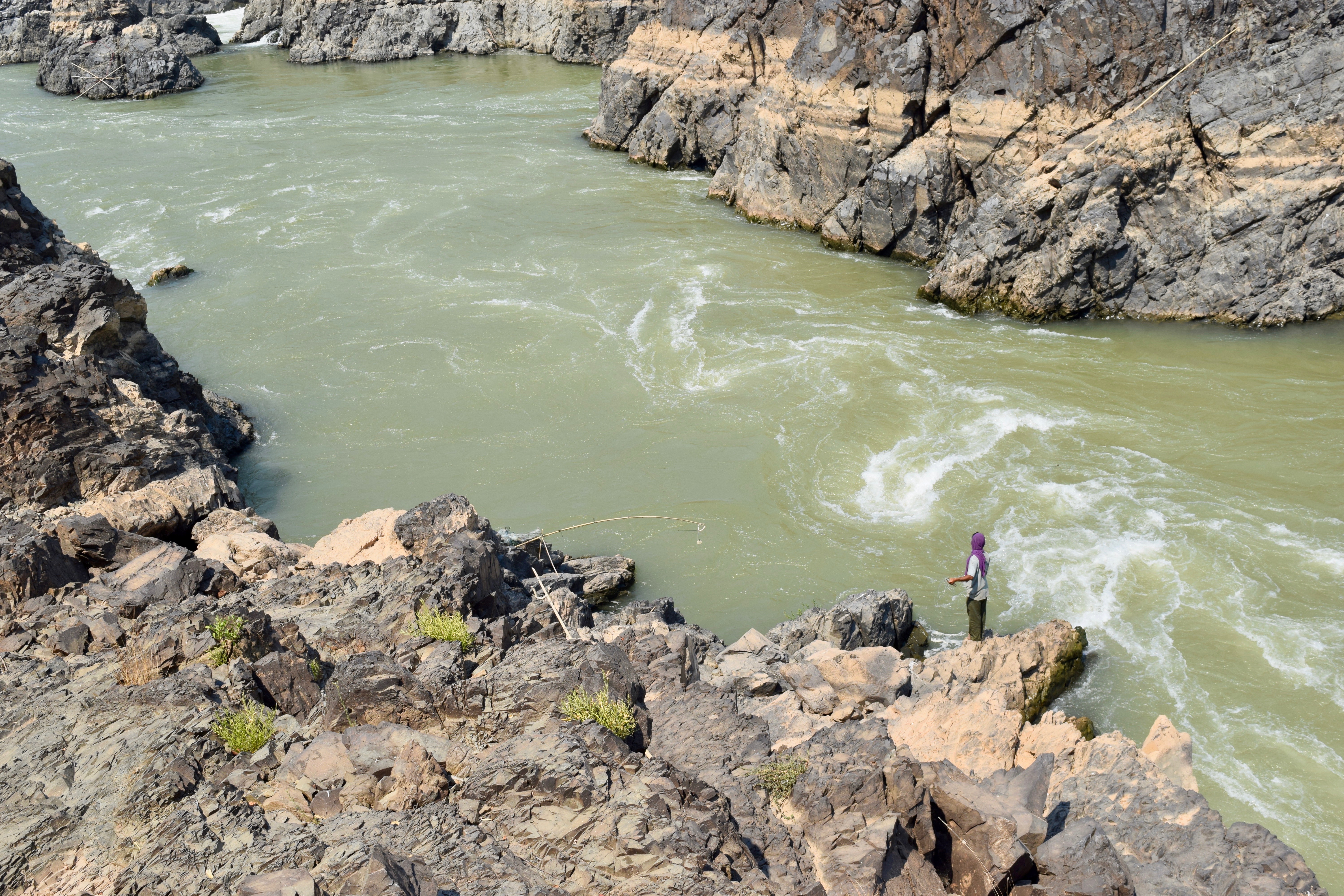
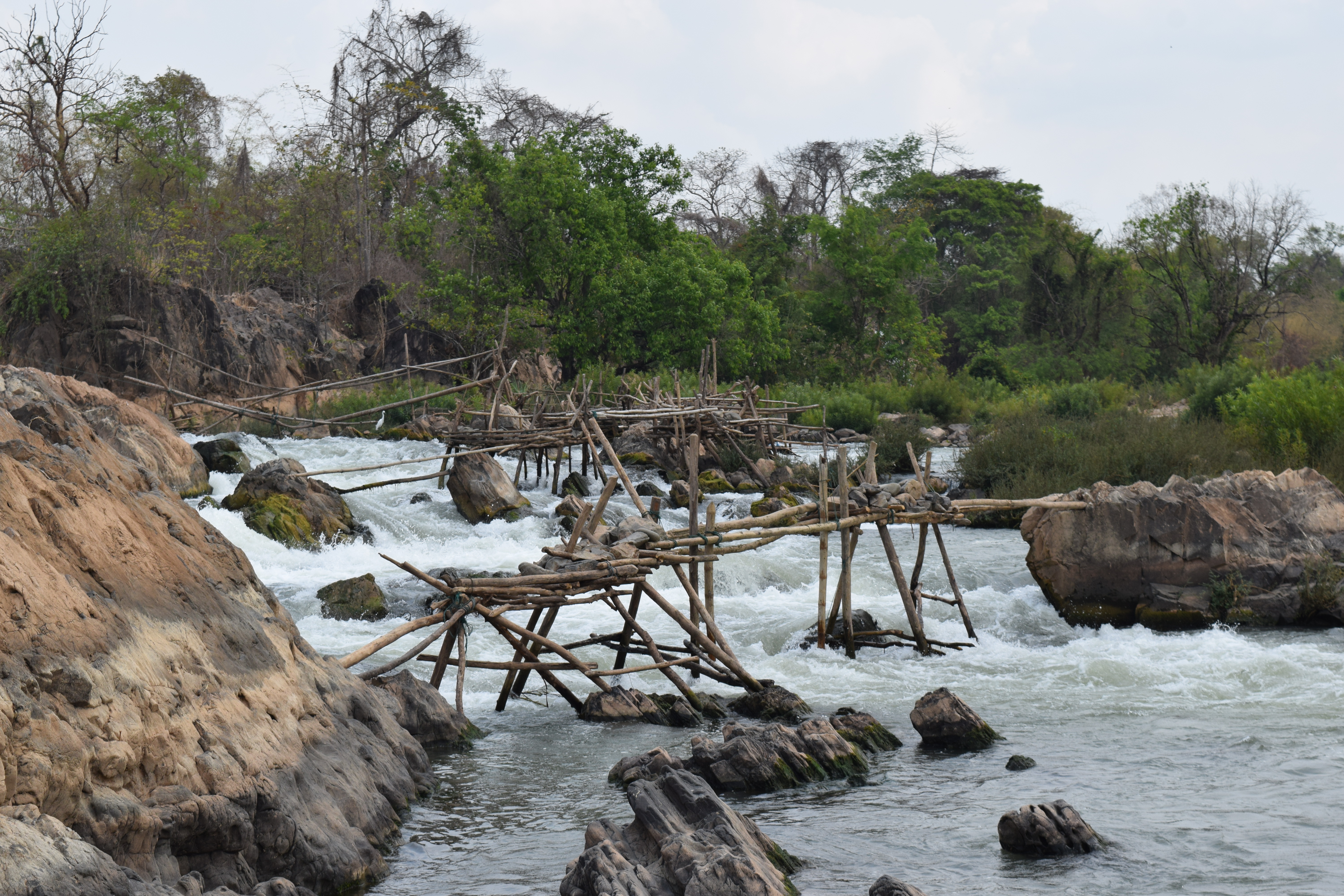
At the boat launch we hopped into a wooden long boat and wove our way through the islands on the Mekong to Don Khone. The 4000 Islands (Si Phan Don in Lao) are at the foot of Laos near the Cambodian border where the Mekong River widens into a delta. Lots of people skip this area because it’s not easy to get to (hours on a bus and then a boat ride) and flights directly to Siem Reap or Vietnam are so cheap. The fact that few people get there is what makes it so great. Most of the islands are too small for development and the ones that are set up enough for tourists have riverside bungalows and restaurants in stilt shacks over the Mekong. Reading, swimming, exploring the islands on bikes or scooters and lounging in hammocks are the extent of activities on Don Det and Don Khone. By the end of our five days there I felt normal again.
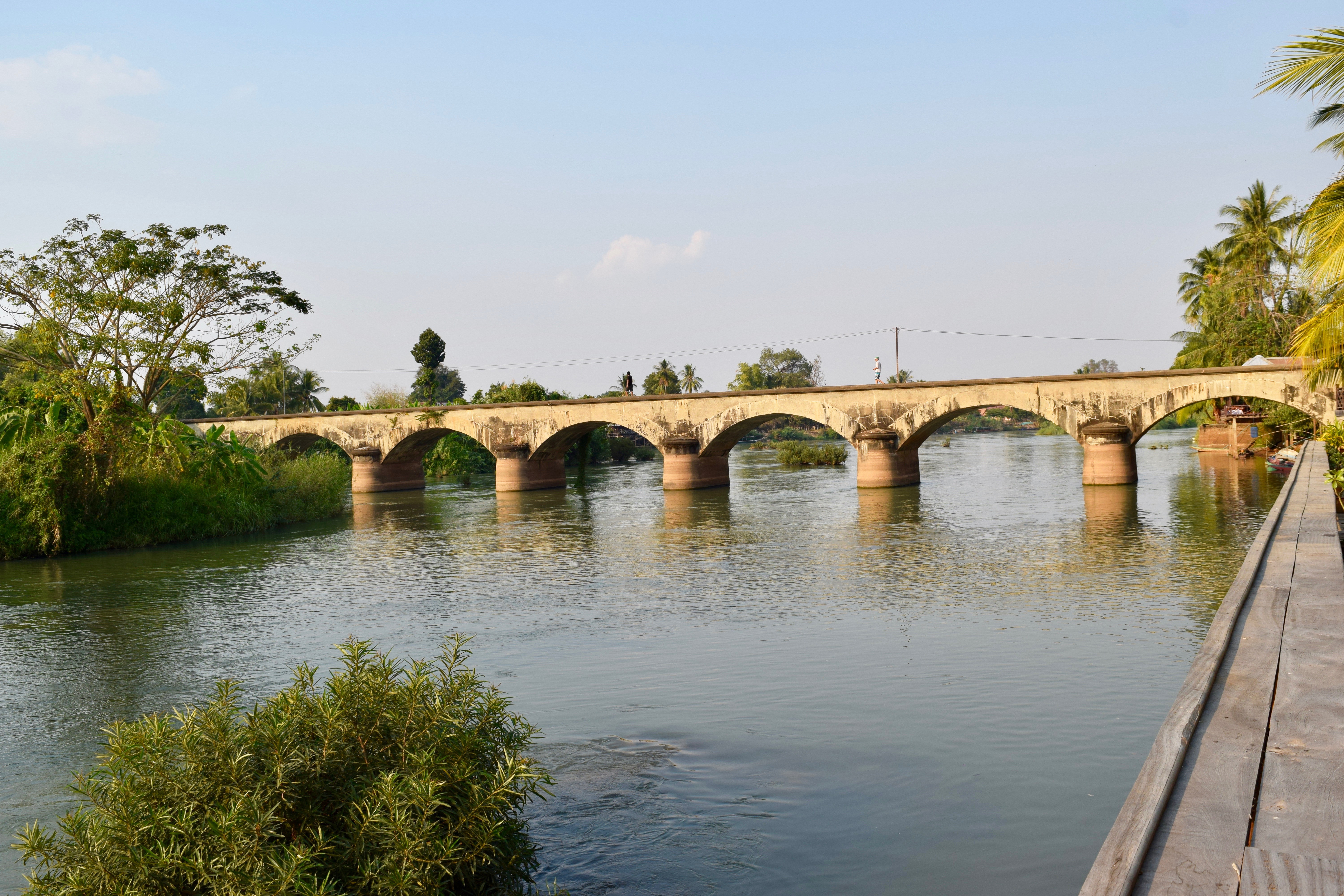
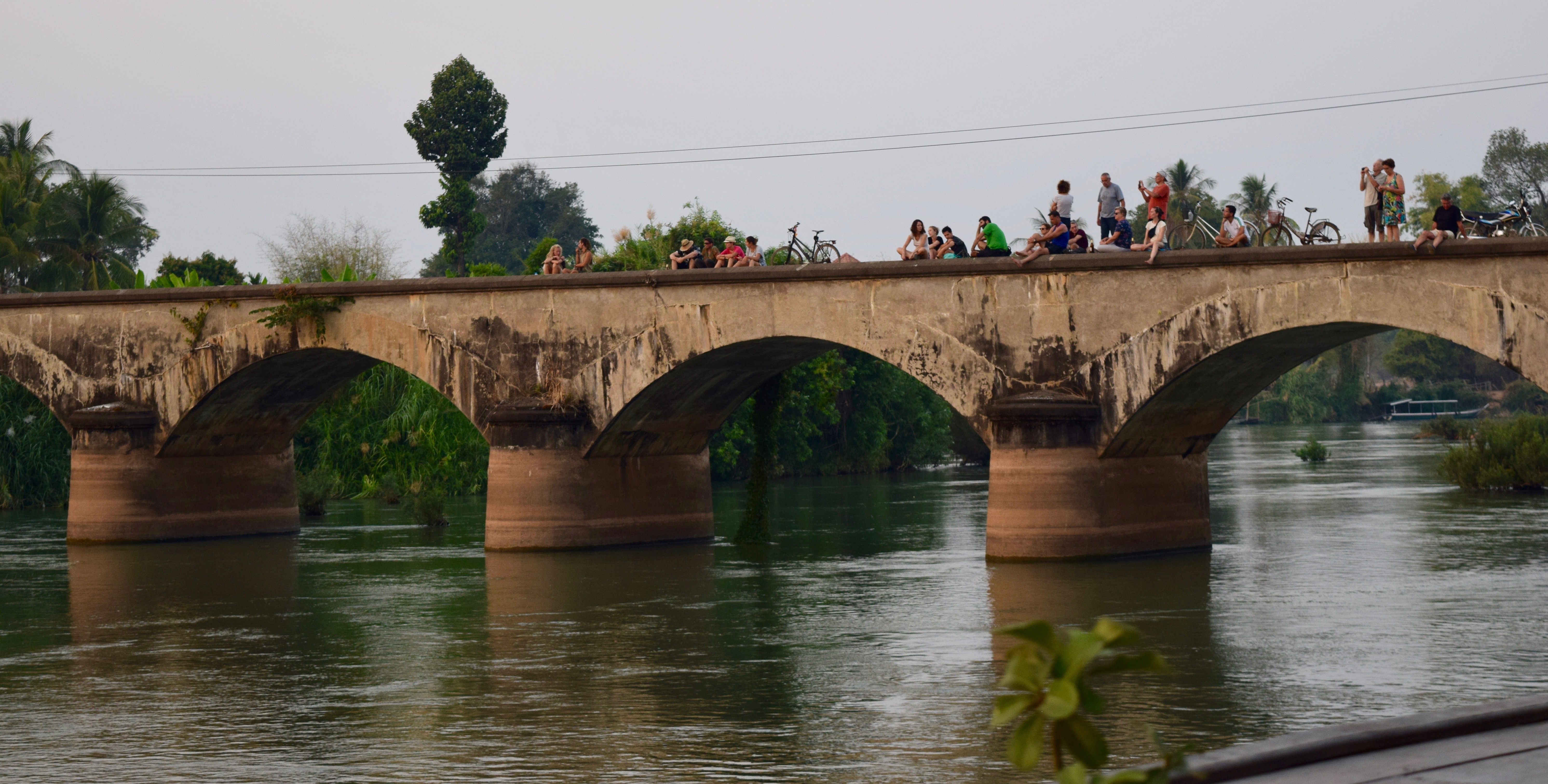
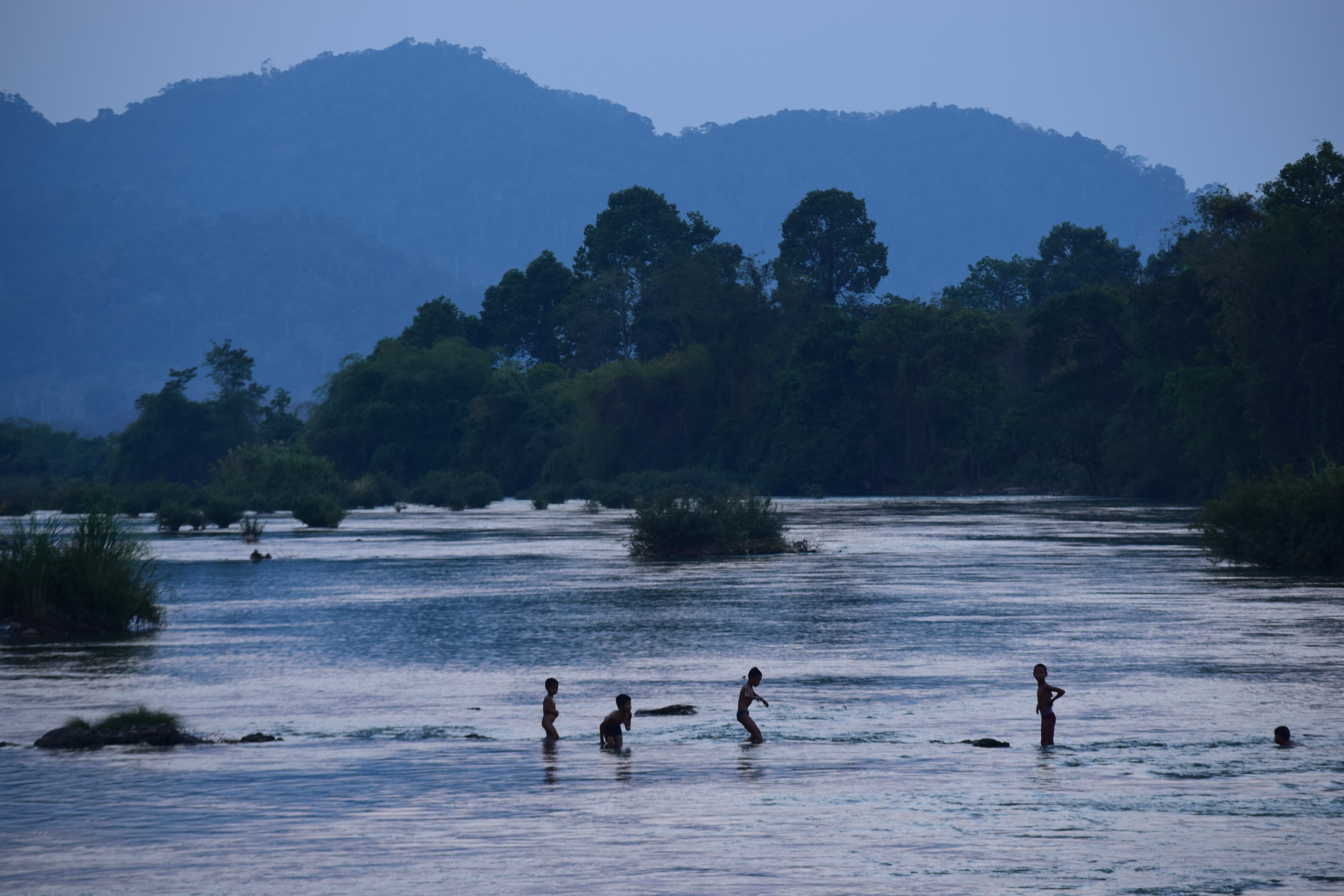
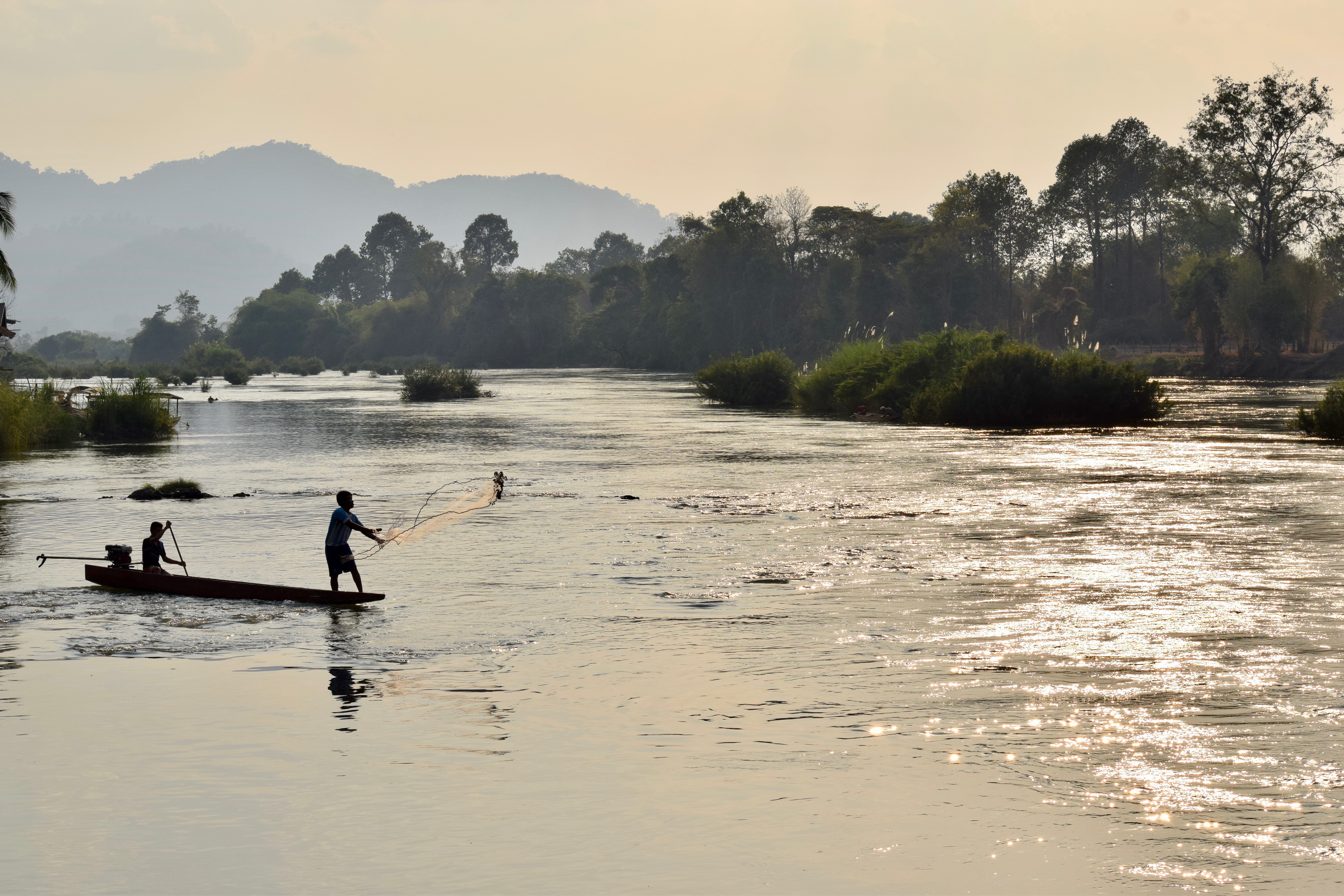
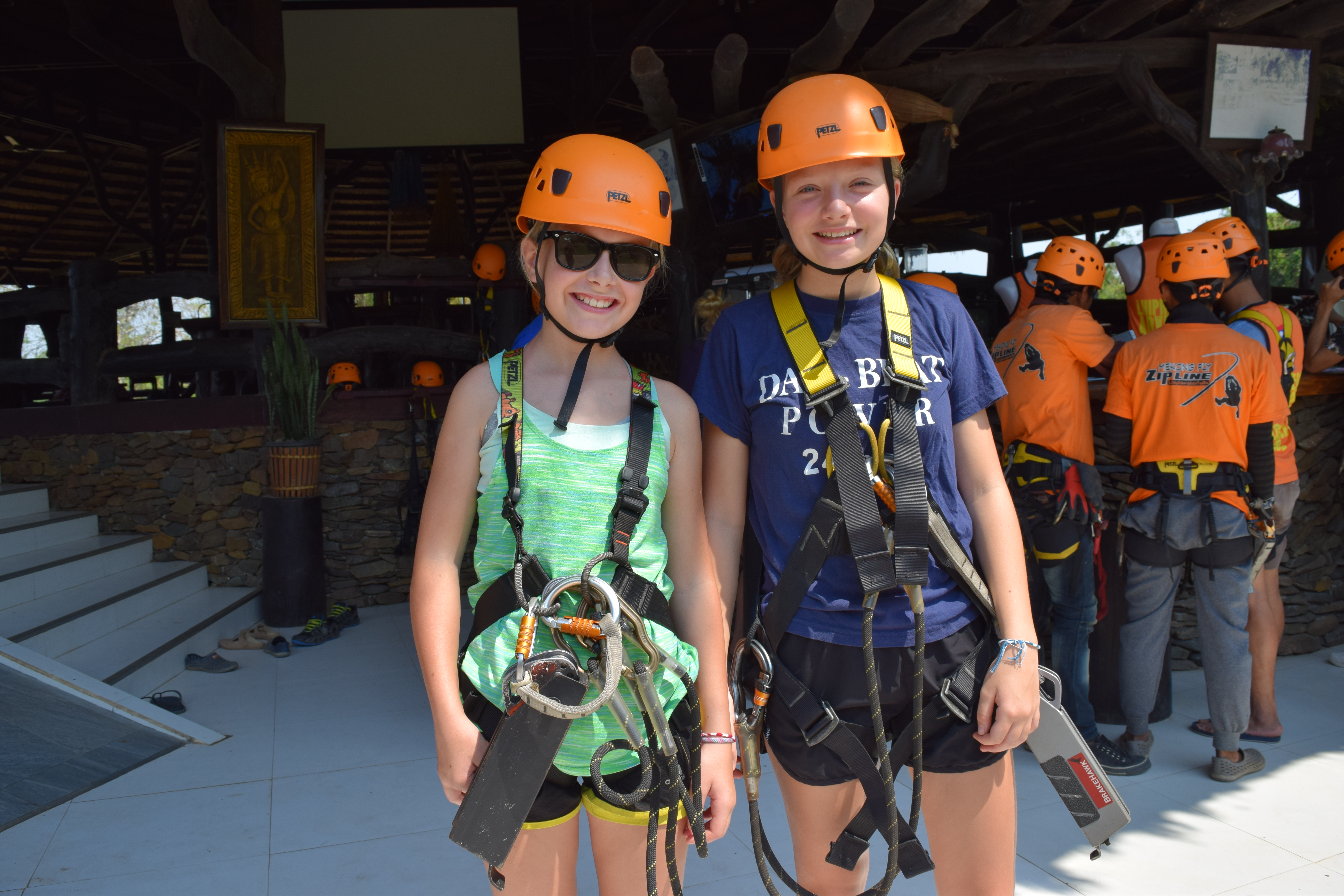
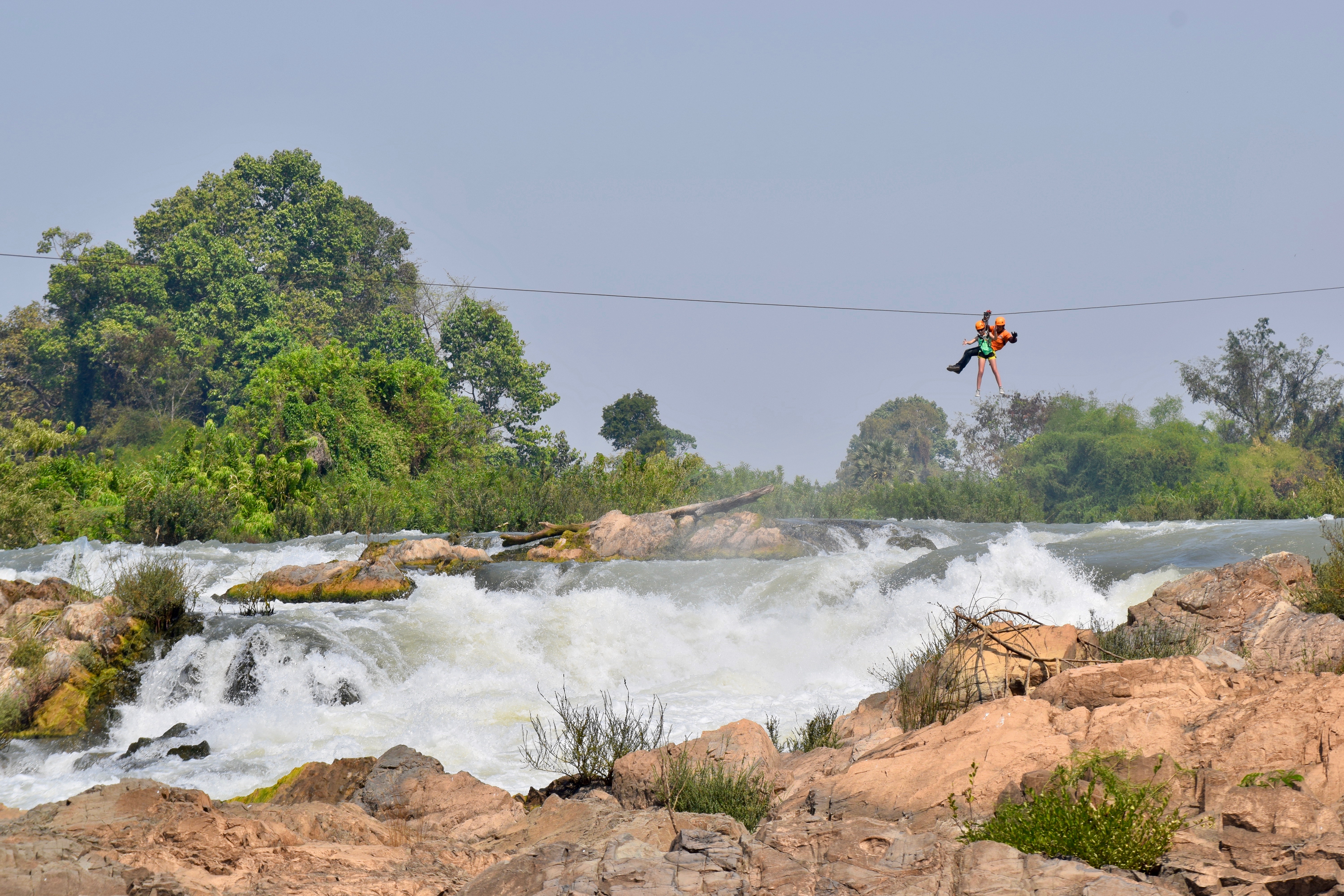
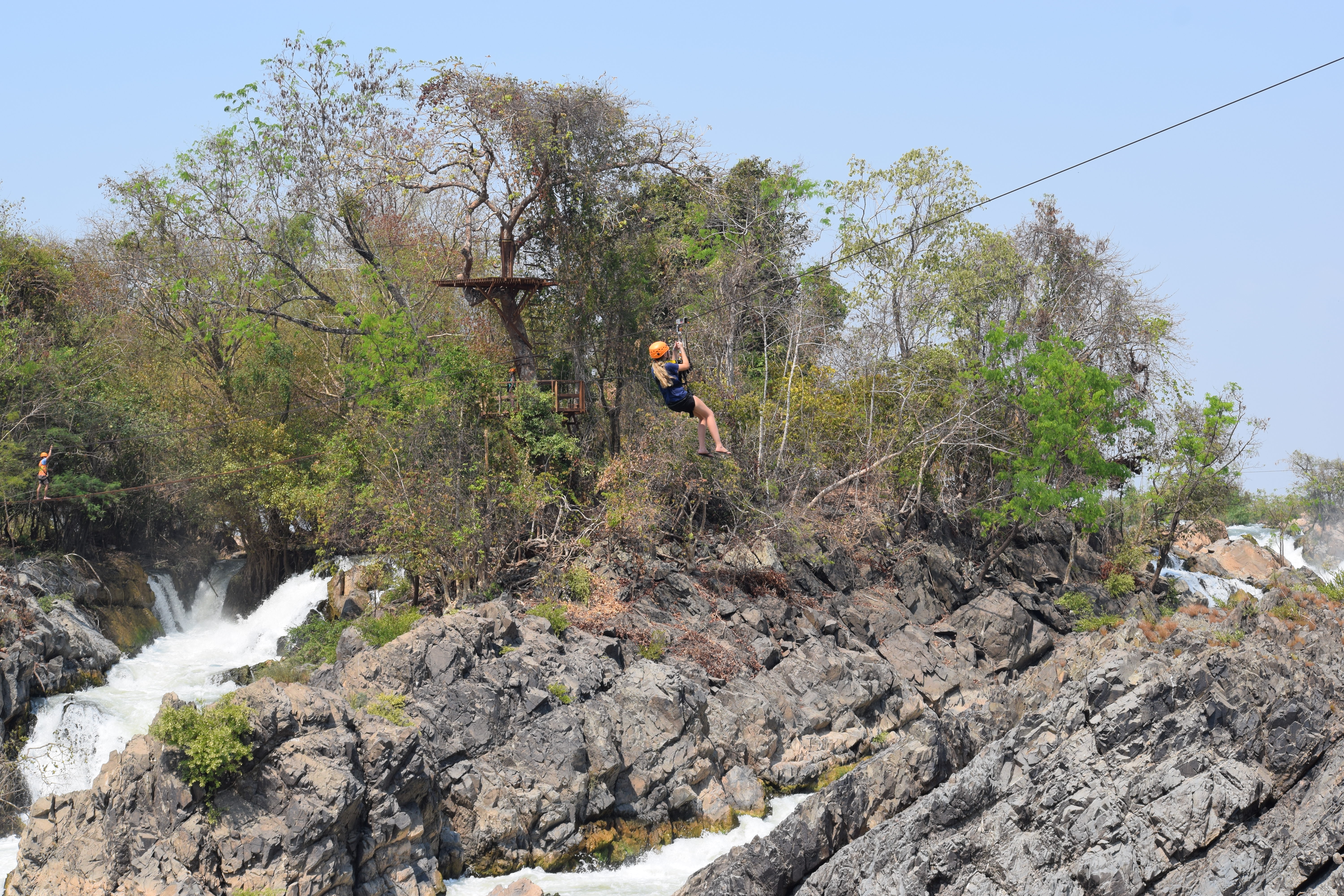
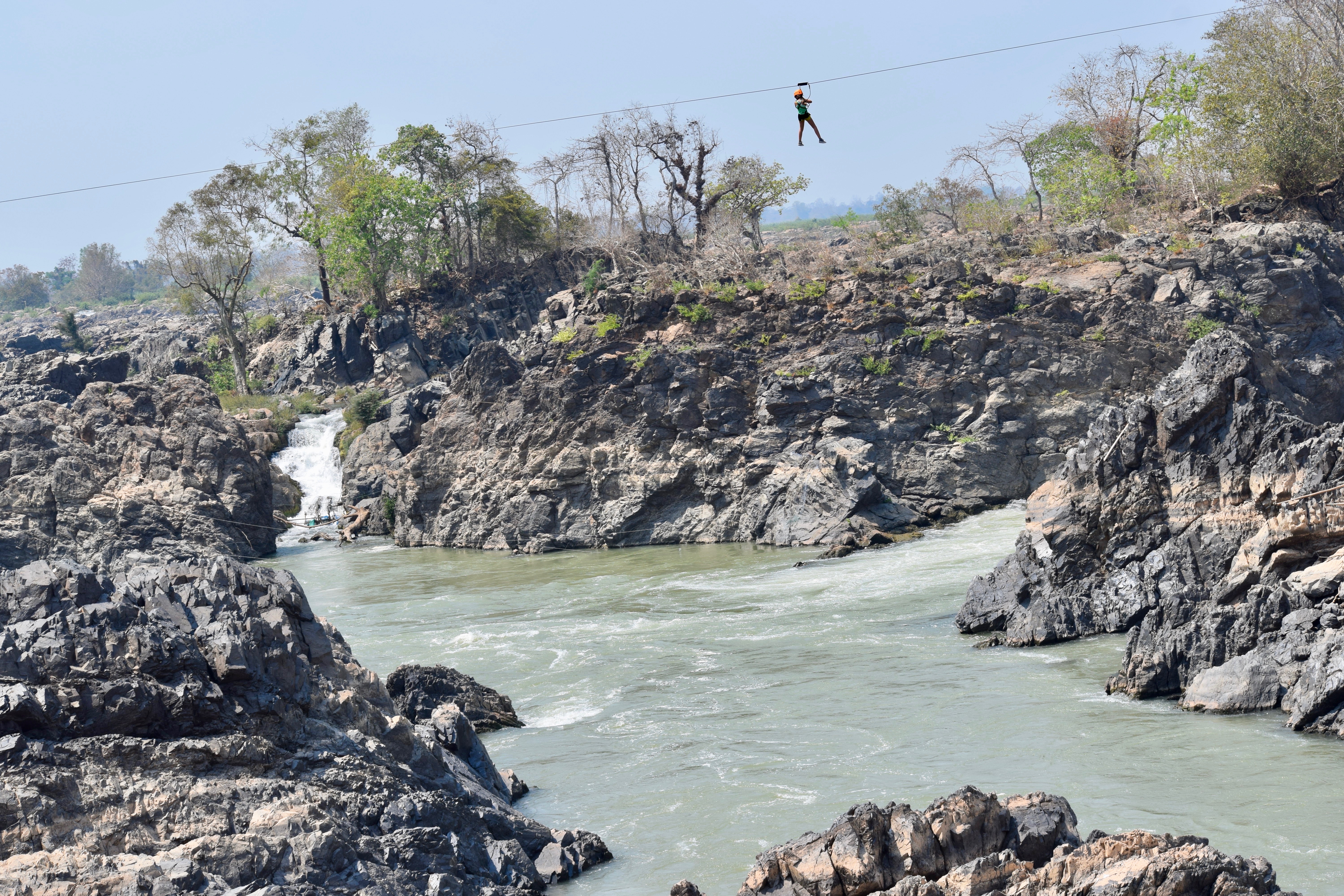
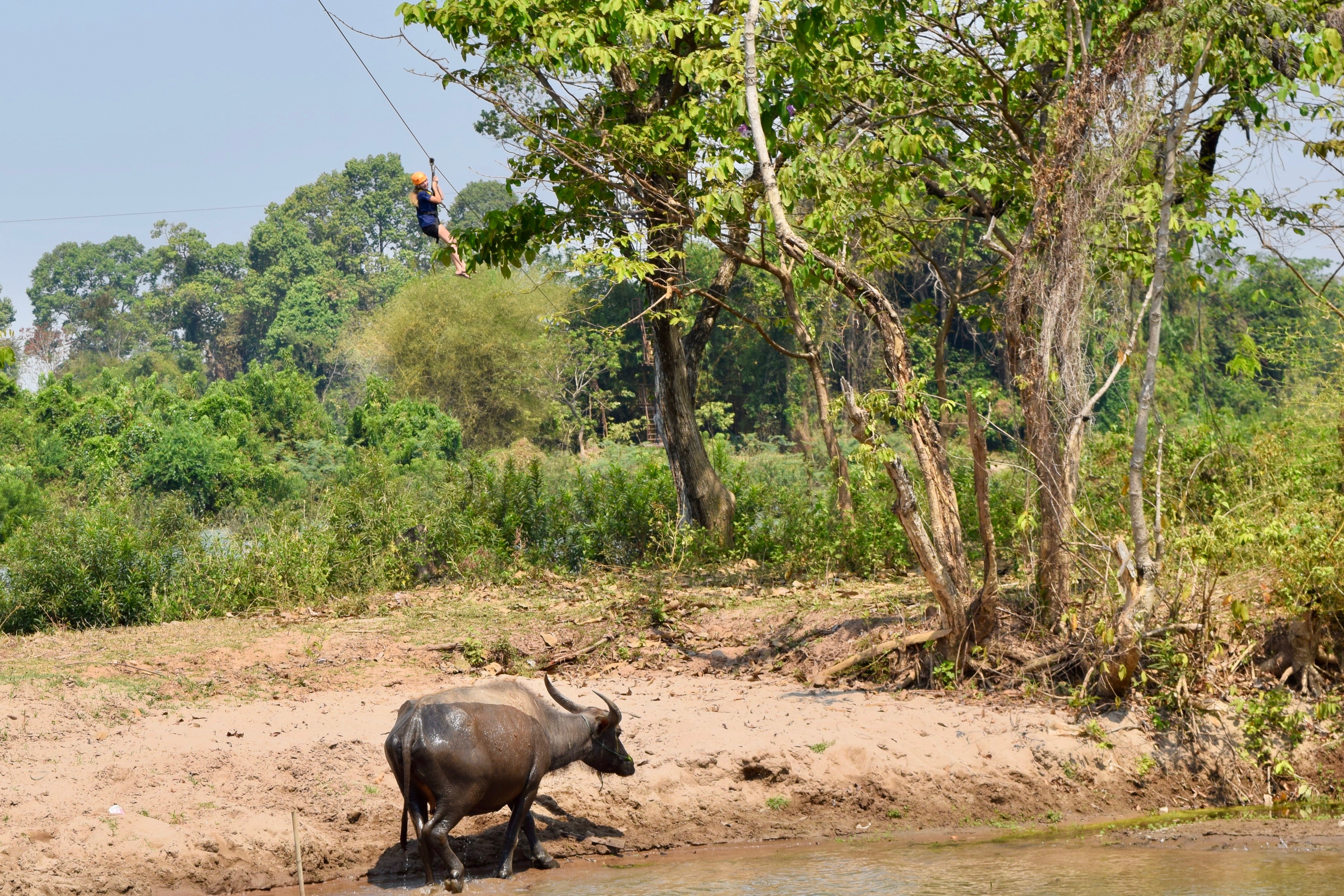
There are some tremendous waterfalls (the largest by volume in SEA). The falls are the widest waterfall in the world according to the Guinness Book of Records. The rapids and falls are 6.7 miles wide, with a drop of 70 feet. The girls decided this was where they wanted to spend some of their own money going zip-lining (thank you Uncle Mike!). It was an extensive set up over the waterfalls and back. I felt a little sick to my stomach watching them go.
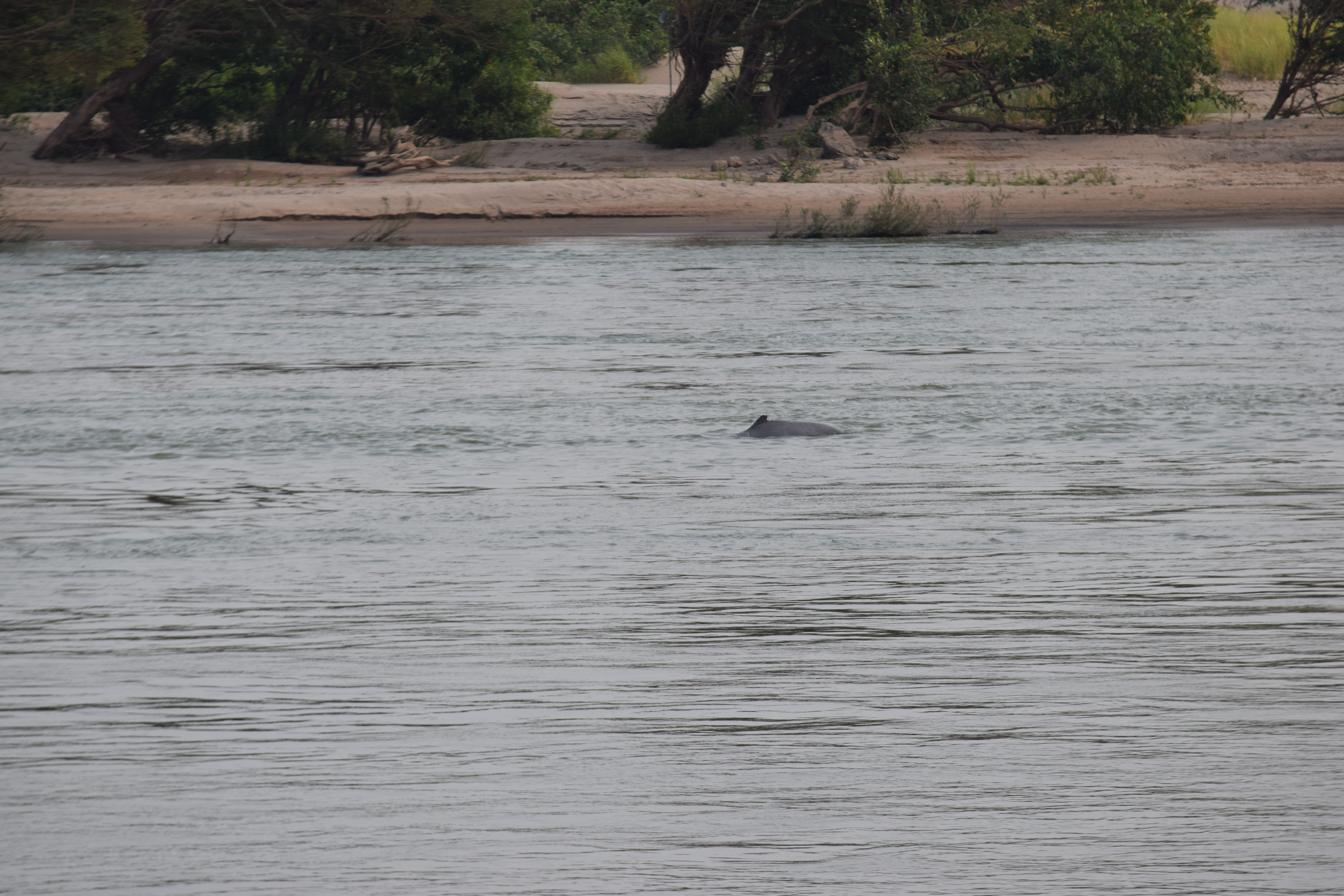
This part of the Mekong is also home to the endangered Irrawaddy dolphins. There are only about 70 left in the world. We took scooters to the south of the island and caught a local boat upriver to see if we could spot them. We stopped on a sandbar type island and watched for a bit. It’s not common to see them, so when we spotted fins peaking out of the water we got really excited. Two dolphins seemed to be playing or fishing right in front of us. We didn’t get a full view, but were able to watch them for about 20 minutes. The area wasn’t busy at all when we were there so hopefully it stays this way and the dolphin population can recover.
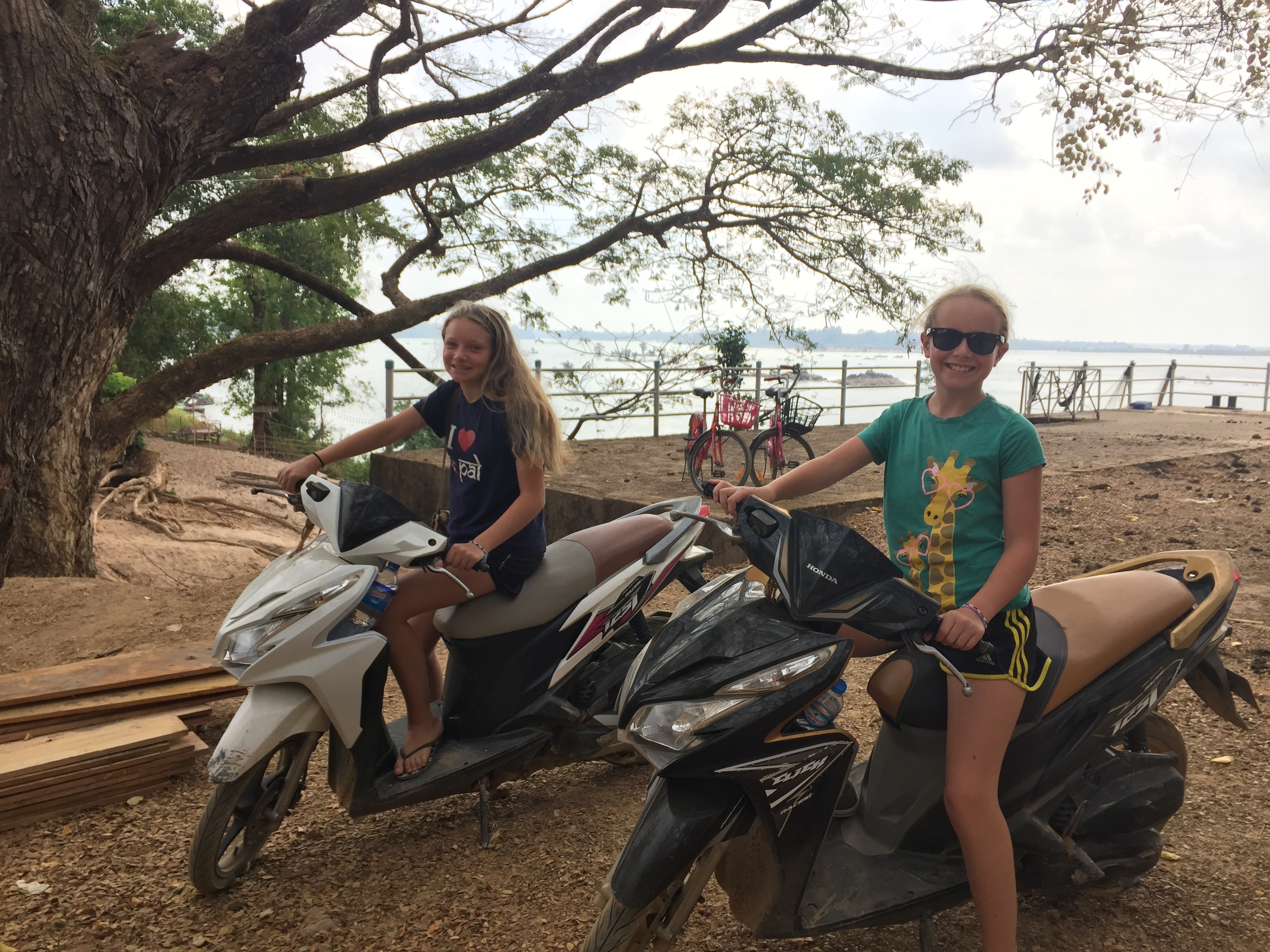
The most fun part of our time on Don Khone was zipping around on motorcycles getting lost (not that you can really get lost on an island…) and finding our way around. We had motorcycles for two days and covered all the driveable roads and paths on the two islands.
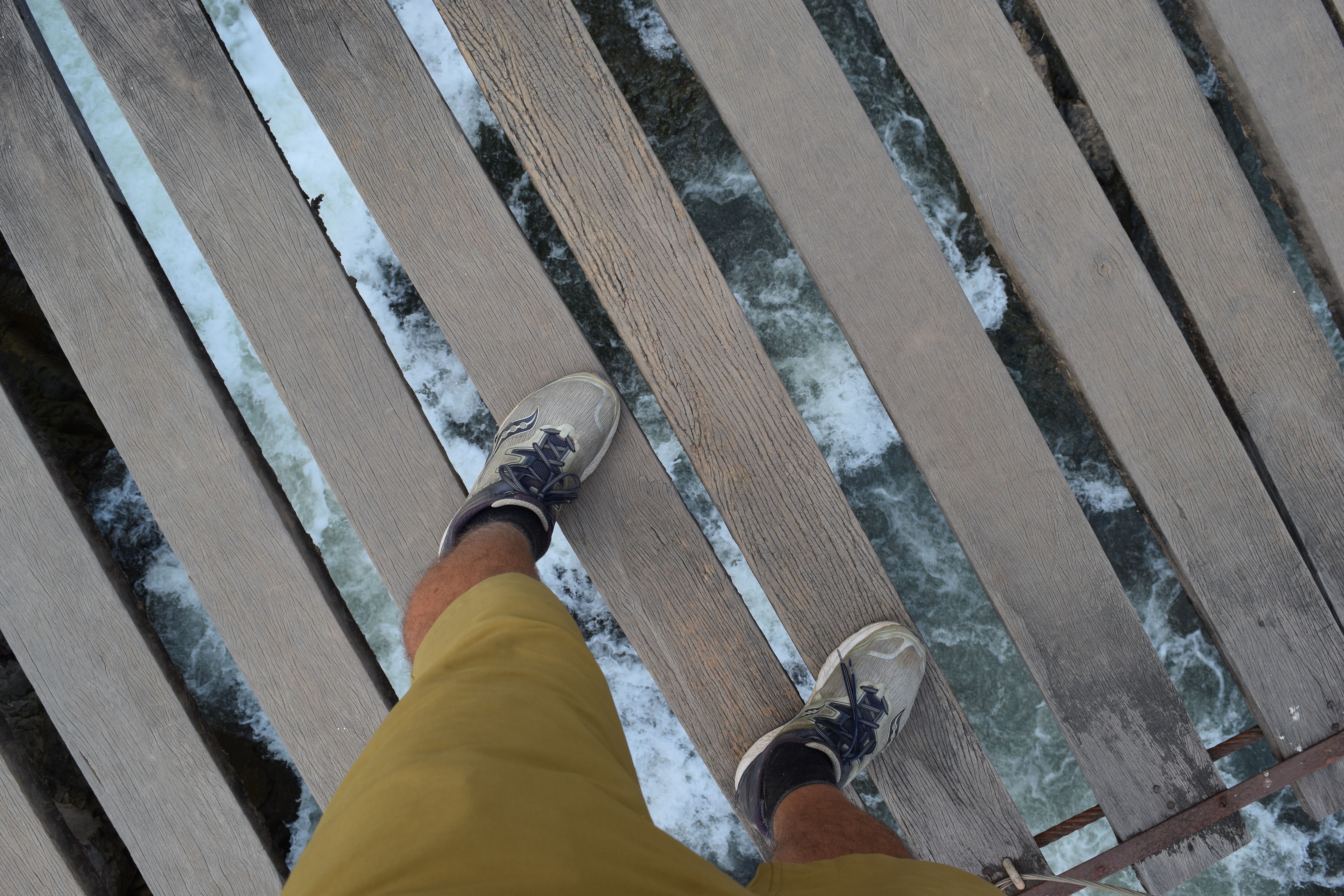
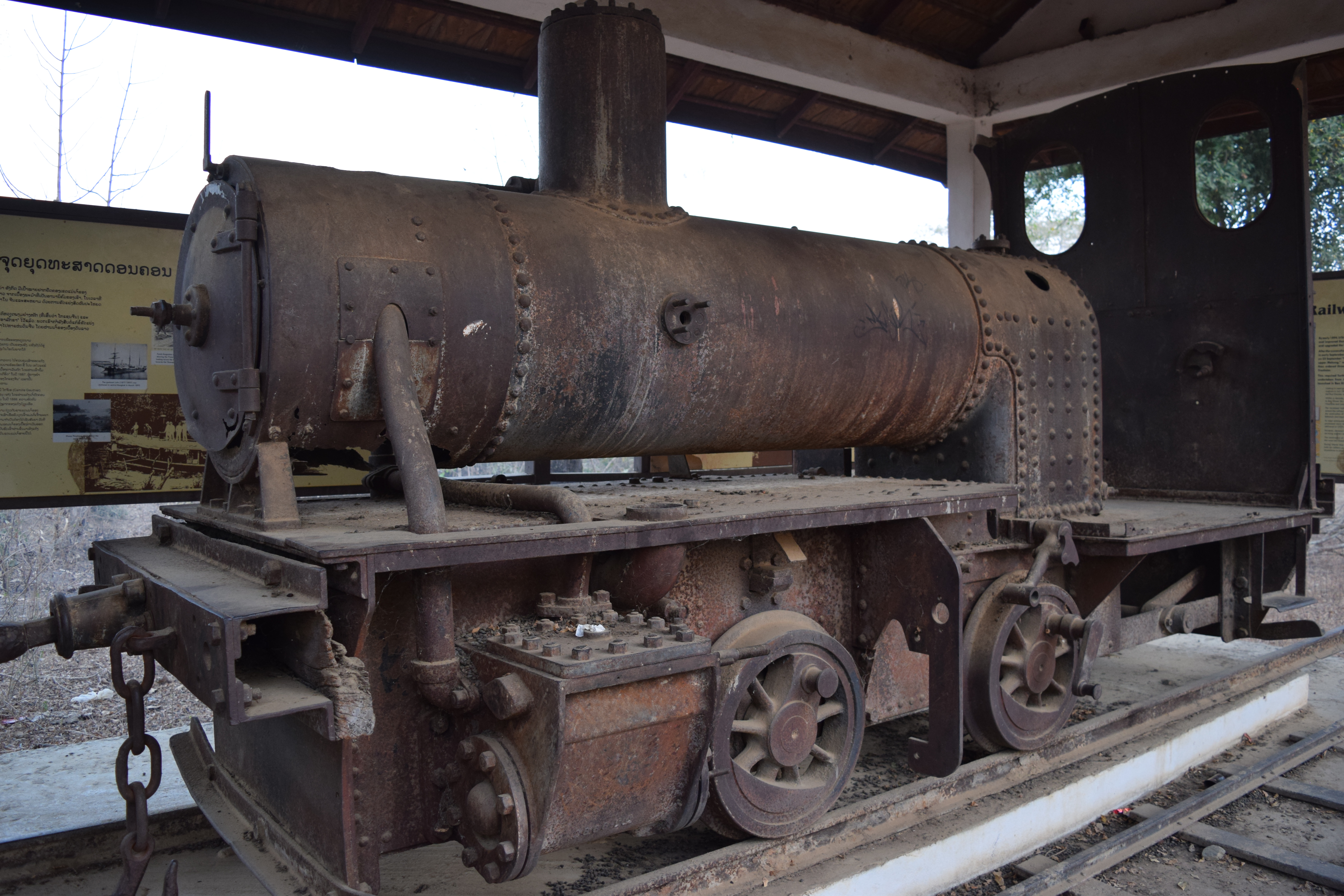
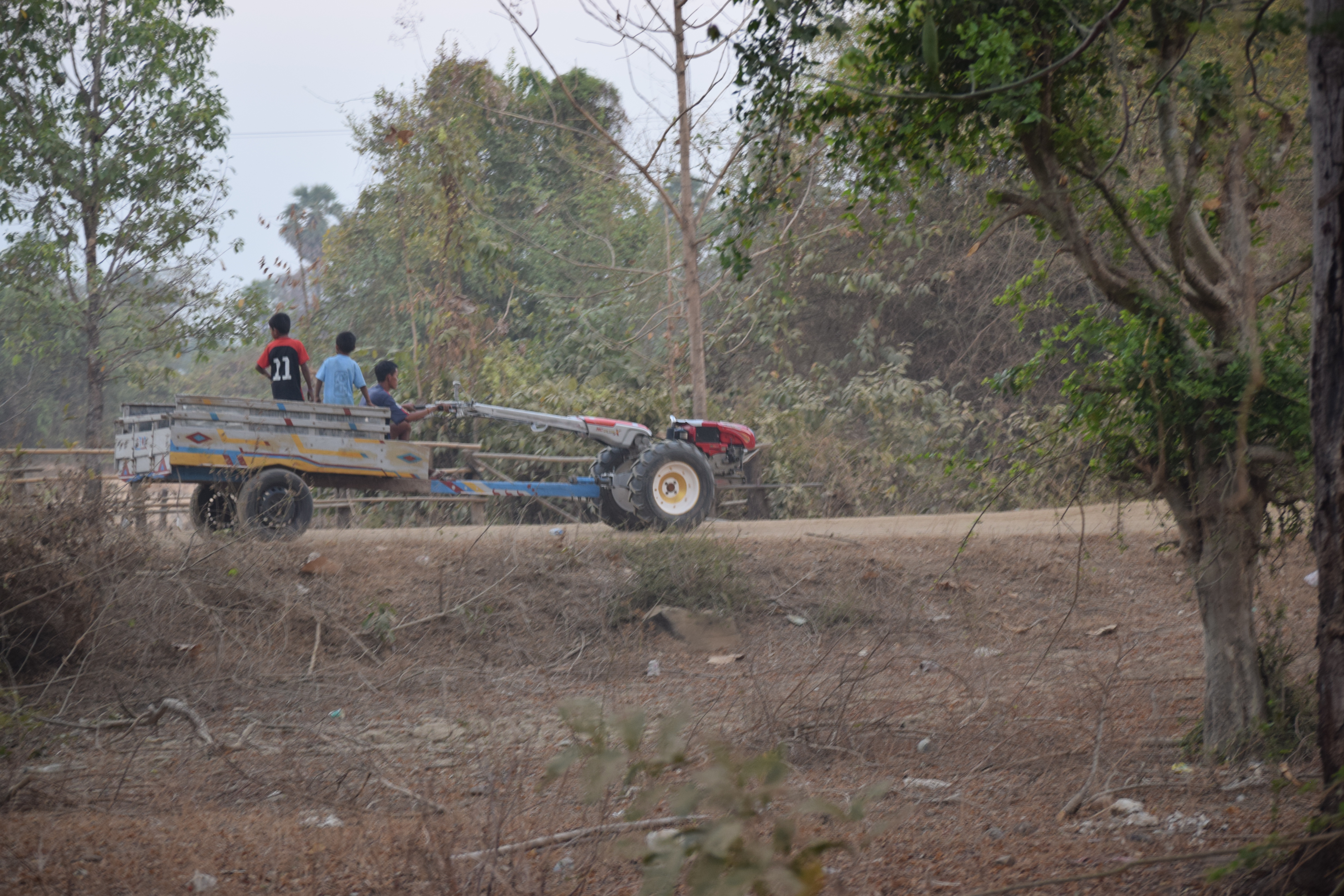
The 4000 Islands marked the end of our time in Laos. We got in the wooden longboat and enjoyed our last ride on the Mekong to the landing. Loaded up like pack mules we walked through the small village looking for our bus to the Laos/Cambodian border. 45 minutes later we were muddling our way through the paperwork to enter Cambodia. Our days of terrible roads and the worst sickness of my life were done and couldn’t outweigh the beauty of the land and the people of Laos. Khop tchaï (thank you) Laos.


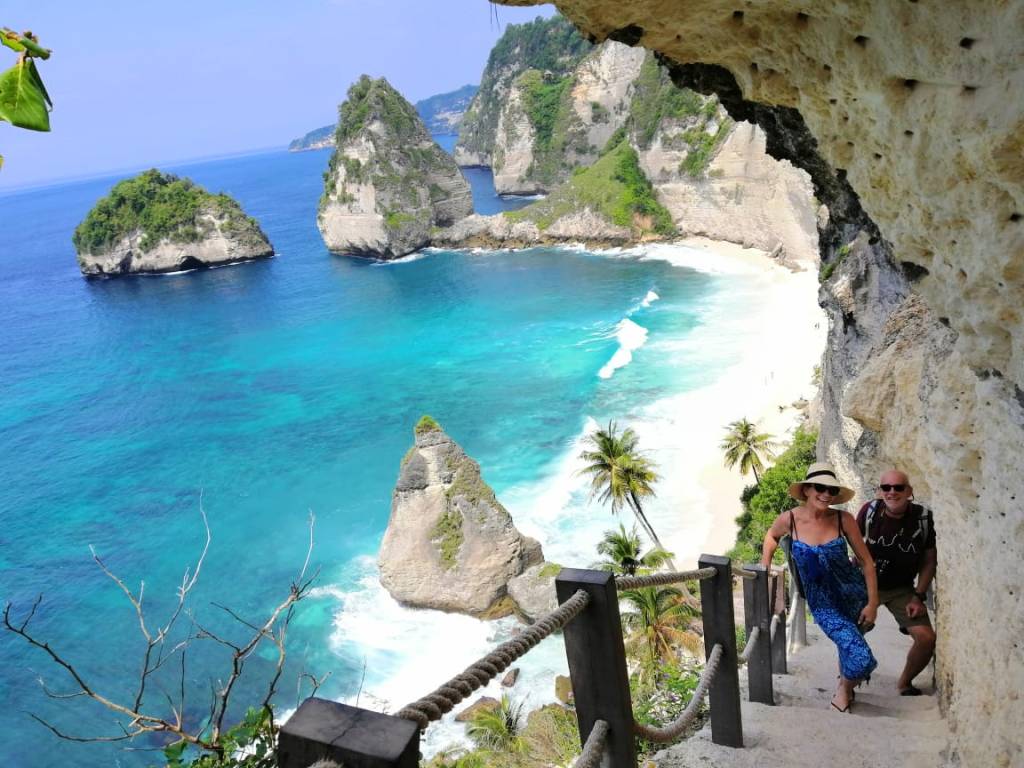
 Our Long and Winding Road
Leave a comment